
Volkswagen ID. Tiguan, first impressions. See you today, Friday, October 30, at VW Home
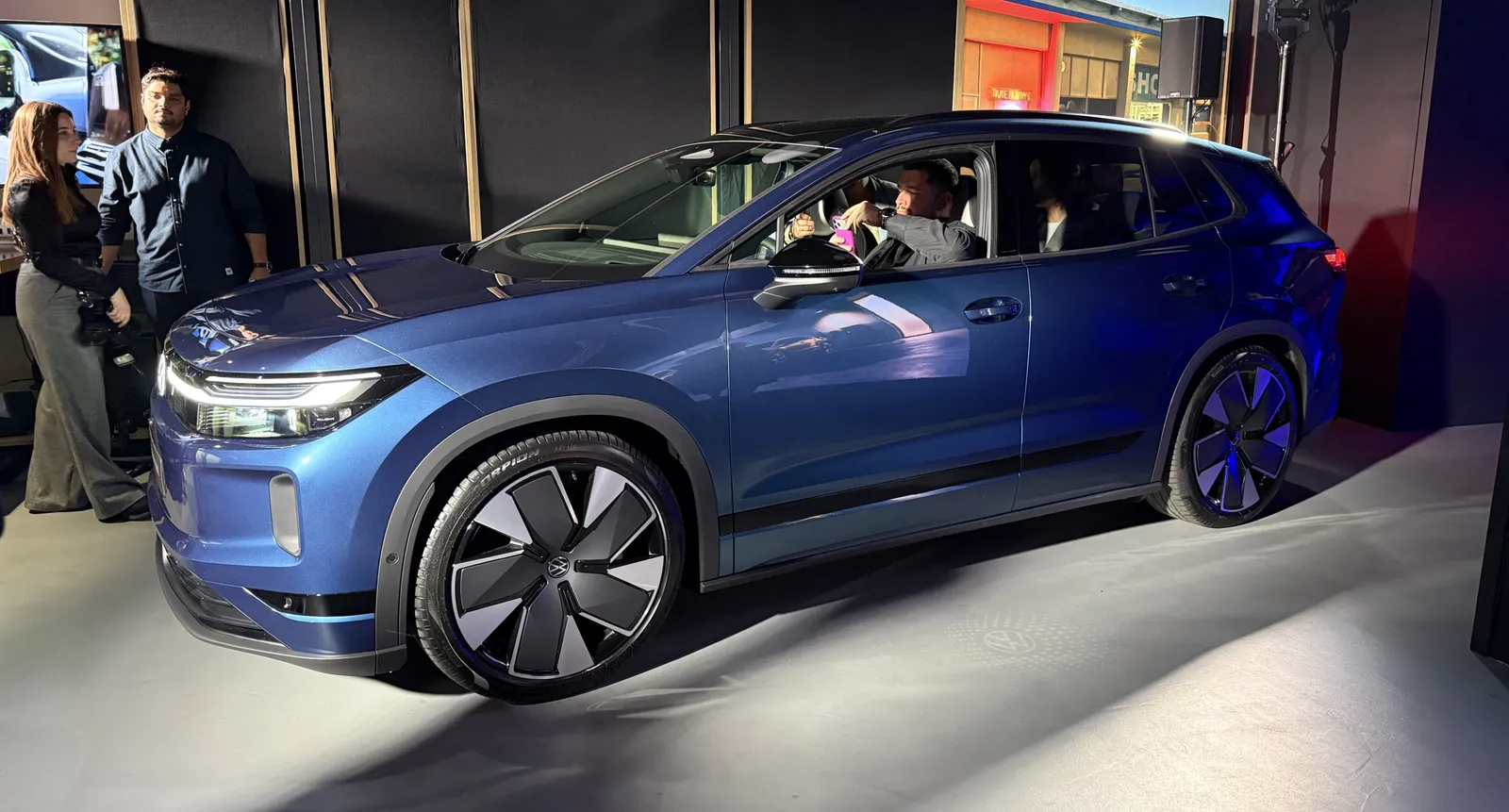
Thanks to the Polish branch of Volkswagen, we had the opportunity to take a close look at the VW ID. Tiguan [statically], the successor to the VW ID.4 and ID.5. Of course, we took the chance to ask a brand representative about the 90 kWh battery that appeared on the British website, checked out the calculator on the steering wheel, and finally saw if the rear drums were removed on the MEB+ RWD platform. We discuss all these points below.
And those who want to form their own opinion can see the car today on Karolkowa Street in Warsaw. Google Maps are HERE.
VW ID. Tiguan. Classic, clever, no experiments
Table of contents
VW ID. Tiguan. Classic, clever, no experiments
R-Line and battery ~95 (90) kWh
Impressions
Steering wheel with calculator and retro style
Rear drums
VW ID. Tiguan: handles, front trunk, rear seat, trunk
R-Line and battery ~95 (90) kWh
Let’s start with the VW ID. Tiguana R-Line 90 kWh, which was noted on a British website by our reader, Mr. Marcin. This version was displayed at the auto show in Paris, while a pre-production version without the R-Line trim arrived in Poland. When we asked a Volkswagen representative about the new package, he frankly admitted that it wasn’t mentioned at all in the materials. And indeed, it isn’t referenced in any press releases either. He did add, however, that since there’s so much talk about it, “there must be something to it.”
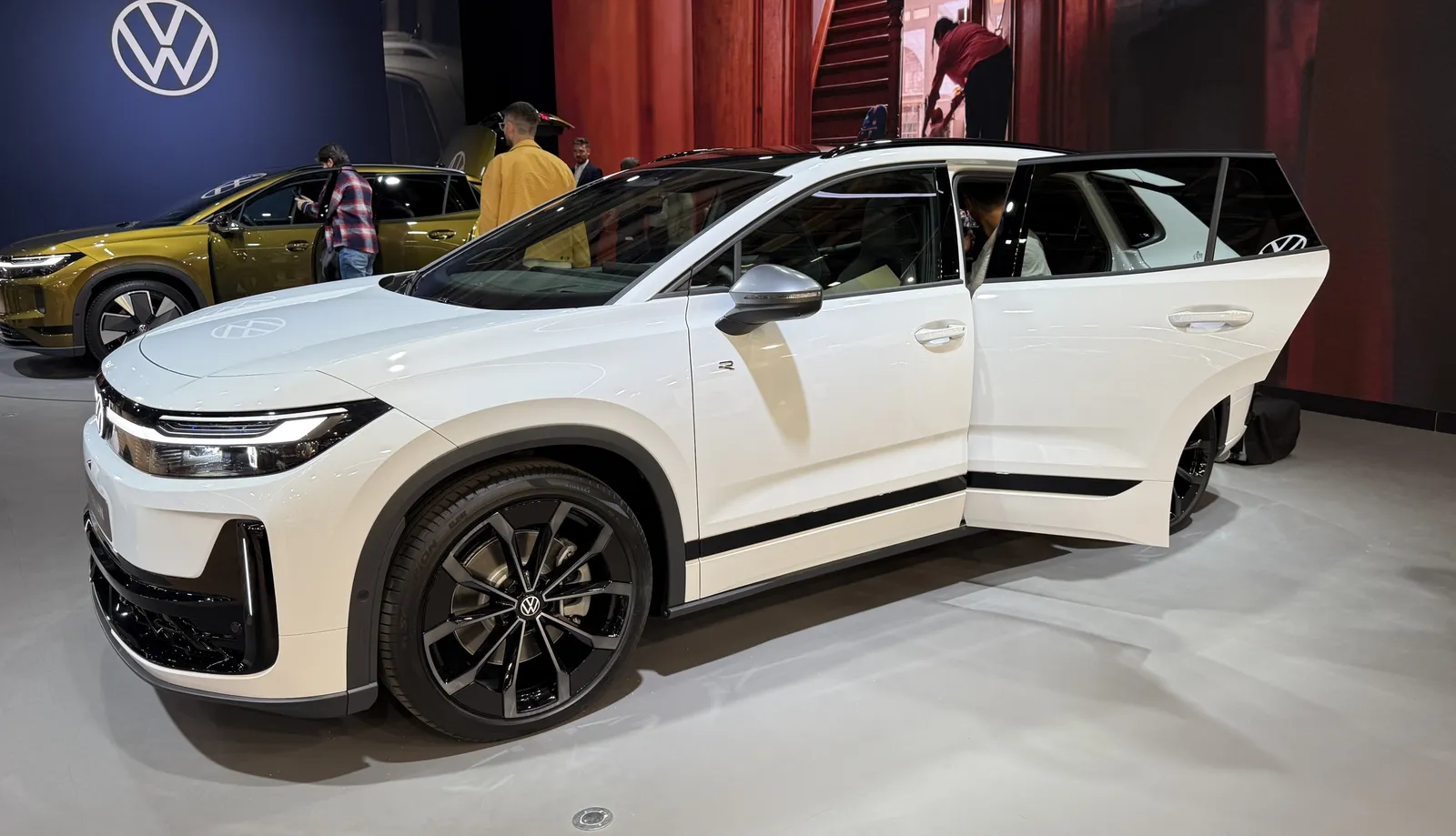
The VW ID. Tiguan R-Line from Paris and…
…Volkswagen ID. Tiguan available for viewing in Poland. Pay attention to the fronts of both vehicles.
Impressions
The car makes a good impression from the outside; it has a much more classic aesthetic compared to the futuristic ID.4. It’s larger, with a length of 4.618 meters and the same wheelbase of 2.765 meters as before. 4.6 meters is unofficially considered the boundary between the C and D segments, but a Volkswagen representative stated that due to its placement in the lineup (VW ID.4 → ID. Tiguan) and the platform used, it should still be classified as a C-SUV (“extended C-SUV”). Skoda also uses this strategy with the Enyaq, so we take that into account.
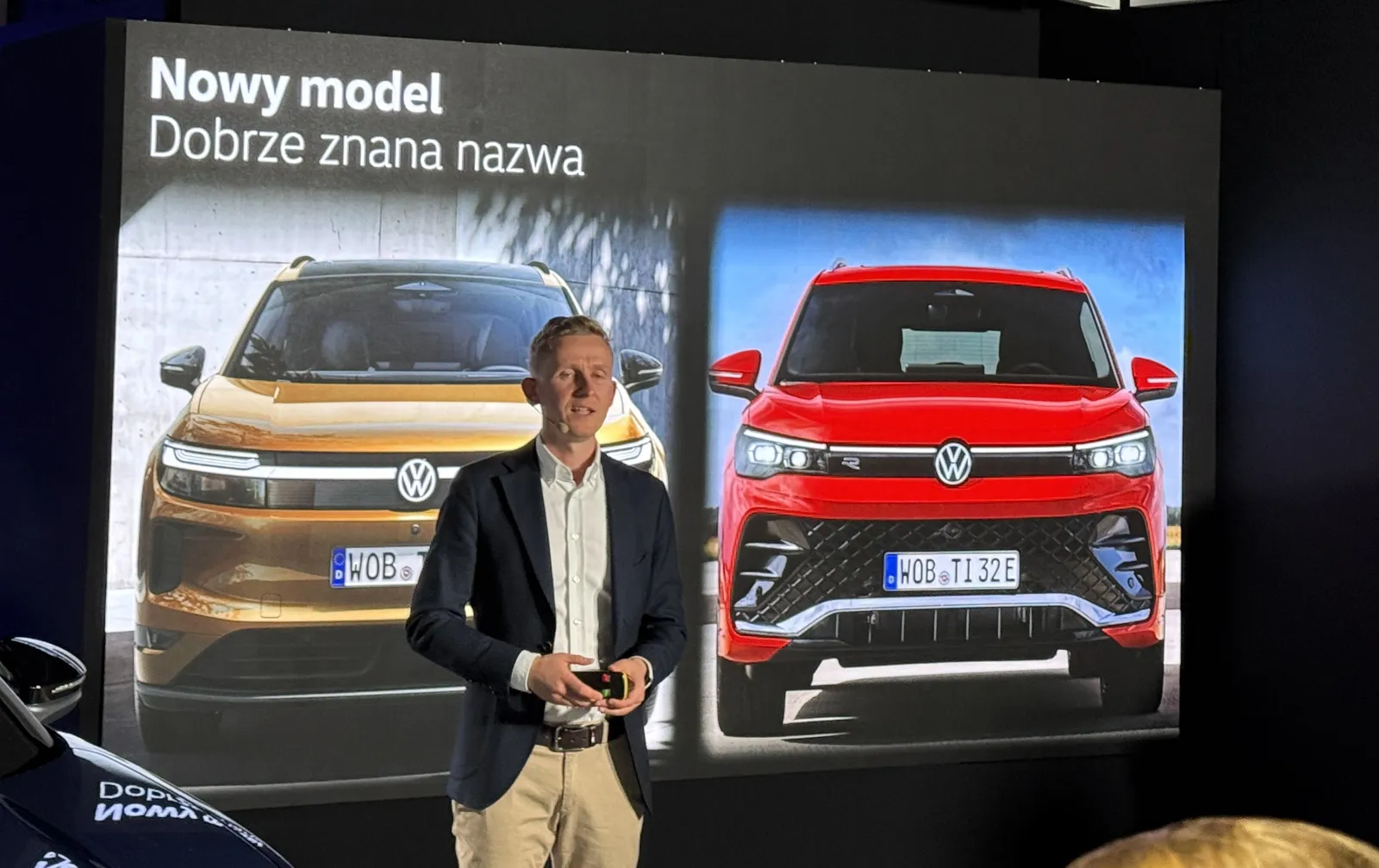
Axel Besser, the person we asked about the car, with a Volkswagen ID. Tiguan (on the left) and a diesel Volkswagen Tiguan (on the right) in the background.
The interior has been transformed and now reminds us of a Mercedes: there’s a black area with dot-like stars in front of the passenger (a third display might be placed there), and the armrest opens in two directions like in the VW ID.7. There are also much larger gauges behind the steering wheel, a handful of basic control buttons for essential functions under the air vents, two magnetic inductive chargers on the center console, a projection display on the windshield (which was inactive), and a steering wheel with a calculator.
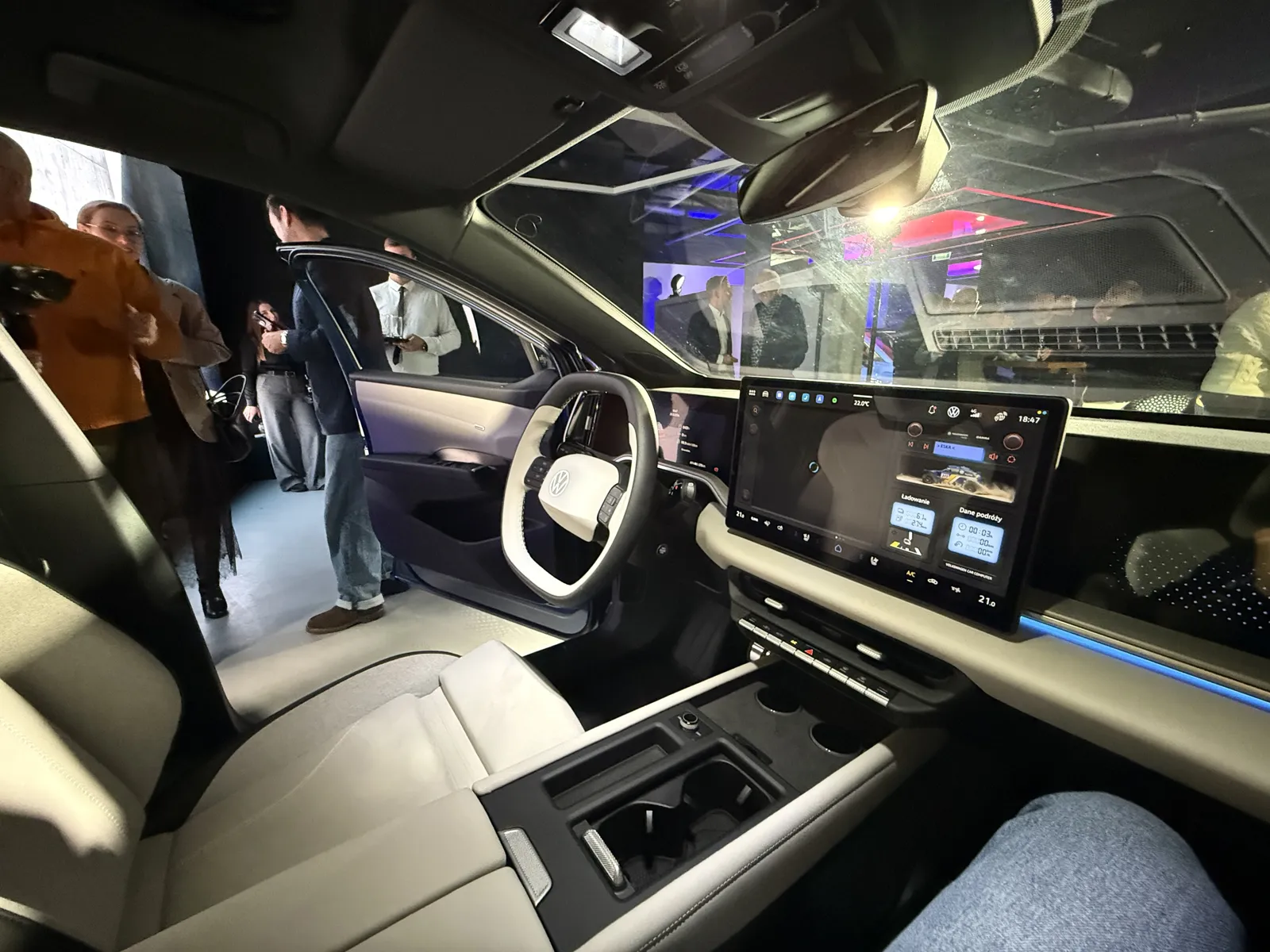
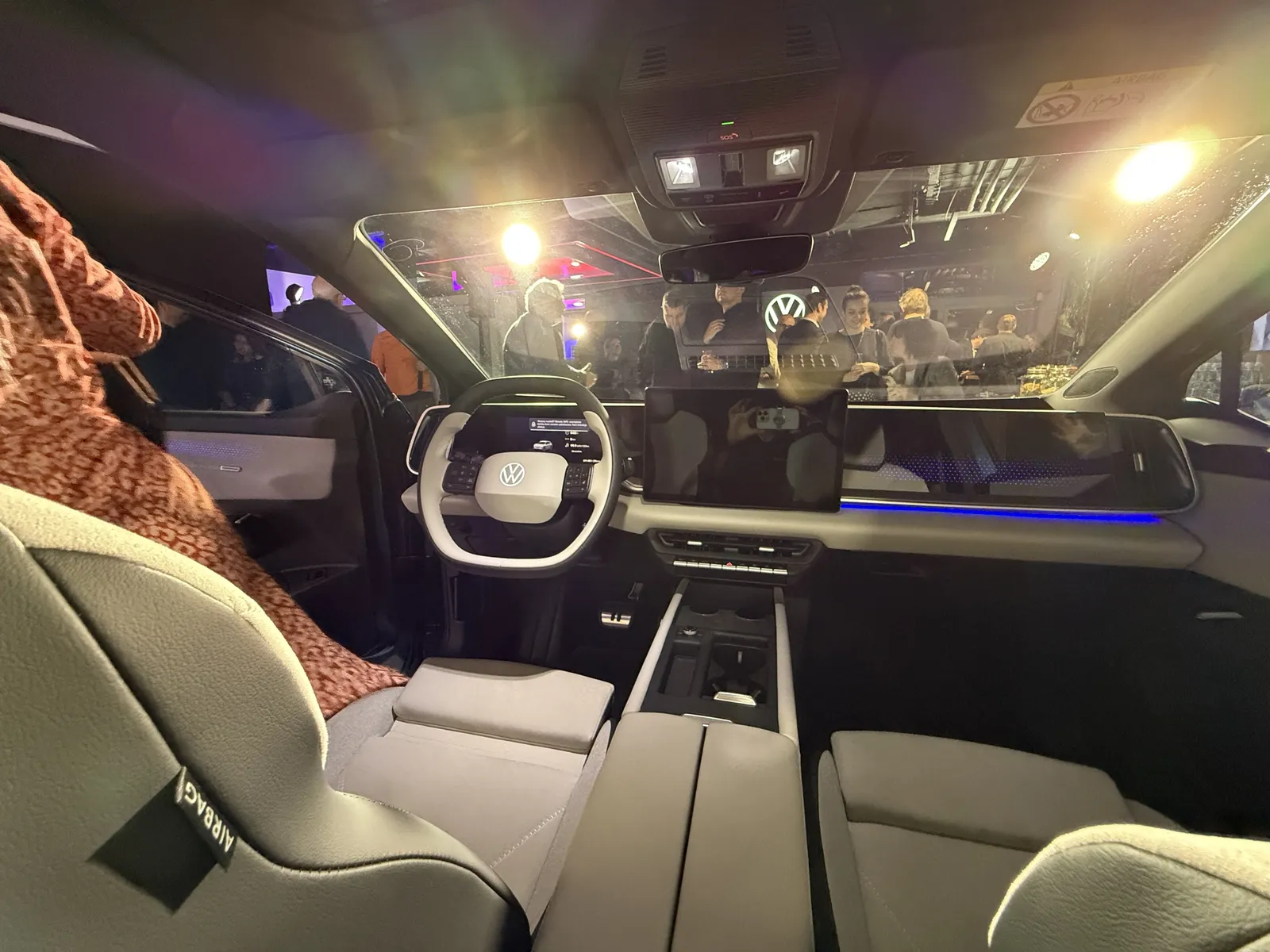
Steering wheel with calculator and retro style
The number of buttons on the steering wheel is a bit overwhelming. When one of the media representatives heard he needed to press “View,” he spent a long time searching for the correct button, which was probably a decent test of ergonomics. But we understand the idea: after the failure of touch buttons, Volkswagen wants to show that it has regular, classic, traditional buttons — which is why there are so many of them. At the same time, to avoid accusations of copying Tesla (and most Chinese brands), the company decided not to use ordinary sliders, let alone ball-trackballs.
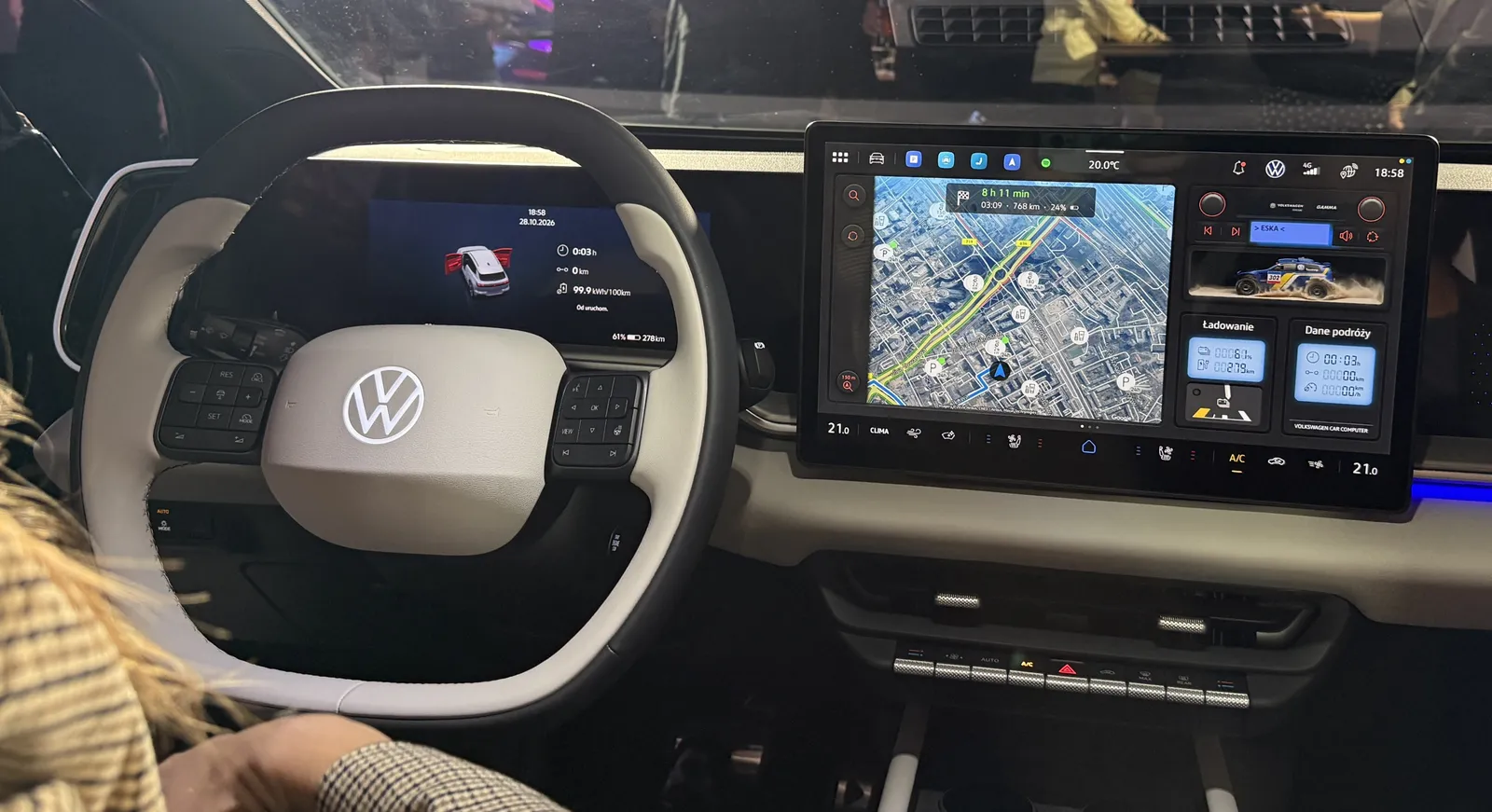
The driver will simply have to learn that one right arrow navigates through the menu, while another right arrow jumps to the next track, and that the left side of the steering wheel is mainly for volume and cruise control.
Of course, the retro style (illustration below) impressed the journalists, but we start to feel that this gadget is primarily used for creating wow videos for Instagram, as its readability is moderate. In electric vehicles, what matters are speed (speedometer), battery charge level, and range. The speed is displayed in an unclear format, requiring a close look to get the exact value. The battery charge level is placed at the top, while range—a key figure for many people, since everyone always asks about it!—is shown on a small “display” on the large gauge indicating power consumption.
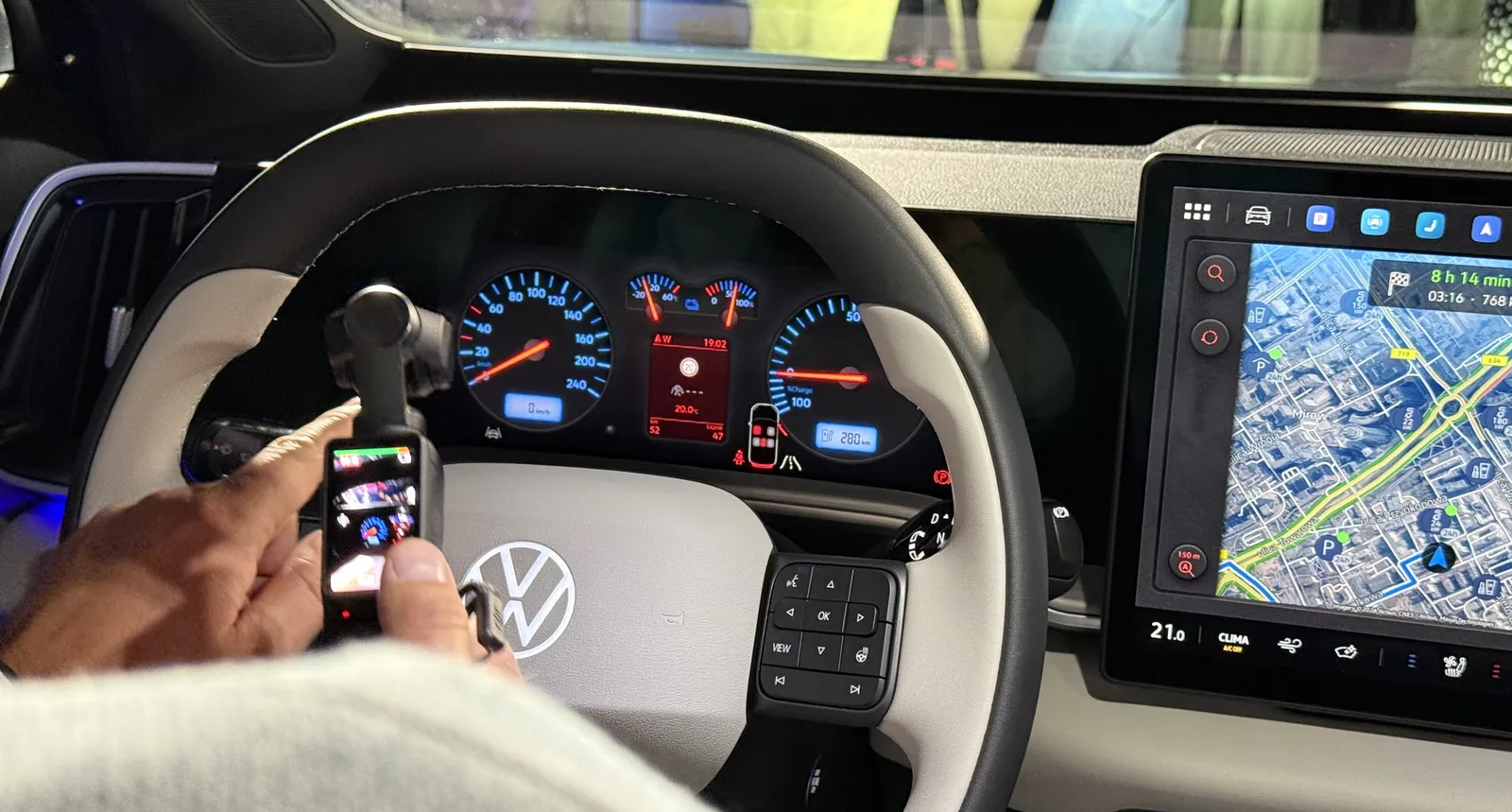
We hope the information about the active autopilot (green steering wheel) wasn’t buried somewhere in a corner. These systems tend to turn off at the most unexpected moments, so it’s better if the driver can quickly assess whether they need to take control. We were also slightly disappointed to find that the retro models mentioned in the press release are merely images of a few cars displayed on the center screen. They have no impact on the appearance of the gauges, so in the ID. Tiguan, we either get a retro style inspired by the Golf IV or a modern visualization.
Rear drums
Since the Volkswagen ID. Tiguan is built on an updated version of the MEB platform, namely MEB+, we were curious to see if they opted to replace the rear drum brakes with disc brakes. After all, vehicles on the MEB+ FWD platform (small cars like the VW ID. Polo) use disc brakes at the rear (Image 1). Well... they didn’t make that change; the VW ID. Tiguan still has drum brakes at the rear (Image 2).
In our opinion, this is good news on two counts: drum brakes require almost no maintenance and ensure compatibility with rear-wheel drive (regeneration). Additionally, they will help us distinguish future Volkswagen electric vehicle models based on their development potential—drum brakes indicate a larger MEB+ RWD/AWD platform with batteries of 90+ kWh, while disc brakes suggest a smaller MEB+ FWD platform, smaller cars, and batteries of around 60 kWh in the next generation of vehicles.
VW ID. Tiguan: handles, front trunk, rear seat, trunk
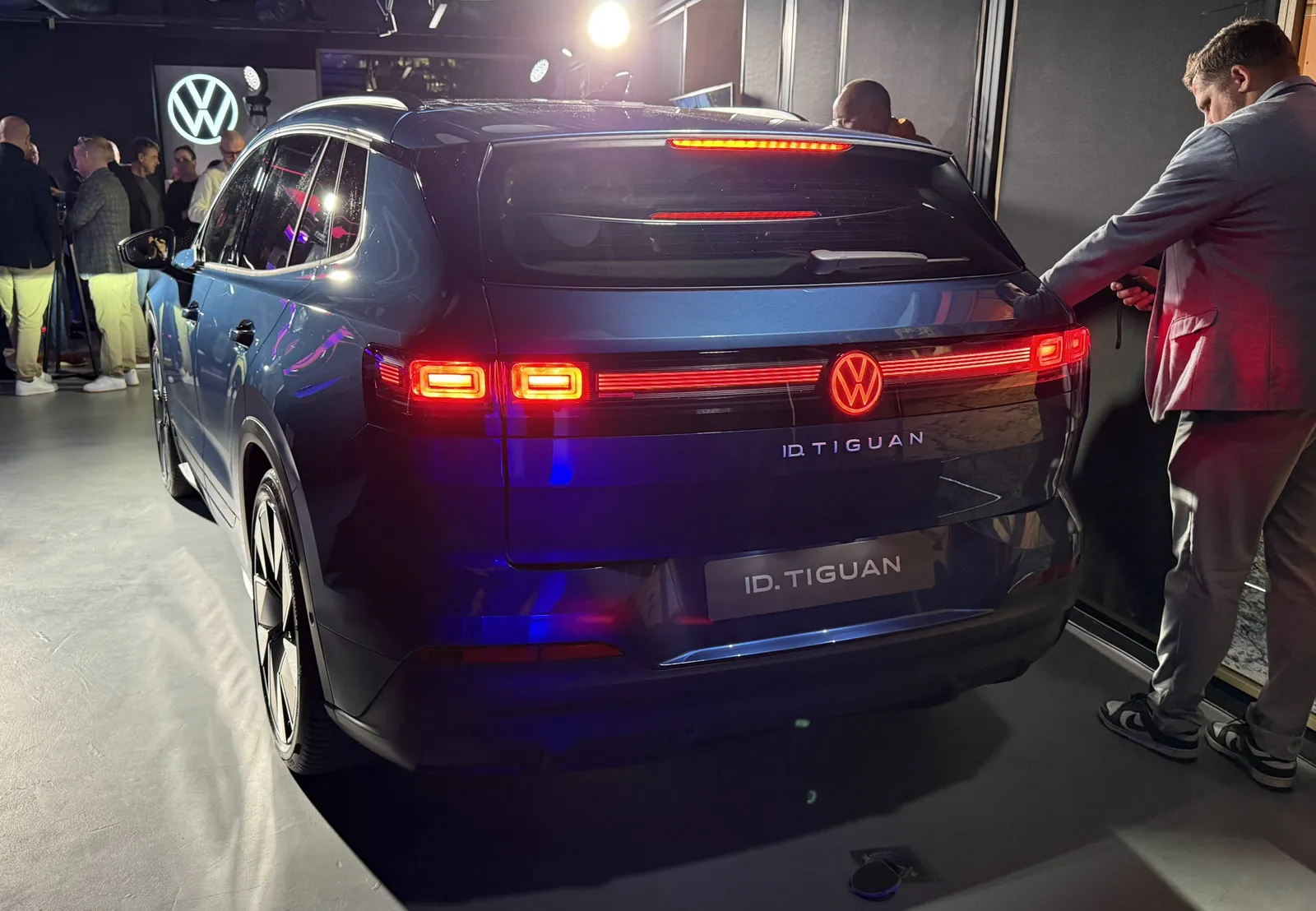
The Volkswagen ID.4 and ID.5 had handles on the vehicle’s surface that contained a small button inside for electric opening, but they could also be pulled out to unlock and open the doors manually. These handles caused regular problems, even among our readers, as water getting inside caused short circuits. The new VW ID. Tiguan has traditional handles. The previous ones were more stylish, but these ones are proven to work better.
Under the hood at the front, there’s space for a small cable compartment (known as a frunk). At the back, as usual, there’s plenty of space, with the VW ID. Tiguan’s trunk capacity being 534 liters. But unlike the models on the MEB+ FWD platform, there’s no giant compartment under the floor — the entire capacity comes from a regular, traditional trunk.
The Volkswagen ID.4 has always offered fantastic space in the rear seat, and that hasn’t changed here. The ID. Tiguan provides plenty of legroom at the back, with feet fitting comfortably under the seat. Overall, this new electric vehicle is a solid car for a 2+2 family, or even a 2+3 setup. The Android Automotive system running in the background promises that the software won’t be as unreliable as it used to be.
The car is available in three trim levels: Trend, Life, and Style. In 2027, R-Line will be added, along with a GTX version featuring a larger battery. The battery capacities currently available are 61 (58) kWh LFP and 82 (77) kWh Li-NCM, paired with various engines and either rear-wheel or all-wheel drive. The base model is priced affordably, but even the most luxurious versions require additional costs for features such as a projection display or a Harman-Kardon audio system — see: VW ID. Tiguan, prices and trim levels.
Article Rating
Reader Ratings
[Total: 2 votes Average: 5]
Don’t miss new content — CLICK and FOLLOW Elektrowoz.pl on Google News. You might also be interested in the following ads: