
Volkswagen will disassemble 4,100 cars per year in Zwickau. Full scale operation starting in 2027.
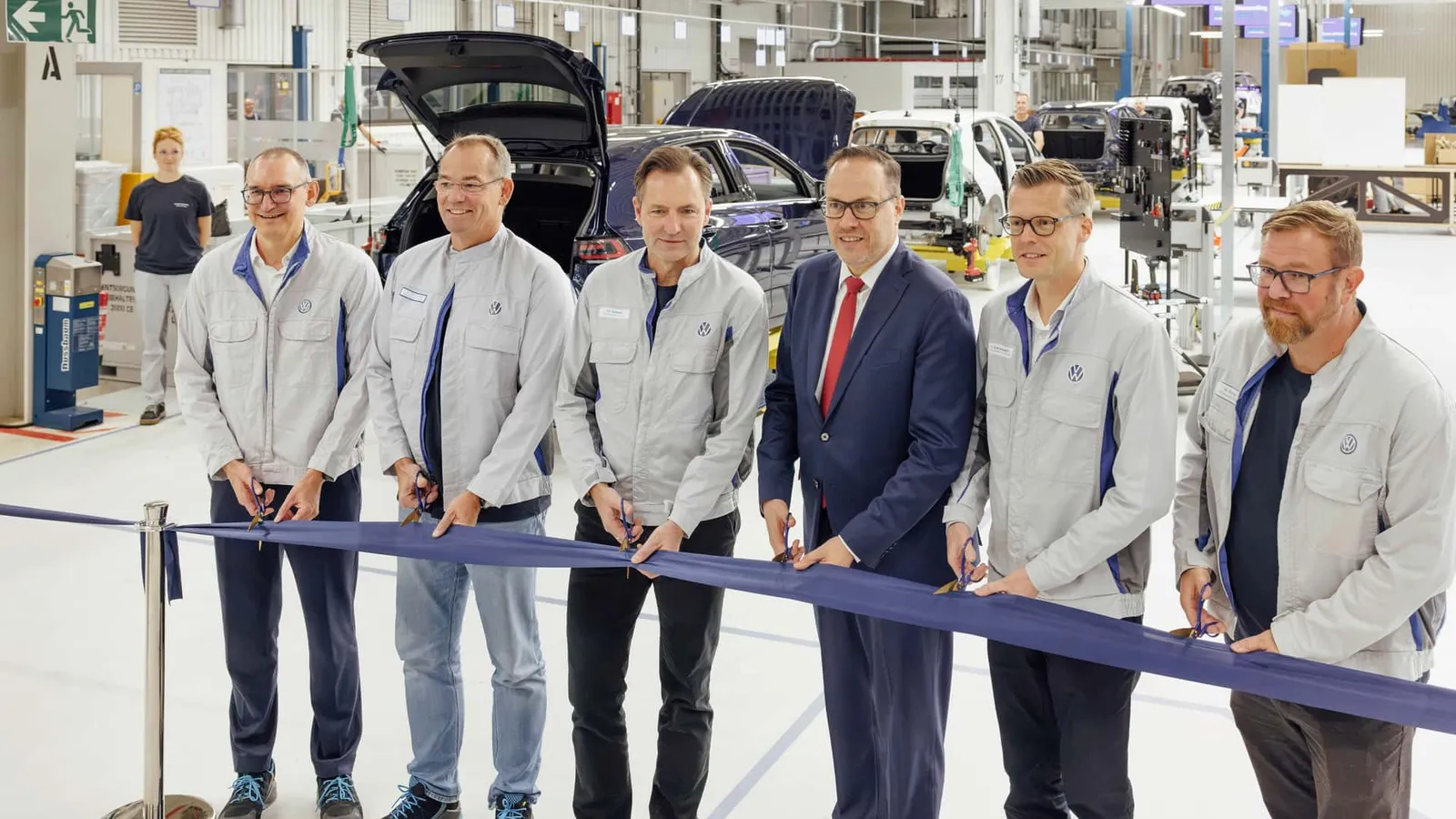
Volkswagen’s factory in Zwickau has been producing only electric vehicles since 2022, and it has now also started dismantling cars. The company installed an eight-stage dismantling line there, which is set to process 4,100 vehicles per year starting in 2027. The recovered original parts will be sold to repair shops. As InsideEVs reported, the line is intended to become a new source of revenue for the plant, which has no planned car production after 2031.
Converting Zwickau to electric vehicle production cost 1.2 billion euros and took several years. Work began in 2018, with the ID.3 rolling off the assembly line in November 2019, the last internal combustion engine vehicle in June 2020, and the ID.5 completing the transition in January 2022. Today, the plant manufactures six models on the MEB platform for Volkswagen, Audi, and Cupra.
Dismantling Line: 100 People in Two Shifts
Initially, the line will disassemble pre-production cars, which are units from the stage before mass production begins, and later it will also handle vehicles taken out of service. Starting in 2027, 4,100 cars per year will pass through the line in two shifts, with 100 workers trained for the new role operating it. Construction and approvals took nine months, three less than estimated. According to VW, this was made possible by reusing some of the machinery from existing production lines.
VW has been selling the recovered parts through dealers and service centers, independent workshops, and auto stores since July. Doors, bumpers, engines, and transmission components are in the highest demand. The company aims to reduce the cost of repairing older cars so they don’t end up as total losses just because a new part is too expensive.
Volkswagen has not provided information on prices, sales volumes, warranty terms, or how parts are inspected before resale, nor has it disclosed which vehicles the components it has already sold come from.
Raw materials are expected to be another source of funding. Plastics are separated even before recycling, making them suitable for producing new components. According to VW, plastic from one dismantled car can supply recycled material for up to three new vehicles, with it serving only as an additive in each of them.
90 million euros for recycling, car production until 2031
VW aims to expand recycling efforts and invest up to 90 million euros in it, with Saxony’s government committing 10.7 million euros. The business is expected to maintain as many as 1,000 jobs. However, no car production after 2031 has been planned in Zwickau, and the profitability of large-scale dismantling still needs to be proven.
This uncertainty coincides with the broader troubles facing the entire group, as VW’s electric vehicles still generate less profit than gasoline-powered cars. In the third quarter, the group sold 209,100 electric vehicles yet still recorded an operating loss of $6.6 billion. Shortly after, it halted work on the ID.Golf until it could find funds for this project.
VW has not announced that the plant will only assemble electric vehicles. The photos released show at least one vehicle, dark blue in color, that appears to be a Golf, although the captions do not specify the model. Therefore, Zwickau may assemble only electric vehicles and sell recycled parts to owners of gasoline-powered compact cars as well.
Source: InsideEVs
LovEV Newsletter
Want more content like this?
Sign up — we’ll send you a weekly summary once the newsletter starts.