
Neo-retro cars: it’s an overdose! Are European automakers running out of ideas compared to the Chinese?
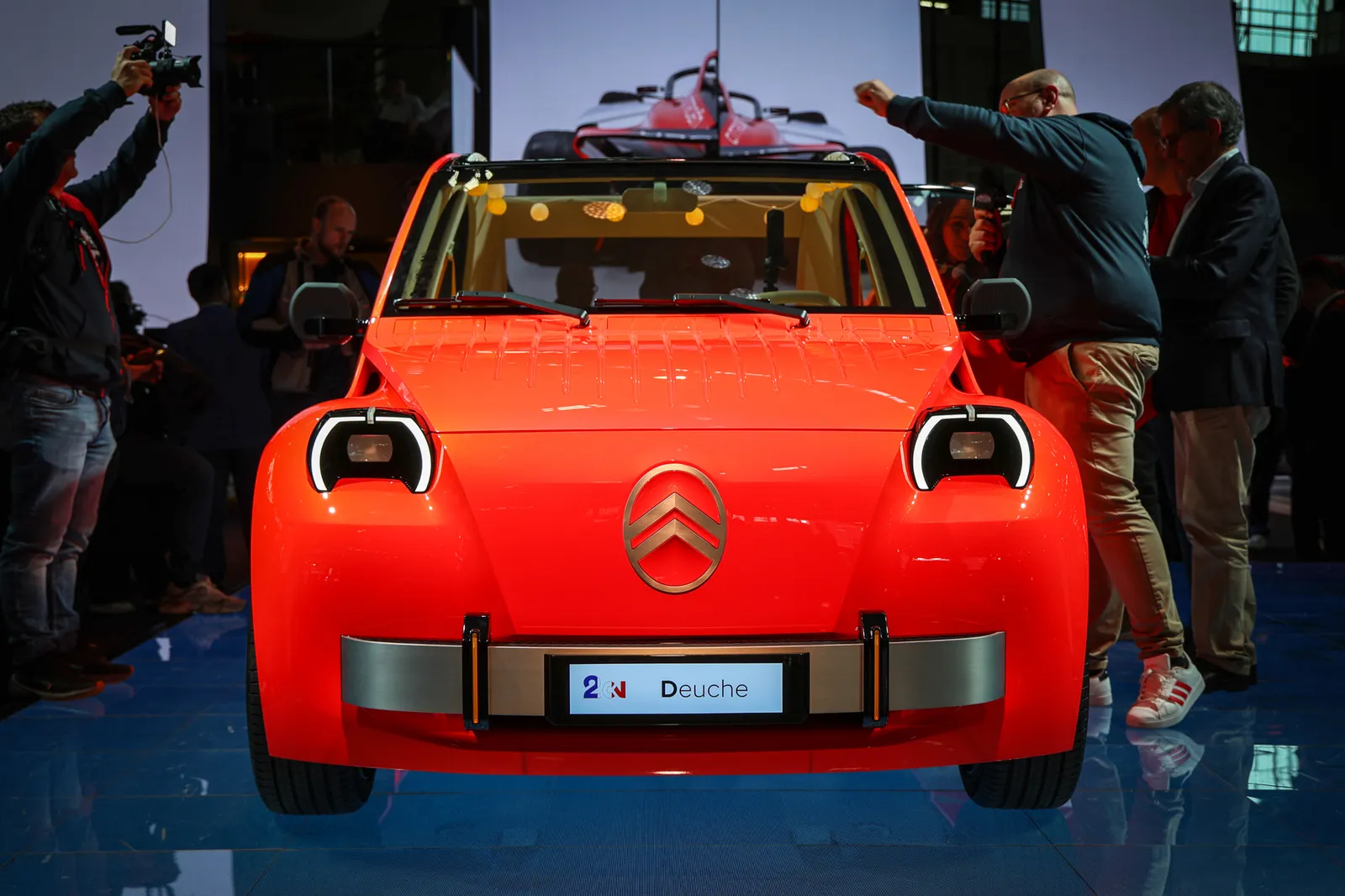
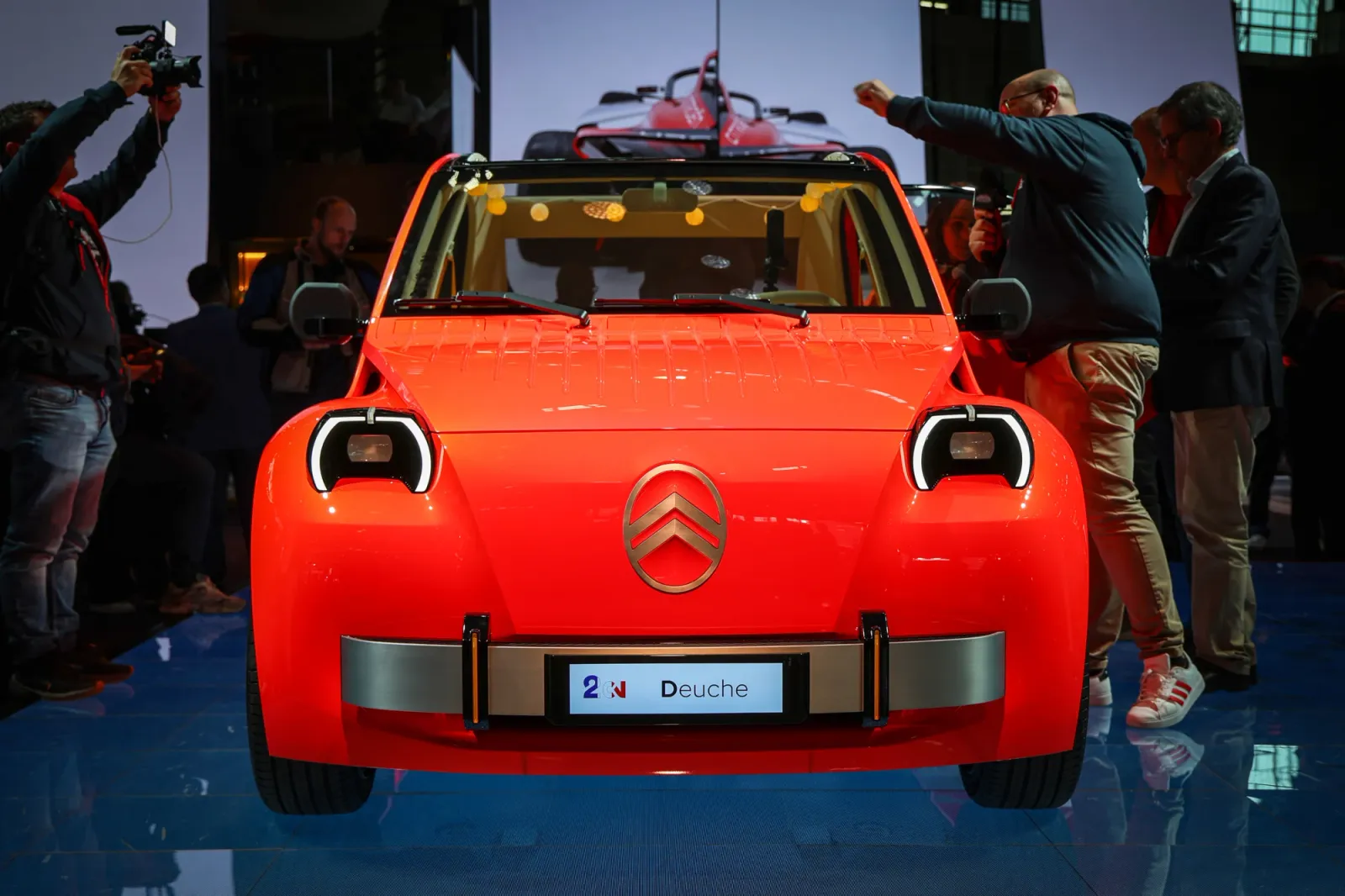
At the World Motor Show, a strong wave of nostalgia sweeps through the booths of European automakers. It’s a bit too strong for our chief grumbler, who sees it as a lack of creativity and an admission of weakness against the Chinese.
You’ve already read in Automobile Propre that among the highlights of the World Motor Show was the strong comeback of concept cars, as well as vehicles that aren’t SUVs. Another trend emerges when looking at the list of new models—something you surely noticed: nostalgia is the star of the show. It’s quite paradoxical to see an event dedicated to the future of automobiles turn into a time-travel machine.
The star of the show is obviously the 2 CV. But a few weeks before Halloween, it wasn’t the only car to make a comeback from the graveyard. We saw the Renault R8 Gordini and Espace revived, as well as the Peugeot 205 T16 and RCZ, not to mention the Alpine A310. In a different category, Audi introduced an electric A2 whose design clearly echoes the original A2, while Fiat showcased the Multiplina, an electric quadricycle that imitates the 600 Multipla.
Do you notice anything in this brief list? They are European brands. Logical—to create neo-retro designs, you need a history. This isn’t really the case for Chinese manufacturers, who have clearly dominated the market, with about twenty companies presenting mostly identical electric city cars or SUVs in an atmosphere reminiscent of another era, complete with oversized booths and paper brochures.
It becomes clear then that for Europeans, retro styling turns into a selling point. And if this is all that remains to resist the Chinese and stand out against those manufacturers who were once the subject of ridicule when they first entered our showrooms a decade ago, and who no longer elicit any laughter from the European industry—now facing an impending storm—that industry managed this week to speak with one voice at the World Motor Show to demand safeguards.
This also shows an admission of weakness. The Chinese have learned to produce good electric cars in record time, so Europeans decide to bring up old models to remind people that they have been making cars for a century, even though their reliability issues and poor electric performance undermine this claim. Is nostalgia becoming a crutch for struggling European automakers? In any case, the marketing narrative is already well-developed, with us being told about an heritage that needs to be preserved.
While another adaptation of Les Misérables hit theaters, the automotive world has also shown in recent years that it’s the old models that perform best… you know the rest. 20 years after the successful comeback of the Mini and Fiat 500, Renault had great success with its R5. Citroën resisted for a long time. But when Xavier Chardon took charge in early 2025, he made the 2 CV a priority, ordering his teams to develop the project quickly. The huge crowd at the Citroën booth right from opening only confirms his decision. It might be a bit too easy, but too much time was lost compared to the competition this time around.
Gilles Vidal, who heads Stellantis’ European design team, emphasized that these revivals must make sense. The 2 CV represents the idea of a simple and affordable car in the era of electric vehicles. Simply bringing back a name isn’t enough to give a car a distinct identity. Still, the upcoming 208, though not retro in style, will make clear references to the 205. Does this still make sense?
We are still a long way from an overload of Renault models. After considering revivals of the R5 and R4, the brand launched a new Twingo inspired by the original. The head of design had claimed at the time that the company would take a break from nostalgia. Yet at the auto show, we saw the return of the R8 followed by that of the Espace. While the R8 is a rather amusing recreational project, with the Espace, people start to worry and think Renault has run out of ideas. Ultimately, its booth and schedule at the show give the impression that it lacks inspiration.
It’s intriguing because this follows numerous changes. In addition to the change in CEO, the head of design also changed at the end of 2025. We expected to see at the World Motor Show a concept that would showcase Renault’s vision for the years ahead, new aesthetic codes, and a fresh approach. If this vision is a neo-retro Espace that also returns to a category that Europeans are no longer interested in (and have shown no desire to return to), it’s cause for concern.