
This is how Volkswagen managed to reduce the ID.Polo’s fuel consumption by almost half.
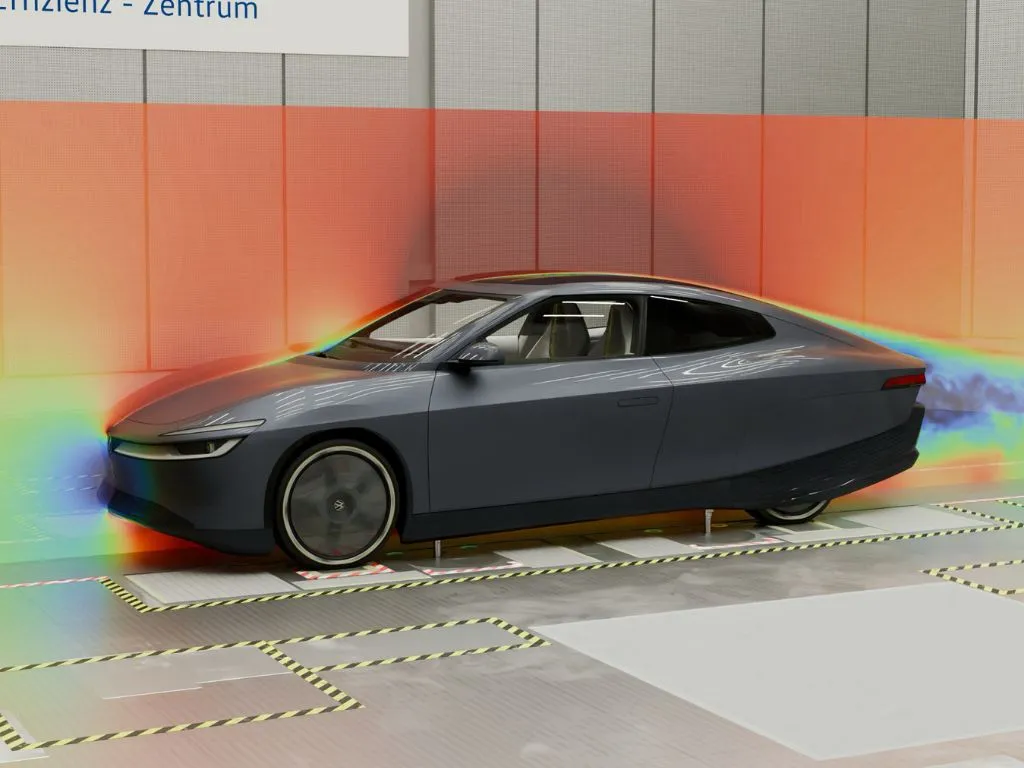
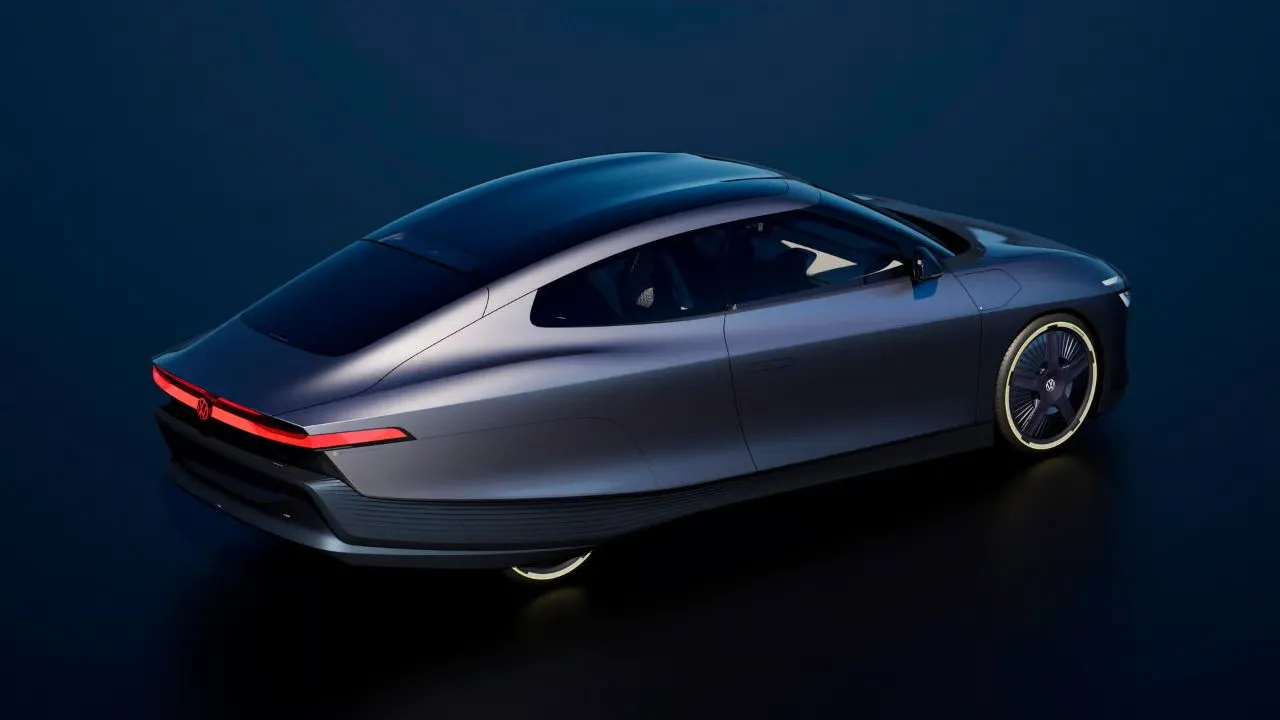
The engineers behind this ultra-efficient concept vehicle reveal the origins of the prototype and the techniques used to reduce consumption.
It has set three efficiency records… and may aim for more. The Volkswagen Mission Efficiency achieved an electric consumption of 7.51 kWh/100 km during its first road test this summer, traveling between Wolfsburg (Germany) and Vienna (Austria). Developed largely using components from the new Volkswagen ID.Polo — with which it shares its commercial launch — this experimental vehicle places special emphasis on aerodynamics.
Also read
Mission Efficiency: Volkswagen sets an extraordinary consumption record with ID.Polo technology
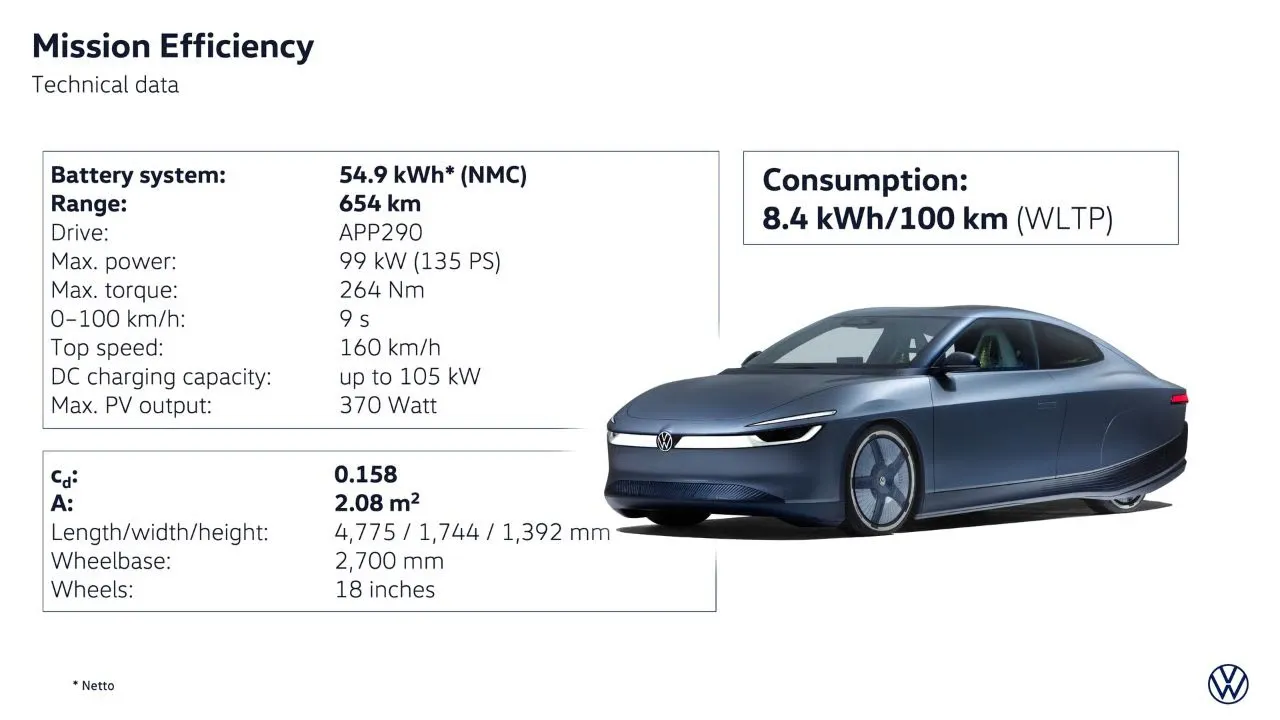
0.158 Cx
This marks a first record for a vehicle “approved for road use” according to the Rekord-Institut für Deutschland (RID), Germany’s counterpart to the renowned Guinness World Records. The drag coefficient (Cx), which determines a vehicle’s efficiency, is 0.158 in this case.

Some Current Cx Values
Volkswagen Mission Efficiency (concept): 0.158
Mercedes Vision EQXX (concept): 0.17
Forthing Xinghai S7 (production model): 0.191
Xiaomi SU7 (production model): 0.195
Lucid Air (production model): 0.197
Mercedes EQS (production model): 0.20
Hyundai Ioniq 6 (production model): 0.21
Tesla Model 3 (production model): 0.219
Geely Galaxy TT (production model): 0.22
Volkswagen ID.Polo (production model): 0.26
This is evident at first glance. The bow is rounded, the surfaces are smooth, and its profile closely resembles that of a water droplet—the ideal shape in fluid dynamics (Cx: 0.045).

In addition, the reduced cabin space and lowered roof contribute to minimizing the frontal area. It is 2.08 m² here compared to 2.33 m² on an ID.Polo. The SCx, derived from Cx and the frontal area, is 0.328. The city car has a score of 0.615 (which suggests an actual Cx of around 0.264…).
Dimensions of the Volkswagen Mission Efficiency:
Length: 4.77 m
Width: 1.74 m
Height: 1.39 m
Wheelbase: 2.70 m
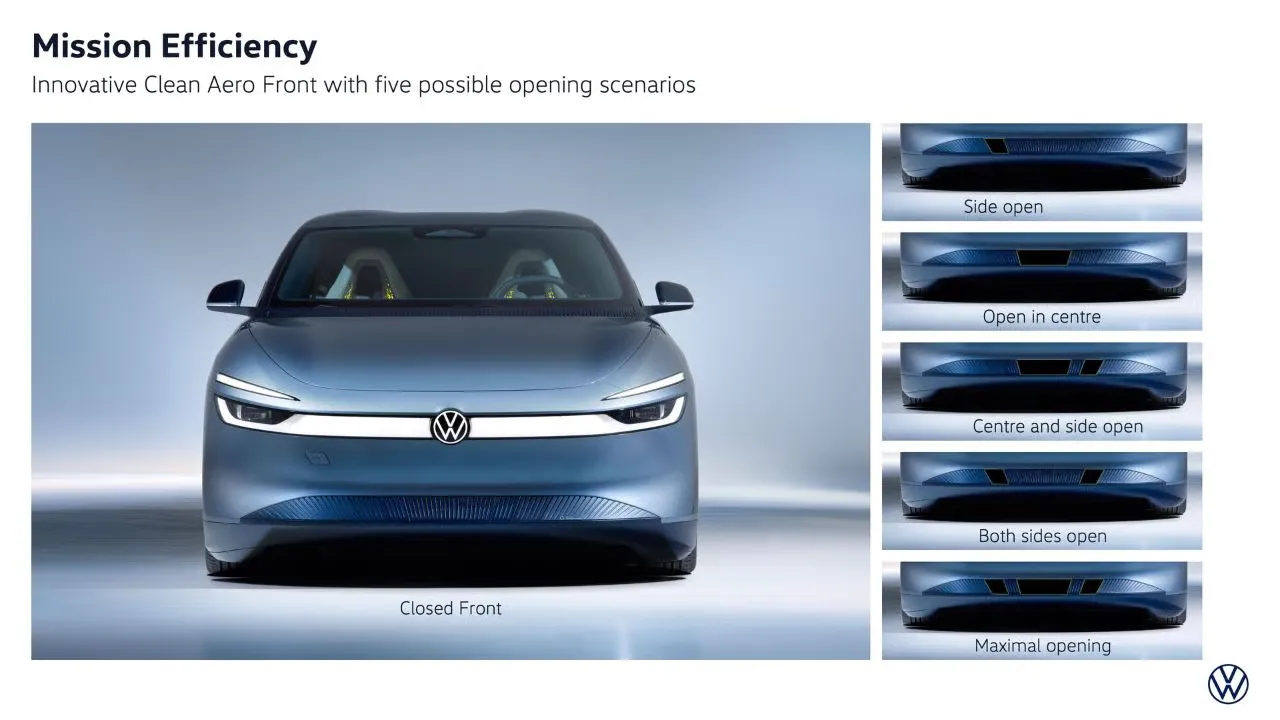
Beyond that, other nuances become apparent, yielding a few thousandths of extra Cx in real conditions. Look at the car from the front. You’ll see three openings. Slats open and close depending on cooling needs. Sven Lange, the aerodynamicist and one of the project’s authors, explains further: “During driving, we mainly used the small side openings. The central slat was only opened to ensure cooling during charging.” Thus, optimization is tailored to the situation.
Look at the car from the front again. You’ll see two protrusions in front of the front wheels that help redirect the flow. It’s an elegant solution, but not so easy to implement on a daily vehicle. “Here, we have only one type of tire and one type of wheel rim,” explains Sven Lange. “On a car like the ID.Polo, you have several of each. Here, we were able to shape it customarily, which is more problematic in mass production.” On this experimental vehicle, the engineers even allowed for a slightly low ground clearance at the front, an approach angle that isn’t friendly to sidewalks, or a very narrow gap between the tires and the wheel arches.
Speaking of the detrimental effects of wheels, we note that the tires are Continental models derived from the EcoContact 7 series, featuring rounded sides that facilitate better penetration through the air. Solid wheels also reduce certain “points,” as aero specialists put it (milli-basis points), in terms of Cx value. At the rear, they are shaped to minimize their impact.

What about mirrors? The XL1 – VW’s aerodynamic vehicle from the 2010s – was equipped with cameras to deal with these annoying air flow disruptors. Sven Lange explains why they were omitted: “Firstly, we wanted to use components from the production series. Secondly, the camera still affects aerodynamics since it has to be mounted on long supports for certification reasons. This costs about 5 points (0.005 Cx) compared to 6 points (0.006) for conventional mirrors. We also need to install screens inside, which consume energy. Moreover, a traditional mirror is much more comfortable for the driver.”
VW still included some extras such as 370-watt solar panels on the roof. Theoretically, depending on weather conditions, they can add around 30 kilometers to the range.
The brand, however, avoided ultra-complex mechanisms such as the science-fiction-like plasma actuators. Such a device also requires energy, according to an expert in the field... In fact, the possibility of using the car in everyday real-world conditions was one of the designers’ concerns. “It’s not just pure engineering fantasy; it has to be a practical car as well,” adds Sven Lange.
Closer to production
Let’s check it out aboard. The horizontally positioned yet natural driving stance, the narrow and bulged windshield, and the close proximity to the passenger… The sporty atmosphere reminds us of the XL1, but the interior space is still much larger. There’s another sense of déjà vu here. In front of us lies the capacitive steering wheel from the ID.Polo. We can also see the small instrument cluster taken from earlier ID.3 models. The central screen is a removable tablet that can be placed on your lap during charging. Why not?
To get into the rear seats, one has to rely more on the (much touted on YouTube) tai chi chuan techniques. While the knee space is surprisingly acceptable, headroom is obviously limited. The thick backrest serves more aesthetic purposes than ergonomic ones. This remains a concept car after all.
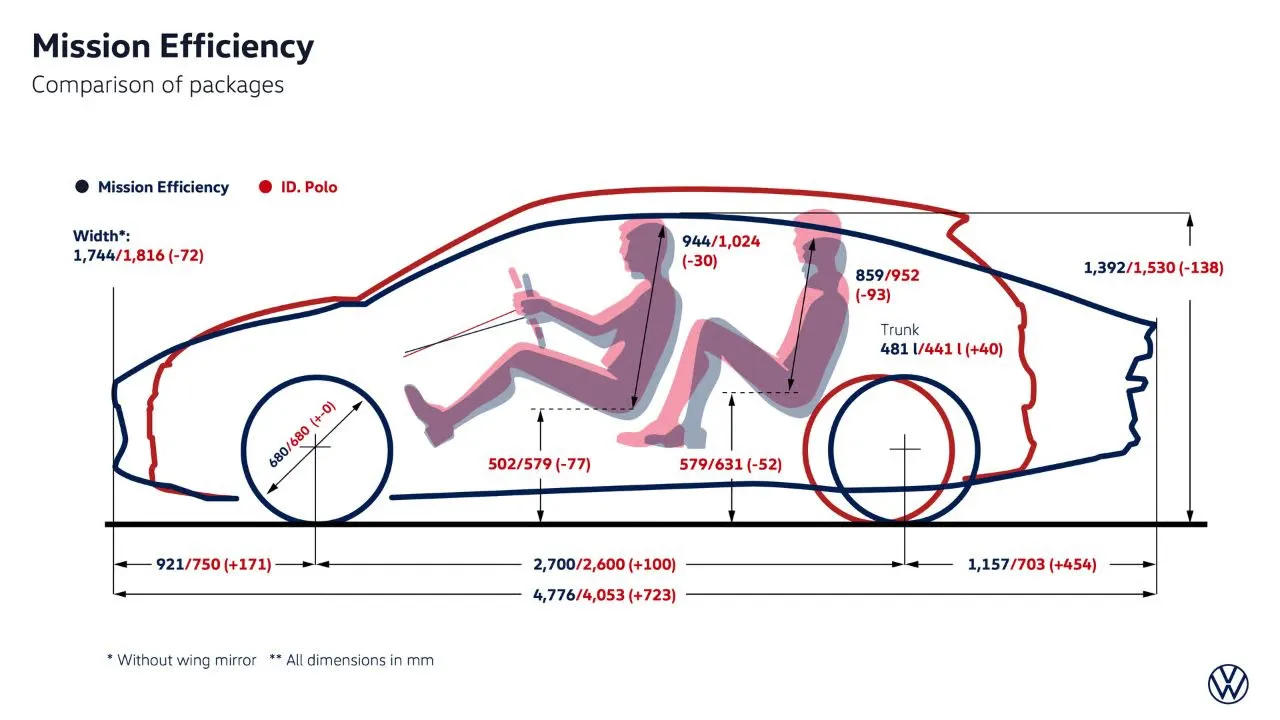
Let’s move on to the trunk. The space is narrow and deep, but its capacity is more than adequate (481 liters). The designers also thought of adding extra storage space of about 20 liters behind the rear wheels… It’s still narrow there. This is, of course, a consequence of the “slim” rear axle—17 cm shorter—to reduce the track width. The goal was to achieve a droplet-shaped profile dictated by fluid dynamics. “It was one of the biggest challenges during the design phase,” admits the engineer. The standard ID.Polo’s axle was actually positioned a bit too low to achieve the perfectly streamlined underbody that gradually slopes upward toward the bow as envisioned in the wind tunnel tests. The springs and shock absorbers had to be repositioned.
ID.Polo Parts
80% of the components in the Mission Efficiency vehicle come from the ID.Polo’s MEB+ series and platform. A focus on realism (and likely cost constraints) led VW to limit the use of exotic materials; only parts of the wings, doors, or hood are made from composites. According to our information, the car weighs nearly 1,600 kg, which is double that of an XL1.
This is further proof that aerodynamics matter more than weight in the energy balance of an electric vehicle, especially at high speeds. Illustrated with the ID.7 sedan: reducing Cx by 0.001 improves range by 1.2 km. To achieve the same result through weight reduction, 9 kg would need to be cut. This effect is most noticeable at highway speeds. VW claims a 30% improvement in efficiency above 80 km/h. Conversely, this means similar fuel consumption between an ID.Polo traveling at 100 km/h and a Mission Efficiency model at 140 km/h.
The entire powertrain comes from the ID.Polo. It includes the new APP290 engine mounted at the front, as in the city car version, here in its 135 hp configuration.
Technical specs:
Platform: MEB+ rear-wheel drive
Battery: 54.9 kWh (net)
Composition: nickel-manganese-cobalt (NMC)
Peak charging power: 105 kW
Power output: 135 hp
0-100 km/h: 9.0 seconds.
Top speed: 160 km/h
The vehicle also features a home inverter using silicon carbide (SiC) semiconductors, which are also used in the standard model. These more expensive “transistors” enable significant improvements in efficiency, with estimates ranging from 5% to 10%. Added to this package is a battery with prismatic cells known as “Unified Cell.” The nickel-manganese-cobalt (NMC) cells and management system are the same, but there is one difference: the capacity here is 54.9 kWh compared to 52 kWh on the ID.Polo.
In reality, the buffer between gross capacity and net capacity was reduced. “It’s the only flexibility we allowed ourselves,” explains Jannis Springer, one of VW’s innovation department leaders. “It ensured we could reach Vienna with a charge remaining. Though in the end, it wasn’t necessary.”
The prototype did arrive on the banks of the Danube with 164 km of range left after its single scheduled charge. Those three kilowatt-hours saved made no significant difference.
Two and a half years of development
VW aimed for a fuel consumption of less than 10 kWh/100 km. But at the beginning of development — which started in December 2023 — the simulations weren’t that rigorous. Sven Lange said, “We made extensive use of CFD (Computational Fluid Dynamics) software, with around 300 different models. And I believe we also spent 100 to 150 hours in the wind tunnel.”
Jannis Springer: “Over the past few months, as the vehicle took on a more concrete and tangible form, we became confident that we could meet the targets. The real possibility of achieving them only became clear in recent weeks.”
The three records verified by the Rekord-Institut für Deutschland (RID):
Cx for a homologated vehicle: 0.158
Ideal circuit consumption: 6.48 kWh/100 km (climate off, flat route, constant speed)
Road consumption for its category: 6.89 kWh/100 km (7.51 kWh including charging losses)
Also read
Volkswagen ID.Polo test: a versatile city car… really versatile?
The goal of Mission Efficiency was also to approach, or even beat, certain records set in recent years. One such record was set this summer by the Geely Galaxy TT at high altitude in China. Another target was Mercedes’ Vision EQXX concept car. If the sometimes fierce rivalries between automakers can lead us toward greater efficiency…