
Vishay Siliconix manufactures chips for electric vehicles and similar applications in Itzehoe.
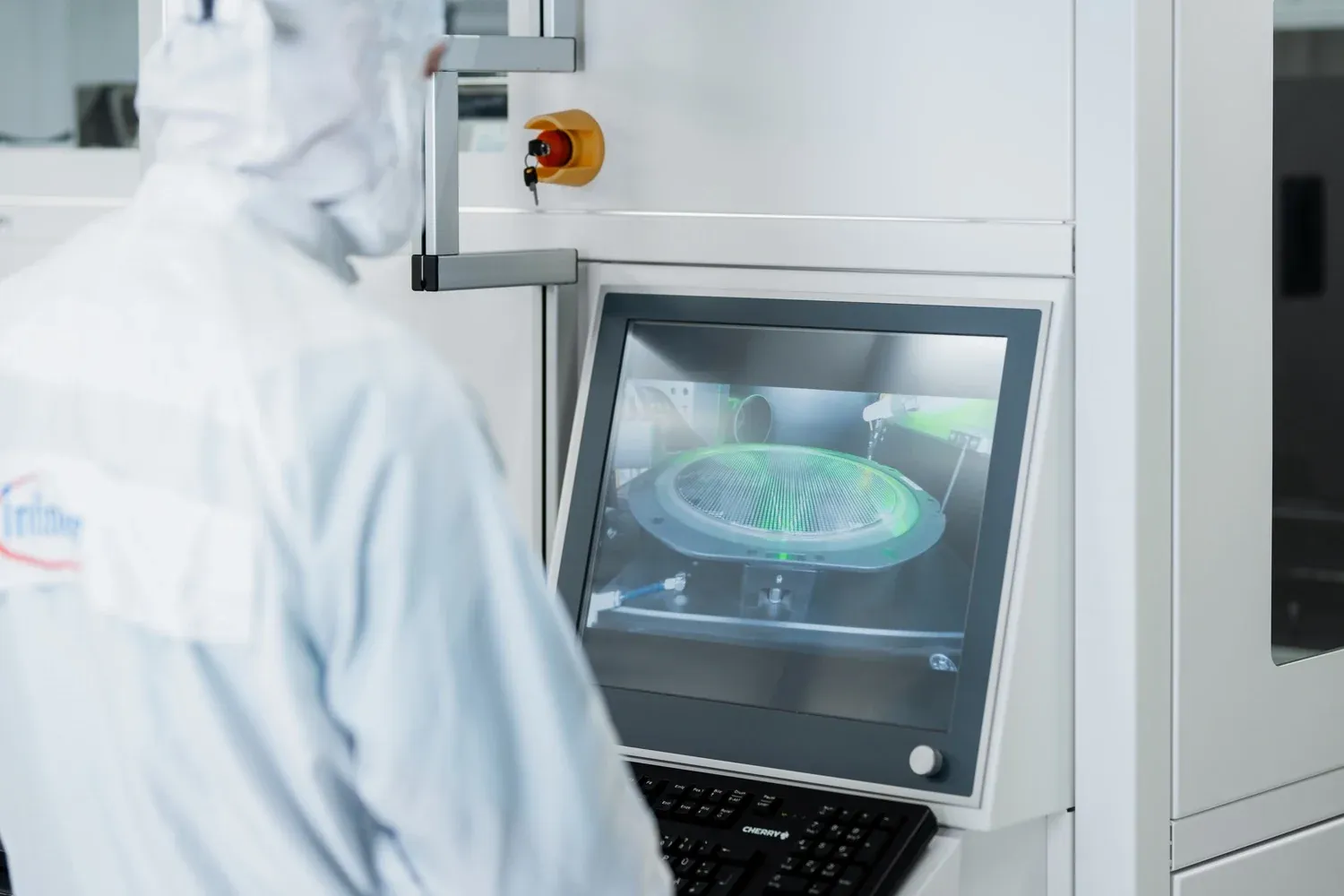
Vishay Siliconix Itzehoe GmbH will receive approximately 215 million euros in funding from the federal and state governments to expand its chip production capacity. The newly produced chips can be used in areas such as electric mobility, for example in driver assistance systems and battery management.
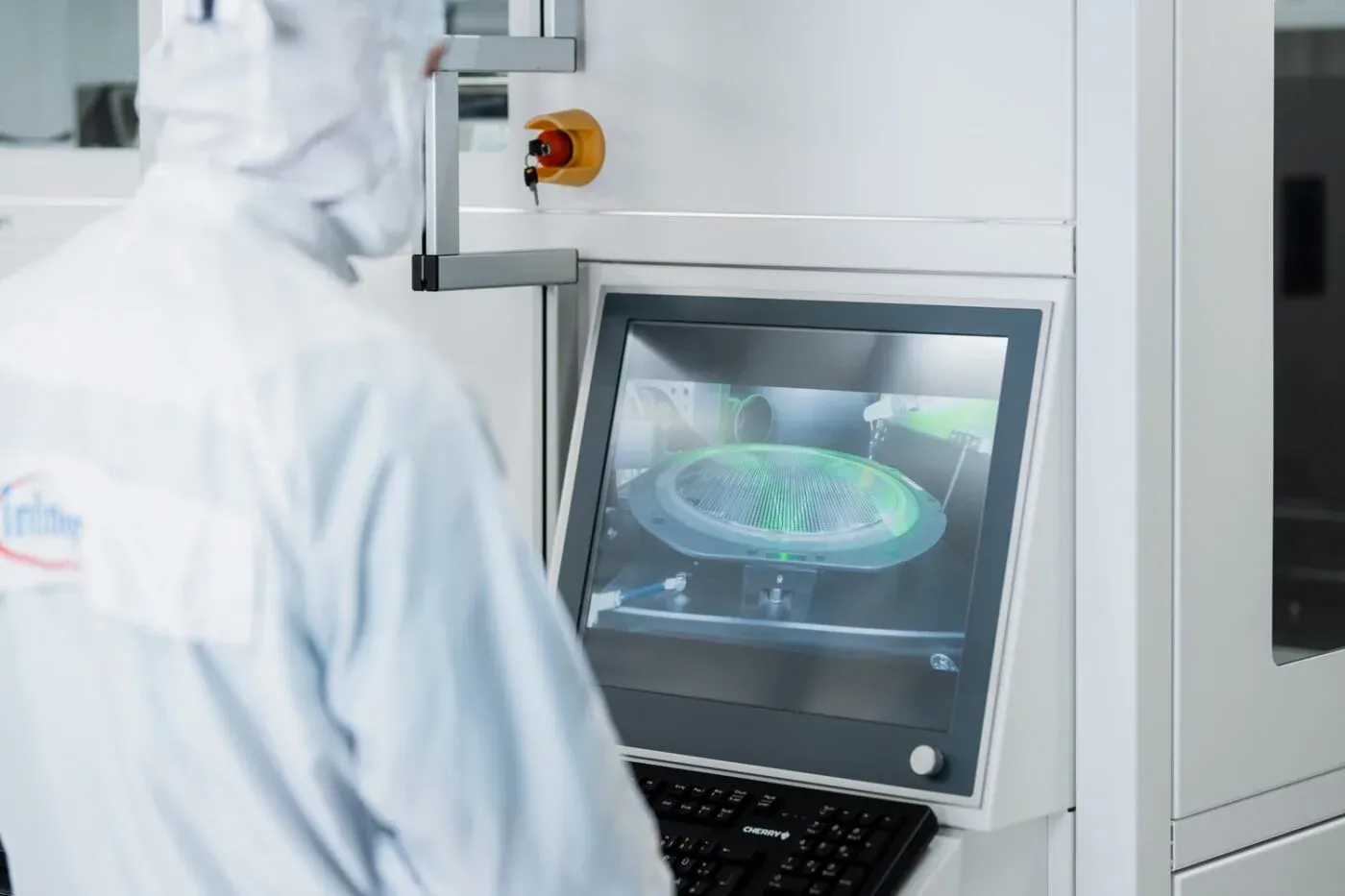
Illustrative image: The industry is transitioning to 300mm wafers in many places.
Image: Infineon
As part of this funded project, the company plans to begin manufacturing its next generation of power electronics—known as silicon MOSFETs—at its Itzehoe facility and more than double its production capacity. It will do this by switching to 300mm silicon wafers. The newly produced chips are expected to be significantly more energy-efficient and compact than the alternatives currently available on the European market. The federal government is supporting this major project with 172 million euros, with the state of Schleswig-Holstein contributing an additional 43 million euros.
Generally, chip production on 300-millimeter wafers is now considered technologically more advanced and significantly more efficient than that on the previously standard 200-millimeter wafers, as the larger diameter allows for 2.3 times as many chips per wafer. Even industry leaders like Infineon are adopting this new diameter. Vishay Siliconix specifically aims to leverage the new wafers to achieve new economies of scale in production at its Itzehoe facility, thereby reducing unit costs and ultimately making the site sustainably competitive.
Frank Wetzel, State Secretary at the Federal Ministry of Economics, commented: Secure access for our industry to chips is a geopolitically critical issue — as recent years have clearly shown. That’s why, through the European Chips Act, we are strengthening the capabilities and production capacity in Germany. The expansion of Vishay’s factory is a strategically important investment that ensures Germany’s industry receives power semiconductors produced locally, thereby enhancing the resilience of domestic industries and our technological sovereignty.
Schleswig-Holstein’s Minister of Economics, Claus Ruhe Madsen, added: “Itzehoe has been a leading hub for microelectronics and semiconductor technology for decades. The fact that Vishay is investing in expanding its production precisely on the occasion of its 30th anniversary in this location is a strong commitment to our region and an important signal for Schleswig-Holstein as an industrial site. Through this support, the federal government and the state are working together to create the conditions for an internationally oriented company to continue shaping its future in Itzehoe.”
The funding is provided under the subsidy framework of the aforementioned European Chips Act. The purpose of this funding instrument is to strengthen the German and European semiconductor ecosystem, expand production capacity in Europe, and enhance the resilience of European supply chains. When the Act came into effect in 2023, the EU set the goal of doubling Europe’s share of the semiconductor market from less than 10 percent to 20 percent by 2030 through this regulation.