
Journey through Electric China: 4,000 kilometers to understand where things are heading
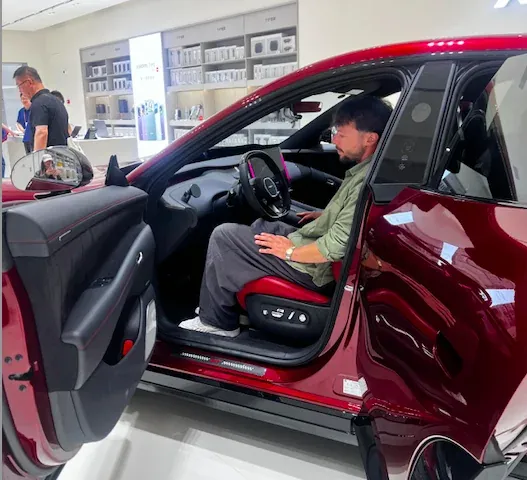
Journey through Electric China: Edoardo Benericetti, part of Vaielettrico’s team, has traveled over 4,000 km across this Asian country. To understand how much truth lies behind the impressive pace of electrification shown by the statistics.
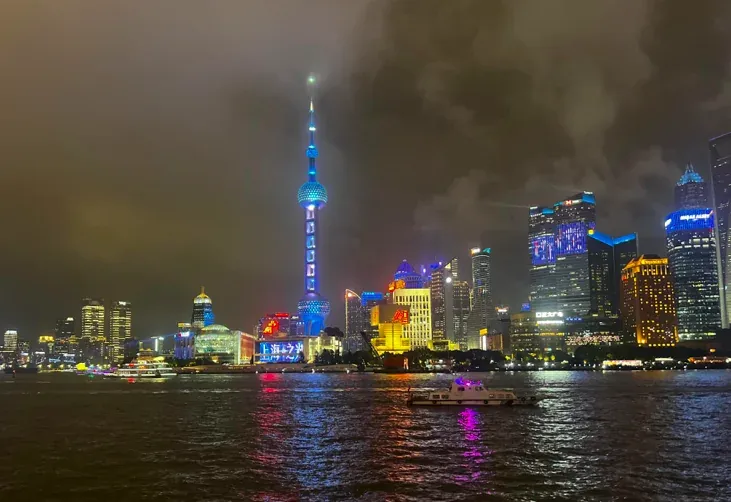
Journey through Electric China: from Beijing to Shanghai, passing through…
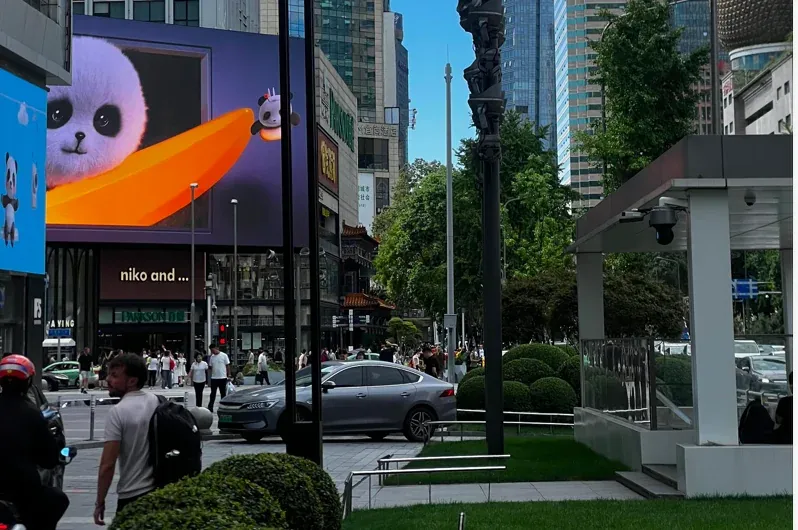
China is known to be the leader in electric vehicles. Before embarking on a long journey—from Beijing to Shanghai, passing through Pingyao, Xi’an, Chengdu, Chongqing, and Zhangjiajie—I kept asking myself: Is it truly the paradise for electric vehicles and technology that everyone talks about? It’s one thing to read about it in an article or a chart, but another entirely to experience it firsthand. Looking around at a traffic light in Beijing and trying to understand a country so geographically, culturally, and technologically distant from ours. The same holds true for the automotive market. It didn’t take long to realize that reality matched expectations—and even surpassed them when compared to the situation back home.
Green Plate vs Blue Plate: The Dragon’s Logic
In Beijing and Shanghai, you don’t need to be an expert to notice this — just look at the color of the license plate. Green means BEV. Blue means anything else. It’s a visual cue that’s impossible to ignore, and in these two cities, the proportion of green license plates on the road is impressive. I’ve tried this game several times: looking at the first 10 cars that passed by and checking what kind of license plates they had. Often I got an “green” score of 8/10, sometimes 9/10, and a couple of times 10/10. I can’t remember any score of 7/10 or lower. Almost always, the only cars with blue license plates were high-end European models: Audi, BMW, Mercedes, Ferrari, Porsche. However, there’s a technical detail worth explaining clearly, because it’s what makes this visual cue so reliable. Only in the two cities mentioned is the green license plate reserved exclusively for pure electric vehicles (BEV).
Lottery (with few winners) for traditional cars
In the rest of China, green license plates are also assigned to plug-in hybrids (PHEV) and EREVs (extended-range vehicles). This category falls under the national definition of “New Energy Vehicle (NEV)”. In the two cities I visited, however, those driving plug-in hybrids receive blue license plates, just like those of traditional gasoline cars. Why this choice? It’s due to a system that doesn’t have an exact equivalent in Italy: in Beijing, gasoline car license plates are allocated through a monthly lottery with extremely low chances of winning. For pure electric vehicles, obtaining a plate is almost guaranteed. In Shanghai, on the other hand, gasoline license plates are auctioned off, with winning bids regularly exceeding 11,000 euros. Green license plates (for BEVs only) are free.
Electric vehicles only in big cities? Far from it
Translated: In these two cities, buying a pure electric vehicle is not (just) an environmental choice but also a practical and quick way to get a car. The situation remains the same in Xi’an, Chengdu, and Chongqing. These are all extremely large metropolises (with approximately 13 million, 21 million, and 18.5 million residents respectively; the latter having 32 million in its expanded municipal area). In these megacities, a quota system does not exist, so the green license plate category includes plug-in hybrids as well. The proportion of electric vehicles on the roads still appears very high at first glance. Even in the smaller stops along the route—Pingyao, a historic “town” of 400,000 residents in Shanxi, and Zhangjiajie (1.5 million), a mountainous prefecture in Hunan—the trend is confirmed.
Between Expected Benefits and Unexpected Surprises
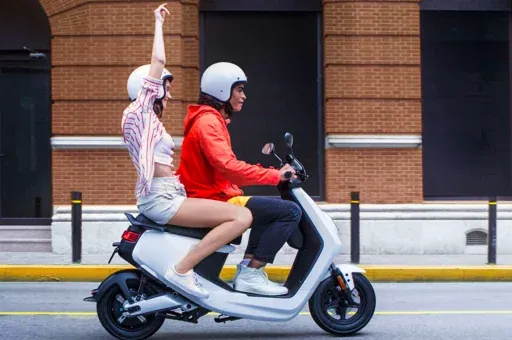
In Middle Earth, the population density is astonishing. There are people everywhere, cars everywhere, scooters everywhere. And at any time of day or night. I can’t even imagine what it would be like to breathe air with such a high percentage of internal combustion vehicles. The same applies to two-wheeled vehicles, where different measures have been adopted. In fact, there has historically been a ban on real motorcycles and scooters. Nearly 200 Chinese cities have restricted or banned them in urban centers since the 1980s, more for traffic reasons than emissions. However, with a maximum speed limit of under 25 km/h, vehicles that are essentially small scooters in size and appearance are legally classified as e-bikes. By exploiting this regulatory gray area, they avoid the ban and have thus spread extensively throughout the country.
Journey through Electric China: The Questions I Take Home
In addition to improved air quality, the benefits in terms of noise pollution are also significant. This is an advantage that is often underestimated when discussing electrification. To conclude, I can say I definitely received the answers I was looking for. However, seeing these extremely large metropolises operate in this way made me return home with a new question: How far are we from a similar scenario? Not so much in terms of products and infrastructure (which are available), but rather due to the lack of a real mechanism to drive this transition through decisive action.
In China I saw things that…VIDEO-INTERVIEW with Prof. Giorgio Prodi
READ ALSO: Those excluded from the charging station subsidy speak out. And watch the VIDEO
Previous Article
Offshore wind: government cuts funding, Emilia Romagna and Puglia protest