
We have never experienced less noise.
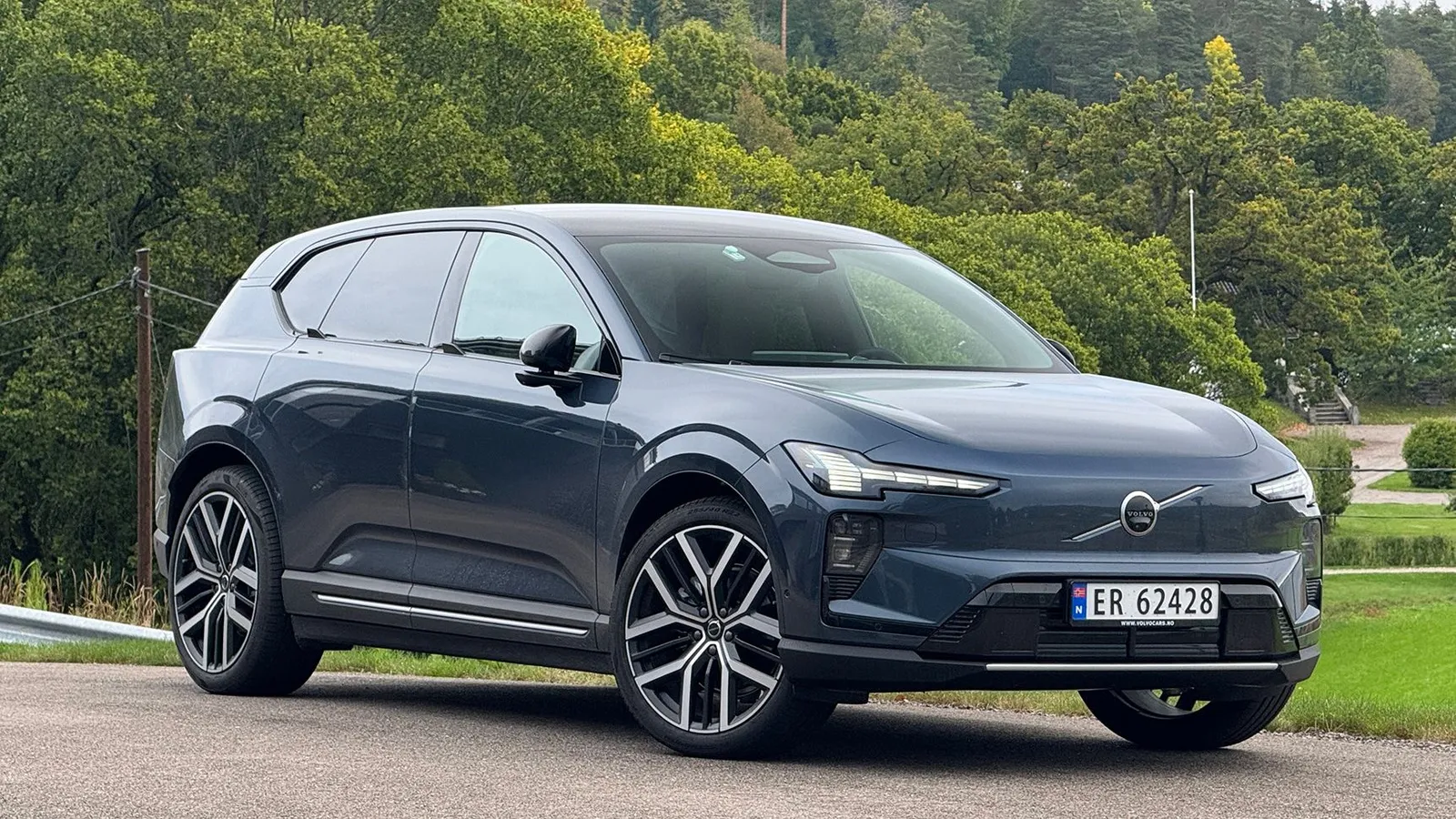
Finally, Volvo can be compared to the best German automakers.
27.10.2026 08:09
2026 is the year when Europeans show off their strength against the increasingly competitive Chinese brands.
Both the BMW iX3 and Mercedes GLC are back where they’re expected to be, impressing with both range and charging speed.
And they can expect fierce competition from the Swedes, as these cars match them on those same parameters — and may even have advantages in other areas...
We take a closer look at:
What kind of car is this?
Pros and cons
Sitting position and interior – best in class
Rear seats – not outstanding
Trunk space – not the largest in class
Rear view mirror
Cruise control
Range – better than promised
Charging – fast
Prices and equipment
Conclusion
What kind of car is this?
The EX60 is the successor to Volvo’s best-selling car of all time, the XC60.
It is a mid-size SUV in the premium segment, built on a completely new platform, offering class-leading range and charging speed.
Volvo EX60 P10 – Summary
Plus
Easy to customize the appearance
Noise and comfort
Weight distribution
Minus
The radio doesn’t work all the time
Door handles
Cruise control
The EX60 is 8 cm longer and 10 cm wider between axles, but it’s slightly lower and has 4 cm less ground clearance compared to its predecessor.
The EX60 is available in three engine variants with three different battery sizes. They are called P6, P10, and P12. Additionally, the P10 is available in the Cross Country trim level.
We’re driving here the highly anticipated best-seller, the P10.
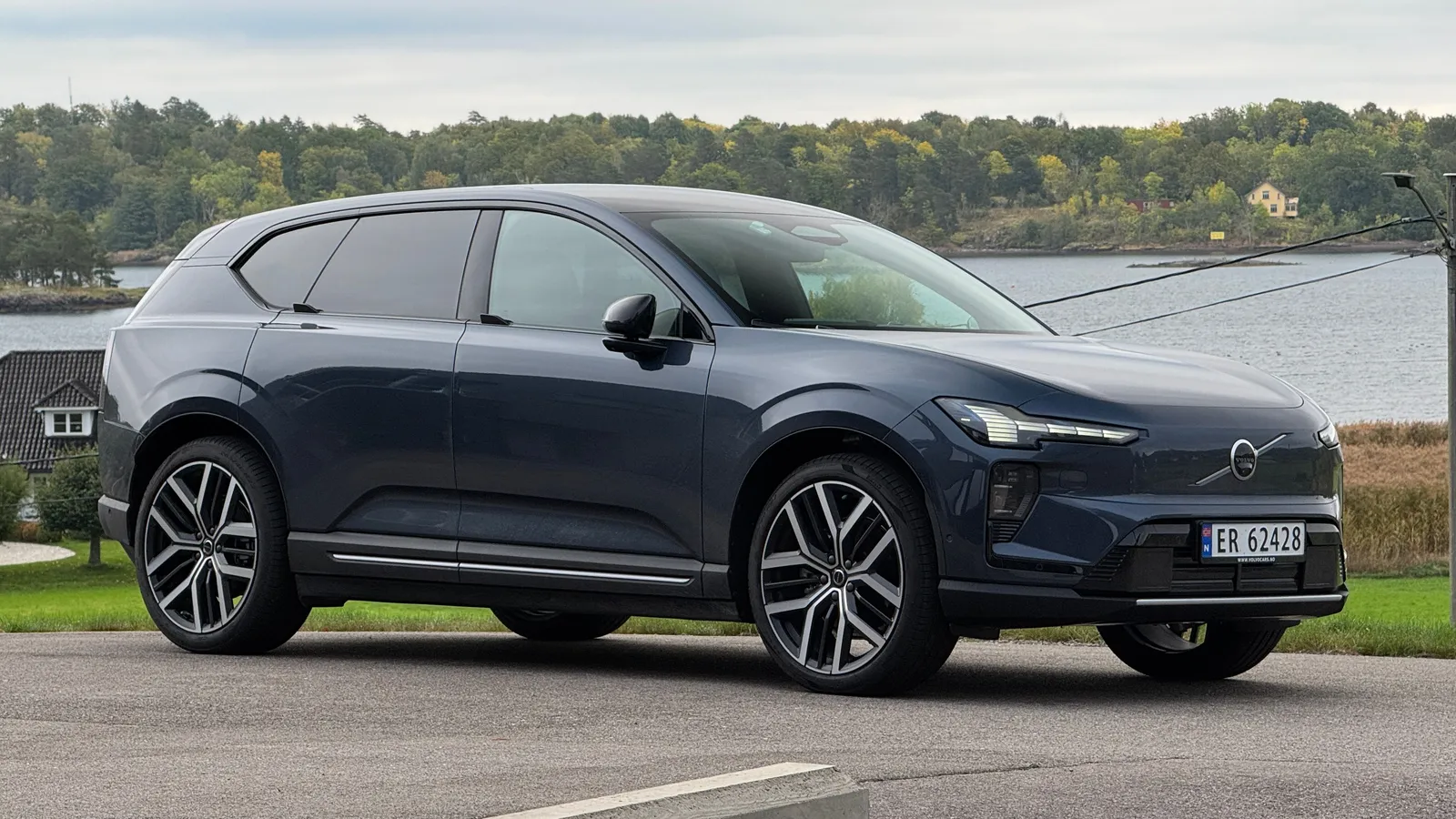
You can also get the Plus and Ultra equipment variants, and personalize both of them.
The starting price for the cheapest EX60 is 650,000 kroner, while the P10 starts at 690,000.
Sitting and interior – best in class
Volvo is renowned for its seats, and here it truly shows its strength compared to competitors.
The adjustment options on the 12-way electric seats with manual seatback retraction are quite generous. The same goes for the lumbar support adjustments.
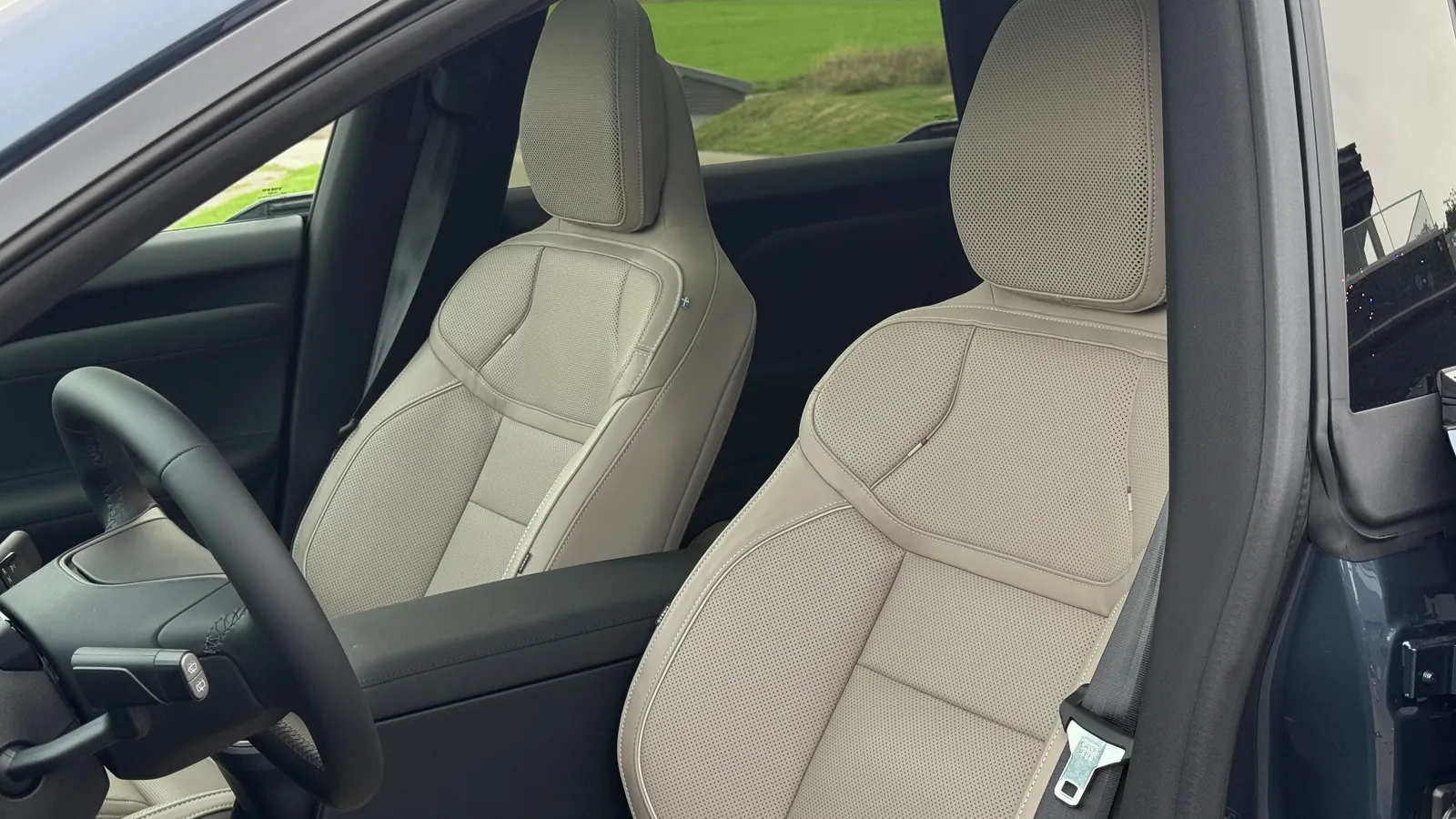
There are plenty of options here to ensure a comfortable seat, with choices available in both wool and leather.
Volvo follows the trend with a small and low-mounted steering wheel. The white buttons that previously featured fingerprints are replaced by matte variants, along with two five-spoke wheels that protrude slightly from the steering wheel, not unlike what you find on the group’s sister brand Zeekr.
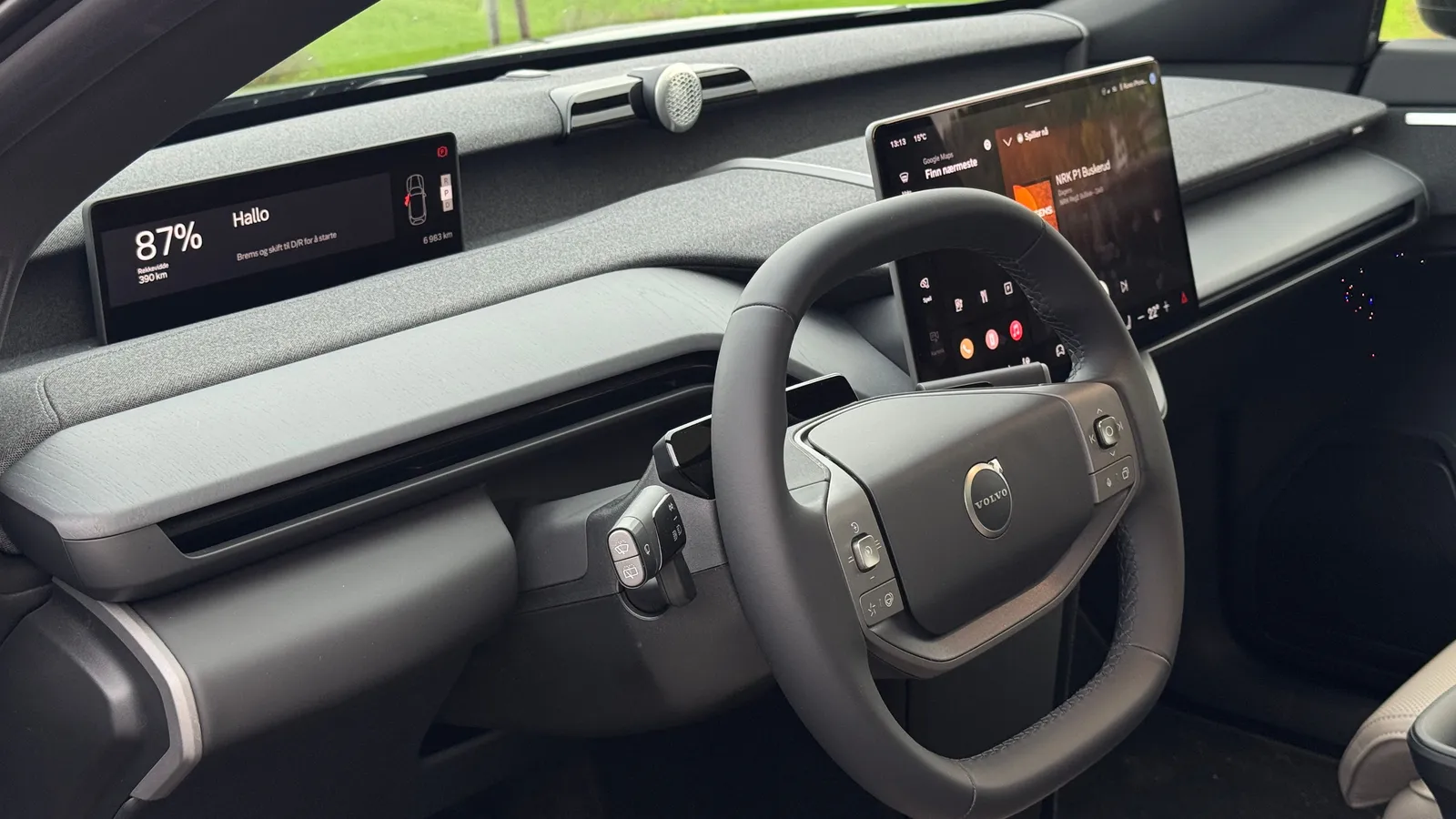
They are nice enough on their own, but you start to miss them after using a steering wheel with more protruding controls.
The reason for the small, hexagonal, and slightly low-mounted steering wheel is that Volvo has done the same as Peugeot and later Toyota and Subaru, namely placing the instrument display high up and far forward in the dashboard.
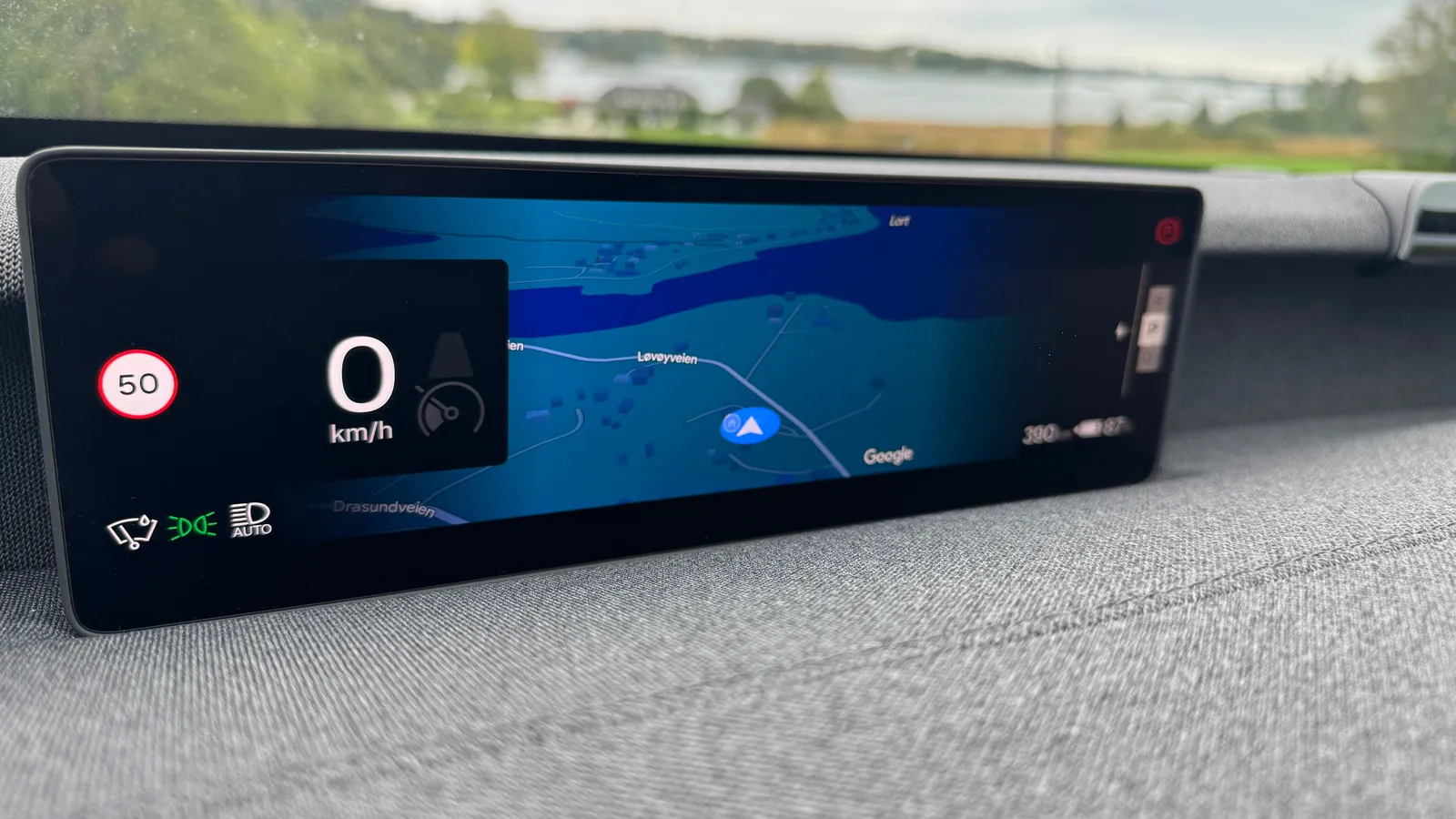
The reason for this is that it eliminates the cost of a Head-Up display while achieving almost the same result, as the eyes don’t need to shift focus as much when looking at the instruments.
You have three key display options on the small screen. The compact multimedia screen also features Scandinavian-style key controls with large buttons to press.
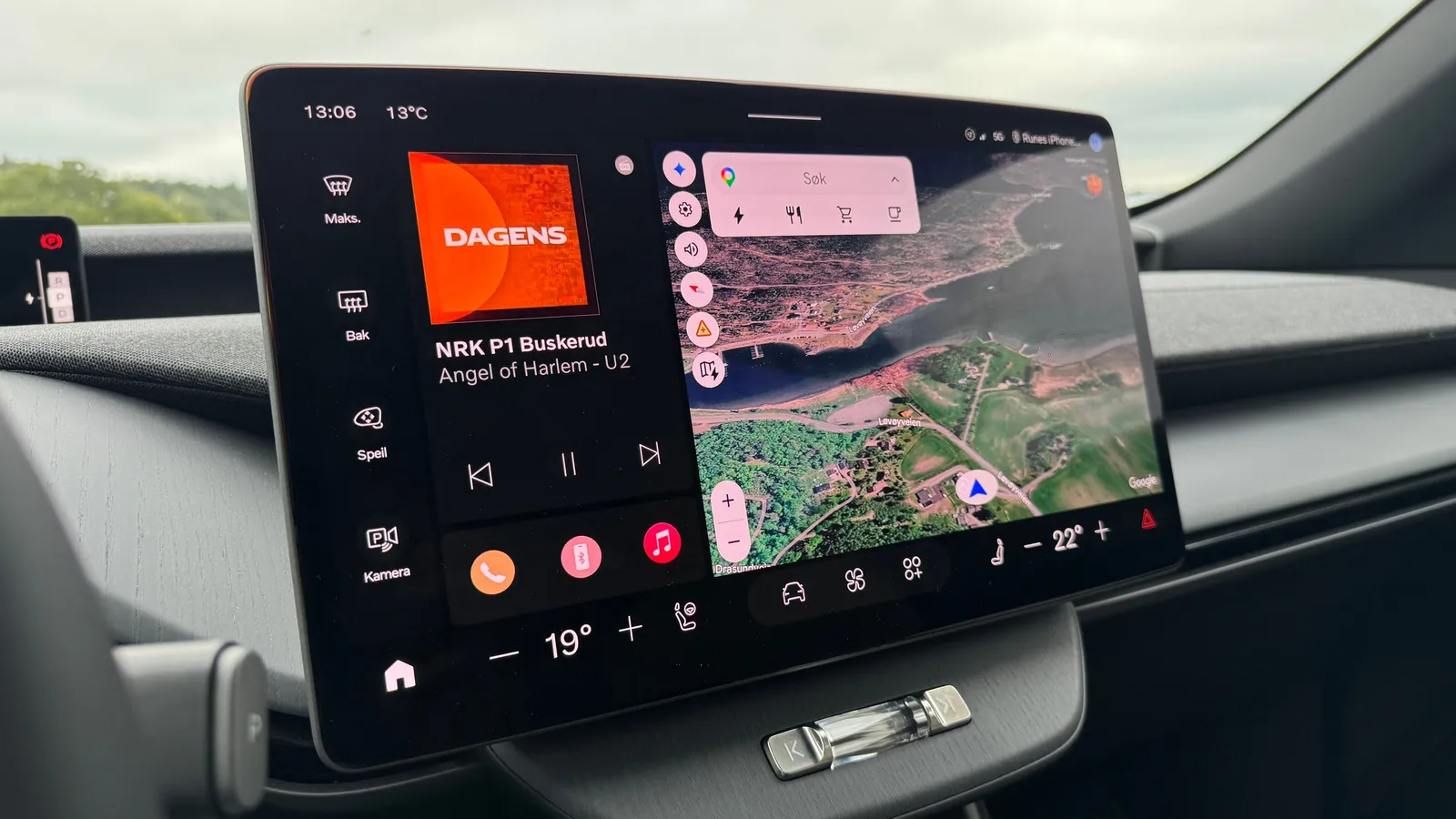
It’s fast and easy to use, thanks to the main menu with the most frequently used functions.
The storage solutions aren’t perfect, however. Volvo has moved the glove compartment to the center, which means there’s no full-length center console.
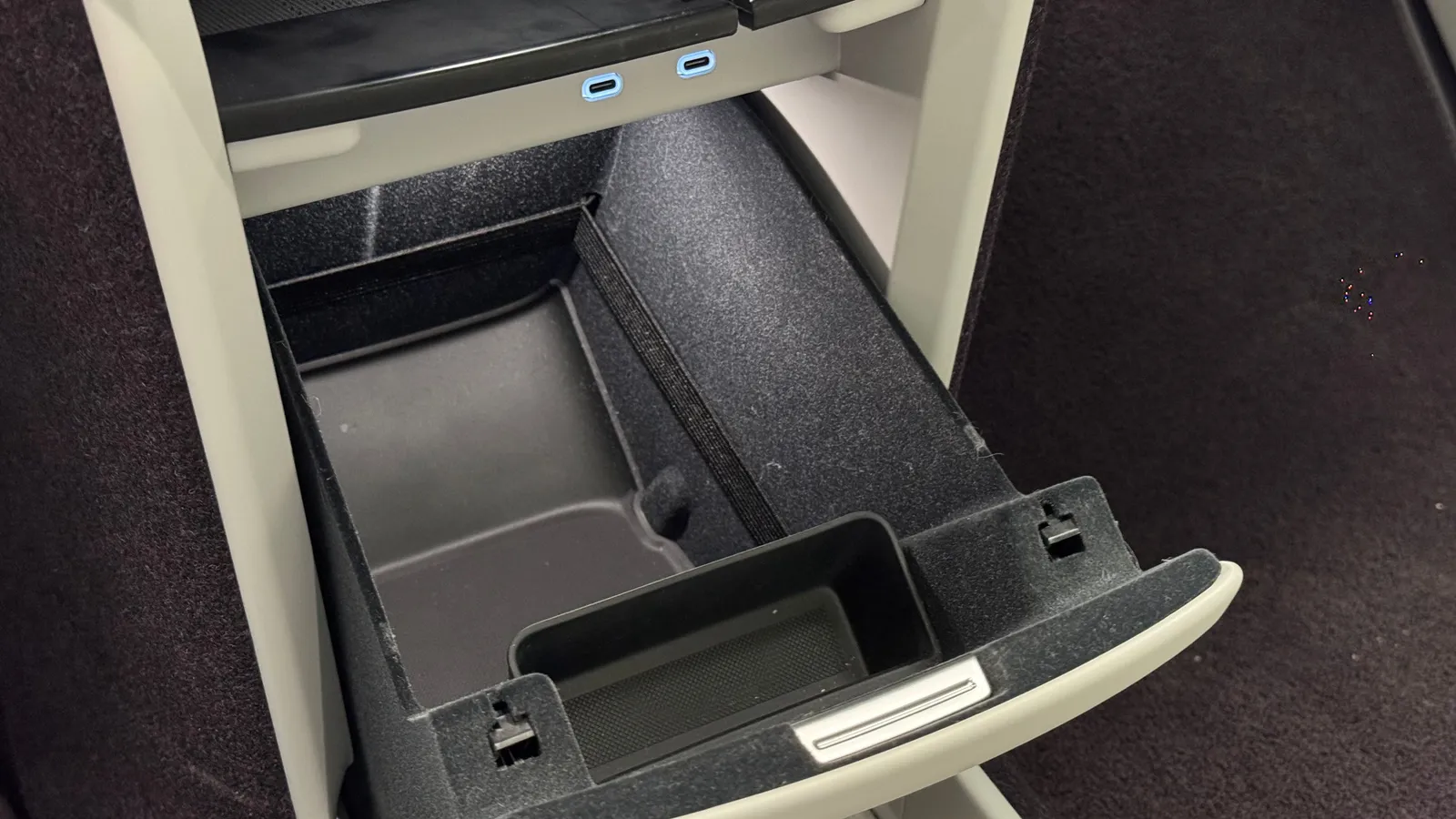
The cabin feels more open, but storage space is lost. Instead of a compartment under the armrests, they opted for a drawer that also serves as a single or dual cup holder. You have to choose.
The ideas are cool – and familiar from the EX30 – but not particularly practical.
What’s left is a compartment for two phones, where only one can charge, along with a large area on the floor.
AI Works
And it’s going to get even simpler. Behind the very minimalist yet cozy interior, featuring various textiles and leather with no flash at all, we find immense computing power to control both the car and entertainment.
And what you should be most excited about is Google Gemini. It requires you to sign in with your Google account, but then you can ask the car to do almost anything.
And it becomes increasingly integrated into what it can do for you while you drive. For example, creating a route exactly the way you want it.
“I’d like to change the time by two hours, and then I’d like you to find an Italian restaurant nearby,” for example.
Raw sound – if you pay
And we must not forget the audio system from Bowers & Wilkins. With two speakers in each rear seat, two on each side of the ceiling, and more throughout the car, it can deliver some of the most immersive sound experiences.
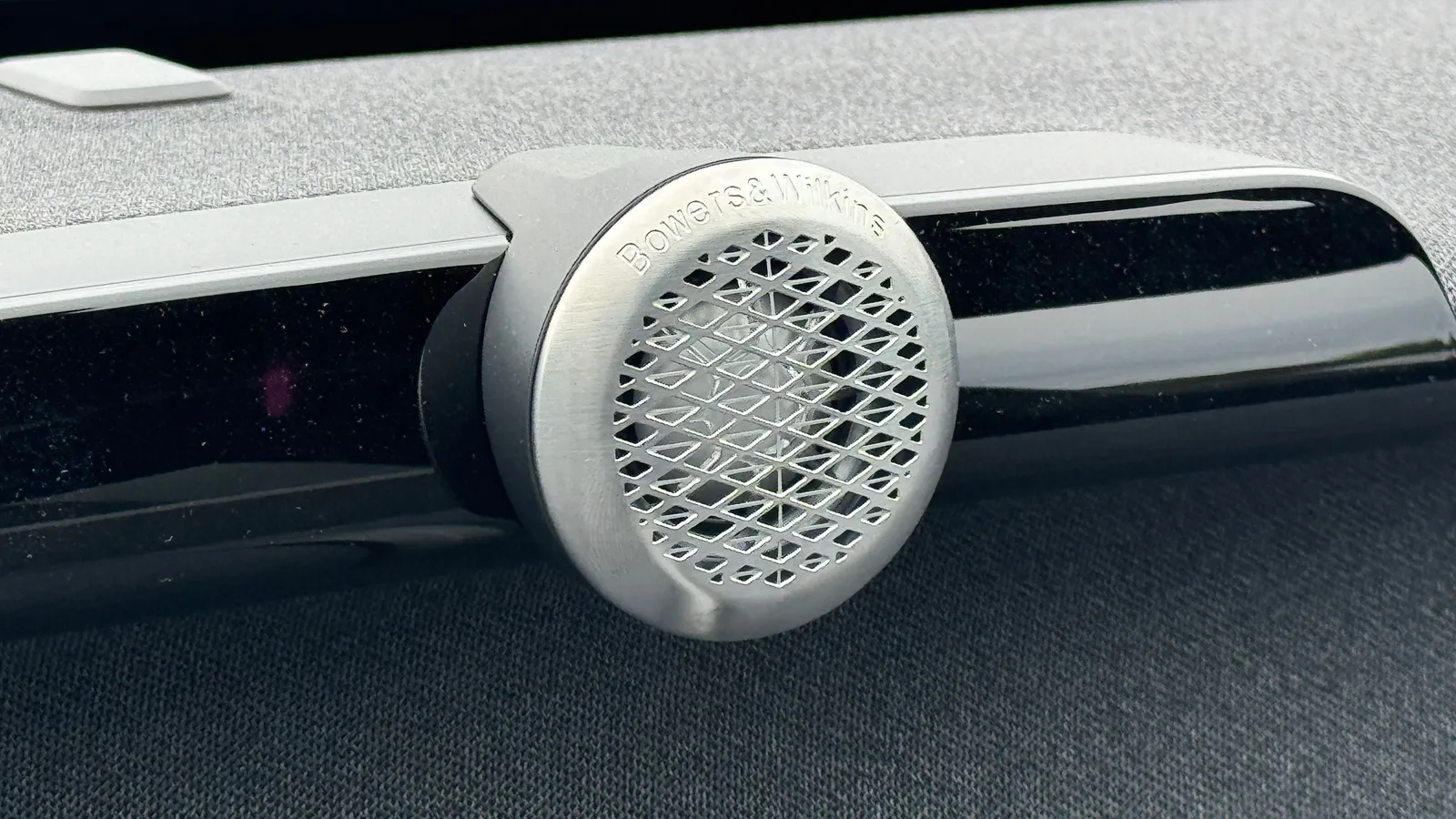
That’s why Apple Music is integrated. But to access music in Dolby Atmos, you also need to activate your Apple Music account (if you have one) and download the music there.
You won’t get the same experience when playing from other sources, but it still sounds incredibly good.
The car also offers another advantage, namely noise cancellation. And it works well. We measured 56.1 dBa at 80 km/h and 60.7 at 100 km/h.
We have tested over 100 cars, but none have achieved such good results.
Rear Seat – Not Exceptional
With a length of 4.8 meters, it’s somewhat surprising that the rear seat space isn’t larger. We had a similar experience with the BMW iX3 as well.
I, who am still 1.89 meters tall, only have a little space between my knees and the seat back when sitting “behind myself”.
Even with Chinese owners, like Volvo does, you won’t get the luxury of a spacious rear seat here, as we often see in cars from that region.
There’s no massage function, cooling, or refrigerator. However, it does come with its own climate control, seat heating, and electrically adjustable seat back.
Trunk Space – Not the Largest in Its Class
The trunk isn’t among the largest either, but it holds 523 liters, including a 28-liter space under the floor, according to the German VDA standard.
Finally, Volvo has equipped it with a 40/20/40 split rear seat (sorry, I know the EX90 also has a three-seater rear — but that’s a station wagon), and with the seats folded down, the volume increases to 1,647 liters. The boot holds 58 liters.
Behind the wheel
But the most important thing is how the car drives. As mentioned, we drove the model that “everyone” should have: the P10 all-wheel-drive version with 503 horsepower and 524 Nm of torque.
It weighs 2,330 kilograms, and despite its weight, it drives smoothly and briskly.
The car feels smaller and more compact than its size would suggest. It’s also quite fast.
The car is supposed to reach 0–100 km/h in 4.6 seconds. We measured it at 6.55 and 6.65 seconds during our tests.
For now, the top speed limit for all new Volvos is 180 km/h.
The rear-wheel drive version can pull up to two tons, while the other variants can handle 2,400 kilograms.
The maximum roof load is 100 kilograms, and Volvo offers a foldable roof rack that fits in the space under the trunk.
The car feels sporty but not aggressive. If that’s what you want, you’ll have to wait for the P12 with 680 horsepower!
Otherwise, the driving characteristics are neutral, with a hint of understeer if you press hard on the throttle.
Adjust as You Like
The P10 has four driving modes. It always starts in Standard mode, where it continuously uses the rear synchronous motor until it senses the need for front-wheel assistance.
The same applies in Range mode. In Performance and Off Road modes, it’s permanently all-wheel driven. Full power is available in all driving modes when the throttle is fully pressed.
The adaptive dampers aren’t affected by the driving mode you choose, but they can be adjusted in three steps.
The suspension isn’t Mercedes-level soft, but you can sense a hint of bumpiness in the road.
Even the stiffest driving mode becomes quite soft on rough roads if you push it to its limits. The second setting is my preferred choice for everyday use.
It’s as comfortable as the iX3’s suspension and offers even more comfort.
In the same menu, you can find the desired level of regeneration. Options range from single-pedal driving, to no regeneration, low, high, and automatic regeneration.
The steering might be the hardest part to get used to. Not only is the speed unusually low and angular, but the weight is also lighter than expected, even in the sturdiest of the three settings.
And if you tilt the steering wheel to navigate turns, the turning radius becomes small, and combined with rapid steering response, even the worst drivers can make passengers uncomfortable.
More like this?
Sign up for our newsletter
– Get fuel directly into the tank!
But on longer drives, most people can place the albums on the equally high armrests in the door and center console to drive smoothly without jolts.
Cruise Control
It feels a bit too simple for this price range. It can’t keep the car perfectly in its lane on the highway; instead, it sways from side to side. Very annoying, even if you stay within the lane.
On interstates, it varies greatly whether the car stays in its lane or not. The gear shift assist works well every time, but you have to set the speed limits yourself.
Range – Better than advertised
The EX60 P10 can go up to 660 kilometers, but our test vehicle with the optional equipment only managed 648.
The fuel consumption on our car is listed as 1.65. We experienced 1.51, which is significantly better, during our fixed test drive.
The conditions were dry roads and temperatures between 12 and 15 degrees Celsius.
Charging – Fast
The EX60, unlike its larger sibling the EX90, comes with an 800-volt architecture from the start.
In this case, that means a charging speed of up to 370 kWt. It means you need to find a 400 kW charger and stay by it alone to reach full speed, which can be quite difficult on its own.
We start with the battery at one percent, already preheated.
You can heat the battery manually or through the navigation system, and you can even go into the vehicle status to check the battery temperature there.
It was 16 degrees when we started, and the car delivers up to 300 kW immediately, but we never see more than 360 kW at the charging station.
But we reach 80 percent with a charging speed of over 100 kW.
At that point, you should really consider unplugging, as it takes us six minutes to reach the final 10 percent.
We took 22 minutes to go from 1-90 percent, and it took 14.5 minutes to go from 10-80 percent. That’s less than the 16 minutes Volvo itself claims.
Prices and Equipment
The EX60 is available in four versions. The rear-wheel drive P6 starts at 650,000 kroner, which already includes the Plus package that gives you everything you need.
The all-wheel drive P10 costs from 690,000 kroner.
You can choose from five tire sizes ranging from 20–22 inches, with prices adding up to 26,000 kroner.
The white car is included free of charge; the other eight colors cost 12,000 kroner.
You can choose between synthetic leather, nappa leather, and wool for the seats, with or without ventilation.
Rearview cameras cost an additional 15,000 kroner, while the Pilot Assist package costs 23,200 kroner.
The Ultra version, featuring B&W Dolby Atmos, a tinted panoramic sunroof, a 360-degree camera, and more, costs 817,400 kroner. The test vehicle ends at 896,000 kroner.
It’s expensive, but if we look back to 2018 when the previous model was launched and compare it with this one, the newcomer seems fairly reasonable. The rechargeable version, which everyone should have at that time, cost 727,000 kroner back then.
Conclusion
This Volvo has a design that feels like a natural evolution from the XC60 and the new EX90, but it also appears modern and sharp like no Volvo has ever been before.
A well-equipped P10 with a range of 660 kilometers will cost you around 800,000 kroner.
This car is easy to match in terms of its leading range and charging speed, and with prices that compete with its main rivals, it is likely to become popular not only in Norway but also in countries that haven’t progressed as far in transitioning to electric vehicles.
Also read
The post We have never measured less noise appeared first on Norsk elbilforening.