
Verne set off in a driverless robotaxi in Zagreb. This is the first such case in Europe, but on a Chinese setup
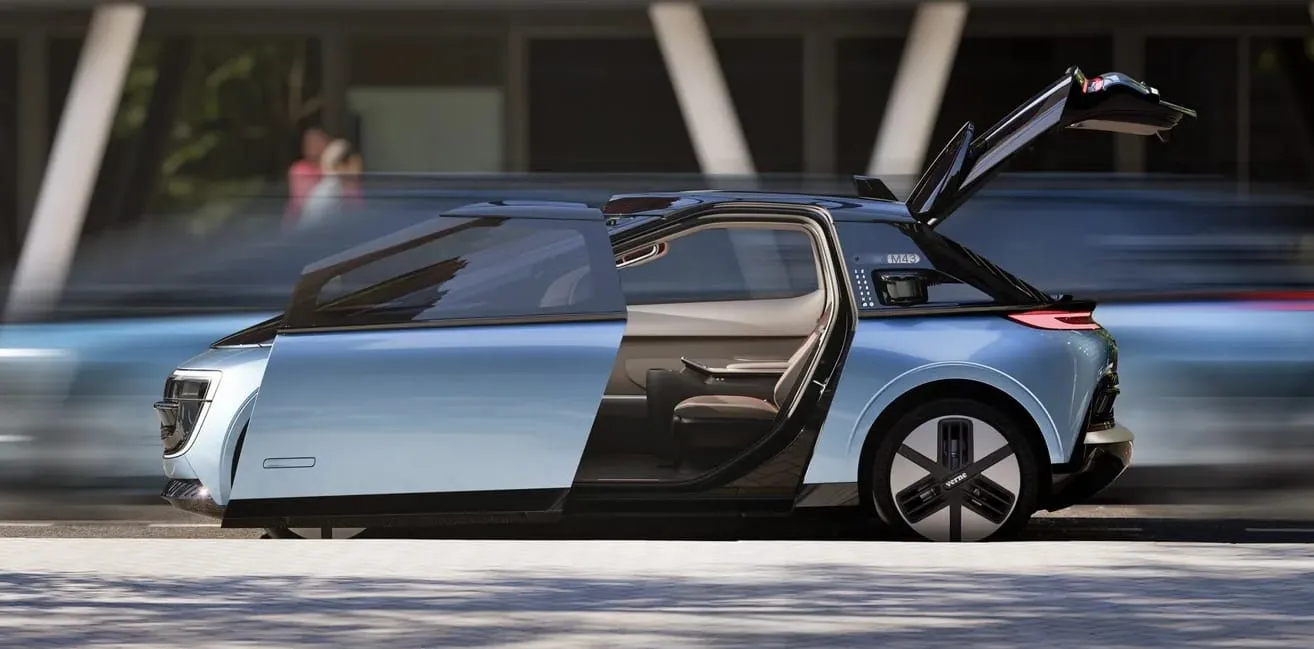
In Zagreb, driverless Verne robotaxis have begun operating. The vehicles travel on public roads along a 22 km route between the company’s headquarters, business center, and airport, with rides available through Uber. This is the first such case in Europe, though the entire technological package is actually Chinese in origin.
Since April, Verne has been transporting passengers commercially, but with a safety operator in the cabin. Now that human presence has been removed, only remote monitoring remains. For passengers, it is this change that makes a difference.
Europe’s first driverless robotaxi, but not from Rimac
The project is led by the Croatian startup Verne, supported by Rimac and in collaboration with Pony.ai from China. The vehicle itself is not original either—it’s the Arcfox Alpha T5 from BAIC, an electric crossover modified for robotaxi use.
This is where the less marketing-focused part of this story begins. In 2024, Verne showcased its own dedicated concept for an autonomous taxi with sliding doors and a futuristic interior. So far, nothing of this has made it onto the streets. What is on the streets is a ready-made car from China along with a ready-made autonomous driving system from China; the previously announced Mobileye Drive has disappeared from the picture.
Pony.ai is not starting from scratch. The company is already operating robotaxis in four cities in China, and earlier this year it boasted that it had produced over 600 vehicles equipped with the Gen-7 autonomous system in partnership with BAIC. Therefore, Croatia seems more like an implementation of a proven solution in Europe rather than the birth of new European technology.
The route is simple, the price is low, and the questions are fairly obvious
The current test routes of Verne do not cover the entire city. They are routes from the company’s base to the airport and business district, with a heavy reliance on highways. In other words, the scenario is much simpler than a dense city center with pedestrians, cyclists, and chaotic parking. It would be unrealistic to expect “full autonomy” in European traffic right away.
For a long time, rides cost the promotional price of 1.99 euros. This price looks good on the Uber app, but it says nothing about the actual cost efficiency of the service. Especially since the fleet consists of only nine cars and operates on a limited route network.
The vehicle itself is also unusual. Verne removed the front passenger seat to create more space for luggage and installed a large screen for passengers in the back. It allows them to track routes, watch videos, or play games. It sounds impressive, but for robotaxis, two questions are more important than the screen: how often does the car require remote intervention and under what conditions can it operate without a human.
200 million euros from the EU and very little European hardware
The issue has another dimension as well. Rimac received 200 million euros in EU funding in 2021 for its autonomous taxi project. Today, it results in a service based on a Chinese car and a Chinese AV system, operating on a limited route in Croatia.
It’s still an achievement, of course. Someone in Europe has finally launched driverless robotaxis on public roads. But it’s hard to pretend this is a triumph of European autonomy. It more closely resembles importing a ready-made solution and attaching a local brand to it.
If this model holds, Europe might see robotaxis in practice sooner. The question is whether it will be a European industry or mainly European operators using Chinese technology. How do you view such a “success” by Verne: a real step forward or an expensive shortcut?
LovEV Newsletter
Want more content like this?
Sign up — we’ll send you a week’s preview once the newsletter starts.