
Internal combustion engine retrofit for electric cars: Company goes bankrupt
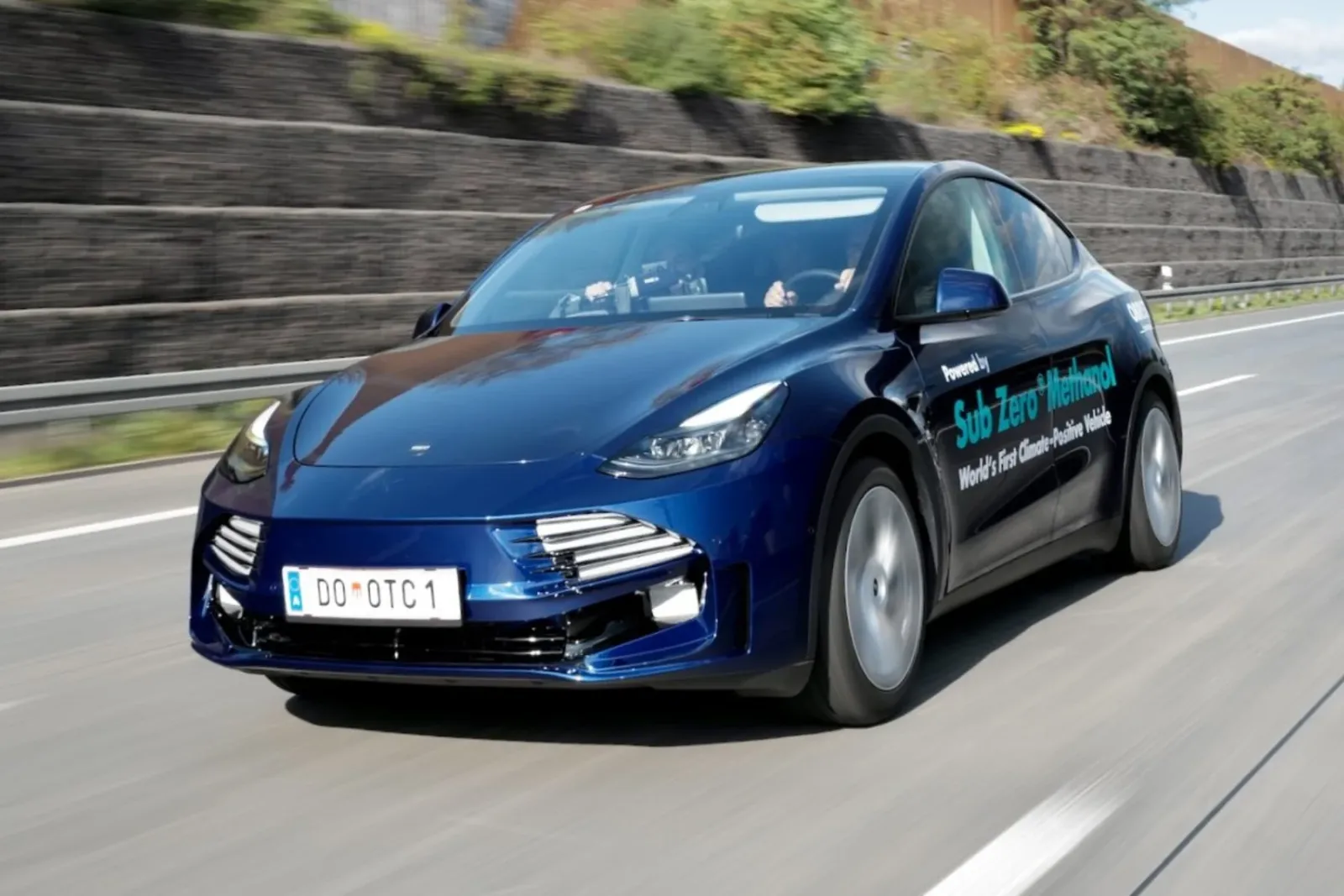
The Vorarlberger Obrist group became known primarily through headlines about modified Teslas equipped with internal combustion engines in the front trunk. Now, three of the company’s development subsidiaries, carrying around 31.8 million euros in debt, are facing immediate closure. The company cites these reasons for bankruptcy.
Image: Obrist
Austrian startup Obrist has drawn attention in recent years with unusual test vehicles. The engineers modified battery-electric models like the Tesla Model 3 and installed a compact two-cylinder gasoline engine as a generator in the front trunk under the name “HyperHybrid.” The goal was to create a production hybrid with a smaller battery to reduce costs and weight.
Later, the Obrist group expanded on this concept by adding methods for producing synthetic methanol from atmospheric CO₂. Despite ambitious announcements of large-scale projects and production licenses, the company failed to bring a production vehicle to market or secure steady customers in the automotive industry.
At the end of September 2026, a financial collapse occurred in front of the Landesgericht Feldkirch: separate bankruptcy proceedings were initiated for the Vorarlberg subsidiaries Obrist Powertrain GmbH and Obrist Technologies GmbH. Together with their equally insolvent German subsidiary Obrist DE, the total debts of these three entities amounted to around 31.8 million euros. Specifically for the Austrian subsidiaries before the Landesgericht Feldkirch, Obrist Powertrain GmbH’s debts totaled approximately 18.85 million euros, while Obrist Technologies GmbH’s debts were around 6.08 million euros.
According to the bankruptcy filings, restructuring is ruled out and the companies will be closed and liquidated immediately. A total of 14 employees are affected by these proceedings. The legally separate parent company, Obrist Engineering, which employs around 30 people and manufactures components for vehicle climate control and thermal management, remains unaffected by the bankruptcy and is financially stable, according to local media citing Obrist.
The management cites long-term, high expenses for development and patent protection, with no revenue from license sales, as the main causes of insolvency. Negotiations with foreign investors for a rescue joint venture have failed. In addition to internal financial problems, the ongoing sales crisis in the European automotive industry also strained the business.
The Alpine Creditors Association (AKV) also cites the shift by European automakers toward purely battery-electric vehicles as a cause. For the creditors, it now falls to the court-appointed liquidators to maximize the value of Obrist Technologies’ remaining assets and patent portfolio.