
Electric bike, freedom locked away
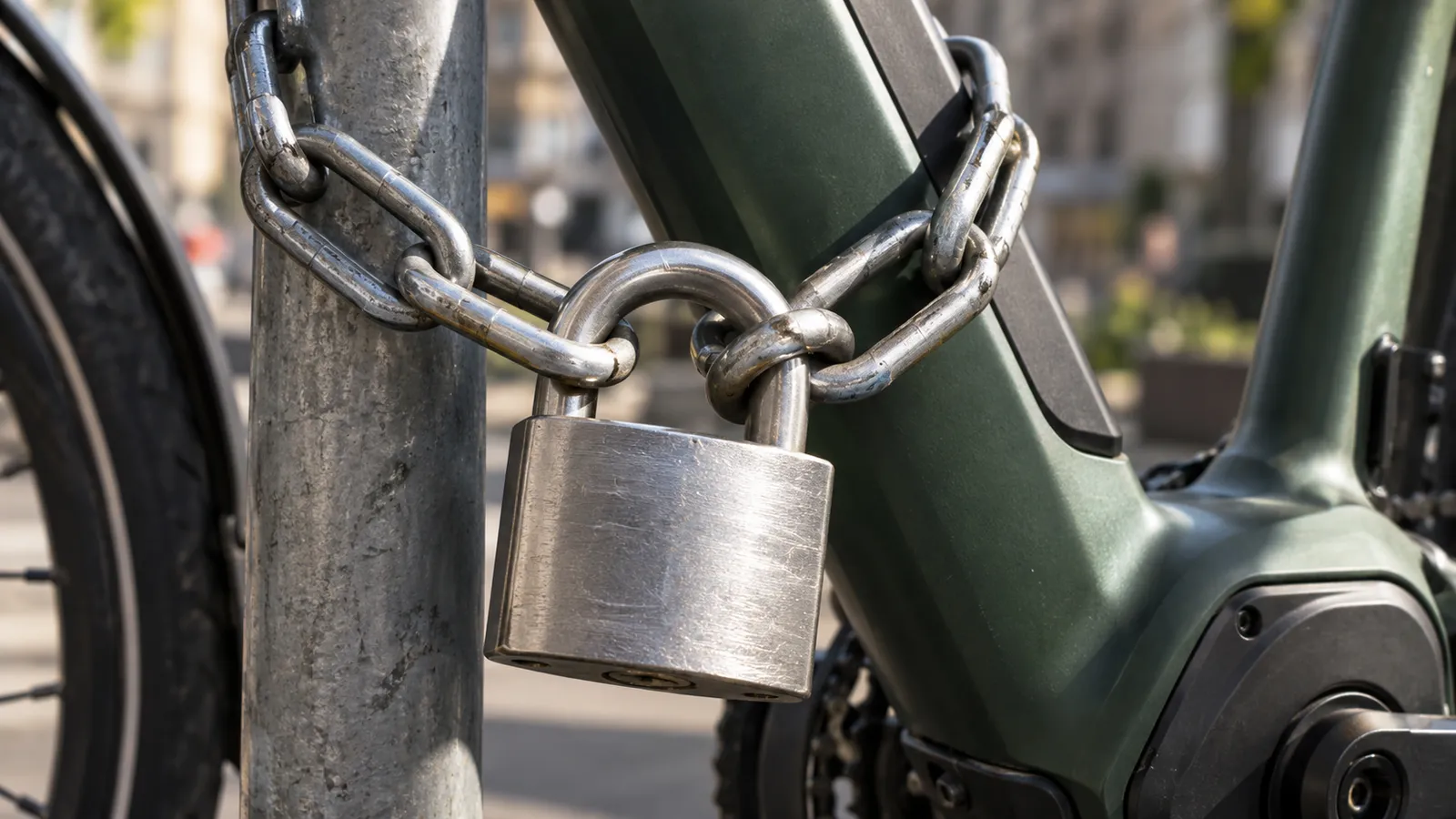
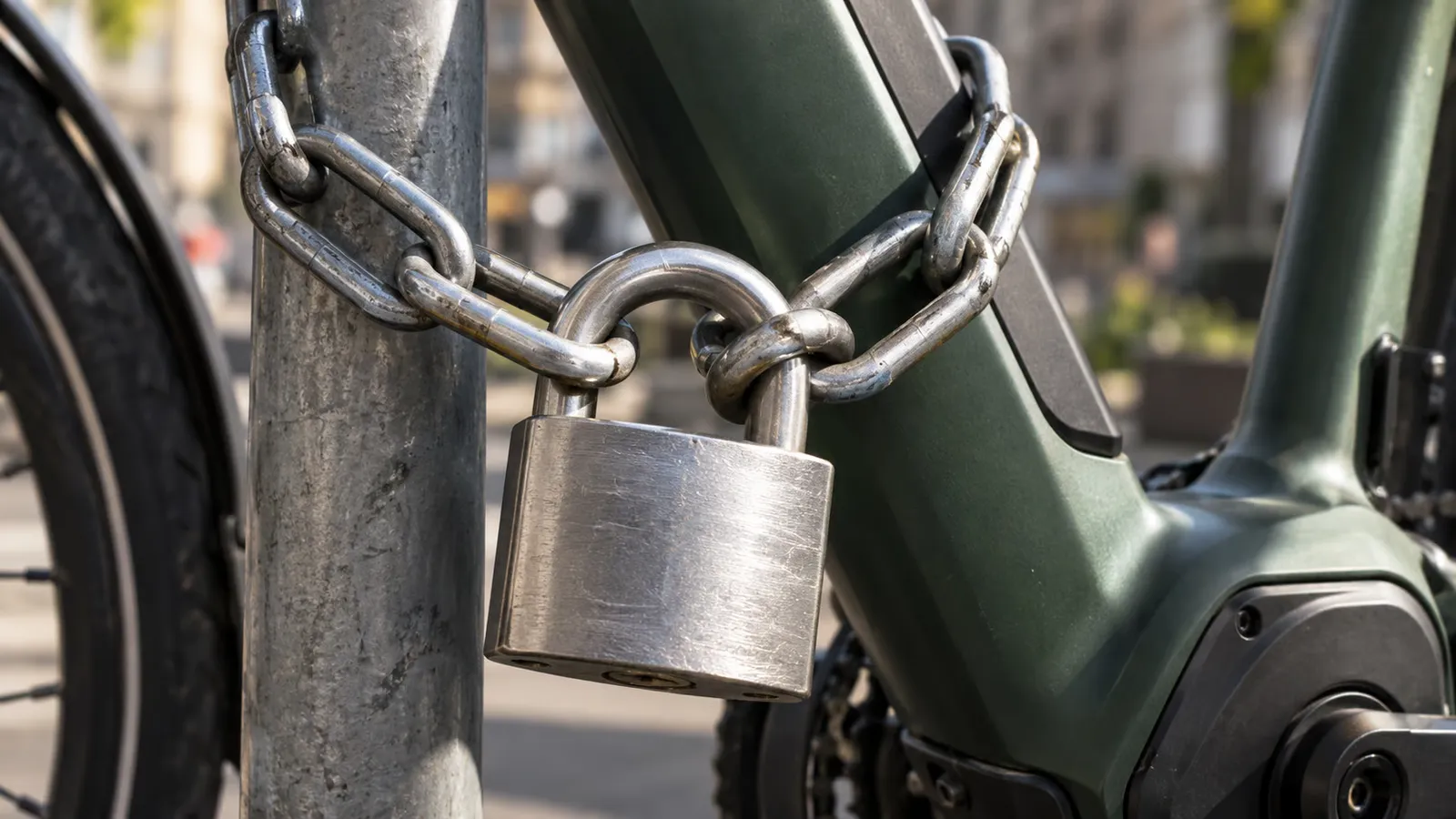
Electric bikes promise to simplify commuting by replacing cars in many situations. But with fears of theft, anti-theft measures, and precautions required at every stop, this freedom can quickly turn into a new prison.
What if we underestimate the impact of these constraints on the everyday use of bikes?
When seriously considering investing in an e-scooter, one first focuses on its range, the strength of its assistance, its comfort, and possibly its ability to carry children or groceries for the week. But sometimes an essential factor is overlooked: parking constraints at home and at the destination. In other words, where and how will I store my device at home, and can I leave it outside for two hours without spending half that time worrying whether it will still be there when I return?
The issue, which seems almost trivial compared to debates about mobility transitions, is actually at the heart of the promise of cycling—namely, the ability to set off easily, stop wherever one wants, and take spontaneous detours. Yet this spontaneity becomes quite limited when a trip to the cinema, a lunch in town, or a business meeting quickly turns into a hassle when it takes ten minutes just to retrieve one’s bike because it’s parked in an outdoor garage, or when one has to force it into a crowded elevator where hostile people make it clear they disapprove. Not to mention, of course, the safety of parking at the destination.
This is somewhat the paradox of so-called low-impact mobility: encouraging the use of a fuel-efficient, compact vehicle suitable for short trips ultimately requires spending money, energy, and time on parking it, without any guarantee that it won’t be stolen. In other words, public policies promote cycling but ignore how to protect the bikes.
Theft as a Deterrent
It must be said that, in terms of the numbers, the scale of this phenomenon is enough to deter even the most carefree. A study on bicycle theft conducted by the Academy of Active Mobility (ADMA) and published in 2023 estimates that between 350,000 and 580,000 bicycles are stolen in France each year, based on various sources. This is an order of magnitude derived from previous research, not a count of thefts for 2026. These estimates also cover all bicycles, whether electric or not.
A direct consequence is that ADMA notes that experiencing a theft discourages cycling among one-quarter to one-third of victims. This does not mean they all give up cycling permanently, but it shows that the consequences go far beyond simply losing an item.
And then there are all the trips one gives up on without having experienced a theft oneself (or not yet): the restaurant in front of which there’s no suitable place to lock one’s things, the train station where one would have to leave their bike until evening, visiting friends who don’t have a fenced yard.
This ultimately severely limits travel to a personal list of acceptable destinations, beyond which one will have to use... their car (or public transportation when possible, assuming they’re not allergic to it).
A mental burden made up of small decisions that seem reasonable when considered separately, but whose accumulation still ends up significantly altering and restricting vehicle use.
Several hundred euros to buy a little peace of mind
In the face of this risk, the first response is naturally to equip oneself better. And anti-theft manufacturers are now developing models specifically designed to withstand saw attacks more effectively.
Let’s take a concrete example. As of the time of writing, the Litelok X3 is listed at 329 euros on the manufacturer’s French website, with an advertised weight of 2.1 kilograms. This is certainly neither the minimum price needed to protect a bike nor equipment essential for all uses. But it illustrates the level of expense that can arise when seeking enhanced protection, since for a bike purchased for 2,000 euros, this anti-theft device alone accounts for just over 16% of the bike’s price. Moreover, it does not necessarily cover protection for the wheels, saddle, or accessories. Additional costs may include insurance, a tracker, and, if available, a subscription to a secure parking service.
Of course, it’s not about blaming manufacturers for developing better products. An anti-theft system that seriously complicates a thief’s task provides real value, but this upward trend also reflects a shift of responsibility toward the user, who is expected to pay more and more to ensure their own safety.
Bicycles can still be very economical to use. However, their true cost isn’t just the price tag in the store or the few cents needed to charge the battery. Protection is part of the budget and should be considered from the start.
A lightweight form of transportation that can become burdensome
But cost is far from the only drawback. A two-kilogram anti-theft lock is a hassle to carry, handle, and install, sometimes requiring one to bend down between a poorly positioned frame bar and a wheel that refuses to stay straight. Electric assistance can make these issues seem negligible while riding, but not so much when lifting the bike.
In addition, there’s the minor hassle that comes with some types of parking. You remove the screen, take the bags, collect the lighting equipment, and if possible and if you prefer not to leave it behind, you unplug the battery as well. You came to do some shopping using a convenient vehicle, only to end up doing your errands or going to the barber with your arms and pockets loaded with various accessories, your hair flattened by the helmet (if you remembered to take it off), making us more resemble a lost astronaut than a customer whose appearance needs attention.
At home, the solution might involve bringing the bike into one’s apartment. However, this requires being able to climb stairs, navigate stair turns, and find space within the dwelling. For someone who lacks strength, suffers from back problems, or uses a cargo bike, this option isn’t even feasible.
The survey conducted by FUB and ADMA also highlights that the problem isn’t limited to deserted streets at night. Among respondents who experienced theft, 59% said they parked in public areas, and nearly half of the thefts occurred during the day. While these results reflect the surveyed group, they urge us to move beyond the stereotype of a bike left outside at 3 a.m.
There is indeed a kind of inequality similar to that regarding access to charging stations when owning an electric car, which we often discuss: having a garage with easy access and a secure space at work drastically changes the experience. The same vehicle can be a straightforward option for one person and a constant source of complications for another.
I can no longer count the times I have given up using my e-bike due to the various constraints it entails, sometimes for a simple 15-minute trip... which would take 20 minutes by car.
Insurance and connectivity alone are not enough to ease one’s mind
Insurance provides financial compensation, the extent of which depends on the contract, its parking conditions, and its indemnification terms. But even when it fulfills its role (well, apparently this happens sometimes), it doesn’t eliminate the necessary procedures or the time spent without a bike. It doesn’t take the children to school the next morning nor make an equivalent bike immediately available.
Identification represents another useful advancement. In France, it is mandatory, except for specified exceptions, for bikes sold by professionals starting from January 1, 2021, for new bikes, and July 1 of the same year for used bikes. Linking an identifier to the owner’s contact details particularly facilitates the return of a bike when it is found.
As for alarms, trackers, and electronic locking functions, their usefulness depends on the systems and circumstances. They can supplement protection but do not turn an exposed parking spot into a safe one. Receiving an alert may allow us to act quickly, but it can also mean that the bike continues to occupy a spot in our minds while we try to do other things. It’s still that old issue of mental load.
The ability to stop is part of riding
There’s a lot of talk, rightly so, about the continuity of cycling routes. Equal attention should be paid to what awaits the bike at both ends of the journey. A pleasant path that leads to a train station where one doesn’t know how to secure their bike properly doesn’t solve much of anything.
Solutions do exist: sturdy frames for securing the bike, accessible facilities without having to carry the bike, spaces suitable for cargo bikes, and secure parking near shops and transportation. For longer stops, the quality of access, maintenance, and site management are just as important as the number of parking spots advertised.
Another idea is one developed by Velhome, a peer-to-peer platform that allows users to park their bicycles securely in designated locations through an app. If you have space at home, in your business, backyard, or bike garage, you indicate it on the geolocated app, and cyclists looking for a safe place to park will use it. Think of it as a bicycle version of Airbnb, or a variation of existing car parking platforms like Zenpark and similar ones. For businesses, some already store packages, so the idea is to enable them to earn an extra income by storing bicycles as well. While it does require a bit more space, many businesses have backrooms or interior courtyards that could be utilized for this purpose.
Finally, combating resale networks and returning found bicycles should also be part of the solution. We cannot keep asking owners to cover the risk alone with an extra lock, without developing public infrastructure that ensures safe bicycle use.
The next major breakthrough for electric bicycles may not lie solely in their motors or batteries, but rather when we can enjoy a casual drink, securely tie up our bike, and spend the evening without constantly checking outside between bites of nuts.