
Vehicle-to-Load (V2L) in ADAC Test: How safe are six electric cars?
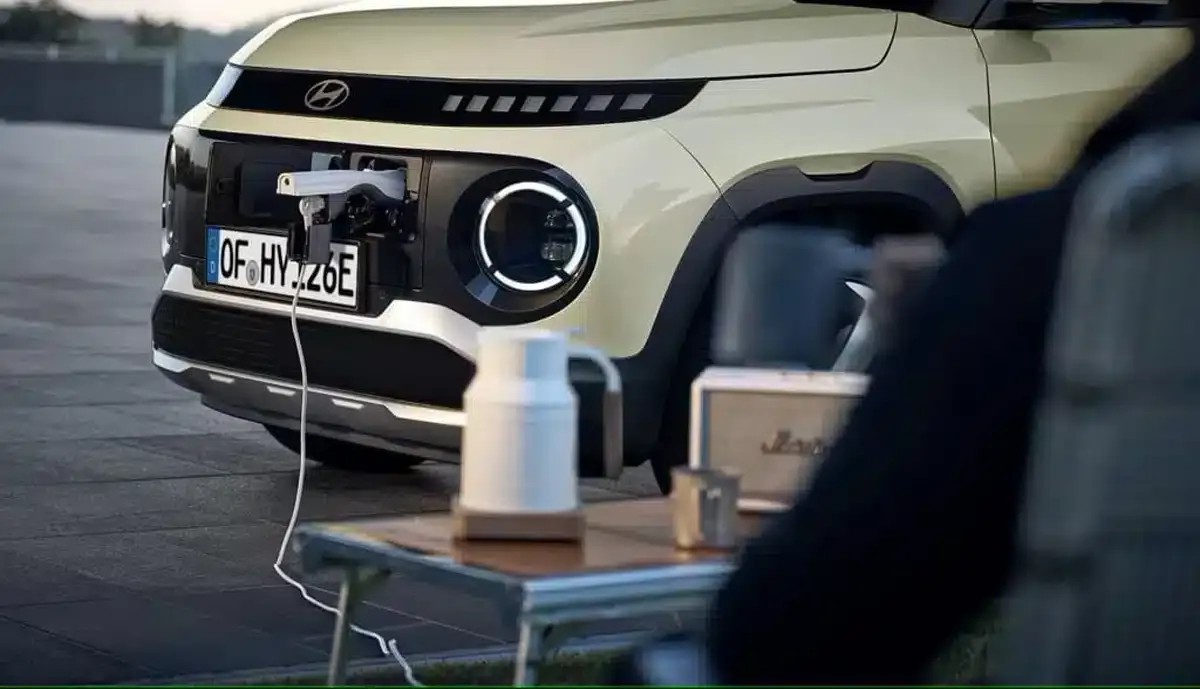
Image: Hyundai (illustrative)
Vehicle-to-Load (V2L) allows using an electric vehicle’s battery pack to power or charge external electrical devices. Possible applications include refrigerators, tabletop grills, hedge trimmers, or e-bikes for camping, gardening, and other outdoor activities. The ADAC tested the functionality of the BMW iX3, BYD Seal, Kia EV5, MG4, Renault 5, and XPeng G9 models for safety and ease of use.
To use V2L, in addition to the bidirectional charger in the electric vehicle, a suitable adapter is required, with the manufacturer solutions for the six test vehicles differing significantly. MG and BYD use adapters with cables and multiple outlets, while the Kia adapter has a rain cover. The other adapters offer no special protection against moisture. For liability reasons, all manufacturers prohibit the use of V2L in wet conditions.
The activation process also varies: with BMW and XPeng, simply plugging in the adapter is sufficient, while with BYD and Kia a button must also be pressed. MG activates V2L via a touch button on the display, and Renault does so by holding down a button on the adapter. Adapters from third-party suppliers were not part of the investigation.
In the ADAC safety tests, all six electric vehicles responded to short circuits and overloads in accordance with regulations by shutting down. The measured peak V2L output for all models was below 3.7 kW, except for the BMW iX3, which allowed 4 to 5 kW for about ten minutes before shutting off. No noticeable damage to the adapters or vehicles occurred during the intentionally induced short circuits, and all electric cars remained fully drivable.
After the short-circuit test, V2L was immediately available again in almost all vehicles after unplugging and replugging the adapter. In contrast, the Renault 5 required a shutdown mode, for which the key had to be taken out of range for several minutes; this procedure was not described in the user manual. Additionally, ADAC found that, except for the BMW, the tested electric cars had a self-consumption of 390 to 500 watts when operating external devices.
The ADAC identifies areas for improvement in adapter design, user guidance, and error messages. Kia reports “high consumption” when overloaded, but also uses this message in case of a short circuit. Other vehicles display messages such as “charging error, connected device not compatible” or “error: connected device.” Specific error messages that name the issue and provide troubleshooting tips are considered more useful.
Also interesting
About the author
Thomas Langenbucher is an expert in electromobility with experience in the automotive and financial industries. Since 2011, he has been covering electric vehicles, sustainable technologies, and mobility solutions for ecomento.de. Learn more.
Reader interactions