
VDIK calls for earlier review of CO₂ fleet targets for commercial vehicles
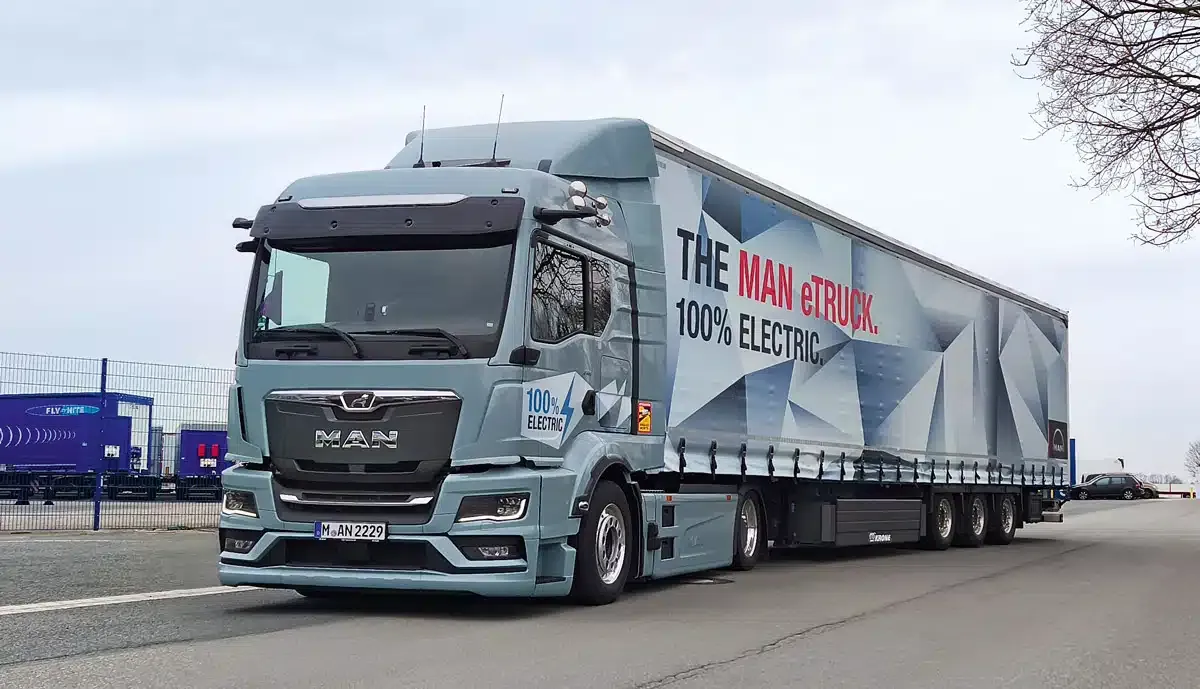
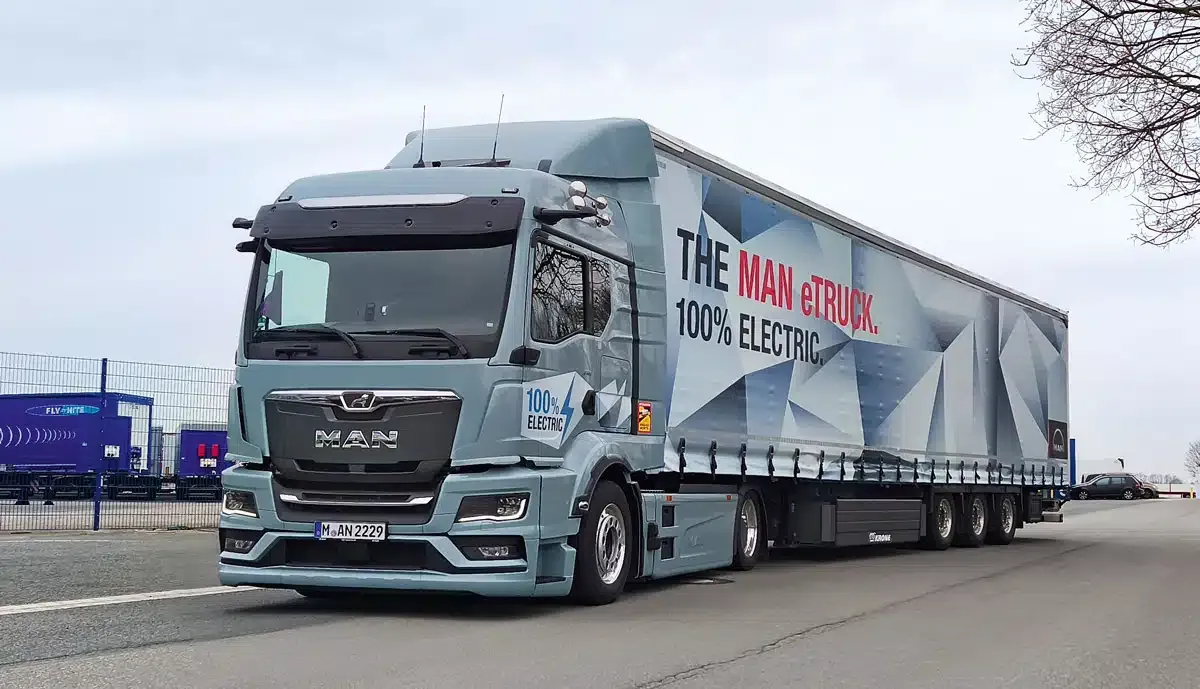
Image: MAN (illustrative)
The EU has set ambitious CO₂ fleet targets for the commercial vehicle industry, but according to the Association of International Motor Vehicle Manufacturers (VDIK), it has not yet created the necessary conditions to achieve them. Therefore, VDIK calls for advancing the review of CO₂ fleet regulations scheduled for late 2027. Policymakers must now take action to ensure that realistic targets are aligned with actual circumstances.
"International manufacturers are offering an attractive range of electric commercial vehicles. It is now up to policymakers to create the conditions necessary for their widespread adoption," says VDIK President Imelda Labbé. "Emission-free commercial vehicles are already available in all segments at series production level. What is lacking are reliable frameworks for commercial vehicle owners: predictable operating costs over the entire vehicle’s lifespan, a robust charging infrastructure, sufficient space for charging and parking, as well as faster approvals for grid connections. As long as these conditions are absent, investments will remain out of reach—putting the achievement of our goals far into the future. Therefore, we call for advancing the review scheduled for the end of 2027."
According to the association’s analysis, roughly one-third of all newly registered trucks must be emission-free to meet current EU fleet targets for 2030. In 2025, the share of electric trucks among new registrations in the EU was only 4.2 percent. Emission-free commercial vehicles are already available in all relevant segments in production-ready form. Therefore, the key question at present is rather whether these vehicles can be operated economically and reliably under real-world conditions.
The VDIK calls for immediate improvements to the framework conditions for deploying electric trucks. The association views the lack of certainty in planning operational costs as particularly critical. The profitability of emission-free trucks currently depends heavily on political frameworks, especially toll exemptions. These exemptions will expire in mid-2031, and no reliable follow-up arrangement exists yet. As a result, fleet owners must make investment decisions today regarding vehicles whose costs are not politically guaranteed for a significant portion of their lifespan. “Without customers’ purchasing decisions, manufacturers cannot meet their fleet targets, no matter how good their vehicle offerings are,” emphasizes the VDIK.
According to the association, there is also “significant need for action” regarding infrastructure. A nationwide charging network for heavy trucks still lacks coverage: only around 355 public charging points for heavy commercial vehicles are in use nationwide, with plans to have around 4,200 charging points at 350 locations by 2030. Megawatt chargers, as a key technology for long-distance transport, are still in their infancy. At the same time, there is a shortage of suitable areas for truck parking and charging infrastructure; alone in Germany, around 19,600 truck parking spaces are missing. Charging, parking, and legal rest periods need to be planned together. Additionally, there are multi-year lead times for connecting to the grid, both in public spaces and on industrial sites.
VDIK emphasizes: “The manufacturers are ready. To ensure that ambitious European climate goals can also be achieved in road freight transport, policymakers must now create the necessary framework conditions.”
Also interesting
About the author
Thomas Langenbucher is an expert in electromobility with experience in the automotive industry and finance sector. Since 2011, he has been covering electric vehicles, sustainable technologies, and mobility solutions on ecomento.de. Learn more.
Reader interactions