
Vattenfall fast charger: already outdated by August 2025
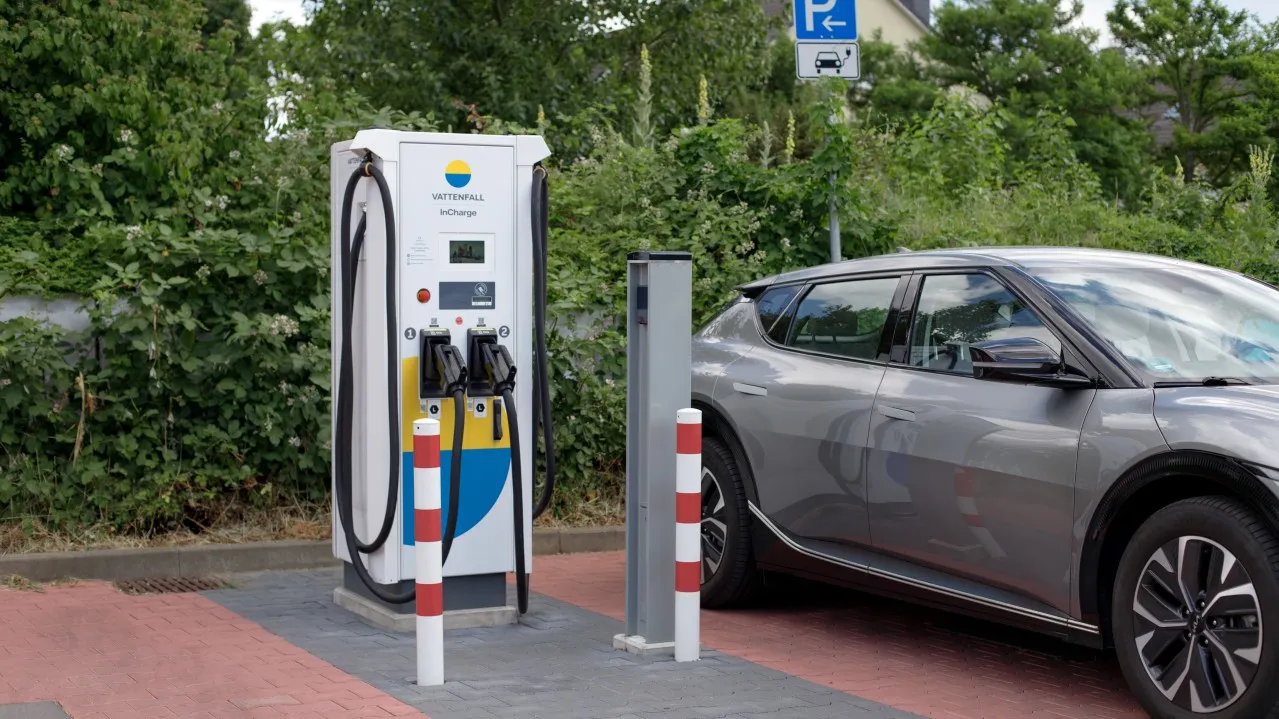
Vattenfall InCharge reports record usage of its charging stations in Germany: The amount of energy charged increased by around 65 percent, and fast-charging usage surpassed last year’s levels as early as August. At the same time, the company criticizes a possible discount on fuel.
Ad
Vattenfall InCharge reports that this year its public charging network in Germany is operating at a level of utilization higher than ever before, according to the company. The energy giant highlights growth in fast charging as a key factor, linking this development to current high and volatile fuel prices. However, the company does not provide specific figures regarding the size of the network or the average utilization rate of individual charging stations.
Significant increase in energy charged
According to Vattenfall, the amount of energy supplied at its own public charging stations has increased by around 65 percent since the beginning of the year. This represents the highest figure yet recorded in Germany’s InCharge network. The announcement does not clearly specify what period the comparison is based on, such as the same time last year or the first few months of the current year.
Fabian Hagmann, who is in charge of the charging network at Vattenfall, sees this as a sign that more people are driving electric cars and charging them regularly at public stations. With volatile fuel prices, consumers have been seeking more predictable costs for their transportation needs.
Fast charging is growing particularly rapidly
Vattenfall reports the greatest increase in fast charging usage. By the end of August, more than 10 GWh of electricity was delivered at the company’s fast charging stations. Vattenfall converts this amount to a driving distance of around 55 million kilometers, which corresponds to an estimated average consumption of about 18 kWh per 100 kilometers. Thus, the figure for the entire year 2025 was exceeded by 47 percent already after eight months. Mathematically, fast charging usage last year was nearly 7 GWh.
The statement does not provide details on how many fast charging stations and charging points Vattenfall operates in Germany, which hardware manufacturers are used, or what charging capacities the stations have. It also remains unclear what proportion of the growth comes from newly built locations and what comes from increased use of existing charging points. According to Hagmann, fast charging is increasingly becoming a routine practice for many drivers, both on long trips and in daily driving.
Ad
Vattenfall criticizes fuel discount schemes
Vattenfall devotes most of the report to the situation at gas stations. The prices of gasoline and diesel were directly tied to global commodity markets, so rising oil prices had an immediate impact on transportation costs. Electrified mobility could help make transportation more affordable and less dependent on oil price fluctuations, in addition to contributing to climate protection.
The company rejects a tank discount. While such a discount might provide short-term relief to consumers, it creates incorrect incentives, as market prices should reflect scarcity and accordingly guide consumption behavior. From Vattenfall’s perspective, it is more sensible to permanently reduce dependence on fossil fuels. Greater price stability can be achieved in the long term primarily through greater electrification of transportation. It is not surprising that a charging station operator holds this view, as it aligns with a common criticism among economists against blanket fuel price reductions.
Cost Comparison and Tariff Model
According to Vattenfall, the energy cost per kilometer for an electric car is currently about half of the cost of gasoline or diesel, whether charging at home or at the company’s public charging stations. The statement does not provide specific prices or the underlying consumption figures. In practice, such a comparison depends heavily on the household electricity tariff, the proportion of fast charging, and the vehicle’s consumption.
In its own pricing model, Vattenfall InCharge eliminates a subscription with monthly fees and instead uses only two charging rates. This model was recognized this year in the P3 eMobility Excellence Benchmark 2026 as well as by AUTO BILD for its transparency and customer-friendliness. Additionally, the company is working on improving its digital offerings and now employs an AI-powered agent in customer service.
Advertisement
