
You’ll wish your Xiaomi caught fire: if this battery causes a fire, they’ll give you another car for free
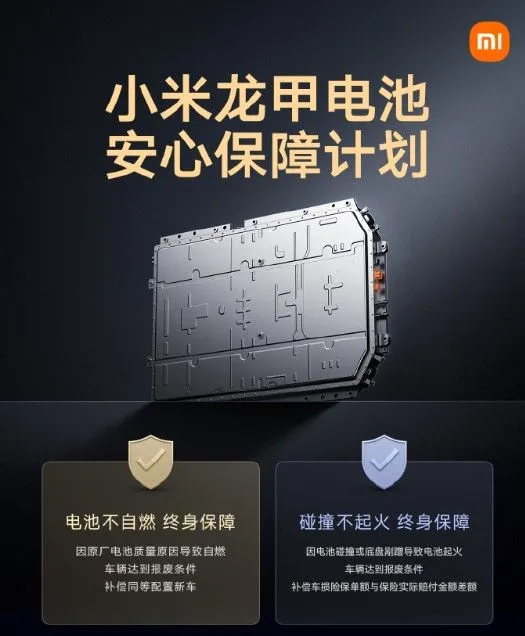
Xiaomi has just done something unusual in the automotive industry. The company has introduced its new Dragonscale battery, developed in collaboration with CALB and Sunwoda, and it came with a particularly striking promise: if a car equipped with this battery is destroyed by a fire caused by a defect in the battery itself, the owner will receive another new car with equivalent specifications.
In other words, Xiaomi’s new technology comes with a lifetime safety guarantee that addresses one of the biggest concerns surrounding electric cars and their batteries. And here’s a headline that practically writes itself: if the battery catches fire due to a manufacturing defect and the car becomes a total loss, Xiaomi will provide another car. Obviously, it’s not a good idea to start a fire, but this promise is far more substantial than many of the standard warranties in the industry.
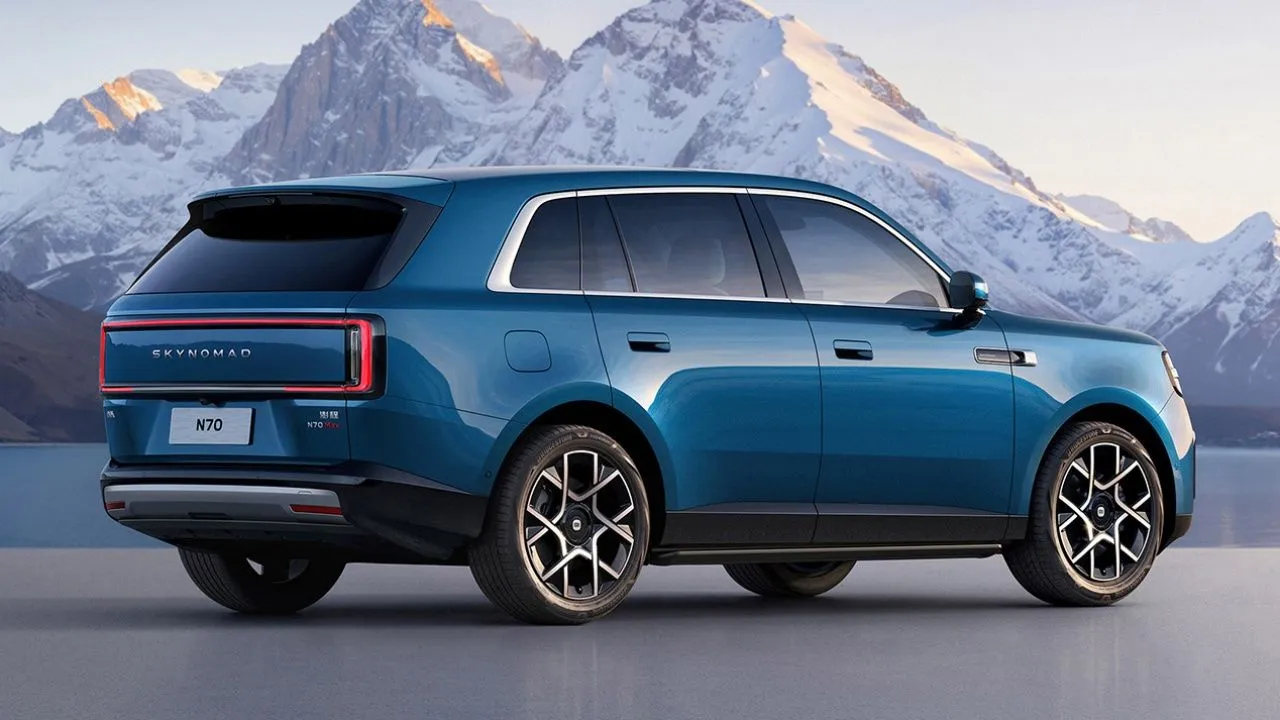
The Longjia battery will make its debut in Xiaomi’s new Skynomad lineup, which will be officially unveiled on September 7. The first models expected to use it are the N90 and N70, two large SUVs through which Xiaomi aims to rapidly expand its presence in the automotive market. The N90 is designed to be the largest and most family-oriented model, while the N70 will offer a slightly more compact alternative.
A warranty that goes far beyond the battery
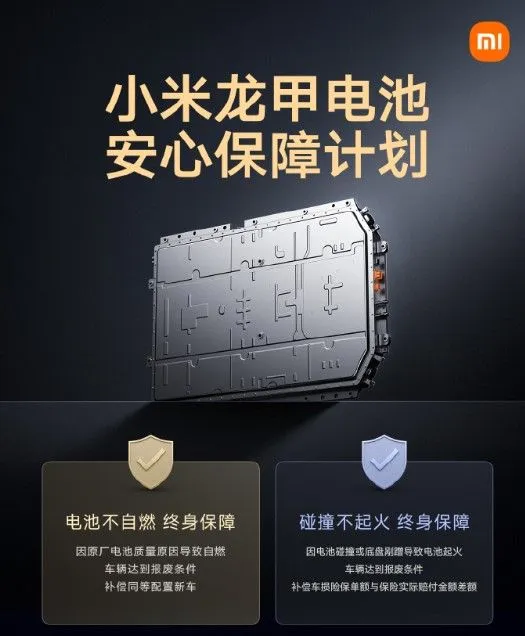
The truly remarkable aspect lies not only in the battery but also in what Xiaomi is willing to cover if something goes wrong. The Chinese manufacturer has announced the so-called Longjia Battery Peace of Mind Plan, which provides lifetime coverage for certain battery-related fires. The first scenario covered is the most straightforward: if the battery catches fire due to an inherent quality issue and the vehicle is declared a total loss, Xiaomi will compensate the owner with a new car of equivalent specifications.
The second scenario is even more interesting because it does not require the fire to originate from a manufacturing defect. If the battery is damaged in a collision or due to impact or abrasion on the vehicle’s undercarriage and subsequently a fire breaks out that results in the total loss of the car, Xiaomi commits to covering the difference between the insurance compensation and the vehicle’s value before the accident. In other words, the brand aims to prevent the owner from having to bear out of pocket the depreciation that may exist between these two amounts.
There is, however, fine print. The coverage is intended for the original owner and non-commercial use of vehicles, so it does not apply in the same way to rental cars, transportation services, or used units. Additionally, according to the information published about the program, the terms include the use of Xiaomi’s connected services and maintenance at official centers. Thus, this is not an open check for any Skynomad that ends up in flames.
And that’s precisely why the advertisement is so eye-catching. Xiaomi doesn’t just claim its batteries are safe; it backs that statement with money and a new car. At a time when battery safety remains one of the arguments used by those who question electric vehicles, the company has chosen to turn this risk into a commercial promise that’s hard to ignore.
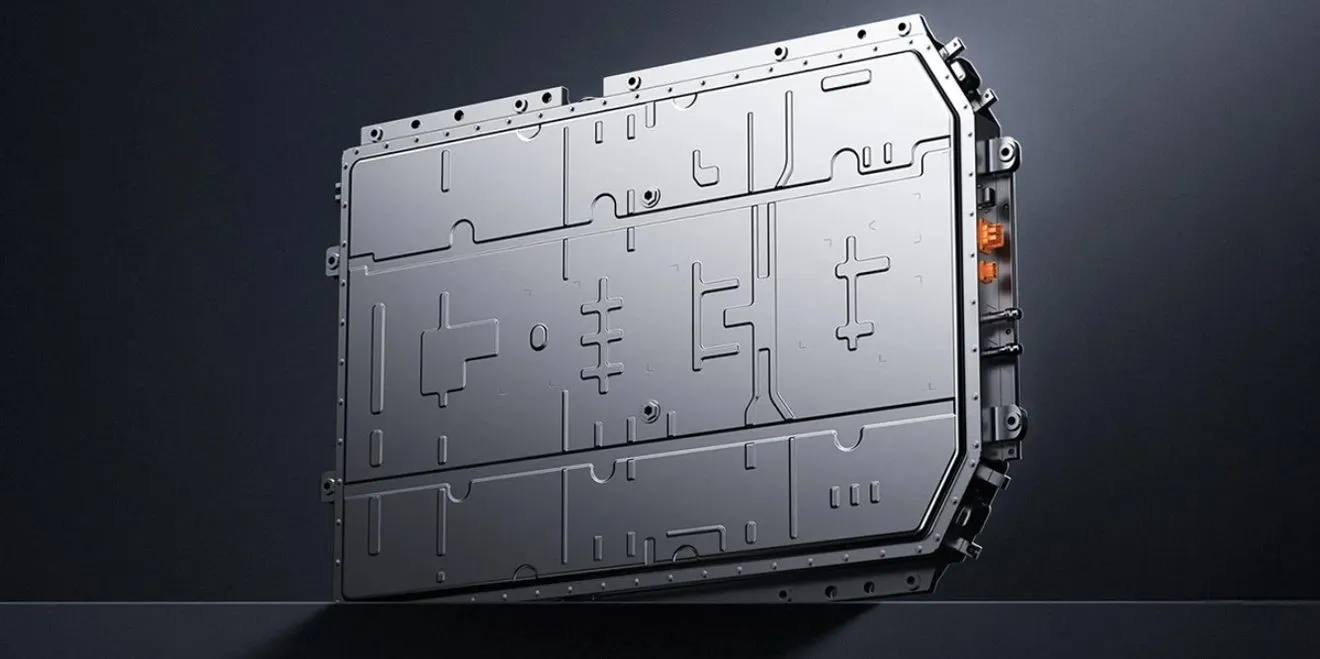
The Longjia battery was developed by Xiaomi in collaboration with CALB and Sunwoda, but the company insists its involvement goes far beyond simply purchasing batteries from a supplier. Xiaomi has participated in defining the product, designing the packaging, and developing the cells, as well as establishing quality controls over the manufacturing process.
In terms of safety, Xiaomi claims that the new battery exceeds China’s national standards in various aspects. Its features include an electrical isolation system with millisecond-level disconnection and multiple layers of redundant protection. The company also states that the battery can withstand a test at 55 degrees with the battery fully charged, without a cell fire spreading to the rest of the pack.
Another notable feature is Xiaomi’s battery management system, known as Cloud BMS. According to the company, it allows for continuous monitoring of cell status through cloud-based analysis and artificial intelligence systems. Xiaomi claims to collect data at a frequency ten times higher than required by national standards and with three times more information, enabling the detection of anomalies and rapid response to certain issues within milliseconds.
All of this will first arrive in the Xiaomi Skynomad N70 and N90, which will use an electric configuration with an extended range option. The N90 will be the largest model in the series, with five- and seven-seater versions according to available information, while the N70 will serve as a smaller alternative. Initial reports suggest the N90 is around 4.96 meters long, though Xiaomi still needs to officially confirm all details of the lineup.
It’s also not yet confirmed whether the Longjia battery will be available for the current Xiaomi SU7 and Xiaomi YU7. Both models currently use batteries supplied by manufacturers such as CATL and BYD FinDreams, so it seems the new technology is initially reserved for the new Skynomad series.
The launch comes at a crucial moment for Xiaomi. The company delivered 31,267 vehicles in China during July 2026, a significant figure but nearly 38% lower than the 50,212 units it achieved in December 2025. The new Skynomad lineup could become a key factor in boosting sales volume and, more importantly, improving the profitability of its automotive division.
Xiaomi’s strategy is quite clear. Rather than trying to convince customers solely with figures on range, power, or charging times, the brand is aiming to eliminate one of the major fears associated with batteries: what if it catches fire someday? Their answer is straightforward: if the issue is covered under the warranty and the car gets destroyed, another will be provided.
That said, it’s important not to interpret the announcement as an invitation to expect the car to catch fire. The coverage has very specific conditions, and the fire must occur in scenarios outlined by Xiaomi. But as a confidence strategy, it’s hard not to acknowledge that promising a new car if the battery causes vehicle destruction is one of the most aggressive moves we’ve seen so far in terms of safety.
There’s also one final interesting consequence. If Xiaomi manages to prove over time that the Longjia battery combines a low failure rate with such strong guarantees, it could force other manufacturers to respond. Because after announcing something like this, the question for the rest of the brands will be inevitable: if your battery is that safe, why don’t you dare guarantee it in the same way?