
Several experts named the Xpeng G9L as the best car at the Paris Motor Show, sending a warning to German brands.
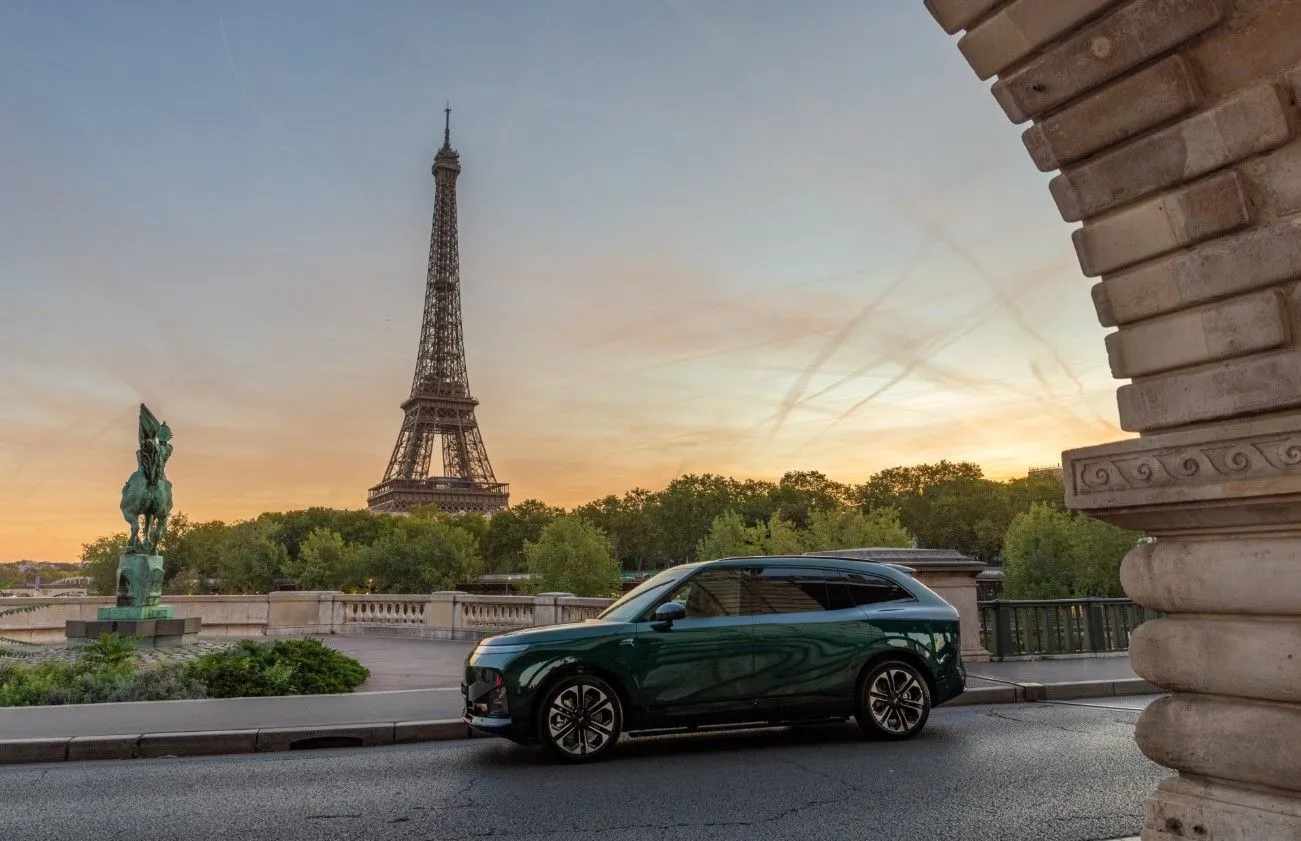
Automobile shows provide an opportunity to understand the industry beyond manufacturers’ presentations and speeches. It’s also in the corridors where people ask which car has caught the most attention among those who have been walking the exhibition halls for days. One such conversation at the end of the Paris Motor Show offered an answer that reflects how perceptions of Chinese brands are changing.
The Belarusian media outlet Avtopanorama asked journalists and experts from various countries which car they considered the best at the French event. Among the responses, a German journalist and American experts chose the Xpeng G9L. This isn’t an official award or a representative vote from all the press, but it is a recognition notable for the backgrounds of those who selected it.
The argument supporting its choice is the price relative to what it offers. The conversation mentions around 75,000 euros, with the claim that certain BMW and Mercedes models in a comparable category can cost two to three times more. This comparison depends on the selected model, version, and equipment, so it cannot be applied generally. Nevertheless, it raises a question that traditional manufacturers will need to answer more frequently: to what extent can their price difference be justified by the product itself.
The presenter summarizes this impression with a forceful statement: “The era of looking down on Chinese cars is over.” The G9L provides reasons to understand this claim, as its offering goes far beyond simply providing a large car with many screens.
Space, comfort, and a fast charging speed that outperforms rivals
The Xpeng G9L is 5.12 meters long, 2.00 meters wide, and 1.79 meters high, with a wheelbase of 3.10 meters. It is 23 centimeters longer than the G9, a length increase aimed primarily at providing more interior space and enabling six or seven-seater configurations. Its design combines the capacity of a family SUV with a comfort focus typical of a luxury sedan.
The six-seater version best reflects this intention, featuring two individual seats in the second row equipped with armrests, heating, ventilation, and ten-point massage. The front seats also have Nappa leather upholstery, electric adjustments, and comfort functions, along with a system that uses sensors to adjust the seats to the occupant’s physique. In the seven-seater variants, the third row includes heating, ventilation, and electric folding functionality.
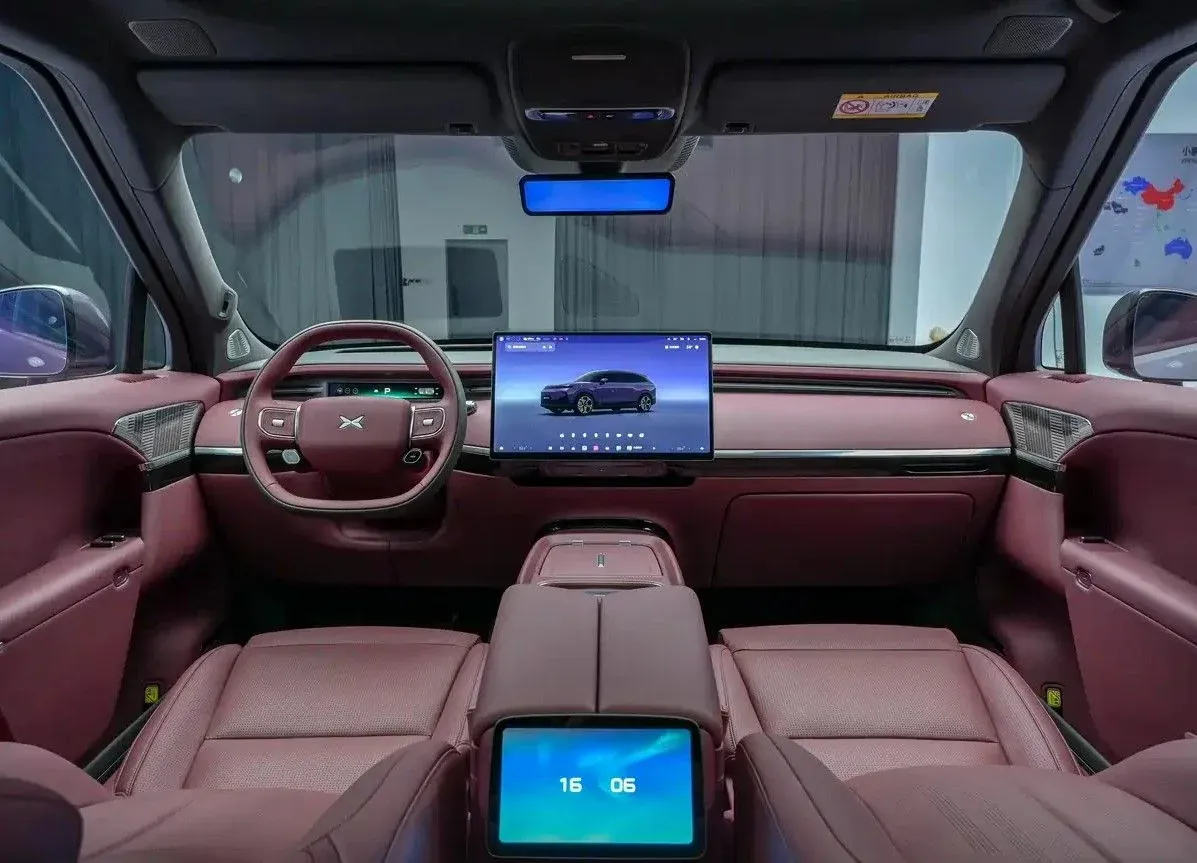
Passengers in the back seat enjoy a 21.4-inch 3K entertainment screen that unfolds from the ceiling. It is paired with a 23-speaker sound system, while the driver has access to digital instrumentation, windshield information projection, and a 17.3-inch central screen. The navigation system includes Google Maps and charging stop planning.
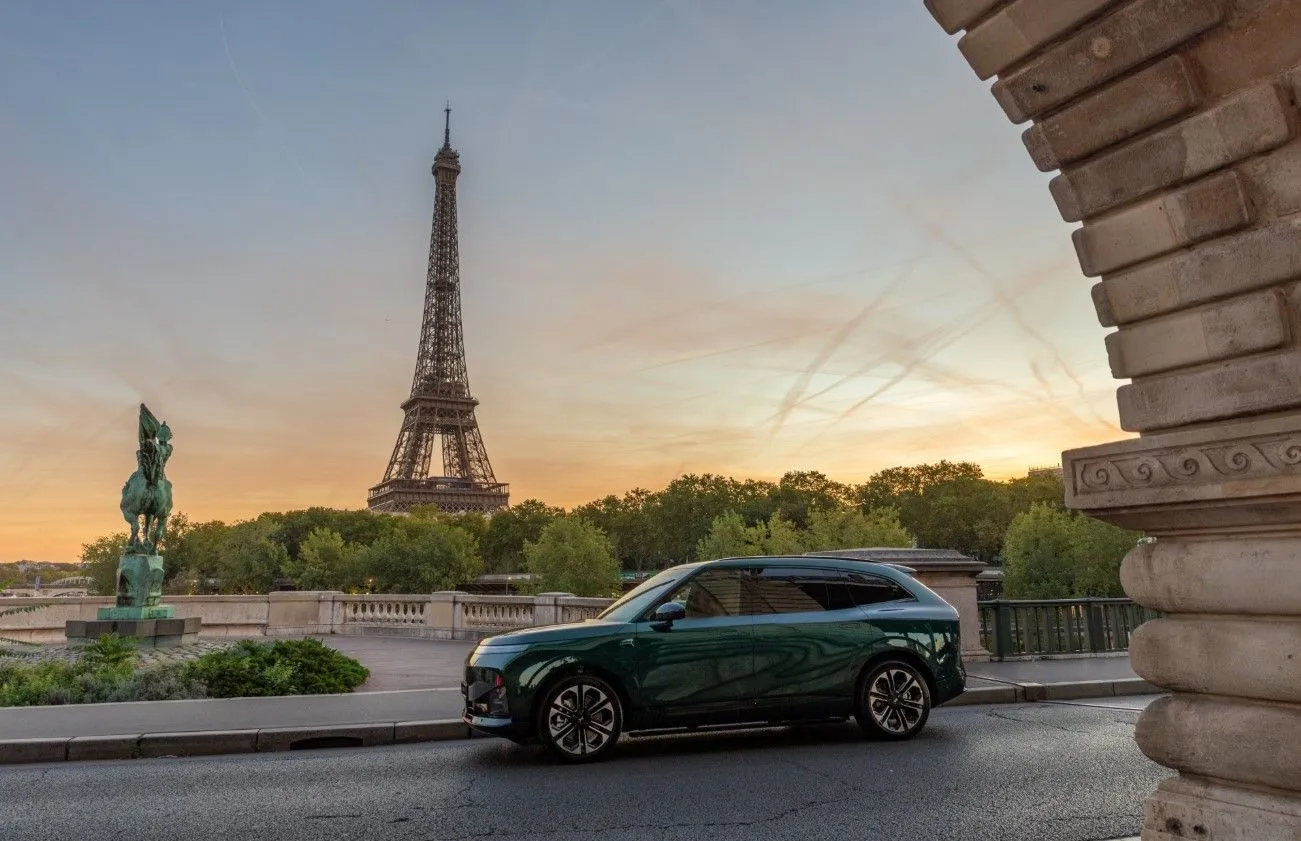
The range includes a rear-wheel-drive version with 270 kW (367 HP), capable of accelerating from 0 to 100 km/h in seven seconds. Above that are the Performance variants with two engines and all-wheel drive, which deliver 430 kW (585 HP) and reduce that time to 4.9 seconds. These performance figures are more than sufficient for a car whose main appeal seems to lie in how it treats its occupants.
All these versions use a battery with a gross capacity of 110 kWh, offering an approved range of up to 591 kilometers under WLTP standards for the rear-wheel-drive model and up to 553 kilometers for the all-wheel-drive versions. It’s important to distinguish these European figures from those reported under Chinese homologation cycles, which do not allow for a direct comparison with models sold in our market.
One of its strongest advantages lies in charging. The 800-volt system boasts a maximum claimed power of 540 kW in DC, capable of reaching 80% charge in less than 12 minutes under optimal conditions. Utilizing these capabilities depends on the battery temperature and finding a charging station that can deliver the necessary power. For AC charging, it features an internal charger of 22 kW.
Xpeng also announces an upgrade to its driving assistants through remote updates, powered by its Turing chips. It will be necessary to see which functions eventually make it to Europe and under what conditions they can be used. For now, this announcement should be viewed as part of its planned development, not as an autonomous driving capability available from day one.
The European plan also includes production at Magna Steyr’s facility in Graz, Austria, with initial deliveries scheduled for December 2026. This is an important detail in discussions where tariffs are frequently mentioned: simply comparing the Chinese price and doubling it does not replace an analysis of the European tariff, its equipment, taxes, and place of manufacture.
In Germany, the seven-seater G9L RWD Long Range Ultra starts at 74,600 euros. The six-seater AWD Performance Ultra costs 79,600 euros, while the seven-seater version with all-wheel drive reaches 85,600 euros. These are the prices announced for the German market; no confirmed prices have been set yet for Spain.
It’s not as if Chinese brands will suddenly dominate the premium segment overnight. Emotional factors and brand value play a significant role in purchasing decisions. But the G9L shows that the landscape has changed: Xpeng has already managed to have its product recognized as a benchmark in terms of space, comfort, and technology. For BMW, Mercedes, and Audi, this means having a competitor that requires more than just brand prestige to counter.