
V2G was supposed to generate 720 euros per year for users. For now, closed systems and meter deficiencies are the winners.
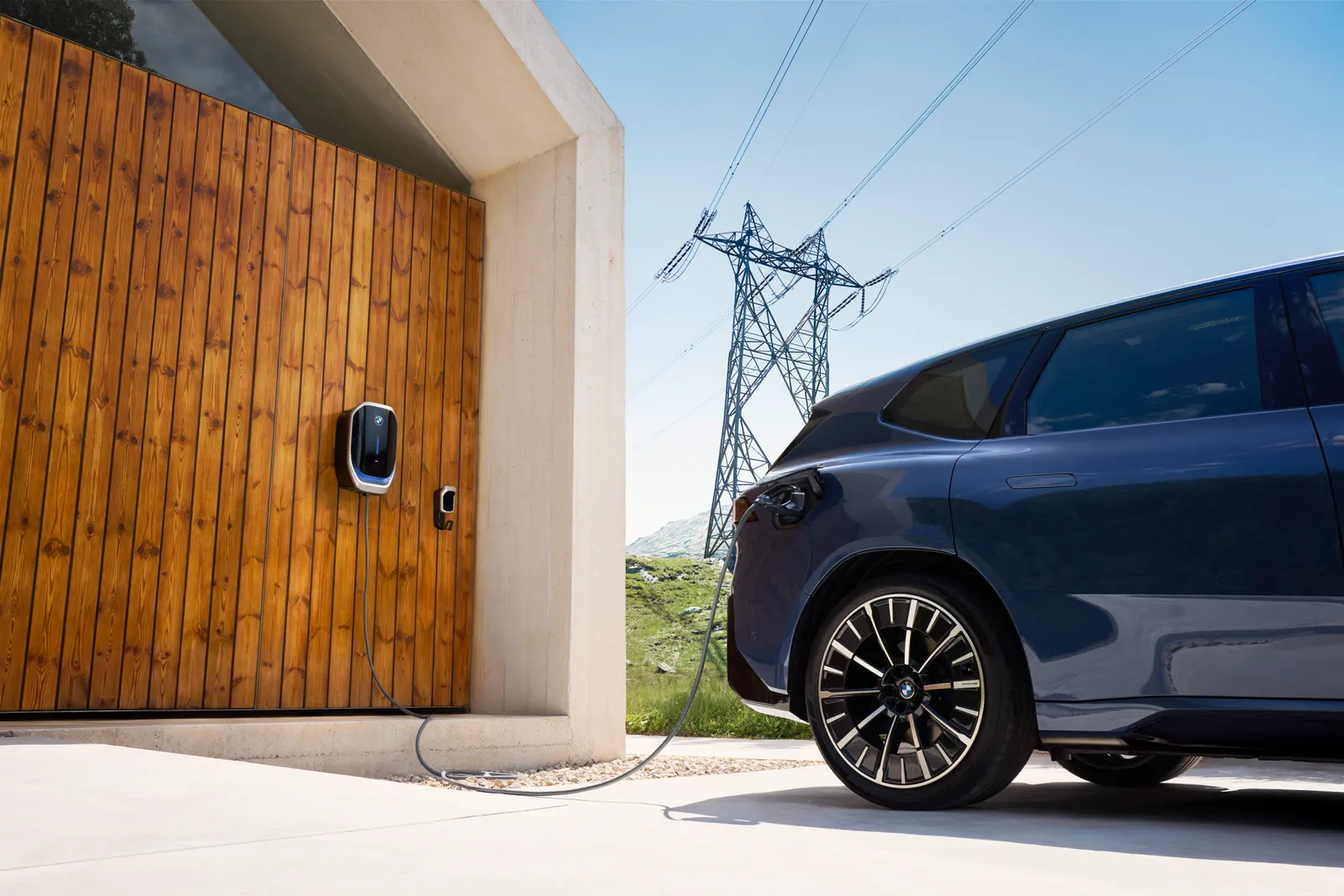
Two-way charging is making a comeback in promises from manufacturers and energy companies, but there remains a significant gap between promises and implementation. In Germany, BMW and E.ON mentioned 720 euros per year for iX3 owners if the car functions as an energy storage unit, but such offers are still very rare in real-world use.
Table of Contents
Show
Hide
For EV drivers, this is no longer a “can it be done?” question but rather “when will it work without hassle with wallboxes, tariffs, and operators?”
720 euros sounds good, but V2G is still not a mass-market product
The concept seems simple on paper. The car charges when electricity is cheap and feeds energy back to the home or grid when prices rise. BMW and E.ON calculated that an iX3 owner could earn 0.24 euros per hour connected to a two-way wallbox, totaling up to 720 euros per year.
The problem is that such implementations are hardly visible. It’s not about a lack of technology in the car itself, as the traction battery does exactly what it was designed for: storing and releasing energy. The issues arise at higher levels, namely in the car’s communication with chargers, meters, energy suppliers, and network operators.
Markus Hackmann from P3 Group identifies several obstacles at once. First, fragmented standardization. Second, too few smart meters. Third, warranty risks for manufacturers. Fourth, a lack of scalable business models beyond individual, closed projects. In short: the technology exists, but there’s still no mass-market product.
A good example is Germany. According to the Bundesnetzagentur, intelligent metering systems account for only 5.5 percent there. This is a very low level for a market that likes to talk about energy transition.
Volkswagen wants V2G, but even within the group there’s no unified approach
The topic has been pushed in Volkswagen Group for a long time, not just at the presentation level. It is said that the group’s vehicles, including future small electric models from the Polo class to the Skoda Epiq, are being prepared for V2G. However, alongside these ambitions, chaos is also evident.
Elli is recruiting interested parties for an offer promising an annual income of up to 720 euros. Meanwhile, Skoda is promoting its Moon product. Two companies from the same group are competing in the same space. This doesn’t look like a mature, unified ecosystem.
A lot is happening behind the scenes. Ambibox has developed a DC wallbox produced by CATL’s Nebula, which is being used in Skoda and Moon projects. EcoG is developing software for this segment. The Mobility House has been promoting V2G for years, with Herbert Diess openly criticizing the rigid structures of grid operator companies. In other words, the expertise exists. The problem is that knowledge and hardware alone still aren’t enough to succeed in the market.
There’s also the old, less appealing issue of grid fees and regulations. If energy used for charging and feeding back into the grid incurs double costs, economics quickly become unviable.
The biggest problem are closed ecosystems
Today, V2G often requires a specific set of components: the right car, the right wallbox, the right tariff plan, and the right energy partner. For customers, this means lock-in. Instead of freedom of choice, they end up with a package from which it’s difficult to exit.
This is precisely what multi-party interoperability is meant to change. IEA Task 53 is working on ensuring that two-way charging operates among multiple market participants, rather than only within a single company’s ecosystem. Currently, in European ISO 15118-20 in dynamic mode, 57 out of 186 parameters remain optional. That’s a lot. Too much if anyone wants to build scalability.
For comparison, China has GB/T standards, while Japan has demonstrated through CHAdeMO for years that standardization can simply be more practical. Europe is still in the process of finalizing its rules.
Here AFIR also comes into play, which is the EU regulation for alternative fuel infrastructure that could partially establish a legal framework. But EU regulations alone cannot replace meters, integration, or a meaningful offering for customers.
Who Will Profit First and What Does This Mean for Poland
It’s easiest to establish a business where there is high energy consumption and a predictable work schedule. Therefore, the real first beneficiaries of V2G could be corporate fleets, transportation, and logistics industries, rather than private drivers who park their cars sometimes in front of their apartments and sometimes in front of offices.
At home, competition is also fierce. Standalone energy storage systems are becoming increasingly affordable. For example, Ankersolix offers a plug-and-play set with a capacity of 5 kWh for 1599 euros or 10 kWh for 2698 euros. At an exchange rate of around 4.3 zloty per euro, this amounts to approximately 6,900 zloty and 11,600 zloty respectively. These prices would have sounded like a pricing error just a decade ago.
In Poland, this topic exists more in the realm of pilots and announcements than as a mature market for Kowalski. Operators like GreenWay, Orlen Charge, Tauron, and Ekoen focus primarily on conventional charging today rather than large-scale V2G services for individual customers. If this market develops more widely here, it will likely start with homes equipped with solar panels, corporate fleets, and customized solutions for specific partners. For now, that might be sufficient, but I wouldn’t say we yet have an open market.
V2G hasn’t disappeared, but it has shifted from being a highlight to routine work involving standards, meters, and billing. What do you think? Will cars being used as energy storage be adopted more quickly in Poland, or will traditional home energy storage alongside solar panels prevail?