
Used Volkswagen ID. Buzz – Buyer’s Guide. Prices, trims, range, and common issues
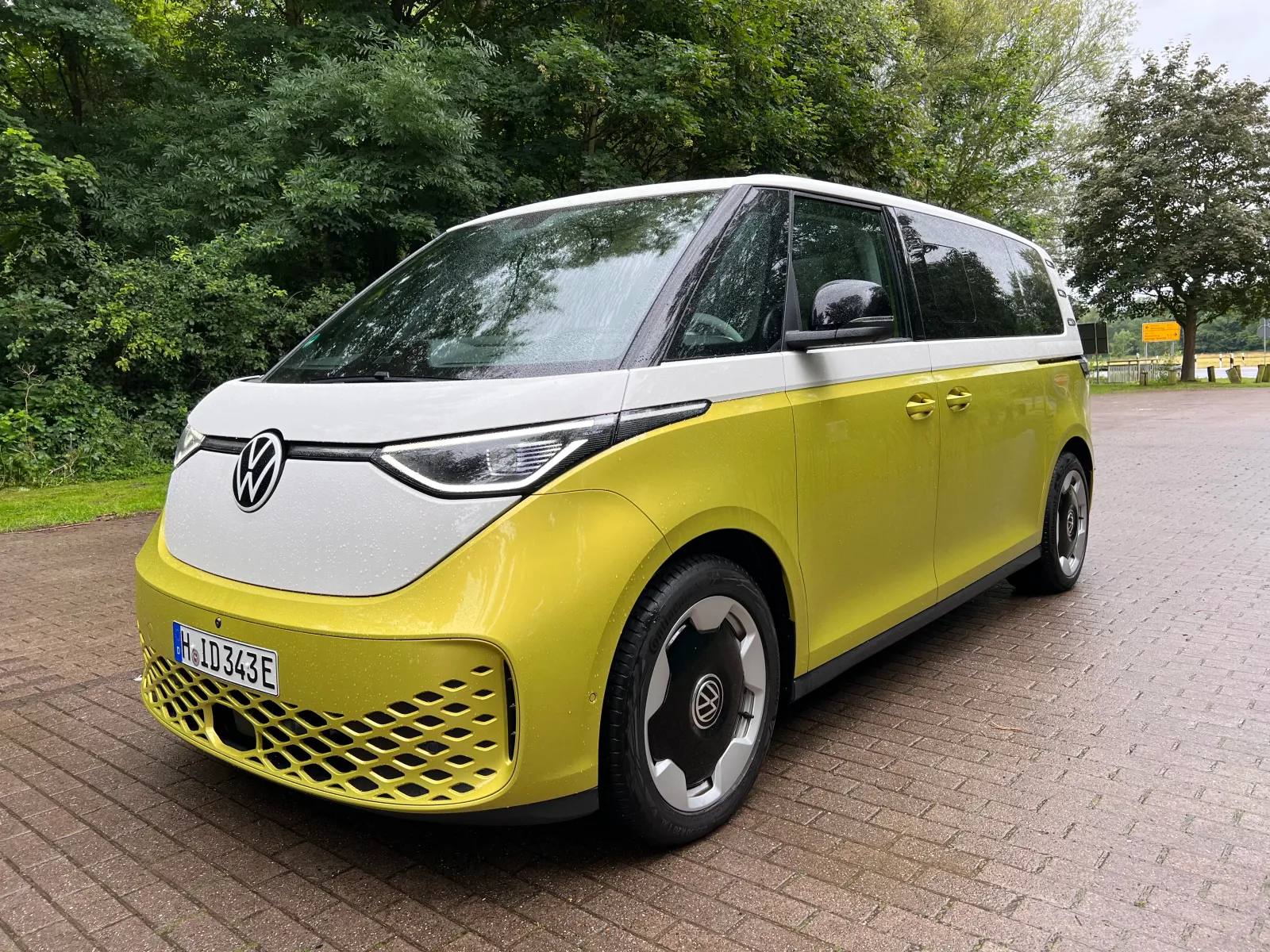
The ID. Buzz doesn’t age.
There are cars that quickly deteriorate after a few years. The ID. Buzz is definitely not one of them — perhaps because it already looks as if it’s 60 years old from the start? And in this case, that’s a compliment.
Volkswagen made excellent use of its own history. Short overhangs, a nearly vertical silhouette, a large logo, two-tone paint, and proportions inspired by the classic T1 ensure that even today the Buzz looks fresh and stands out among other similar models on the roads.
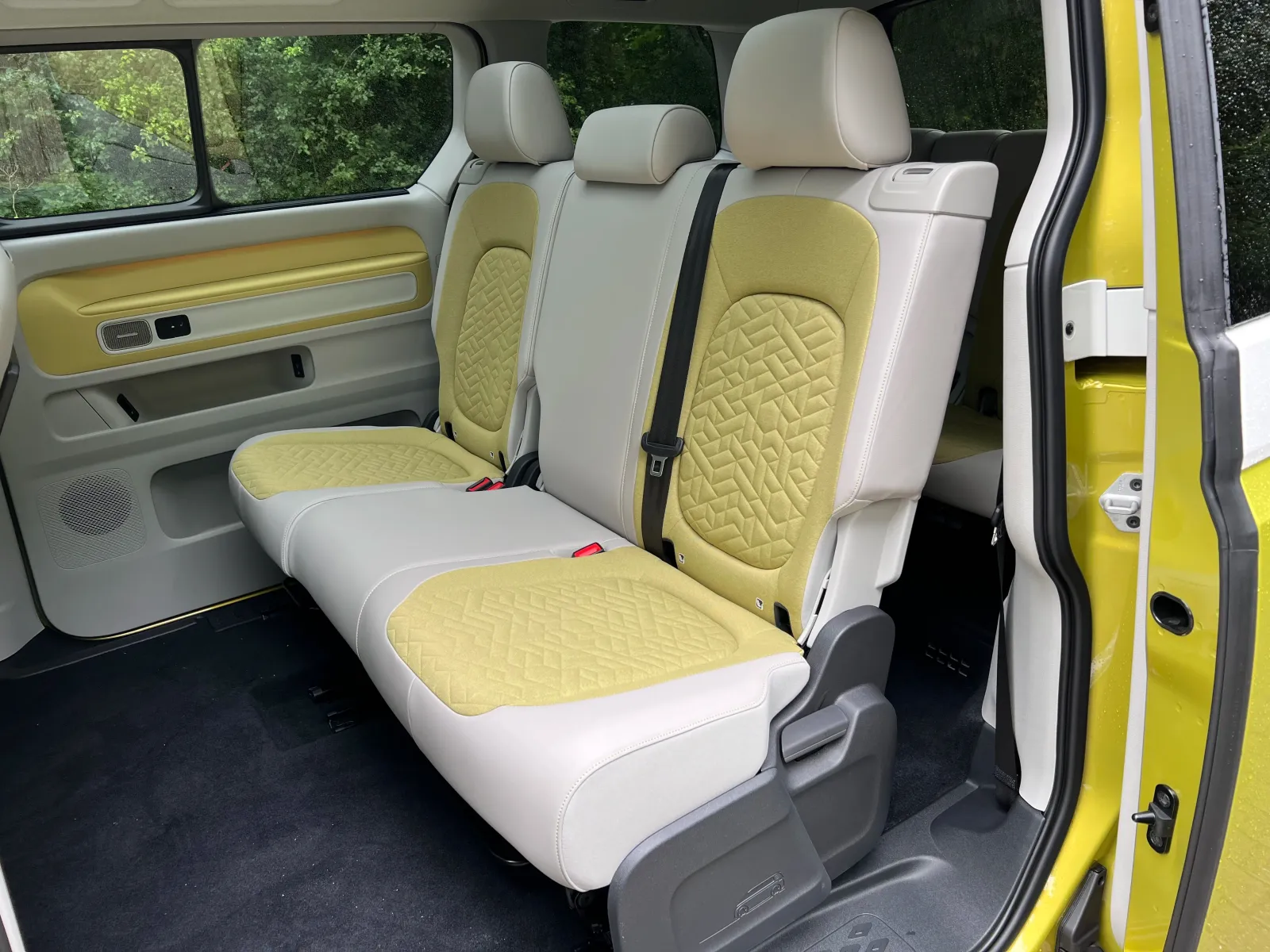
It’s also not a regular van converted into a passenger vehicle. It was built on the MEB electric platform (the same as, for example, the ID.3), features a battery in the floor, an enormous wheelbase, and a very spacious cabin. The shorter version measures 4.71 meters in length yet still offers an interior larger than that of many significantly longer SUVs. Today, it represents an interesting option not only in the new car market but also in the used car market.
First versions of the ID. Buzz: 204 HP and 77 kWh
Production began in 2022. The first passenger version of the ID. Buzz was mainly available as a five-seater model with a short wheelbase.
The power came from an electric motor at the rear axle with 204 HP and 310 Nm of torque. The battery had a usable capacity of 77 kWh and a gross capacity of 82 kWh. This is important when reviewing listings, as sellers sometimes list one value and sometimes the other.
The official WLTP range is around 420 km, with a maximum DC charging power of 170 kW, and the top speed is limited to 145 km/h. These models are currently the most common on Poland’s used car market.
The ID. Buzz has seen significant improvements since 2024
In 2024, a revised version was introduced with a new engine delivering 286 HP and a battery capacity of 79 kWh net. A longer ID. Buzz LWB model was also added to the lineup, featuring an 86 kWh battery and the ability to seat seven passengers.
The top model in the lineup is the sportier GTX. It has two engines, 4MOTION drive, and 340 horsepower. The charging capability has also changed. The shorter Buzz with a 79 kWh battery can accept up to 185 kW of power, while the LWB version with an 86 kWh battery can handle up to 200 kW.
Even more significant for everyday use is the change in the multimedia system. The newer models come with a 12.9-inch screen, a faster computer, and illuminated sliders for temperature and volume control.
If the budget allows, the upgraded model is clearly more well-developed.
How much does a used ID. Buzz cost in Poland?
The Polish market isn’t very large—currently, only 14 ID.Buzzes are listed on Otomoto. Cars from 2022-2023 with 204 horsepower engines dominate the market.
The cheapest reasonably good individual units currently start at around 155,000–160,000 zł. A car from 2022 with about 50,000 km on the odometer can be found for roughly 156,000 zł. Models from 2023 with 25,000–45,000 km typically cost around 165,000–180,000 zł.
Better-equipped cars, those from Polish dealerships, or ones with very low mileage can cost 190,000–210,000 zł or more.
Beware of seemingly very cheap offers. Some of them are lease transfers or net amounts, not the actual price of the whole car.
What is the real range?
There are no miracles here. The ID. Buzz is tall, wide, and has the aerodynamics of a large van.
Early models with a 77 kWh battery should be able to travel approximately 290-340 km under normal conditions. Urban driving can yield more range, while winter conditions and fast highway driving will result in significantly lower figures. The LWB version with an 86 kWh battery typically offers around 350-400 km of real-world range.
If the Buzz is intended mainly as a family car for city driving, suburban routes, and vacation trips with stopover charging, the initial 77 kWh battery will suffice. If it needs to cover long highway distances regularly, a larger battery makes more sense.
Check the heat pump and battery
The heat pump was not standard on all units. Therefore, it’s advisable to verify its presence using the VIN in older vehicles.
The battery’s state of charge is far more important. One should not rely solely on the range displayed after charging—it is merely a prediction dependent on driving style and temperature.
Before purchasing, it’s worth checking the SoH, or the actual condition of the battery. Volkswagen offers the option to conduct a diagnosis and obtain information about the remaining capacity.
The battery is covered by a warranty of 8 years or 160,000 km, with protection ensuring at least 70% of the original usable capacity is maintained.
Mandatory: checking the battery service schedule
In 2026, a significant campaign emerged regarding certain vehicles produced between 2022 and 2024.
The issue concerned specific high-voltage battery modules. In extreme cases, they could discharge excessively and overheat.
This does not mean that every used ID. Buzz from the early production years is problematic. However, before purchasing, it is necessary to enter the VIN in ASO and check whether the vehicle was affected by the campaign and whether all required actions were taken.
Depending on the vehicle, software updates, battery checks, or replacement of specific modules might be required.
Electronics are the weakest point of first-generation cars
The most common complaints from owners relate to the multimedia system and electronics. Early infotainment systems can be slow, freeze up, or require a restart. Unlit temperature and volume sliders have also been criticized.
Therefore, more time needs to be spent on the electronics during inspections than usual. Test the phone connection, check Android Auto or Apple CarPlay, the navigation system, rearview camera, air conditioning, seat heating, assist systems, and all screens.
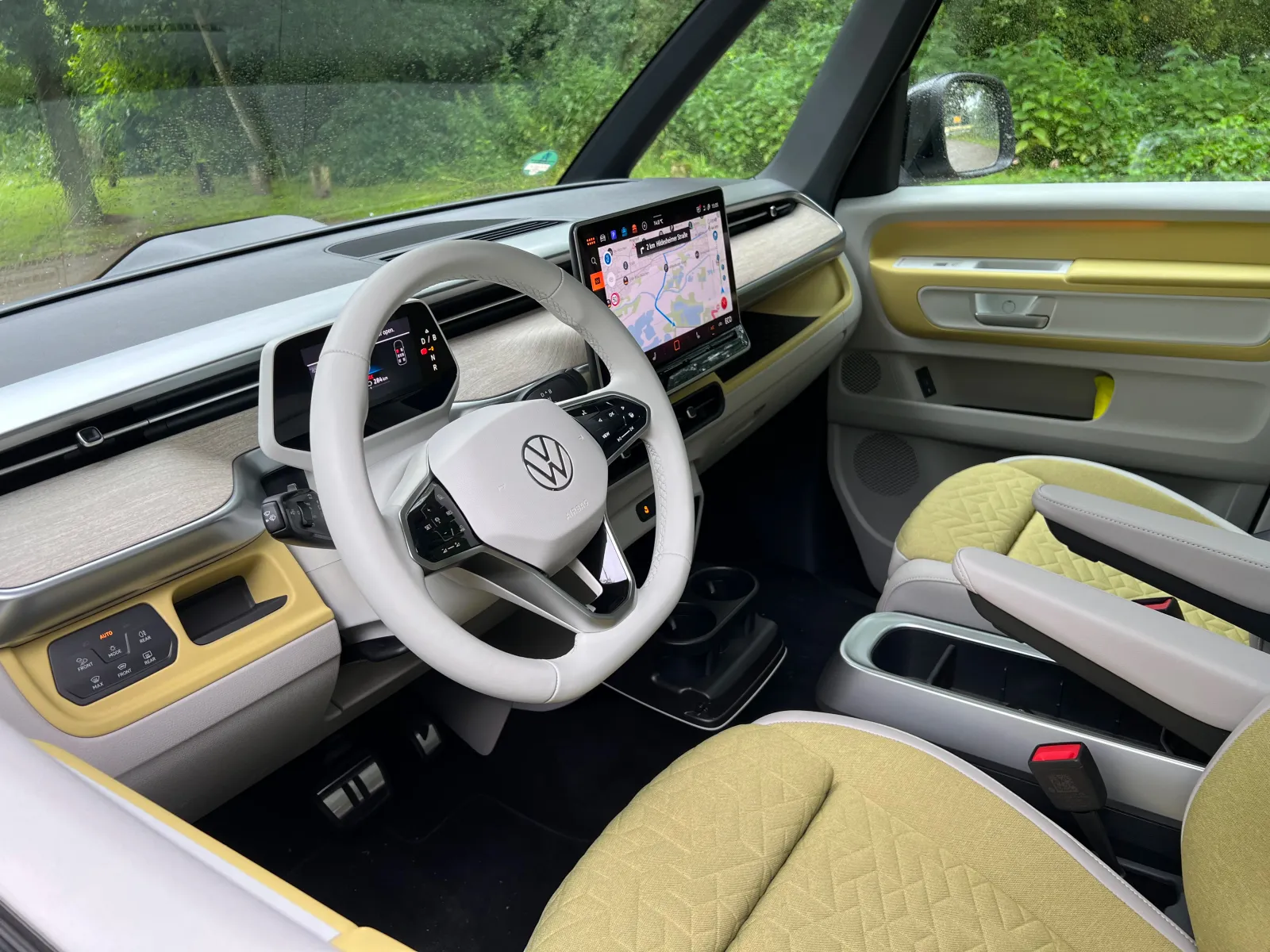
It’s also worth checking the conventional 12 V battery. Its poor condition can cause a variety of seemingly unrelated electronic errors.
Doors, brakes, and tires also require attention
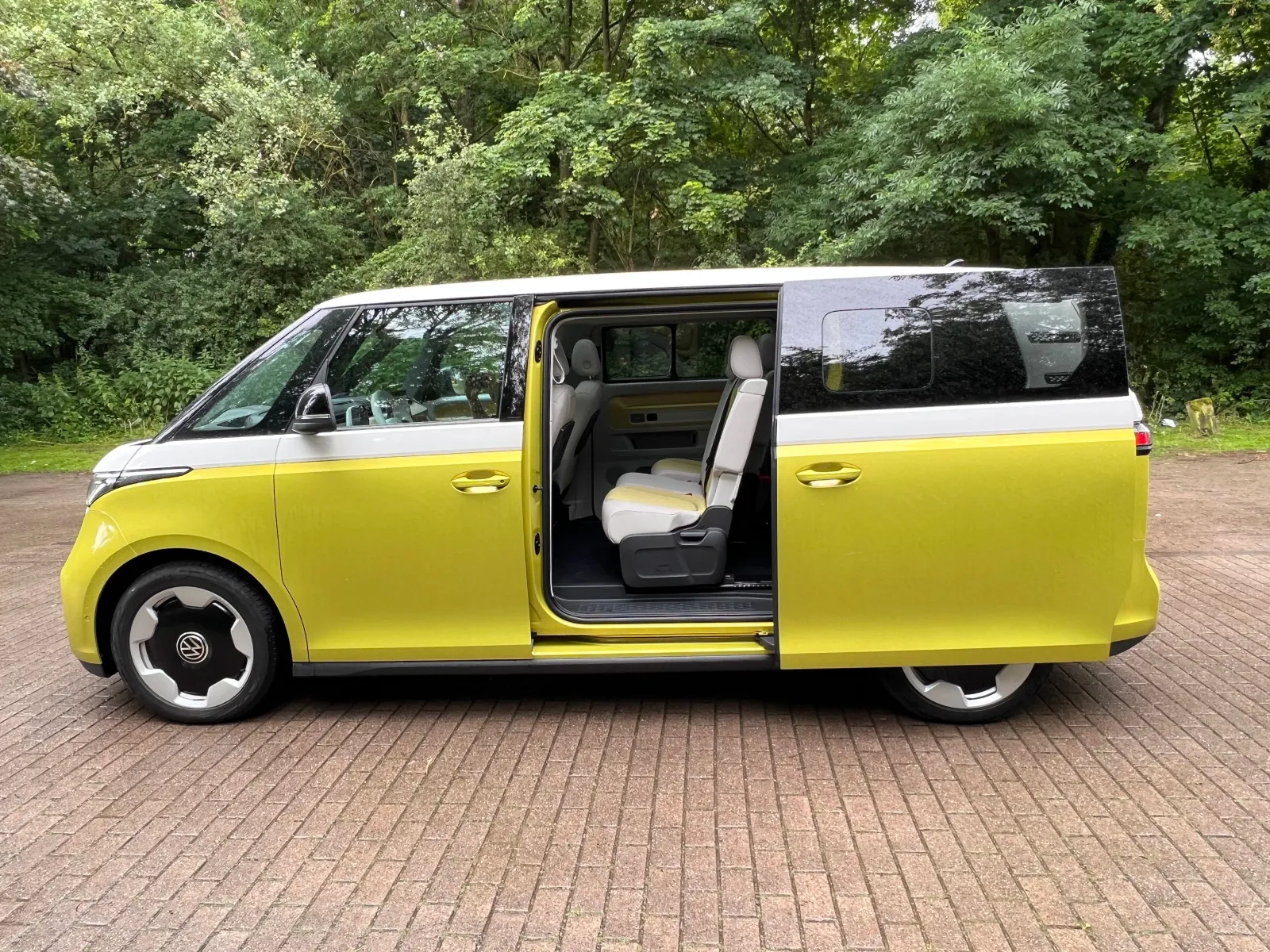
If the used vehicle has electric sliding doors and an electric trunk lid, each one needs to be opened and closed several times. The mechanisms should operate smoothly, without stopping or making noises.
The next aspect to consider are the brakes. As with many electric vehicles, regenerative braking means that the conventional brake discs operate less frequently. This can lead to corrosion even with low mileage. British Auto Express lists this issue as one of the most commonly reported problems.
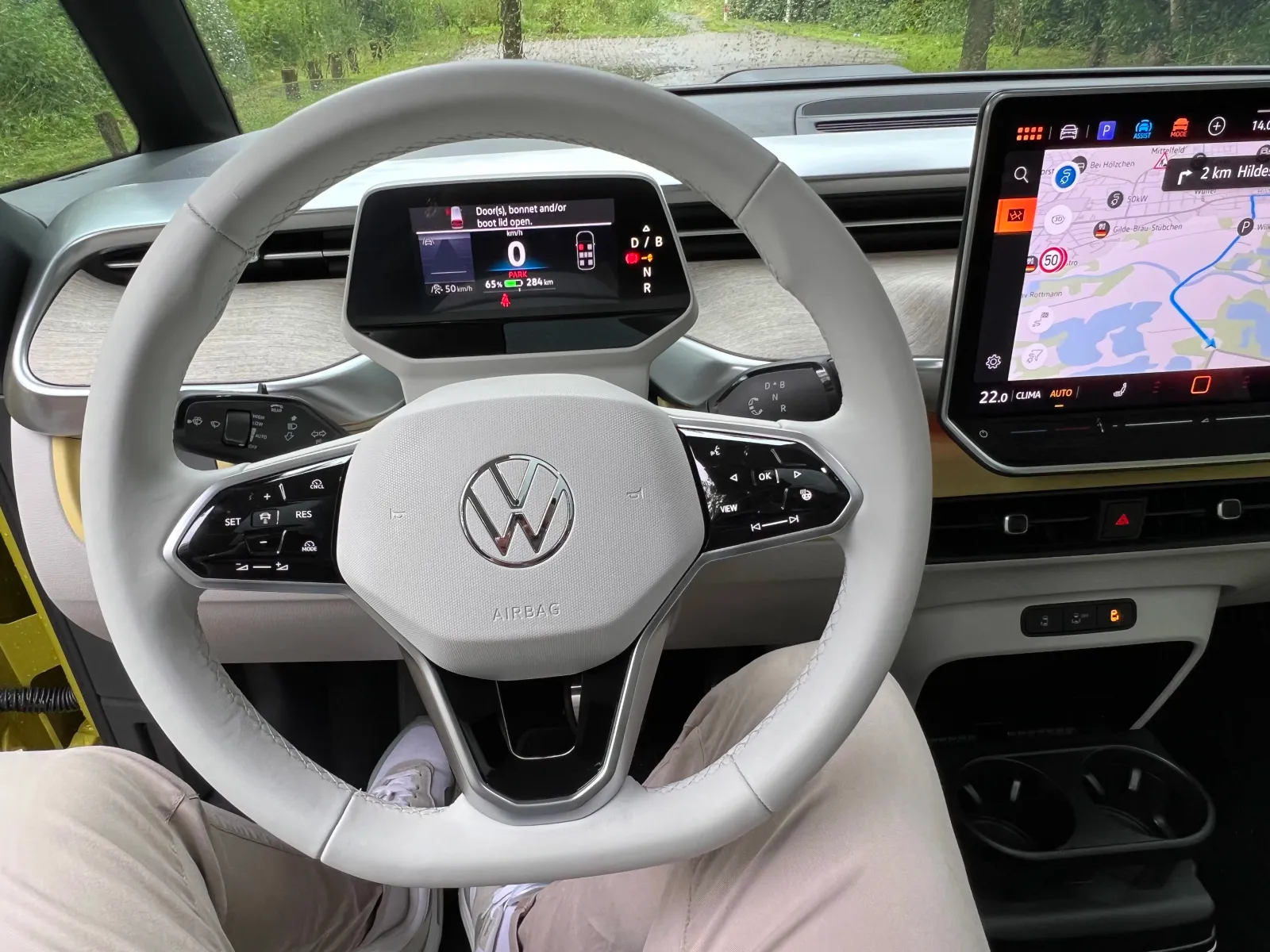
The tires also need to be checked. The ID. Buzz is heavy, has high torque, and often comes with large wheels. Uneven tire wear may indicate issues with the vehicle’s geometry, and a set of good 20- or 21-inch tires won’t be cheap.
The chassis and battery covers should also be inspected for signs of severe impacts.
Practicality is its huge advantage
In terms of space, the ID. Buzz still makes a strong impression. The shorter version offers over 1100 liters of cargo space behind the second row of seats, and over 2200 liters after folding them down.
The longer LWB version is even larger and can accommodate five, six, or seven seats. If someone truly needs a large family car, the difference compared to most SUVs is enormous.
However, it’s necessary to check the specific configuration before purchasing, as the number of seats and equipment vary significantly between models.
Is it worth buying a used ID. Buzz?
Yes, but mainly these days because the price is starting to match the car’s capabilities. At 160,000–180,000 zł, the first units of the Pro 77 kWh 204 HP model look much more attractive than when new ones cost around a quarter of a million. They still offer great styling, plenty of space, and very good driving comfort.
The most sensible choice seems to be a well-maintained model from 2022–2023, preferably from a Polish dealership, with a complete service history, up-to-date software, recent battery maintenance, and verified SoH.
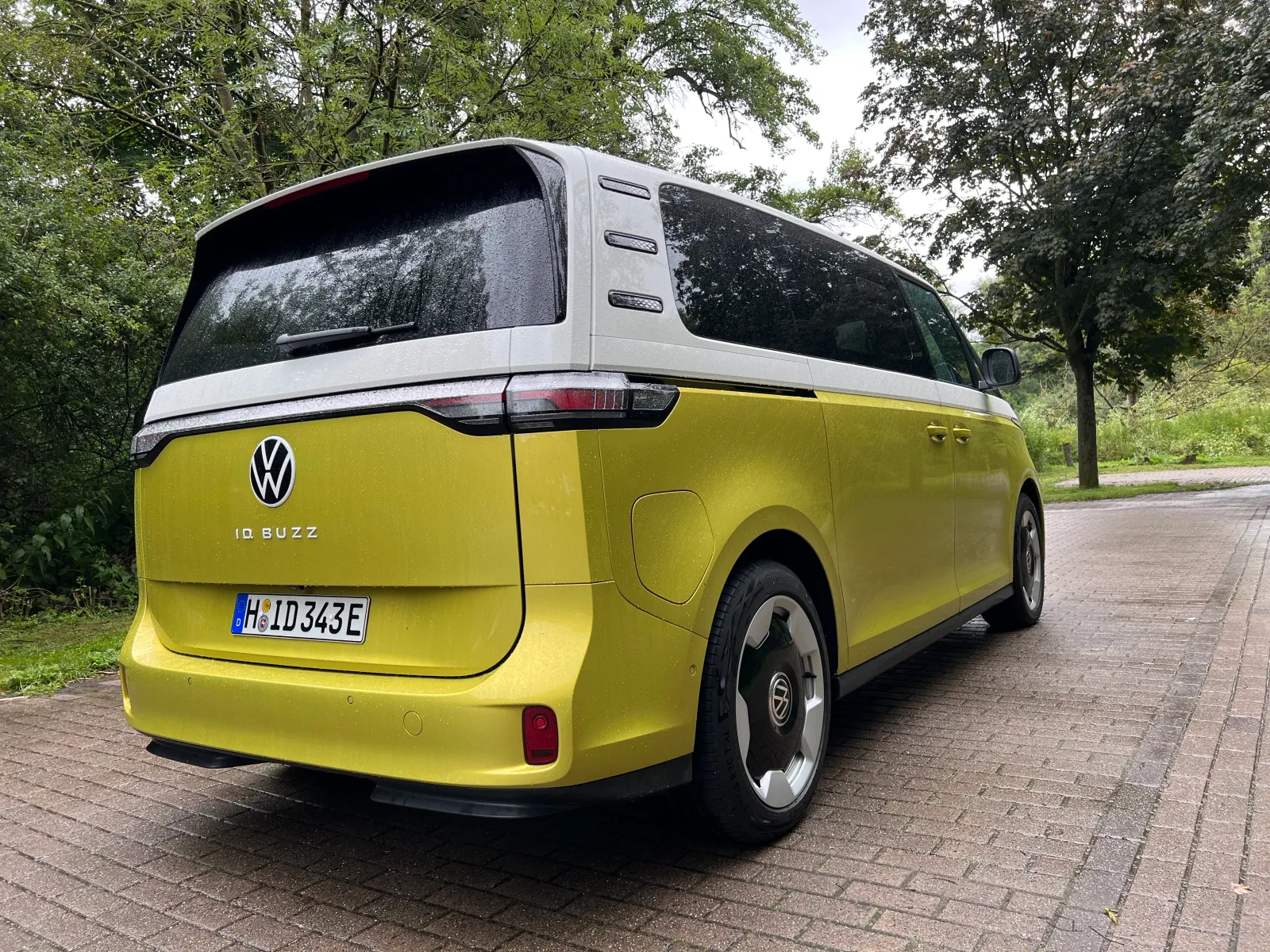
If the budget permits, an even better option is the 2024 model after its modernization. With 286 horsepower, a larger battery, faster charging, and improved multimedia features, it addresses some of the biggest weaknesses of the initial version.
The ID.Buzz is undoubtedly one of the most interesting combinations of style and practicality on the market – but if someone drives frequently on highways, it might lack sufficient range. The retro-style Volkswagen would work well as a delivery and passenger vehicle that also promotes a company (everyone will notice an aesthetically customized example), or as a “local” car for transporting large families and/or heavy loads.
Piotr Sobczyk
