
U.S. Expert: Solid-State Technology Is at a Turning Point
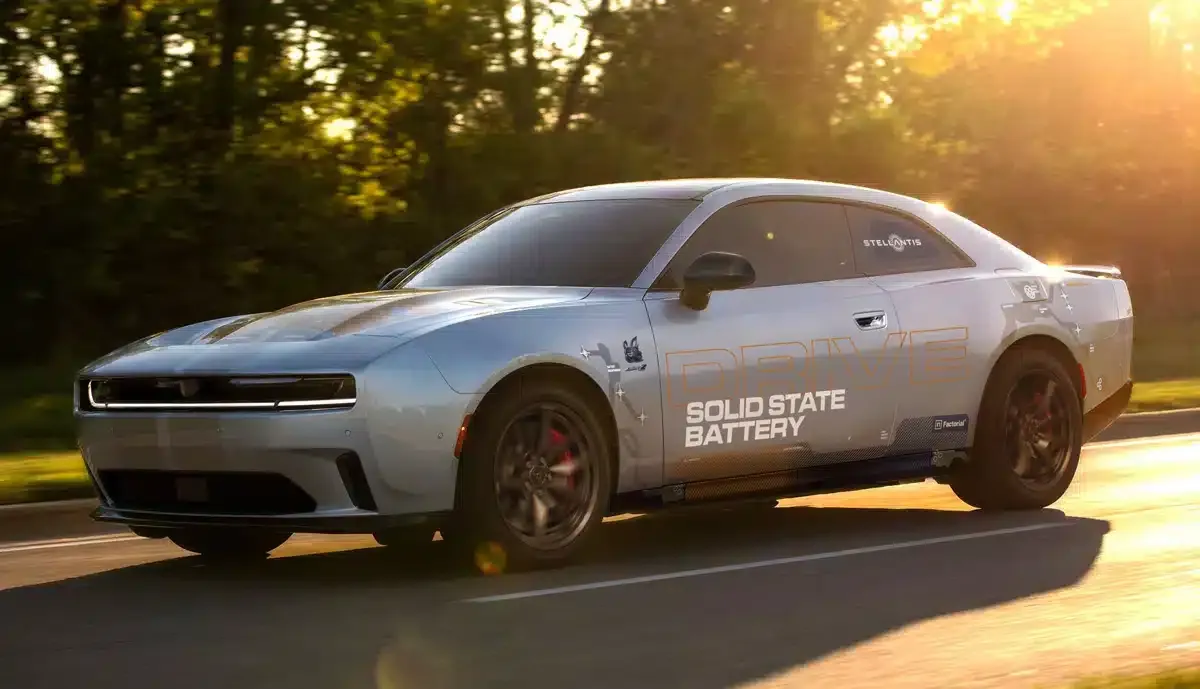
Image: Stellantis
Solid-state battery technology is currently at a critical turning point, according to Automobilwoche, which cited a U.S. company specializing in this field. Siyu Huang, CEO of startup Factorial, sees this as a historic opportunity for automakers in the U.S. and Europe to catch up technologically with leading Asian competitors.
Factorial relies on a strategy to accelerate industrialization. By converting existing factories that were previously used for lithium-ion batteries with liquid electrolytes, solid-state batteries are to be produced. According to Factorial, this approach can reduce investment costs by up to 80 percent compared to building new facilities.
Factorial is already working with well-known partners. These include Mercedes-Benz and Stellantis, as well as the California-based company Karma Automotive. The latter plans to use Factorial’s batteries in an electric coupe set to launch at the end of 2027. Successful road tests have already been conducted: a modified electric Mercedes EQS covered over 1,200 kilometers on a single charge just last year.
Despite progress, there are still technical hurdles to overcome before solid-state batteries can be mass-produced. These include challenges in manufacturing, the durability of the electrolyte, and high operating temperatures. As of now, there are no vehicles on the market equipped with true solid-state batteries.
In an interview with Automobilwoche, Huang predicts that by 2030 the battery market will be divided into two segments. While cost-effective lithium iron phosphate (LFP) batteries and increasingly sodium-ion chemistry will dominate the entry-level market, the high-performance segment is expected to shift toward solid-state batteries. Factors such as energy density, safety, and charging speed will be key considerations in this segment.
According to the CEO, Factorial’s focus is now shifting from validation to industrialization. “A breakthrough only matters if it can be implemented on a large scale,” said Huang. The key question for the industry is no longer the technology’s performance but rather its timeline and required capital investment.
Also interesting
About the author
Thomas Langenbucher is an expert in electromobility with experience in the automotive and financial industries. Since 2011, he has been covering electric vehicles, sustainable technologies, and mobility solutions for ecomento.de. Learn more.
Reader interactions