
One of the largest component manufacturers explains why it can earn more money with an electric truck than with a diesel one.
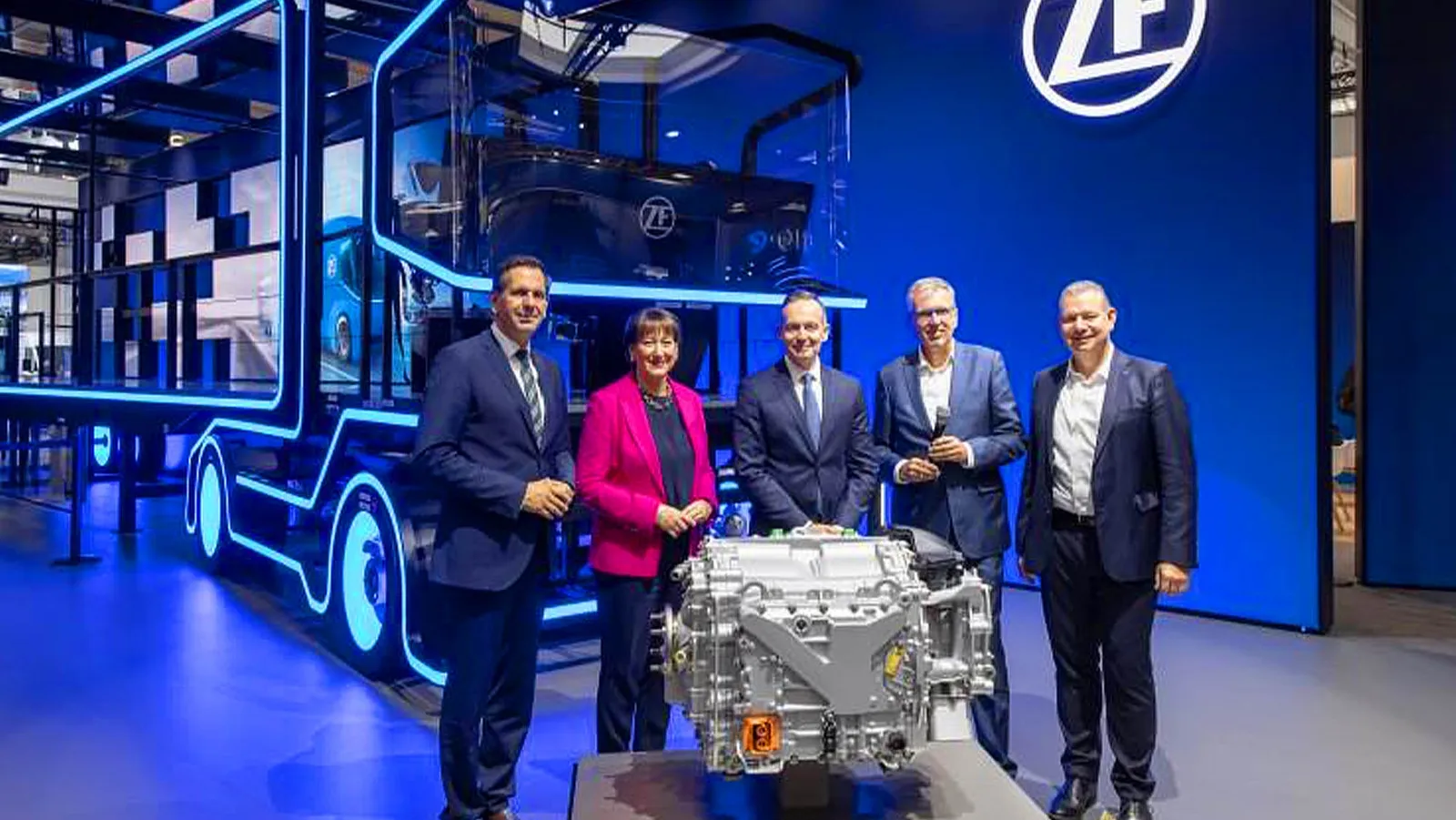
The electrification of heavy transportation is opening new business opportunities for the major suppliers in the automotive industry. While electric trucks eliminate numerous mechanical components found in diesel models, they also allow for the integration of propulsion systems with higher technological and economic value. For some companies, this transformation can result in a significant increase in revenue per vehicle.
This is the case with ZF, one of the world’s largest manufacturers of components for automobiles and industrial vehicles, which has seen electric trucks as an opportunity to expand its business. The German company aims to raise the revenue of its industrial vehicle division from 7.8 billion euros in 2025 to approximately 9.0 billion euros within three or four years.
Andreas Moser, a member of ZF’s board of directors and head of its industrial vehicle division, explained one of the main reasons behind this strategy: an electric drive shaft can integrate the functions of several components that, in a diesel truck, are separate.
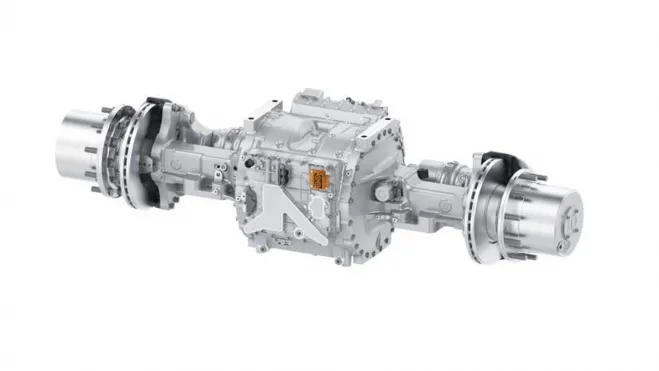
A single electrical system replaces multiple traditional components
The difference lies in how the drive system is constructed. In a conventional diesel truck, motion is generated by an internal combustion engine and transmitted to the wheels through a gearbox, drive shaft, and set of axles and gears.
On the other hand, certain electric propulsion architectures allow the electric motor, reduction gears, and transmission components to be combined into a compact system integrated into the axle.
This transformation alters the business model for suppliers. While in a conventional vehicle a company can handle the supply of specific components, in an electric vehicle it has the opportunity to provide a more complete propulsion package.
For ZF, this means it can increase the economic value of the systems it sells per truck manufactured, even though the vehicle requires fewer separate mechanical components.
The company has not specified exactly how much this value increases in an electric truck compared to a diesel one, but it views this technological integration as one of the drivers of growth for its industrial division.
It’s not necessarily that manufacturing an electric truck becomes more expensive due to the inclusion of these systems, but rather that the supplier can take on a larger share of the propulsion system, and thus the cost of the components supplied to the manufacturer.
ZF aims to reach 9 billion euros in revenue
The German company has set a significant growth target for the coming years. Its Commercial Vehicle Solutions division, which specializes in technologies for trucks, buses, and other industrial vehicles, generated approximately 7.8 billion euros in revenue in 2025.
Its goal is to raise this figure to around 9 billion euros in three or four years, representing an accumulated growth rate of nearly 15%.
Electrification will be one of the drivers of that expansion, along with securing new contracts and developing the business in international markets.
The strategy does not rely solely on selling more trucks or increasing global production. It also aims to boost the value of the technological systems that ZF can provide for each vehicle.
This is particularly important for major component manufacturers, who are adapting their businesses to an industry where electric motors, power electronics, and control systems are playing an increasingly significant role.
India and China will be crucial for growth
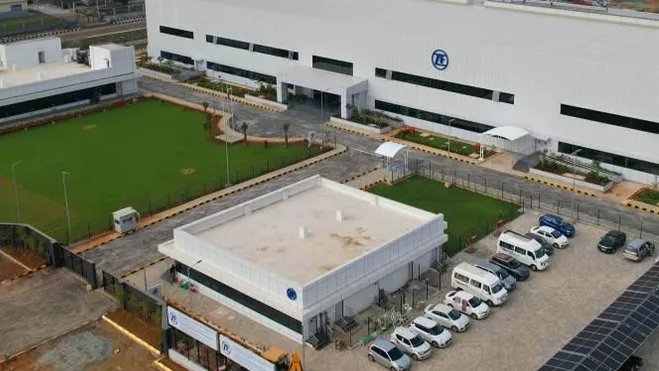
Another major goal for ZF is to expand its presence in Asia, especially in India, where the company sees significant potential for development in industrial transportation.
According to data provided by Moser, the average value of components supplied by ZF per commercial vehicle in India is around 500 euros. The executive believes this figure could rise as manufacturers adopt automated transmissions and new electric propulsion technologies.
The company has production facilities and engineering teams in the country, enabling it to develop solutions tailored to the needs of local manufacturers.
China also plays a significant role in this strategy. ZF has promoted local production of electric propulsion systems to strengthen its position in a market where manufacturers are expanding their capabilities for developing and exporting industrial vehicles.
The international landscape, however, is not uniform. While Europe is facing uncertainty in the industrial vehicle market, India represents one of the growth opportunities for the coming years.
The transformation of trucks goes far beyond electric engines
ZF is also strengthening its activities in electronics, advanced driver assistance systems, and software.
The digitization of industrial vehicles requires the development of increasingly complex technologies, ranging from active safety systems to solutions capable of electronically managing various functions of the truck.
The company is working on shared software platforms that can reduce engineering costs and leverage common solutions across different vehicles and markets.
This transformation thus entails a change in the business model of traditional suppliers. Mechanical components remain essential, but integrated systems, electronics, and software are gaining importance in the value of vehicles.
Electrification can thus become an industrial opportunity even for companies historically tied to conventional transmission and mechanical systems. Electric trucks may require fewer parts, but they also allow certain suppliers to provide a larger share of their technology and increase the revenue they earn per unit.