
Univé is cutting off Omoda, Jaecoo, and Leapmotor from insurance policies. In the Netherlands, the issue is not the vehicle but rather repairs.
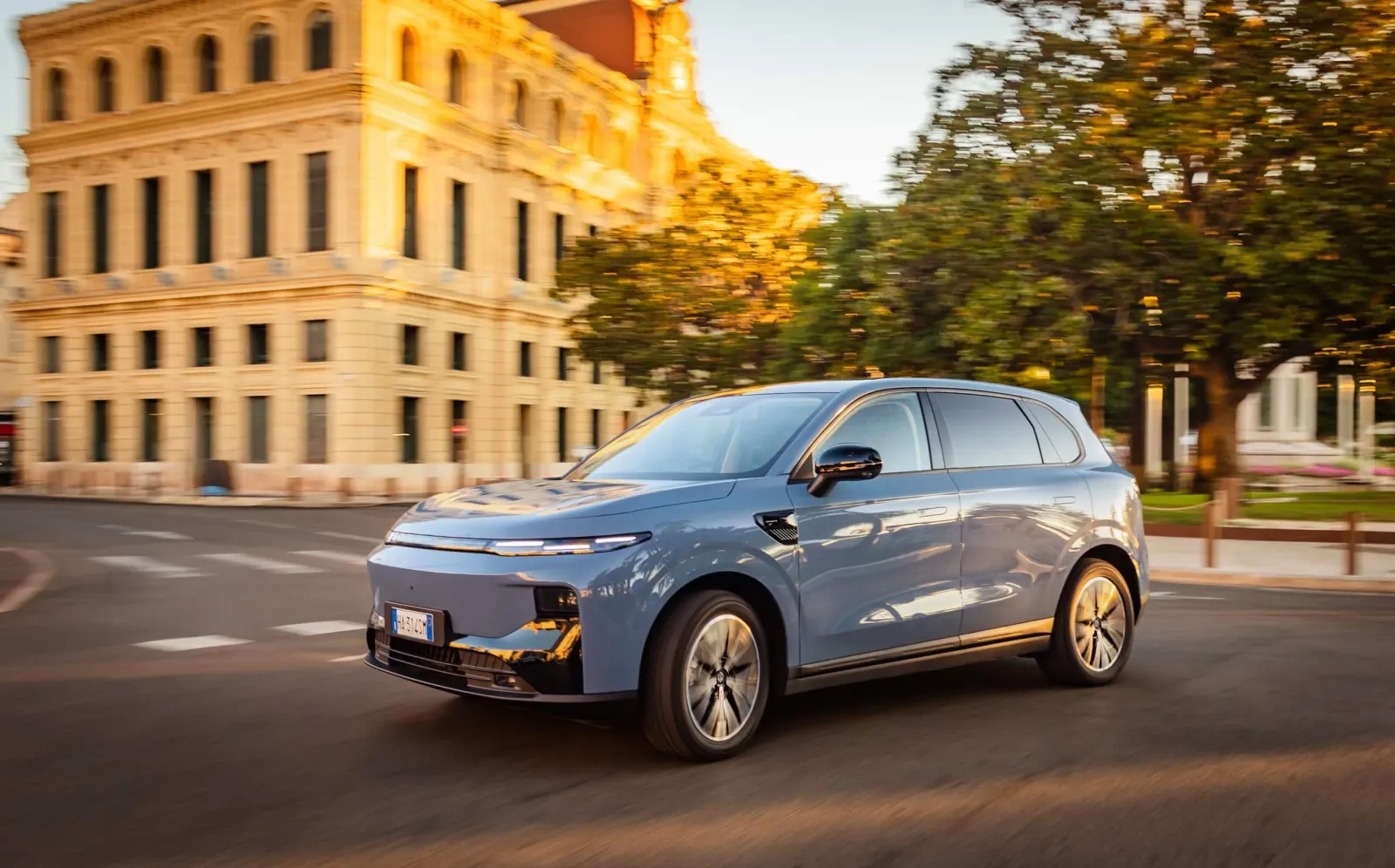
Dutch insurer Univé has excluded brands such as Omoda, Jaecoo, and Leapmotor from its insurance coverage, offering only basic WA to a few other new brands, which is equivalent to our compulsory car insurance. The reason is not related to the quality of the cars or their country of origin, but rather to the availability of parts, repair manuals, and repair shop networks after an accident.
For Polish customers, this is not yet a cause for alarm, but rather a warning sign. Especially if they purchase a brand that is still building its infrastructure in Europe.
Which brands does Univé insure, and which does it reject?
According to an analysis of RDW registration data, 88 passenger car brands are currently operating in the Dutch market. 16 of them entered the market within the past 5 years and together account for 2.4% of all new registrations during that period.
Univé divided new drivers into three groups. Lynk & Co can be insured with full coverage. For Dongfeng, Lucid, FIREFLY, NIO, and ZEEKR, only WA is available. Meanwhile, Hongqi, Changan, Voyah, KGM, Leapmotor, VinFast, Jaecoo, MHero, and Omoda are currently completely excluded from insurance by Univé.
The insurer explains this straightforwardly. “Car quality and the quality of the repair organization are two different things,” said Henkjan Matthijs from Univé. And that’s the core of the issue.
If parts have to be shipped from afar, the workshop doesn’t have access to technical data, or only a few shops can repair the car, repairs take longer and cost more. Sometimes much more.
The study makes it clear: drivers look at price, not support services
A MarketResponse survey for Univé shows that when buying a car, 67% of drivers first look at the purchase price. Next are fuel consumption or range at 55%, and safety at 47%.
After that are maintenance costs at 39%, appearance or color at 38%, technological features at 21%, and brand image and residual value, each at 20%. Only 18% of respondents pay attention to insurance and policy costs, while just 12% check the availability of parts. The same 12% consider the country of origin of the brand.
Univé also presents another interesting finding. 56% of drivers are unaware that limited part availability can affect the possibility of insuring a car. Meanwhile, 57% understand that a new brand may have more limited insurance options if its repair infrastructure is still weak. So intuition prevails over knowledge.
The Dutch attitude toward Chinese cars is also fairly cool, but not hostile. 10% say they would definitely buy a car from China, 19% somewhat likely, and 37% have a neutral stance. In total, 66% are not negatively inclined, with only 12% outright excluding such a purchase.
Matthijs also provided a strong example from the market. A few years ago, with one American electric model, a small crack in a component of the front suspension resulted in a total loss, as the repair instructions required replacing the entire body. It’s an extreme case, but it clearly shows how much depends on procedures rather than just the car itself.
In Poland, we don’t have any reports today of insurers refusing coverage in bulk for Omody, Jaecoo, or Leapmotor, but it’s worth calling the insurer before purchasing to ask about coverage, parts, and repair networks. Because on paper a new brand might seem great, but after an accident the real test of its organization begins. What are your experiences with getting coverage quotes for new brands in Poland?
LovEV Newsletter
Want more content like this?
Sign up — we’ll send you a weekly summary once the newsletter starts.