
A BYD car priced at 10,000 euros that charges in 5 minutes, Chinese XL city cars, Tesla’s return as if it never left, and 100% French lithium… Welcome to Regen No. 87
Too busy with your schedule? Regen condenses the most important electric vehicle news for you every Sunday in just a few lines.
All new and stunning
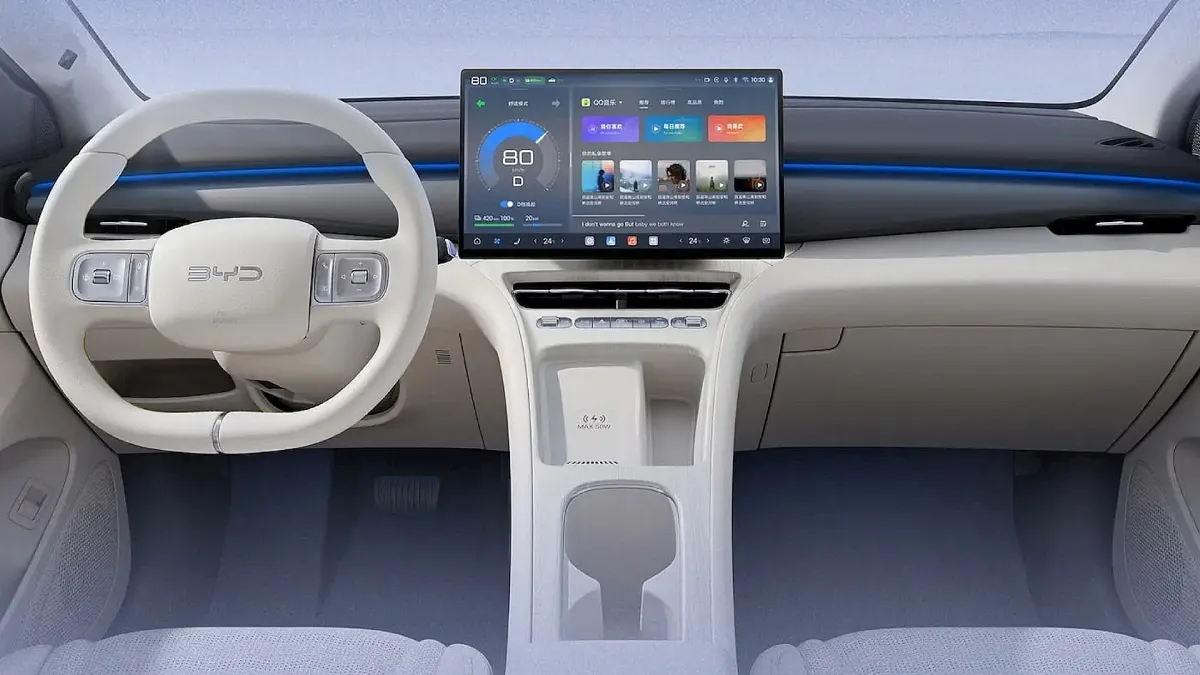
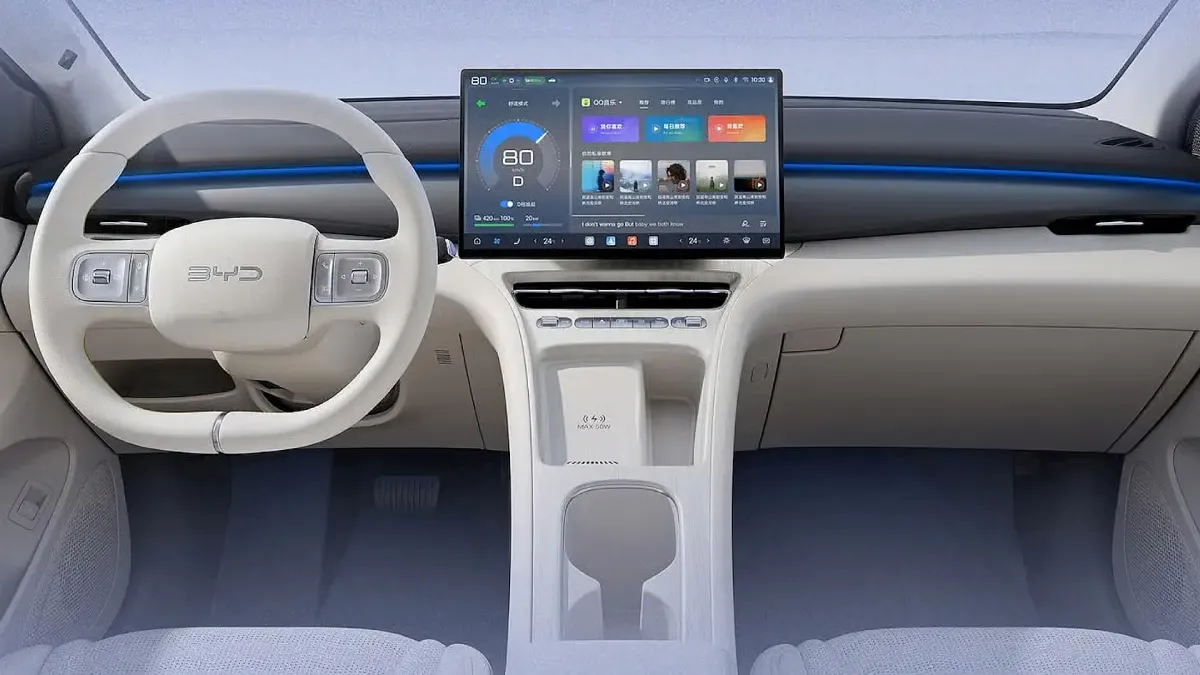
BYD quickly kept its promise to expand Flash Charging to its entire lineup: the new Seagull, priced under 10,000 euros, can charge from 10% to 97% of battery capacity in 9 minutes. 10,000 euros is the price in China—great for grabbing clicks (sorry), but it will be at least twice as much in France.
Indeed, the Chinese are pushing hard in this segment. The Geely E2 test drive reveals a city car with compact interior space and premium sedan-level finish quality. The Chery Q, shown at the auto show, offers similar space with 4.19 meters in length.
Meanwhile, the Leapmotor B05 will soon be assembled in Saragossa, at Stellantis’ factory. Say goodbye to the 30.7% European surcharge and hello, perhaps, to a EU incentive. The transformation of Chinese brands into “European” brands is progressing well, thank goodness.
At Fiat, the future city car related to the electric 2 CV has been named: it will be called the Koala. Following Panda and Grizzly, Fiat is going with animal-themed names.
Elsewhere, Toyota is preparing its electric Corolla, but apparently only in a three-door sedan version. Personally, I approve of this very nice car.
A vehicle that isn’t exactly delicate in design, large enough to fit a Seagull inside — the Mercedes-AMG GT SUV. If you’re a fan of simplicity, definitely don’t click.
The electric vehicle ecosystem barometer
Tesla, the eternal return of a brand that never really left... In September, the Tesla Model Y and Model 3 were the two best-selling cars in Europe across all powertrains, despite declining profits, as electric vehicles accounted for 30% of the market share on the continent. Meanwhile, a Chinese hybrid SUV, the Jaecoo 7, has already made it into the Top 10.
On satisfaction, two studies this week. The first, conducted by USCALE, ranks Xpeng and Tesla at the top, with Audi far behind, and notes that 71% of drivers have already encountered charging issues. The second, from Enedis, confirms that 97% of electric vehicle owners are satisfied.
Ah, and speaking of Tesla, its flying car doesn’t actually fly, just in case. But the hype around it is enormous.
General Motors, on its part, wants to change everything about its electric vehicles. Volkswagen also wants to make changes, but in China, its electric models developed with Xpeng are struggling. It’s a shame because both models look quite nice.
The dramatic moment of the week comes from Toyota, which wants its internal combustion engine vehicles to be considered zero-emission vehicles.
In the Assembly, deputies have submitted a proposal for one million electric cars at 150 euros per month, modeled after social housing, with the fleet owned by the Deposit Fund. Nationalizing and regulating private cars—no doubt we’re truly in France... What could go wrong with this wonderful gas, uh, electric, I mean, plant?
Schumpeter’s famous theory of creative destruction applied to electric cars.
Charging Weather
Unnoticed, this might be the most important news in recent weeks, given its implications for employment and sovereignty: France’s project to produce lithium for 700,000 electric cars per year is finally moving forward.
The digital passport for batteries is on the way, though it’s not that easy to implement.
An idea that fleet managers who never plug in their PHEVs will love: reducing the capacity of rechargeable hybrids to force them to run on electricity. It’s doubtful such a restriction will calm debates or support the electric vehicle cause.
V2G is amazing!
The professional version of electric vehicles
Avere France took advantage of the World Cup to remind presidential candidates that “now is not the time to slow down electric vehicles.” Well, of course not.
For small and medium-sized enterprises, three measures will help with the transition to electric commercial vehicles. In essence, a set of measures. On the side of public authorities, UGAP is making electric retrofits available for commercial vehicles and buses, allowing public fleets to be given a second life without having to purchase new ones.
In the heavy truck sector, CATL has unveiled an electric truck with dual batteries to compete with diesel trucks, while Powermust aims to solve the challenge of charging at depots.
Michelin, which was expected to focus on tires, is stepping up in the charging area by launching EV Charge, a charging card for professionals.
This Week’s Figure
520,000. This is the number of visitors who toured the booths at the 2026 World Motor Show. An increase from previous years.
In Images
That’s all from me for today. See you next Sunday for another issue of Regen!