
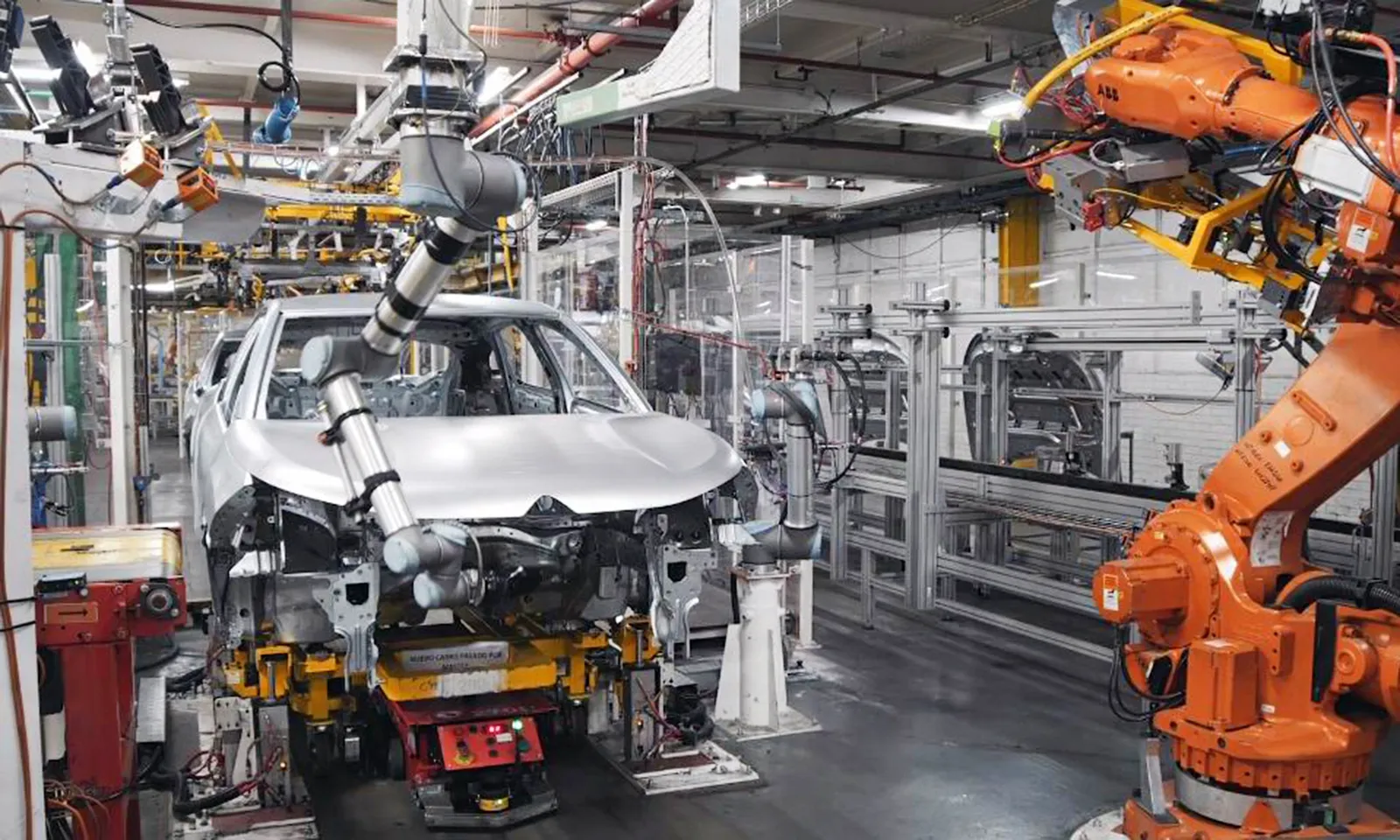
A car factory with its own 25,000 kWh battery: Madrid is advancing Stellantis' plan for 20 plants in Europe.
25/10/2026 22:00
Updated to
25/10/2026 22:00
Stellantis’ factory in Villaverde, Madrid, has installed an energy system that will help reduce gas consumption and meet part of its electricity needs through renewable power generation and storage. This transformation makes the facility one of Europe’s most notable self-consumption industrial projects, thanks to a battery with a capacity of 25 MWh.
The initiative, developed in partnership with energy company GreenYellow, was officially launched on October 20. It includes a combined solar capacity of 12.4 MWp, as well as new systems designed to replace fossil fuels in certain manufacturing processes, according to Stellantis itself.
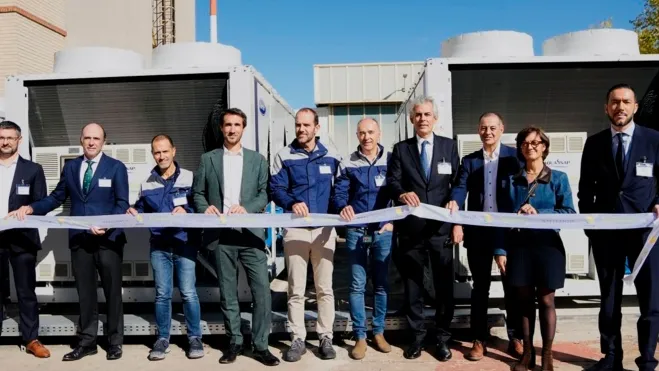
A giant 25 MWh battery will enable better utilization of solar energy
A key advancement lies in the ability to use renewable electricity when production conditions require it, as the facility has 25 MWh of storage capacity provided by Sungrow. GreenYellow describes this system as the largest in Europe for on-site photovoltaic power use, featuring liquid cooling and intelligent management tools to adjust its operation to industrial demands.
This infrastructure allows for the storage of some of the electricity generated during peak solar radiation hours and its use later, reducing the need to rely on external power supplies at certain times and facilitating control over peak consumption—a matter of particular importance for industrial facilities that maintain high energy demands during their production processes.
Electricity generation has also seen significant improvement with the addition of 4.6 MWp in photovoltaic capacity, consisting of a system made up of 6,566 Canadian Solar panels rated at 700 Wp and eleven Sungrow inverters with a capacity of 350 kW, according to technical data published by pv magazine, which estimates annual generation for this new infrastructure to be around 7 GWh.
With this expansion, the complex’s total photovoltaic capacity reaches 12.4 MWp, a figure that includes the solar installations already in operation previously. However, there is disagreement over the location of the new panels, as Stellantis places them on an above-ground facility, while the technical information provided to pv magazine refers to parking canopies.
Stellantis will also reduce gas consumption by nearly 3 GWh annually
The energy transformation at Villaverde is not limited to electricity, as the company has replaced some of its conventional boilers with heat pumps. This measure will enable the reduction of approximately 2.9 GWh of gas consumption each year and cut emissions related to these thermal uses by 57%, according to Stellantis’ estimates.

GreenYellow estimates that this change will result in the avoidance of about 1,218 tons of CO₂ per year, and it has entered into a 15-year agreement to develop its energy management model. This model combines local power generation, storage, and the electrification of industrial processes aimed at matching supply to actual production needs and reducing reliance on conventional energy sources.
The Madrid project will also not be an isolated initiative within Stellantis, as information gathered by pv magazine indicates a program to install around 200 MWh of storage across 20 industrial sites in Europe. The first phase involves seven facilities by 2026, with a second stage expected to take approximately three years to develop.
The Villaverde factory continues to expand its investments in electrification, having added in 2024 a battery assembly workshop for the Citroën ë-C4 and ë-C4 X models, with an expected capacity of 50,000 units per year. The new energy program represents another step in adapting its industrial facilities, although it has not yet been officially confirmed which other European factories will receive the next generation of storage systems or their respective dates of deployment.