
A company converts a 30-year-old diesel truck into an electric one to avoid buying a new one: it saves $500,000.
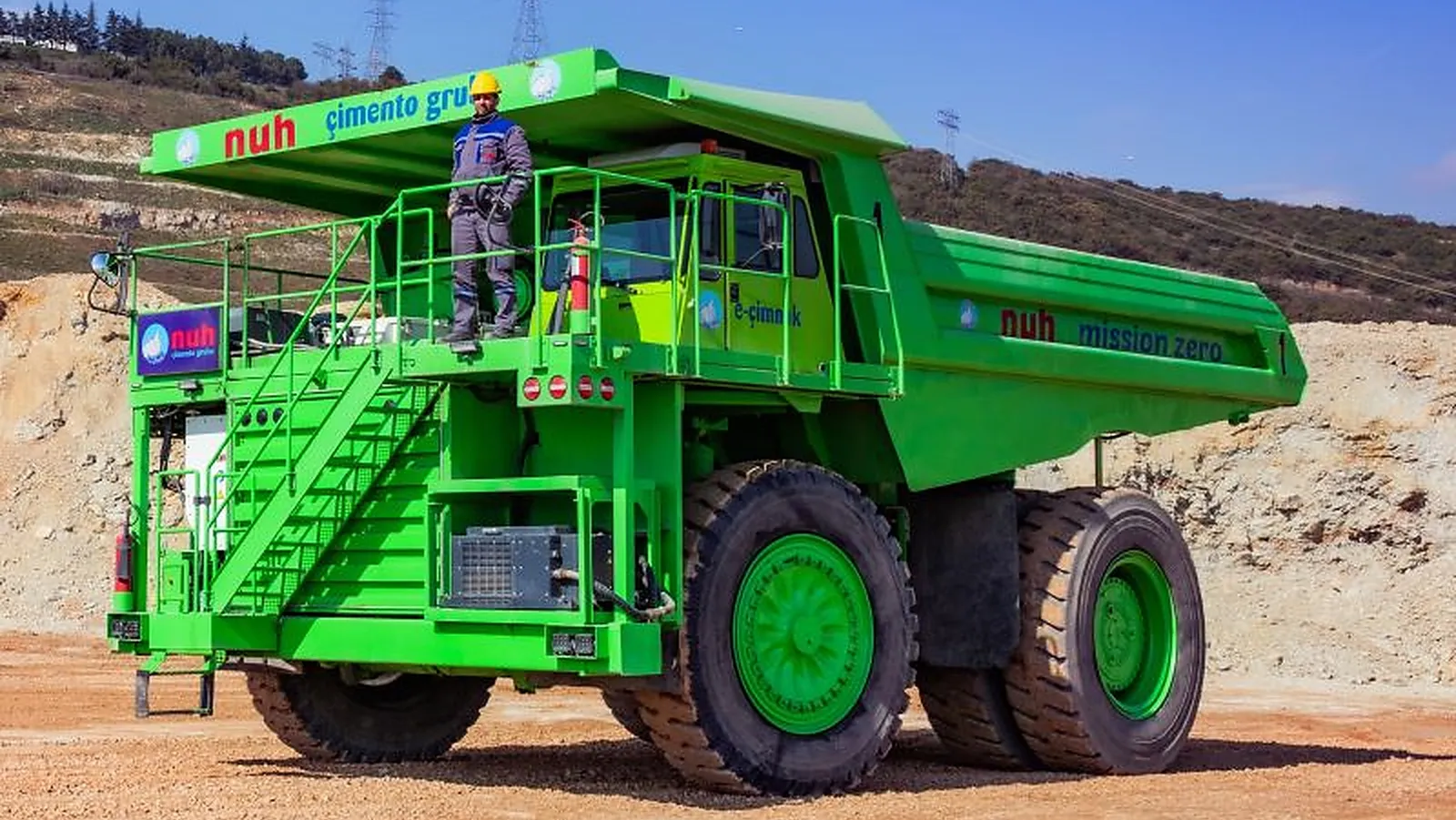
Purchasing new machinery is not always the most cost-effective solution for upgrading a fleet of industrial vehicles. At least that is the conclusion reached by a cement factory in Turkey, which has decided to give new life to its large diesel mining trucks. Instead of retiring them and replacing them with new models, it is converting them into fully electric vehicles, saving approximately $500,000 per unit in investment costs.
The leader of this initiative is Nuh Çimento, a company that developed the project together with the technology group ABB. According to the documentation submitted in 2026 through Business Action Bank, converting each truck requires an investment of approximately $750,000. However, compared to purchasing new machinery, the company estimates it can avoid an additional $500,000 in expenses per vehicle, as well as reduce subsequent operating costs.
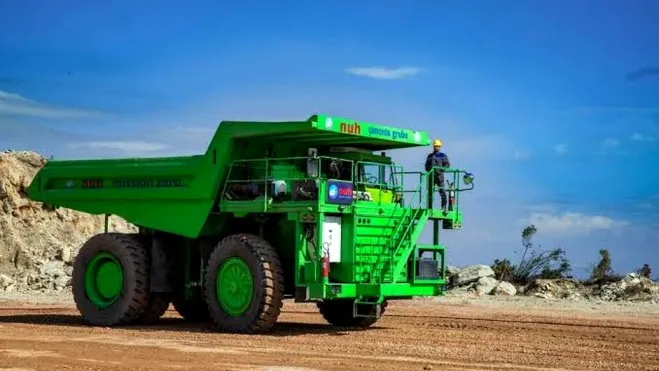
The transformation involves removing the diesel engine and original transmission to install an electric propulsion system powered by batteries. In this way, the vehicle retains its chassis, structure, and most of its components, but stops using diesel. One of the first models used to demonstrate the viability of this solution was a Euclid R85B, a massive dump truck that had already served for about 30 years.
Electric trucks that recover energy while working
The project began development in 2020, though formal collaboration with ABB started in 2022. A year later, the first prototype, named Mission Zero, was put into operation, and in May 2024, the two companies publicly presented the initial results of the conversion. Since then, the initiative has continued to expand and collect data on the performance of this machinery under real working conditions.
One of its most interesting features relates to the location of the plant, which is situated in Kocaeli-Körfez, near Istanbul. Trucks transport large quantities of material downhill along slopes with gradients ranging from 18% to 20%. During these descents, the regenerative braking system allows some of the energy that would otherwise be wasted to be recovered and stored in the batteries for later use.
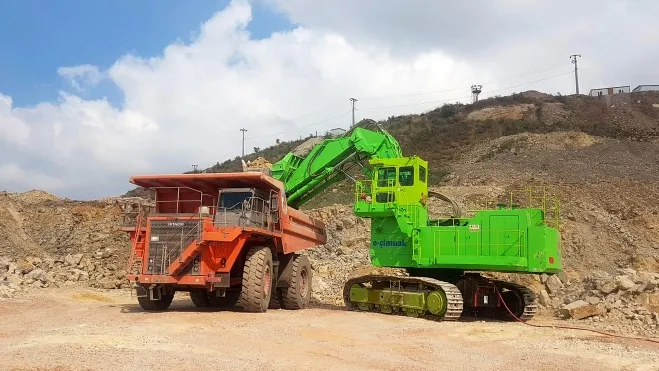
Once the material has been unloaded, the vehicle must climb back uphill, but it does so with a significantly reduced weight. According to ABB, this feature allows the truck to complete the ascent using the electricity recovered during the previous descent. The latest project documentation states that, thanks to this mechanism, the intervals between external recharges can range from one to three months under the specific conditions of this operation.
To achieve this, ABB developed a solution that includes its BORDLINE CC200 conversion system, a traction battery, an air-cooled electric motor, and various electronic devices responsible for managing the vehicle. The package also features a battery thermal control system and DC fast charging equipment, enabling the reuse of machinery originally designed to operate with internal combustion engines.
Over 240,000 liters of diesel saved with just one truck
The results obtained show to what extent extending the service life of these vehicles can be profitable. According to the project documentation, the first electric dump truck had accumulated 5,535 hours of operation by December 2025, avoiding the consumption of approximately 243,540 liters of diesel. When ABB announced its transformation in 2024, it estimated an annual fuel savings of around 100,000 liters and a reduction of 245 tons of CO₂.
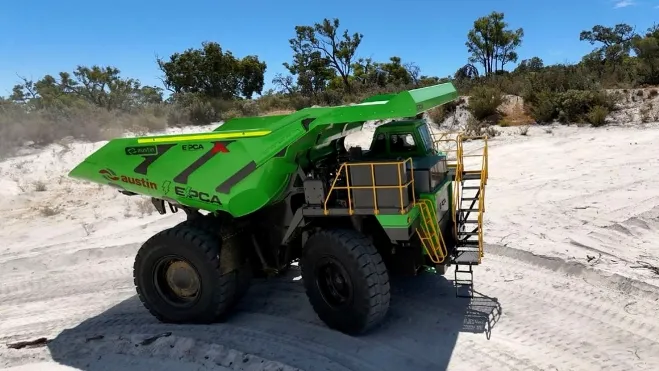
The experience has also been used to expand the project to other industrial vehicles. Data published in 2026 shows the transformation of five mining trucks and twelve excavators and dump trucks, to which an additional 19 newly purchased electric vehicles have been added. In total, the electrification program now includes 36 heavy electric machines and has accumulated over 100,000 hours of operation.
The economic impact isn’t limited to fuel. The company also highlights reduced maintenance needs, especially by eliminating components such as diesel engines or conventional transmissions. Its calculations show a potential savings of $250,000 in engine-related repairs over five years and another $150,000 related to transmissions, although the conversion also requires new investments in batteries, electrical infrastructure, and specialized personnel.
The company aims to continue making progress toward eliminating direct emissions associated with transporting raw materials at its facilities by 2030. However, the success of this solution depends heavily on the characteristics of the route, as steep downhill slopes allow for the recovery of particularly high amounts of energy. Experience shows that electrifying heavy machinery does not always require purchasing new vehicles, though it also does not mean that any diesel truck can be converted with the same economic and energy benefits.