
Silver enables a battery to reach 467 Wh/kg: these are the consequences for electric cars
Obtaining a battery that can store more energy without increasing its weight is one of the main goals for developers. But achieving an impressive capacity is of little use if it is lost quickly during charging cycles. A team from the Hong Kong University of Science and Technology has proposed a solution that addresses both issues by using a silver-based additive.
Led by Professor Shao Minhua, this research achieved an energy density of 467 Wh/kg in a pouch-shaped cell. Separately, a button cell retained 90% of its capacity after 200 charging cycles.
How silver helps in anode-free batteries
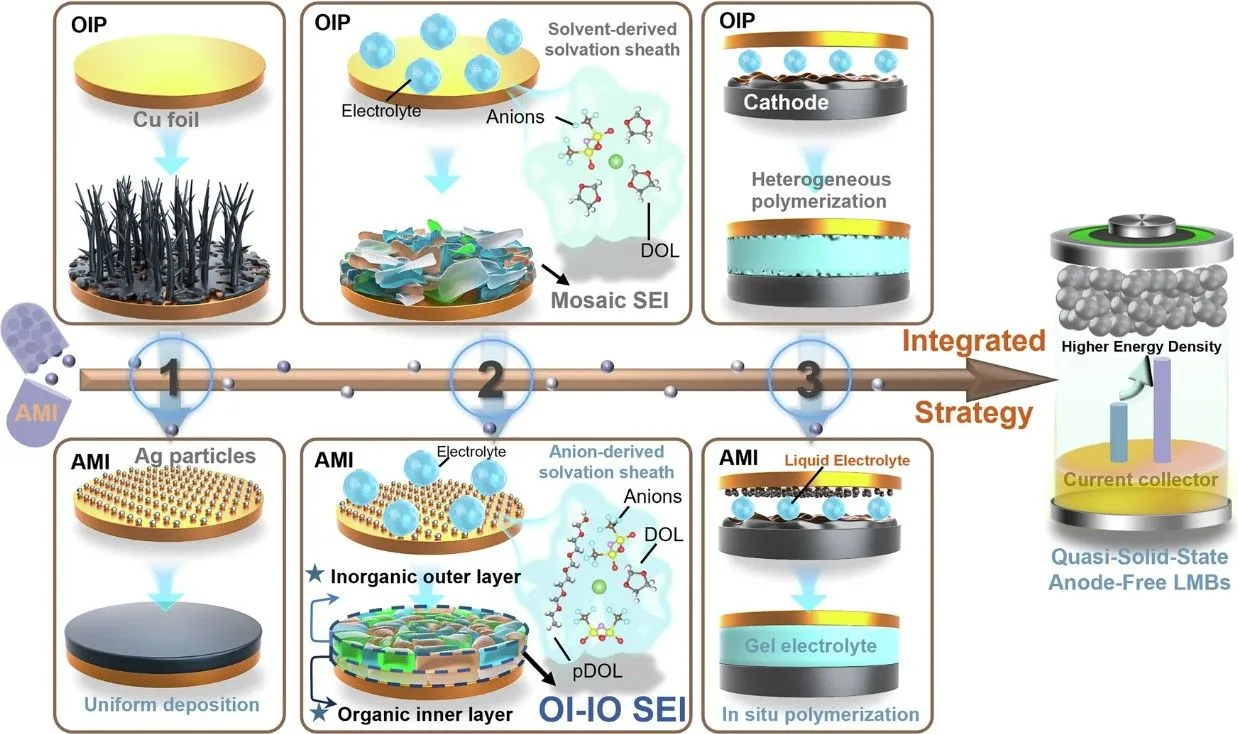
The approach is based on an architecture called “no initial anode.” Instead of incorporating an active material into the negative electrode from manufacturing, it uses a copper current collector onto which lithium is deposited during charging. Eliminating this initial material allows for weight reduction and simplifies production processes.
The problem arises when lithium begins to deposit. The surface of copper does not facilitate uniform distribution, allowing dendrites to form—needle-like structures that degrade the cell’s performance and can cause internal short circuits. The stability of the protective layer formed on the electrode surface, known as SEI, is also crucial.
To improve this behavior, researchers have added a multifunctional additive called AMI, which contains silver ions, to the electrolyte. Its role goes beyond simply adding an ingredient to the mixture: it triggers a series of processes after the cell is assembled to modify copper, regulate lithium deposition, and enhance electrode protection.
Silver helps lithium deposit more evenly. At the same time, this additive contributes to forming a protective layer with an inner region rich in organic components and an outer region rich in inorganic components. The goal is to allow ions to move while maintaining a stable barrier during repeated charging and discharging cycles.
This is complemented by a polymerization reaction in the electrolyte that creates a quasi-solid gel. This gel helps maintain contact between the electrode and the electrolyte, one of the critical aspects of these batteries. Therefore, this is not a fully solid-electrolyte battery but rather a quasi-solid configuration designed to improve the stability of its interfaces.
What the tests show and what remains to be resolved
The original study, published in Nature Communications, provides an important clarification: the 90% efficiency was achieved using an LFP cathode cell tested at 0.1 C, a slow charging rate that does not allow conclusions to be drawn about fast charging. The pouch cell, with a capacity of around 2 Ah and an NCM811 cathode, reached 467 Wh/kg based on the total weight of the cell. These are different formats and chemistries.
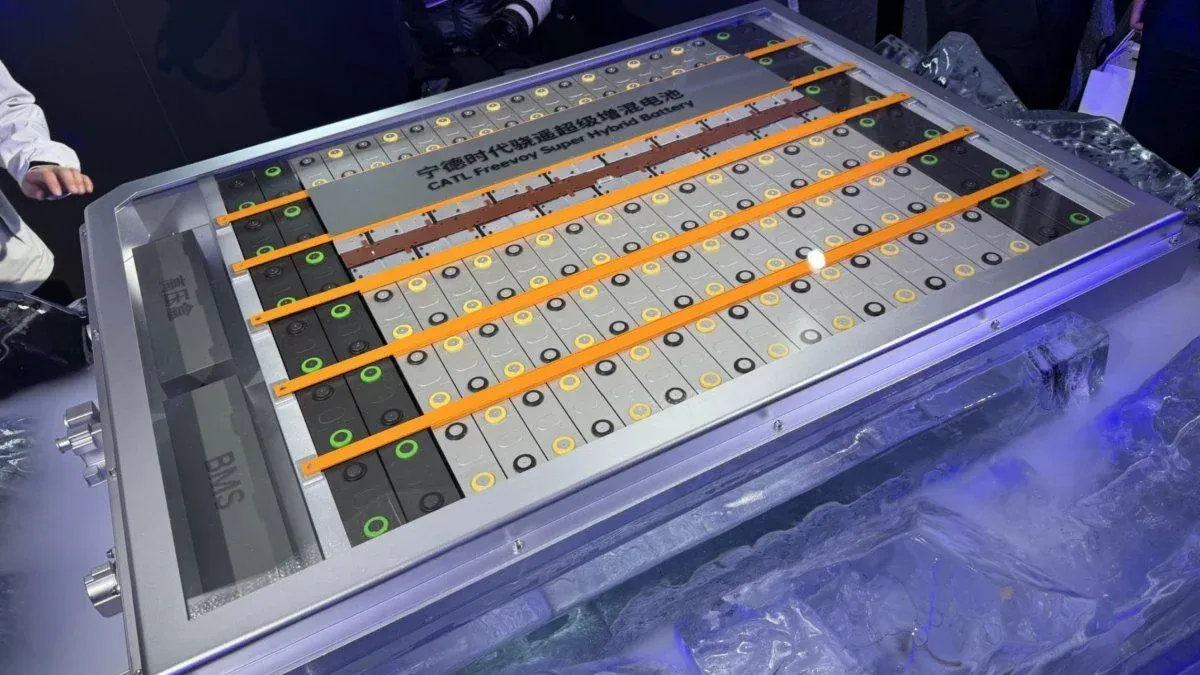
For an electric car, higher energy per kilogram could mean greater range with a similar weight, or a lighter battery while maintaining the same capacity. But that figure applies to a single cell: a complete pack needs to include structure, connections, cooling systems, and control mechanisms, all of which also contribute to weight.
The interest in this research lies in attempting to solve several problems through the same process. Now it remains to see if this advantage holds when cell sizes increase and usage requirements grow, as well as how costly it is to bring this approach to production. Silver has yielded interesting results in the laboratory; its next test will be to maintain those results outside of lab conditions.
Source | Nature