
A regulation for better repairability of electric cars
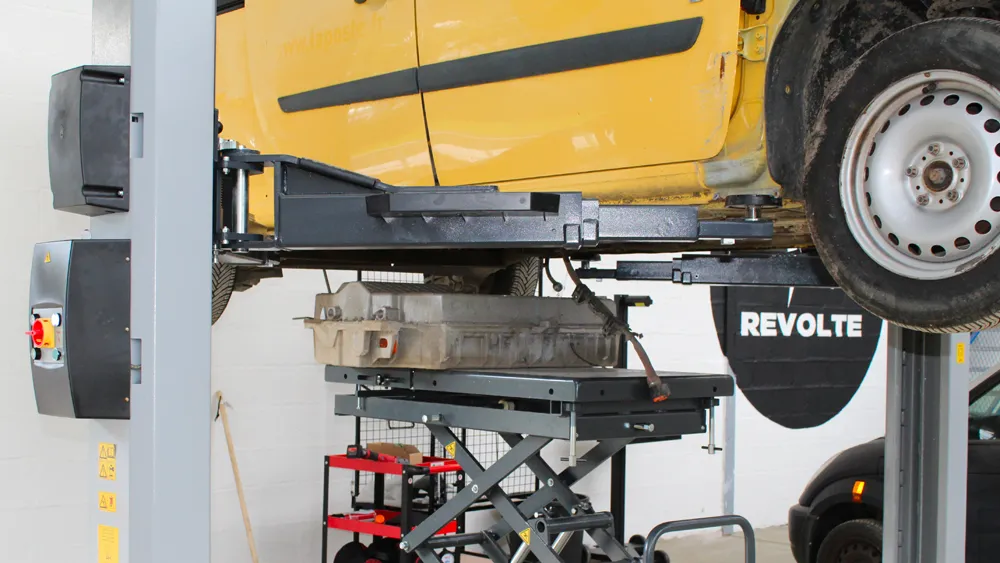
Many electric vehicle owners are concerned about the sustainability and repairability of electric cars. The European regulation 2026/1738, published in the Official Journal of the European Union on July 24, 2026, will require manufacturers to develop designs and procedures that enable repairs on these vehicles.
The voices of Revolte and HOP were heard
In France, several organizations are working hard to improve the repairability of electric vehicles, as manufacturers have tended to lock down access to electronic systems, batteries, and other components. As a result, even local small garages couldn’t replace a water pump in a Renault Zoé.
Revolte, for example, had to figure out how to proceed and develop internal tools to enable certified repair shops to carry out this task. It is precisely this ambiguity and obstacles in repairing electric vehicles that have given rise to the activist network currently working with Europe to improve the situation. In the meantime, the company analyzes the inner workings of electric vehicles from all brands to find ways to prevent many electric vehicle owners from being left behind.
Revolte is not the only one fighting this battle: there is also the independent organization Halte à l’Obsolescence Programmée. As a means of raising awareness, HOP released an investigative report in 2024 titled “The Accelerated Obsolescence of Internal Combustion and Electric Cars” along with a petition “to put an end to future disposable cars.”
The voices of these two key actors, among others, were heard by Europe, which put forward several demands against vehicle manufacturers. Some aim to support the work of repairers, while others focus on reuse and recycling at the end of a vehicle’s life cycle.
Open design
The second paragraph of Article 7 of European Regulation 2026/1738 states that new types of vehicles to be submitted for approval starting from September 1, 2032, must be designed “in such a way as to allow easy and non-destructive extraction and replacement of electric vehicle batteries, their battery packs, and electric drive motors” by repair and maintenance professionals.
Similar obligations are established for end-of-life vehicle centers to facilitate the recycling and potential reuse of these components.
We do not list in this article all the other parts that are either secondary and common to conventional cars (tires, wheels, bumpers, front and rear lights, glass, etc.) or specific to them (engine, catalytic converter, transmission, fuel tank, etc.).
Information to be provided to professionals
For new models received starting from September 1, 2029 (Article 11), manufacturers must provide “waste management operators, technical information providers, and repair and maintenance service providers with unlimited, standardized, and non-discriminatory access” to the information necessary to safely extract and replace various vehicle components.
For batteries and electric motors, this will already include the original equipment number, location, and weight. In addition, there will be technical instructions for extraction and replacement outlining the sequence of steps to follow, as well as the tools or technologies required to accomplish this.
In addition, for the battery, the chemical properties and instructions for safe discharge must be provided. Regarding the motor, information on the types of permanent magnets inside will be shared.
At the same time, manufacturers will be required to cooperate in establishing and maintaining platforms that allow relevant professionals access to this information.
Disabling an EV by its owner
Article 24 of Regulation (EU) 2026/1738, adopted by the European Parliament and the Council on July 8, 2026, also specifies that delivering a scrapped vehicle to an authorized treatment facility or collection point “is free for its last owner,” unless it “does not contain any of the essential parts or components” or “contains waste that has been added to the scrapped vehicle.”
A electric car may therefore be rejected by a scrap vehicle center if the battery and electric motor are missing. However, there are two exceptions. First, if the last owner can provide documents proving that the missing battery was handled by a professional operator in accordance with Regulation (EU) 2023/1542. Second, when the vehicle is declared “as a total technical loss” by an insurance company.
Retrofitting
Article 32 addresses electric retrofitting by requiring that starting from September 1, 2029, member states “take incentive measures to encourage the reuse, remanufacturing, electric conversion (retrofitting), and refurbishment of parts and components, whether they were taken out during the vehicle’s usage phase or during its end-of-life management phase.”
In practice, when repairs are needed, mechanics will have to present their customers with an option to repair using used, remanufactured, or refurbished components, in addition to a quote for new parts. This is exactly what Revolte already does, having participated in European efforts related to repairability and upgrades.
Europe Could Have Gone Further
According to HOP, this European regulation “relating to the circularity requirements applicable to vehicle design and concerning the management of end-of-life vehicles” could have gone further. It already requires “the making available of spare parts and software support for at least 20 years from the end of market release.”
For an electric vehicle, this is particularly significant given that many manufacturers are unable to repair the vehicle identically once the battery fails. This is because such replacement packs are no longer in stock, and French legislation currently prohibits upgrades that would allow users to benefit from newer, higher-capacity batteries while also reducing weight. This remains a real threat to electric vehicle owners who hope to keep their vehicles in good condition for a long time.
The association also calls for: “establishing guarantees for battery repairability at the module level,” “regulating practices that make batteries unreparable (sealed batteries, gigacasting, serialization),” and “increasing incentives by creating a repairability index.”