
A German environmental politician questions the ban on internal combustion engines: "What’s the point if we end up driving Chinese electric cars?

France and Germany’s decision to push for a relaxation of European restrictions on internal combustion engines starting in 2035 has received significant support within Germany’s own environmental movement. Cem Özdemir, president of Baden-Württemberg and a member of the Greens, has openly backed the agreement between the two countries and warned about the consequences that overly strict regulations could have for Europe’s automotive industry.
His statements carry special significance given his position and the region he governs. Baden-Württemberg is one of Europe’s major automobile industry hubs, home to manufacturers such as Mercedes-Benz and Porsche, along with a vast network of suppliers. Özdemir, who heads a coalition government between the Greens and the CDU, believes the transition to electric cars must take place without jeopardizing this industrial structure.

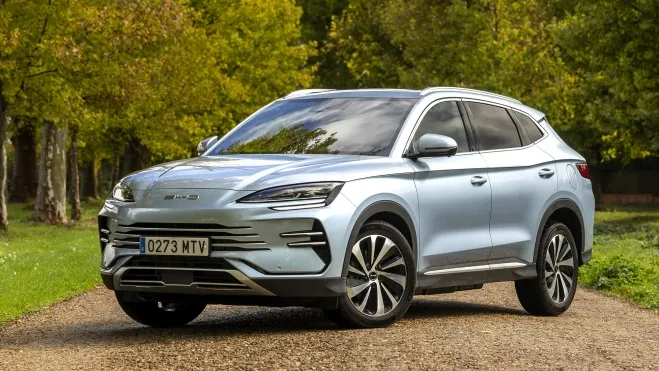
"What’s the point if we end up driving Chinese electric cars?"
The German leader expressed his views during the regional Greens congress held this weekend in Offenburg. According to the German newspaper Staatsanzeiger, Özdemir questioned the usefulness of establishing strict regulations if their implementation ends up causing job losses, a decline in innovation capacity, and the erosion of parts of Germany’s automotive industry, while Chinese electric vehicles gain ground in the European market.
His warning directly addresses one of the main challenges of electrification: the increasing competition from Chinese manufacturers. The regional president believes Europe must move toward electric mobility, but it also needs to ensure that its own companies can participate in this transformation without being overtaken by foreign competitors.
In statements cited by Germany’s public radio and television station SWR, Özdemir praised the agreement reached between France and Germany because, as he explained, it essentially meets the demands his regional government has been making. He also argued that the flexibility will provide Baden-Württemberg’s component suppliers with particularly valuable time to adapt to new technologies.
His stance does not represent a rejection of electric cars. On the contrary, the environmentalist leader insists that the goal should be to support Germany’s industry through this transition. His concern is that too rapid a transformation might weaken European manufacturers and suppliers before they have completed their adaptation.
An Environmentalist Leader Governing the Mercedes-Benz and Porsche Region
Özdemir’s position is particularly significant given his political background. He belongs to the Alliance 90/The Greens, a left-center environmental party traditionally committed to reducing emissions and promoting electric mobility.
Since May 2026, he has led the government of Baden-Württemberg, one of Germany’s most economically important regions. Its territory hosts major facilities for Mercedes-Benz and Porsche, research and development centers, and numerous companies specializing in automotive components.
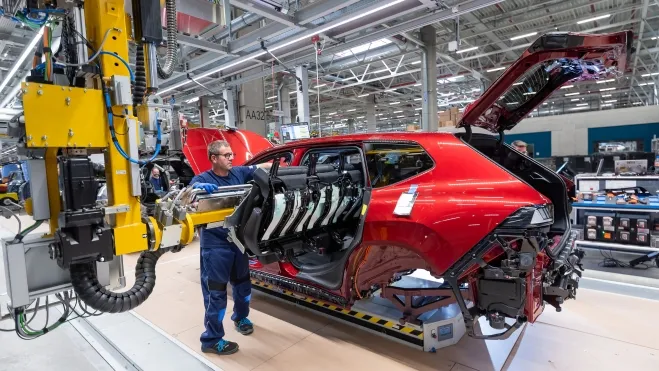
These latter companies are facing one of the biggest challenges in the electrification process. The transition to fully electric propulsion systems changes industrial needs and reduces demand for certain mechanical components associated with internal combustion engines.
However, Özdemir’s statements have also sparked disagreements within his own party. Theresa Fidušek, spokesperson for the Green Youth in Baden-Württemberg, criticized the relaxation of regulations and warned that questioning the timeline for phasing out internal combustion engines now could lead to new misguided investments and put jobs at risk.
During the regional congress, Fidušek argued for the need to ensure jobs that are secure and aligned with climate goals. Her speech received widespread applause, highlighting the divisions within the Greens over how to address the transformation of an industry crucial to Germany’s economy.
France and Germany want to allow internal combustion engines after 2035
Özdemir’s statements come just a few days after the agreement announced on October 16 by German Chancellor Friedrich Merz and French President Emmanuel Macron. The two countries have agreed on a common position to soften European requirements regarding emissions from new cars starting in 2035.
The current community regulations require a 100% reduction in the average CO₂ emissions of new passenger cars by that date, which effectively means an end to sales of conventional gasoline and diesel vehicles. However, the European Commission proposed in December 2025 to lower this requirement to 90%, provided that the remaining emissions are offset through specific mechanisms.
The new Franco-German agreement goes further. Its proposal maintains the goal of reducing emissions by 90%, but removes the requirement to offset the remaining 10%. This could allow certain vehicles with internal combustion engines, including hybrids, to continue being sold after 2035, although manufacturers would still be subject to very strict requirements regarding their average emissions.
In return, Germany has agreed to tighten the production conditions in Europe tied to certain government subsidies and contracts, a demand that is especially important for France. The shared goal is to ensure that the transition to electric vehicles also helps preserve factories, investments, and jobs in Europe. The agreement still needs approval from European institutions to become law. As such, the existing rules for 2035 have not been repealed, and the final scope of the flexibilities remains under negotiation.

In this context, the intervention by the president of Baden-Wurtemberg brings an industrial perspective to the debate. Özdemir does not suggest abandoning electrification, but rather preventing the implementation of regulations from ultimately benefiting foreign manufacturers while European companies lose their production capacity.