
The same electric Jeep, two ways to experience it: 213 HP for everyday use or 375 HP with all-wheel drive for longer trips
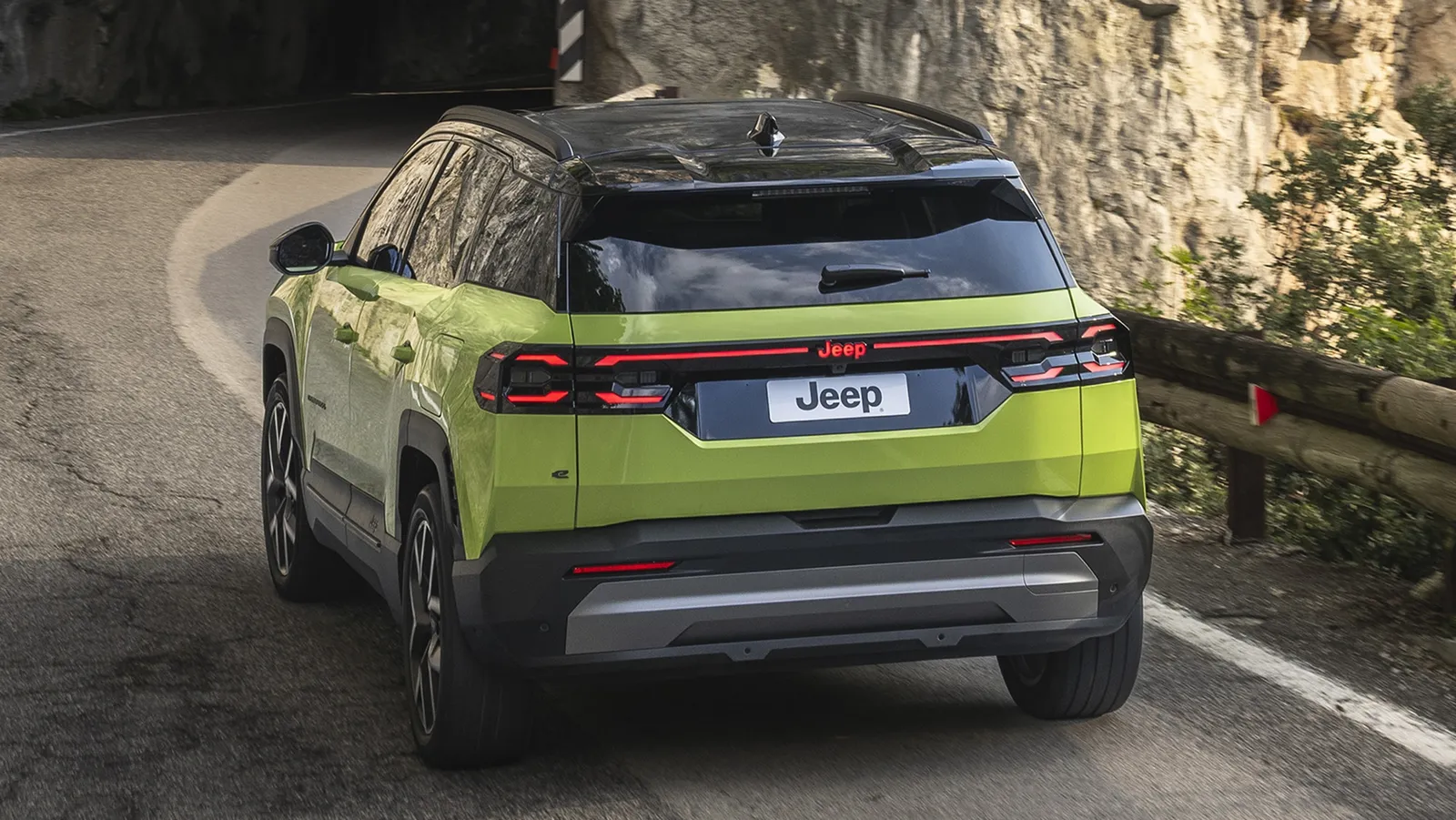
Purchasing an electric SUV is no longer just about comparing range, battery size, or charging speed. What you plan to do with it also plays a role. The new Jeep Compass presents this choice from two very different perspectives: an electric version with 213 horsepower designed to integrate electric mobility into everyday use, and a 375-horsepower Compass 4xe Full Electric with two motors and all-wheel drive, taking this electrification to a more performance-oriented and adventurous setting.
Therefore, the difference isn’t simply in having more or less power. It lies in what type of electric vehicle each driver needs.
213 horsepower and up to 500 km to make the switch easy
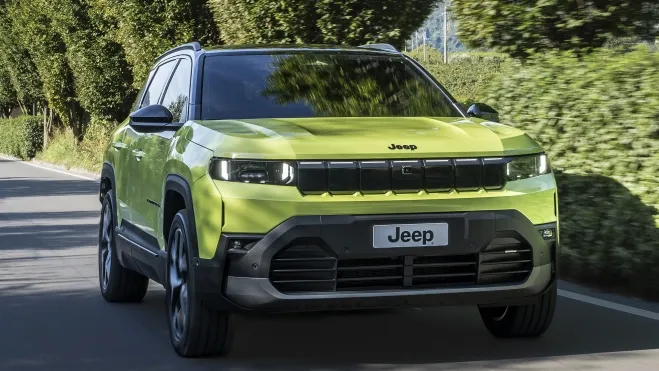
The 213 HP version is likely the most sensible way to approach the new electric Compass. It features a 157 kW engine with 345 Nm of torque, drives the front wheels, and can travel up to 500 kilometers according to the European WLTP cycle.
These figures are designed so that switching from a gasoline model doesn’t require major changes to driving habits. The range is sufficient to cover daily commutes with ease and to handle road trips, allowing for use of fast charging when needed.
This version supports up to 160 kW in direct current, allowing it to recharge approximately 20% to 80% of the battery in about half an hour. For alternating current, it has a built-in 11 kW charger.
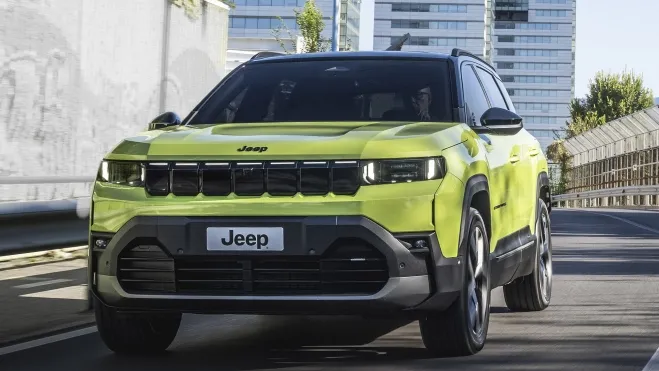
But the Compass’s advantages don’t end with its propulsion system. At 4.55 meters in length, it falls squarely within the category of compact family SUVs, featuring a trunk capacity of up to 550 liters plus an additional 34 liters distributed across various storage areas inside the cabin. In other words, electrification doesn’t require sacrificing the practicality expected from a car of this size.
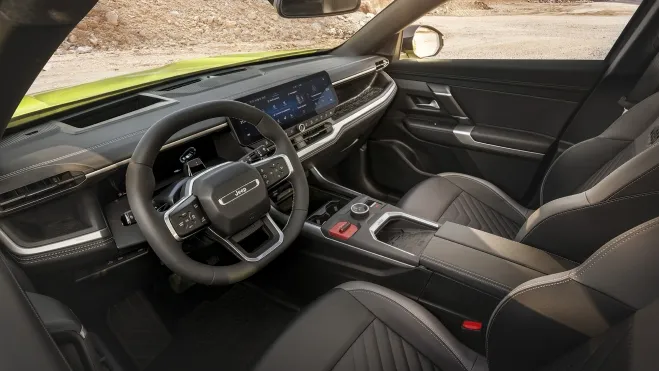
It also significantly transforms the in-car experience. The multimedia system features a 16-inch central screen, along with digital instrumentation, wireless connectivity for Apple CarPlay and Android Auto, and various driving assistants.
In short, it’s the Compass for those who want the electric car to fit into their routine rather than forcing their routine to adapt to the car.
The Compass 4xe takes electricity to new terrain
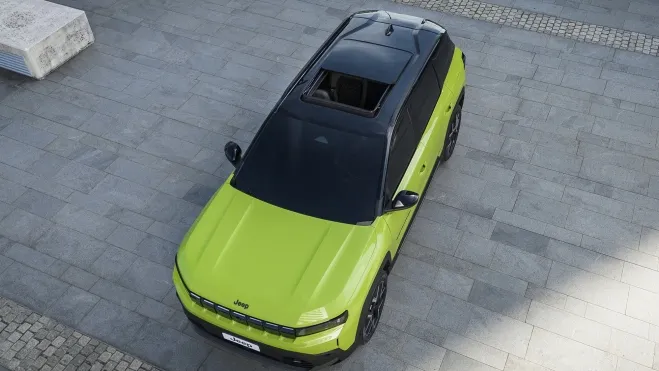
There are, however, drivers who expect more from a Jeep. Here comes the Compass 4xe Full Electric with 375 horsepower — a designation that this time refers not to a plug-in hybrid but to a pure electric vehicle with two electric motors and all-wheel drive. The approach is fundamentally different.
The front motor delivers 157 kW, while the rear motor reaches 132 kW. The result is a maximum combined power of 375 horsepower, but the real advantage lies in having an independent motor for each axle.
This allows for a very different way of managing traction compared to the front-wheel-drive electric Compass, restoring some of the characteristics that have traditionally set Jeep apart.
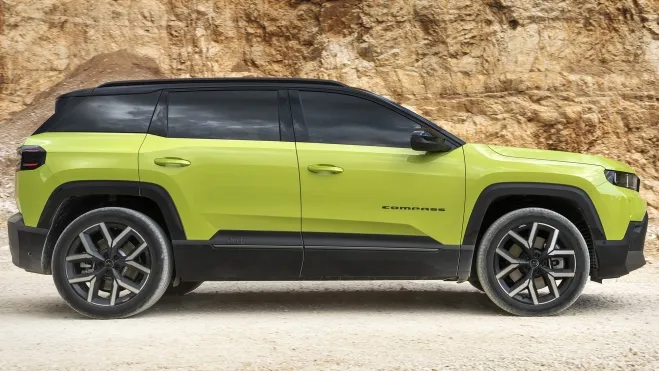
The brand has gone beyond simply adding a second engine. This version features a suspension raised by an additional 10 millimeters, specific protections for the undercarriage, and a setup designed to enhance its performance off-road. The Selec-Terrain system allows choosing from five driving modes: Auto, Sport, Snow, Sand/Mud, and 4WD Lock.
Its wading capacity even reaches 480 millimeters.
More power, but also over 600 kilometers of range
It might seem easy to assume that such a performance-oriented approach forces significant compromises on range. However, the 4xe features a 96.1 kWh usable battery and achieves over 600 kilometers of combined WLTP range. Charging from 20% to 80% can take approximately 27 minutes under optimal conditions.
Thus, the differences between the two electric Compass models aren’t simply that one has 213 HP and the other 375 HP.
The first model focuses on balancing range, space, comfort, and ease of use. The second adds more power, two engines, all-wheel drive, and improved off-road capabilities, while still maintaining a range suitable for long trips.
The Same Compass, But for Two Different Drivers
Both models share the same base, the STLA Medium platform, and carry over many of the features that define this new generation.
The elevated driving position, robust design, interior space, and advanced technology keep the Compass recognizable even after completely abandoning the internal combustion engine.
And that is likely where one of the most interesting aspects of this range lies. Electrification is causing many SUVs to end up offering relatively similar configurations. Jeep tries to take advantage of this technological shift without diluting what has historically distinguished its vehicles.
For someone who primarily uses the vehicle for work, family trips, and road adventures, 213 horsepower, front-wheel drive, and a range of up to 500 kilometers may constitute a more logical combination.
For those who also want to go on excursions, drive regularly on challenging terrain, or simply seek better performance and traction, the 375-horsepower 4xe offers a different solution.
It’s not necessarily about deciding which one is better. The question posed by the new electric Jeep Compass is another: what kind of electric driving experience fits best with the way you actually use your car?