
One million kilometers? What lies behind the long lifespan of LFP batteries
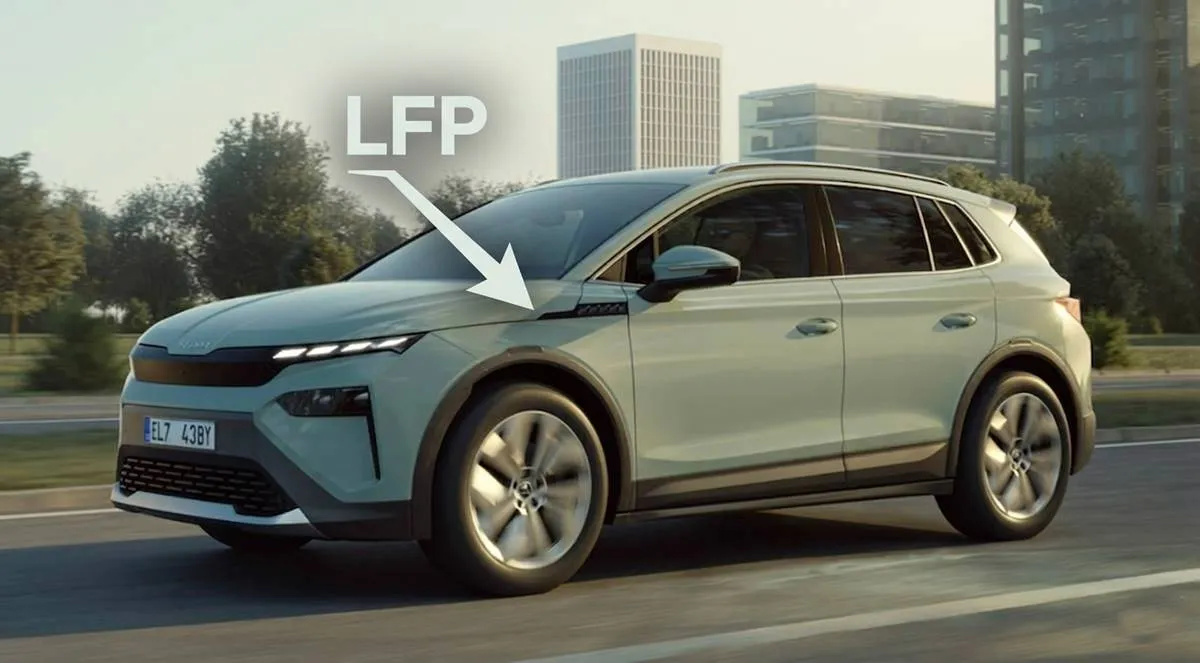
Purchasing a cheaper electric car does not necessarily mean getting a battery with a shorter lifespan. In fact, the opposite can happen. Lithium iron phosphate, or LFP, batteries combine low manufacturing costs with high durability, a advantage that helps promote this technology.
Their main drawback is energy density: they generally store less energy per kilogram than nickel manganese cobalt, or NMC, batteries. But for those looking for an affordable car they intend to keep for many years, sacrificing some range can offer a significant trade-off.
Both belong to the lithium-ion battery family. The difference lies in the materials used in their cathodes, which affect price, weight, thermal stability, and resistance to aging. They are not the only chemistries available, but they are two of the most significant in electric vehicles.
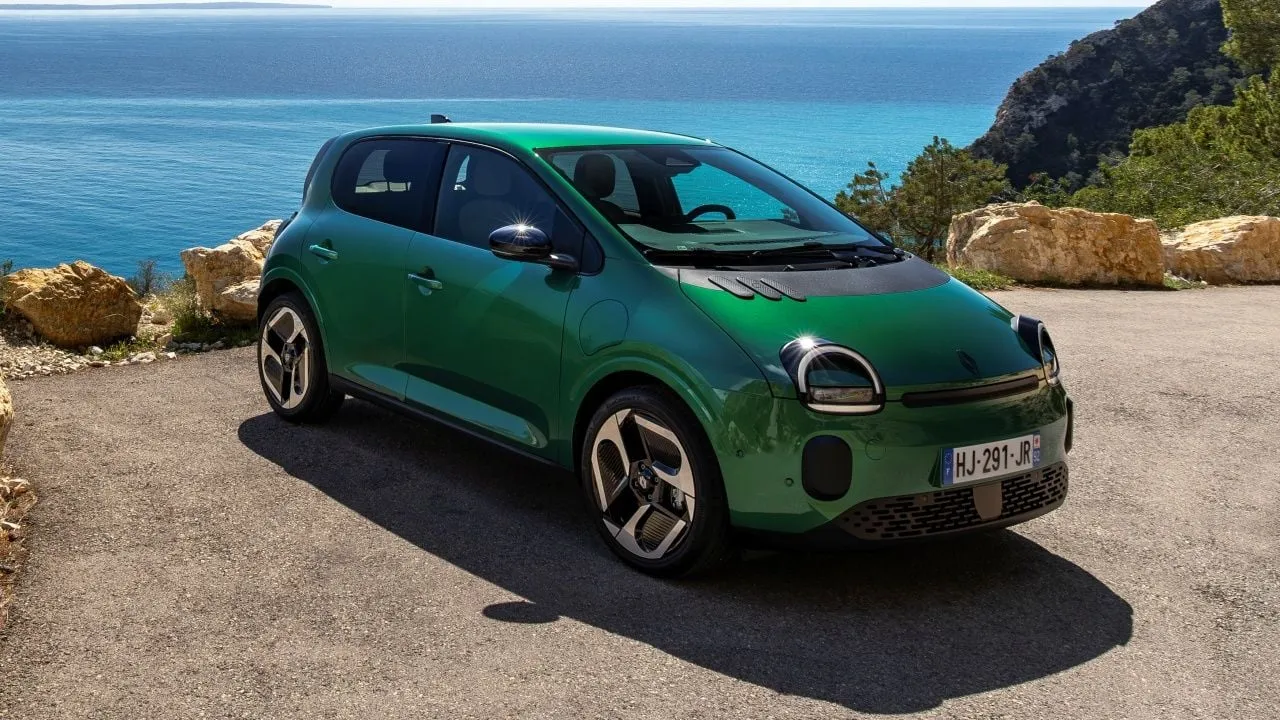
LFP batteries eliminate nickel and cobalt from the cathode and use iron and phosphate instead. This helps reduce costs and explains their appeal to manufacturers looking to offer more affordable electric vehicles. The U.S. National Highway Traffic Safety Administration, NHTSA, highlights precisely this combination of lower-cost materials and longer cycle life.
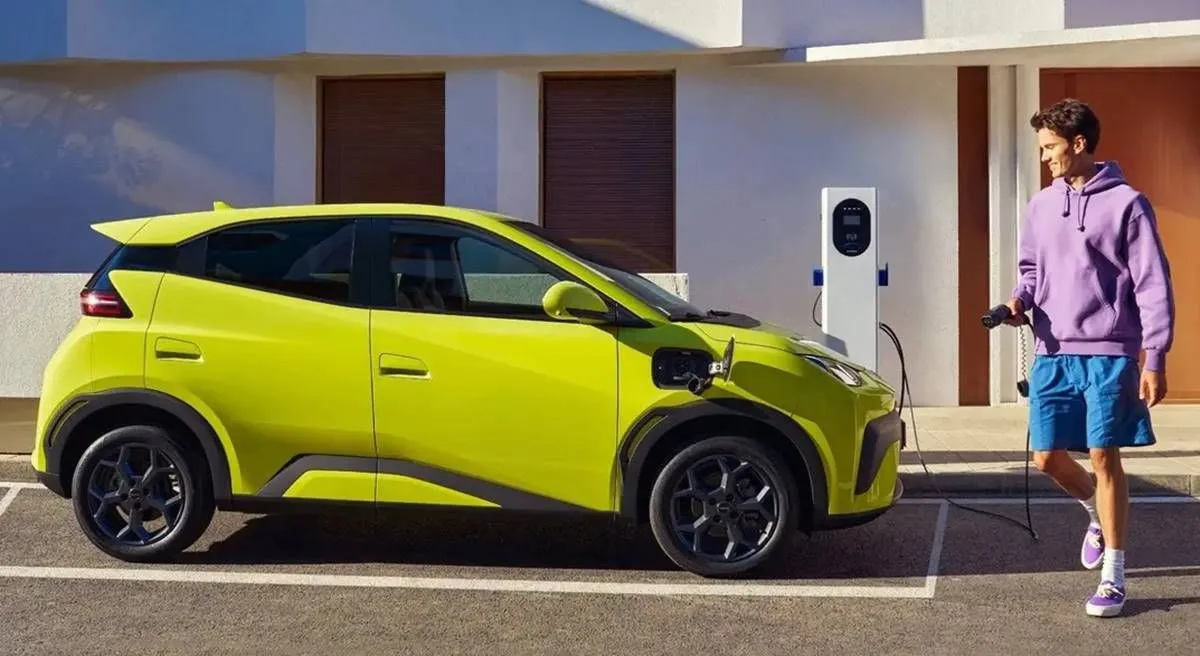
However, LFP batteries are not limited to cheap cars. BYD is one of its main proponents, using this chemistry in its Blade Battery technology. Its approach demonstrates that it can also be used in vehicles with higher performance and larger size, as long as the overall design compensates for its limitations in energy density.
NMCs have significant advantages. Their higher density allows them to store large amounts of energy without increasing weight or volume too much, which is particularly valuable when high range is desired. Choosing between one chemistry and another involves balancing these characteristics, rather than making an automatic classification of batteries as good or bad.
More charge cycles, but no automatic guarantee of a million kilometers
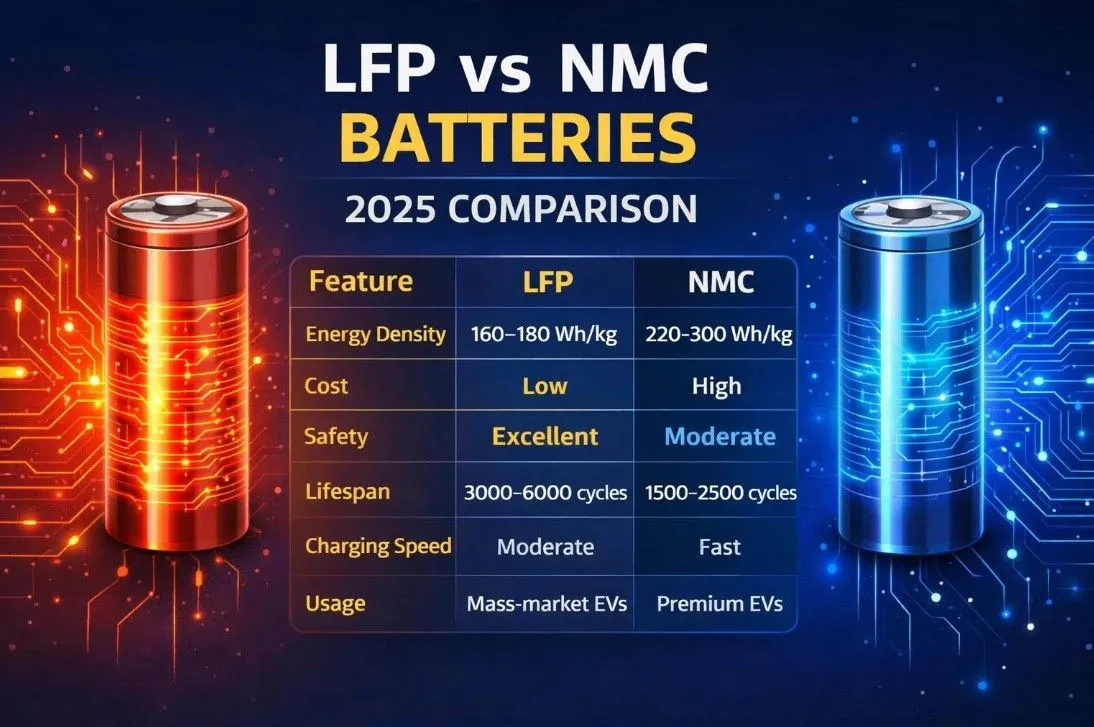
One of the major advantages of LFP is its resistance to charge and discharge cycles. Tests conducted by Sandia National Laboratories show a favorable trend for this chemistry compared to NMC and NCA, although the results depend on operating conditions.
Therefore, it is important to approach figures claiming a fixed lifespan for each technology with caution. Not all LFP batteries last the same amount of time, nor do all NMC batteries degrade at the same rate. Factors such as the specific composition of the cells, temperature, depth of discharge, and charging intensity play a role.
For example, BYD claims its Blade Battery can withstand over 5,000 charge and discharge cycles. This is a specification provided by the manufacturer, not a guarantee that any vehicle equipped with it will cover a certain distance without losing capacity.
In addition, an equivalent full cycle does not mean plugging the car into the charger once. Using up and restoring 50% of the capacity twice is roughly equivalent to one cycle. Small daily charges are not counted as a full cycle each.
That is where some estimates of a million kilometers come from. A simple example: if a car travels 300 kilometers per equivalent full cycle, 3,000 cycles would represent approximately 900,000 kilometers in theory.
The test is designed to show the potential of the technology, but it does not predict a vehicle’s lifespan. It does not account for the gradual loss of autonomy, aging over time, or possible failures in other system components. Nor does it determine when a battery becomes unusable for its owner.
100% charging is another aspect that requires nuance. LFP batteries are often presented as those that can be fully charged without worrying about wear and tear. However, this does not mean they are immune to aging when kept at high charge levels.
A study presented by the Electrochemical Society, using LFP cells and graphite, found less capacity loss when they were used in batteries with a lower average charge state. This chemistry offers good resistance but also has limitations under certain usage conditions.
The recommendation to perform regular full charges may stem, among other reasons, from the need to improve battery level estimation. The voltage curve of LFP cells remains relatively flat for most of their operation, making it difficult to calculate how much energy remains.
Therefore, it is advisable to follow the manufacturer’s specific instructions. A full charge to calibrate the system’s estimates should not be confused with leaving the car at 100% charge for many days. Similarly, fully charging an NMC battery before a trip does not mean it will deteriorate immediately—overall habits and conditions play a role.
Cold weather is also part of this comparison. LFP batteries may exhibit more pronounced limitations at low temperatures, especially during charging. However, the outcome depends heavily on the vehicle: thermal conditioning, preheating, and electronic management affect the actual experience.
A similar situation occurs with ultra-fast charging. A high maximum power rating alone does not indicate how long the battery will last. It is necessary to understand the design of the cells, their cooling system, and the conditions under which the system can handle that power. To compare durability, equivalent testing is required, not just charging figures.
In the used car market, an LFP battery may be an advantage, but it does not replace a diagnosis of its condition. Remaining capacity, the vehicle’s history, and the performance of the thermal system provide more useful information than the acronym alone.
The conclusion for buyers is positive: choosing a more affordable electric vehicle does not mean giving up on a durable battery. LFP batteries offer an attractive combination of cost and longevity. Their potential is high, though turning it into guaranteed mileage requires far more than simply multiplying cycles by range.