
A team of students competing in the world’s longest solar car race: 3,028 km with a car powered by the strength of a coffee maker
20/09/2026 14:30
Updated to
20/09/2026 14:30
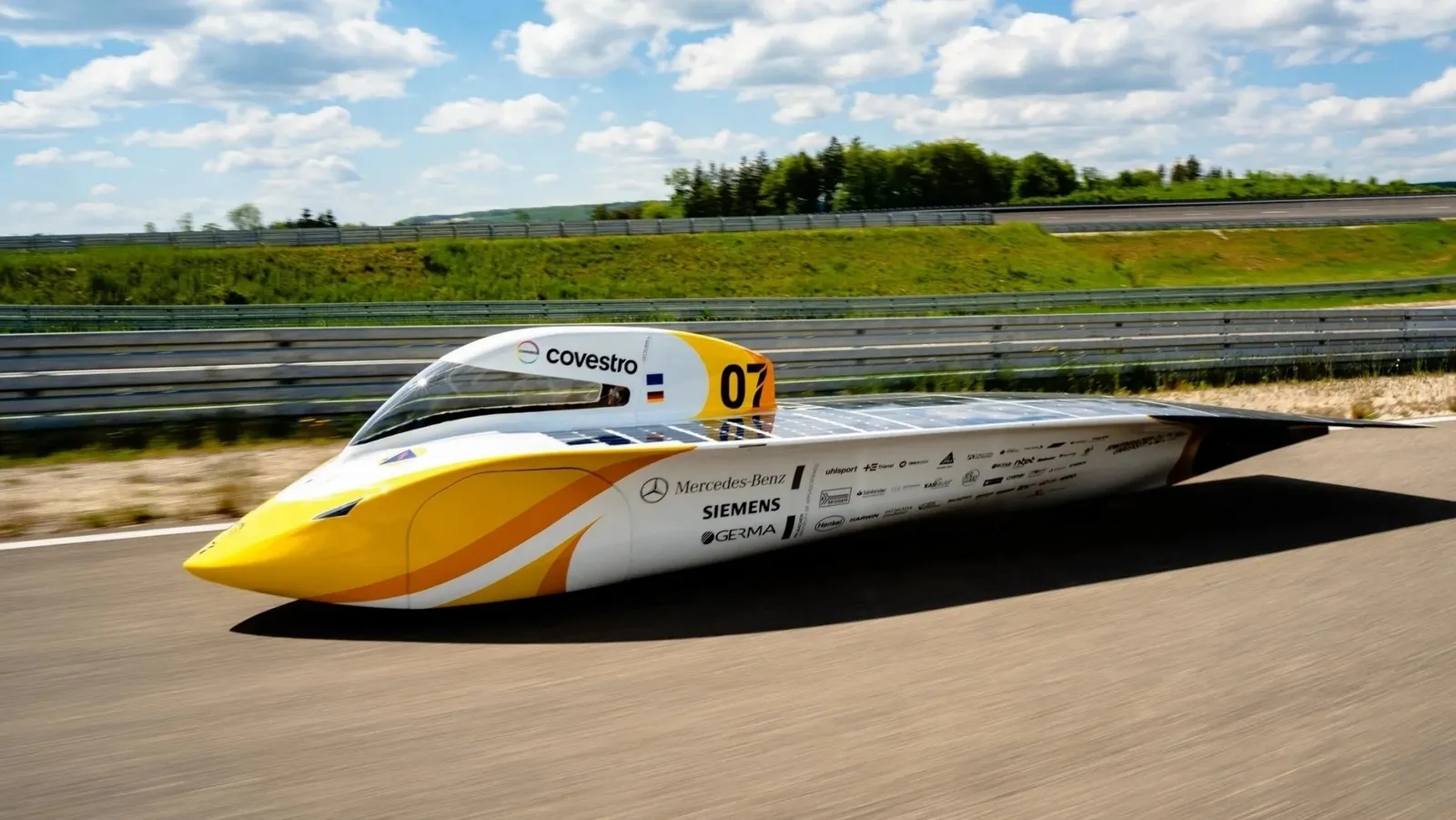
A student team from Aachen is preparing for one of the most demanding competitions in the global electric vehicle scene. Sonnenwagen Aachen aims to make it onto the podium at the Bridgestone World Solar Challenge in Australia with a new car powered by solar energy. The team, composed of students from RWTH Aachen University and the University of Applied Sciences Aachen, is already developing the sixth generation of their solar race car for this purpose.
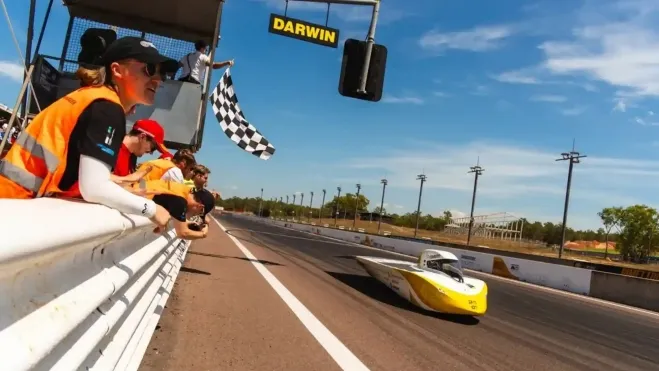
The vehicle is designed to cover a 3,028-kilometer route from Darwin to Adelaide with an average energy consumption that barely exceeds that of a standard home coffee maker. The club president, Nassim Lagrou, describes the race as a "test of endurance," where months of development work and the trust placed in the entire team will be put to the test.
A record of success
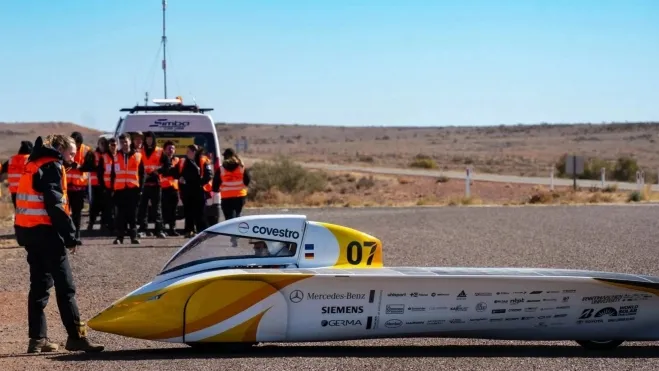
Since its founding in 2015, the team has established itself in the international landscape of solar racing. In their debut at the 2017 Bridgestone World Solar Challenge, their first solar car finished in 16th place and was awarded Best Newcomer. Due to the cancellation of the 2021 World Championship due to the pandemic, the team participated in the Solar Challenge Morocco, a one-off event, where they achieved fifth place with their vehicle, Covestro Photon, after climbing 5,560 meters above sea level through the Atlas Mountains.
In the iLumen European Solar Challenge held in Belgium in 2022, the team won its first international title with two victories for Covestro Photon and Covestro Sonnenwagen. In 2024, Covestro Photon and Covestro Adelie, their current solar cars, finished in second and third place respectively. With their current model, Covestro Æthon, the team achieved fourth place among approximately 40 international university teams at the 2025 World Championship in Australia, improving on their previous results in that championship.
New cell combination: Æthon makes better use of sunlight
From one generation to the next, the technology of Aachen’s solar cars has advanced significantly. The first solar car from 2017 used monocrystalline silicon cells with an efficiency of around 23%. Its successor from 2019 employed gallium arsenide solar cells with an efficiency exceeding 34% and reached a top speed of 144 km/h. The Covestro Æthon, the fifth and so far most recent solar car, combines silicon and perovskite cells in a six-square-meter solar panel. For that season, the rules of the Bridgestone World Solar Challenge doubled the allowed solar surface area, while halving the battery capacity in exchange.
Since a season of solar car racing lasts two years, the Sonnenwagen Aachen team is completely renewed every year. For the current season, the club has 48 members from 19 different study programs at RWTH Aachen University and the University of Applied Sciences Aachen, divided into seven departments covering areas from aerodynamics and electrical engineering to driving strategy. Knowledge sharing among students is ensured through a network of alumni comprising over 190 former members. The project receives support from, among others, Covestro as the main sponsor, as well as Mercedes-Benz, Siemens, and other industry and academic partners.
The new championship has already begun
The team’s journey toward the 2027 World Championship begins this very month of 2026 at the iLumen European Solar Challenge in Zolder Circuit, Belgium, the world’s only 24-hour solar race. The Sonnenwagen Aachen team will compete using their two current vehicles, the Covestro Adelie and the Covestro Æthon. Afterwards, between November and March, the main production phase for the sixth Sonnenwagen will begin, followed by initial testing and a public launch event to introduce the new vehicle.