
An electric car for less than 5,000 euros: the Mitsubishi i-MiEV has its pros and cons
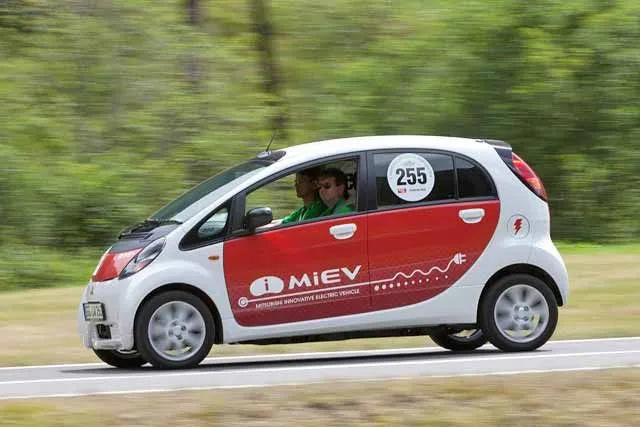
If someone thinks that driving an electric car requires a lot of money, the used car market is starting to show that this isn’t necessarily true anymore. However, just because a cheap electric car exists doesn’t mean it’s a good purchase—here one needs to be much more careful. There are older models that might be interesting for certain uses, but they can also quickly become a source of expenses if their batteries are severely degraded.
In Spain, the units currently listed on used car portals cost around 5,000 euros. These are cars from 2013 or 2014, which usually have few kilometers on them due to the urban driving style typical of this model. Their counterparts from Stellantis have even lower prices, with vehicles under 75,000 kilometers costing around 4,000 euros. And that’s the selling price, which isn’t always the final price.
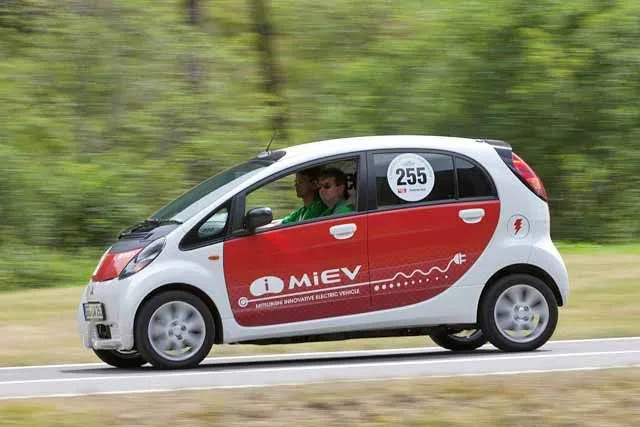
And it’s precisely here that the Mitsubishi i-MiEV becomes interesting. When it arrived in the Spanish market at the end of 2010, it was anything but a cheap car. Its official price before taxes and subsidies was 29,153 euros.
Today, more than fifteen years later, that small Mitsubishi can be found for a fraction of what it cost new. It’s one of those cases where depreciation works entirely in the buyer’s favor, though it also highlights the problem with early electric cars: an aging battery can be far more significant than the purchase price.
A tiny car designed for the city
The design of the Mitsubishi i-MiEV has always been unique. At 3.48 meters in length, 1.47 meters in width, and 1.61 meters in height, it has perfect dimensions for navigating narrow streets and parking almost anywhere. Its raised and extremely compact body resembles a small Japanese utility vehicle rather than the electric cars we’re used to seeing these days.
The interior also isn’t designed to be a family car. It has four seats and a trunk volume of 166 liters, so its capabilities are clearly limited by its size. On the positive side, the elevated seating position and compact dimensions make it quite manageable in urban areas.
For its time, it wasn’t especially poorly equipped either. The i-MiEV could come with air conditioning, power windows, alloy wheels, Bluetooth, USB connectivity, LED rear lighting, a rain sensor, and automatic headlight activation. In terms of safety, it also featured ABS, stability control, and multiple airbags.
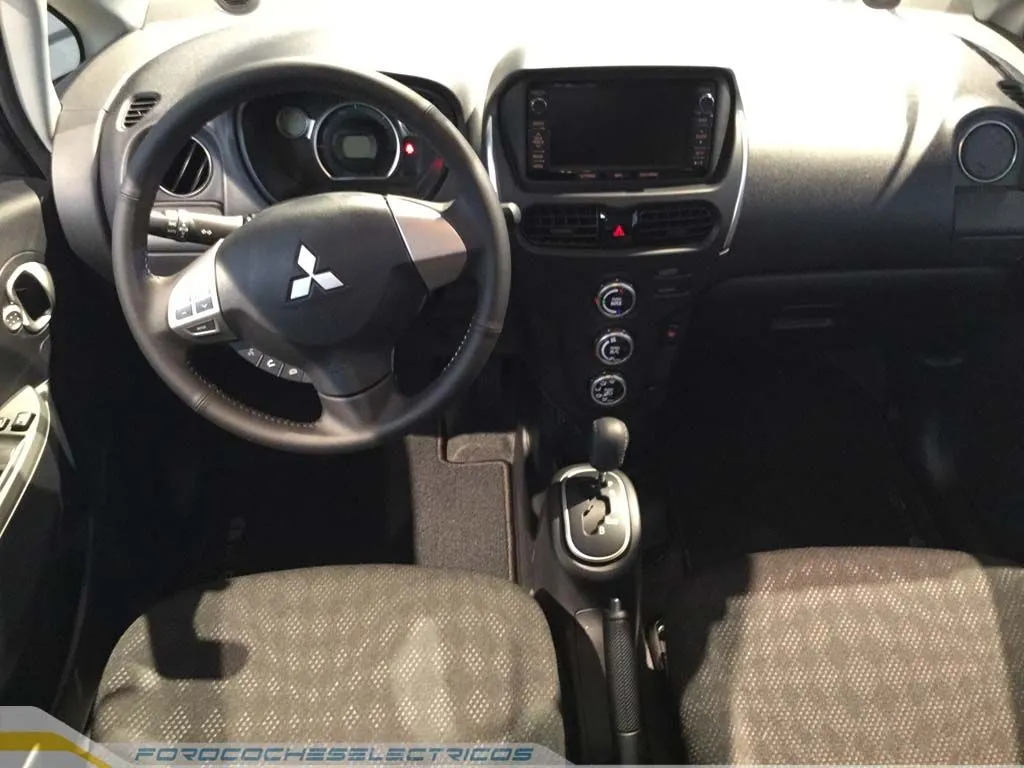
In terms of mechanics, it features an electric motor with 67 CV of power, although some commercial listings from that period mentioned 64 CV, along with 180 Nm of torque and rear-wheel drive. The motor is located at the back and is paired with a single-speed automatic transmission, a setup that helps the compact Mitsubishi deliver quite immediate response in urban driving conditions.
The power comes from a 16 kWh battery, with approximately 15.2 kWh of usable capacity according to the technical specifications. When it was new, Mitsubishi claimed a range of up to 150 kilometers under the infamous NEDC cycle.
With a vehicle that’s already 15 years old and has between 50,000 and 90,000 kilometers on it, talking about 150 kilometers of range doesn’t make much sense. The battery condition is the big unknown factor and can completely change the driving experience from one vehicle to another. In summer, we might manage around 100 kilometers in the city, while that figure can drop significantly in winter. If we have to go on the highway, it’s even less.
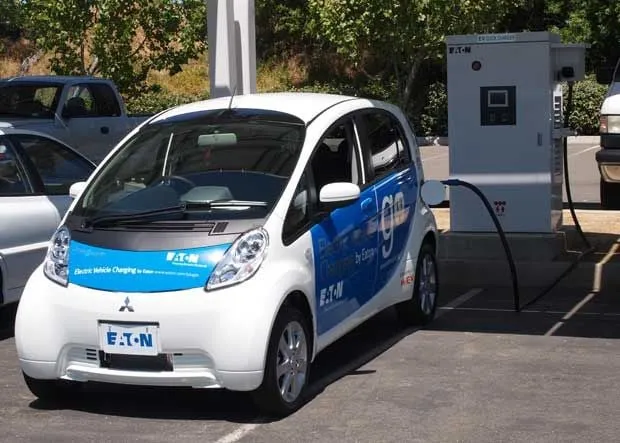
The charging process also differs significantly from that of a modern electric car. The i-MiEV can be charged using alternating current at 3.7 kW, with a charging time of approximately six hours to fully charge the battery. It also supports fast charging via CHAdeMO, a technology that once provided powers around 40-50 kW depending on the version and charger used, though it’s increasingly difficult to find chargers of this type.
The problem is that buying an i-MiEV for 4 or 5 thousand euros doesn’t necessarily mean getting a cheap electric car. Before finalizing the purchase, one should check the actual condition of the battery, as a unit with significant degradation may have too limited range to meet the buyer’s needs. It’s also advisable to examine the charging system, engine condition, suspension components, and especially the maintenance history.
That’s why the Mitsubishi i-MiEV makes sense for a very specific type of user. Someone who needs a second car for commuting to work, running errands, taking children to school, or navigating through a city might find it to be an unexpectedly economical solution. If they can charge it at home and only drive a few dozen kilometers per day, its limitations become less of an issue.
But if the goal is to have one car for everything, the situation changes drastically. In that case, it’s worth considering alternatives like a Kia Soul EV or a Renault Zoe, although the purchase price will be higher. For certain versions of the Zoe, one also needs to check whether the battery belongs to the buyer or is tied to a leasing agreement.
The question is no longer whether an electric car can be bought for less than 5,000 euros. It can be. The important issue is knowing what electric car we are purchasing and how much battery capacity remains after so many years. For such an old model, paying a bit more for one in good condition can be much smarter than going with the cheapest option.
Opinion
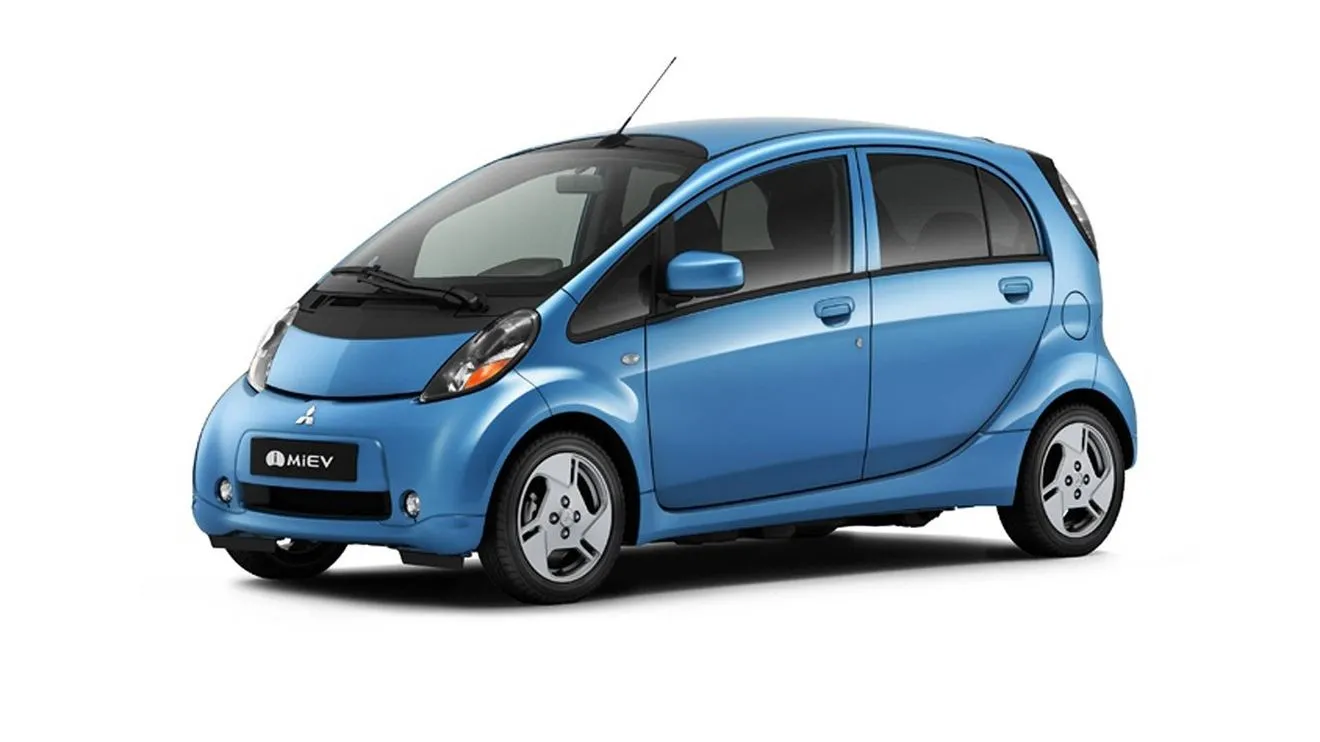
The Mitsubishi i-MiEV is one of those cars that might seem absurd on paper today, but make sense when considering real-world usage. If someone needs a second car for daily trips of 20 or 30 kilometers, one that is extremely easy to park and can perform exactly the same functions as a much more expensive vehicle, this is a good option.
It’s important to pay close attention to the battery condition. The good news is that the Mitsubishi i-MiEV used a 16 kWh battery made up of 88 LEV50 cells from GS Yuasa, featuring a chemistry based on lithium manganese oxide. This chemistry is known for its durability over time and distance. But as always, it’s best to have a certification or conduct an range test.
In conclusion, we can buy a first-generation electric car for very little money. It may not have a long range, but it will get us around at a very low operating cost. And for less than 5,000 euros, it’s not a high risk given the significant benefits we can achieve.