
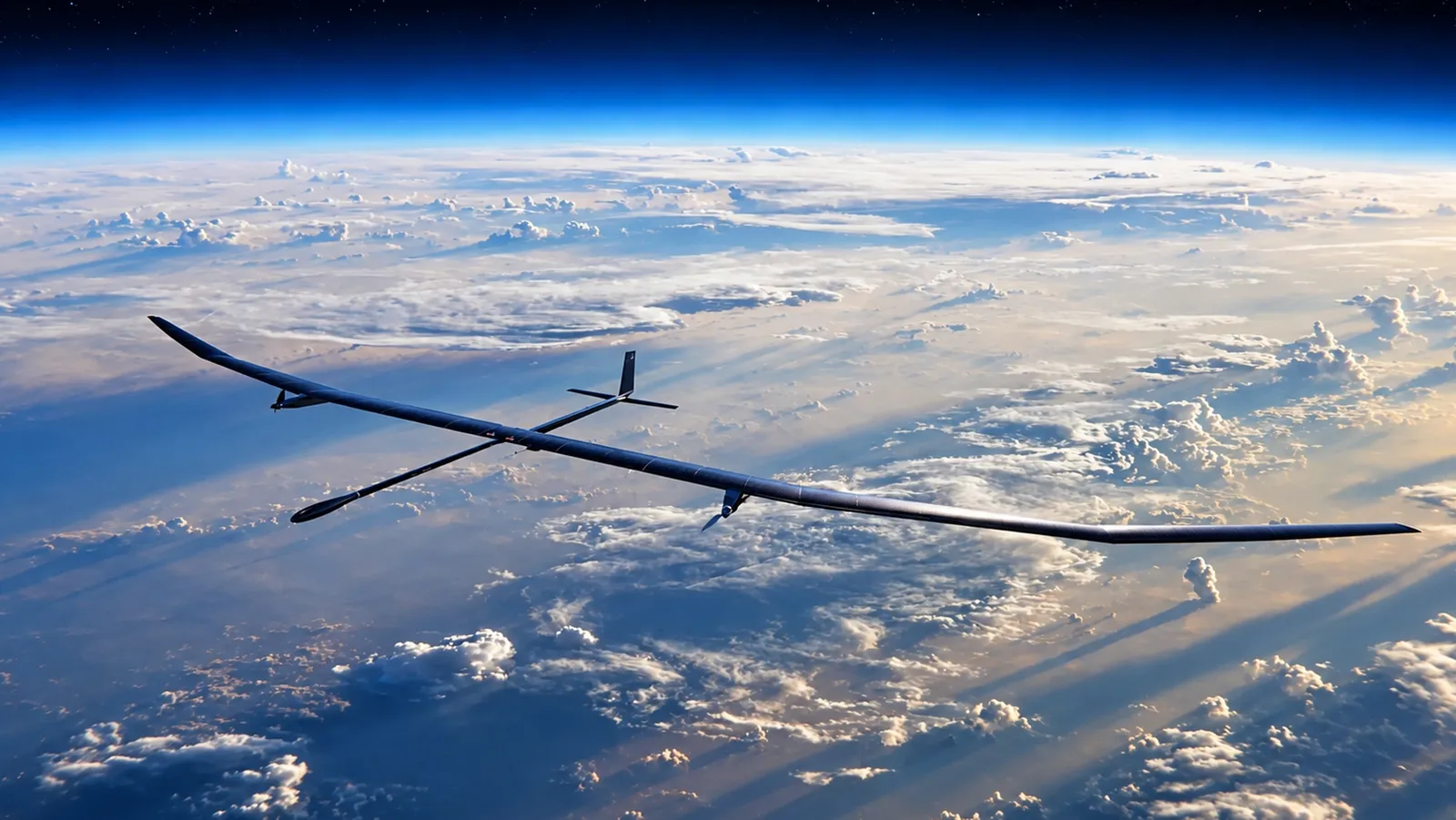
A 35-meter-long solar airplane will be able to fly for months without landing thanks to electricity sent from the ground.
26/09/2026 12:15
Updated to
26/09/2026 12:15
An aircraft with a wingspan of 35 meters and a weight of just 150 kg could remain in the stratosphere for months without needing to land. This is the PHASA-35, developed by BAE Systems and Prismatic, a solar-powered aerial vehicle designed to operate at over 66,000 feet altitude, about 20 kilometers above the Earth’s surface.
The key lies in its extremely low energy consumption. During the day, solar panels mounted on its wings power the electric motors and recharge the batteries. At night, the aircraft continues flying thanks to the stored energy. Now, BAE Systems aims to go further and reduce its reliance on sunlight even more by developing a system that can deliver energy directly from the ground while it remains in flight.
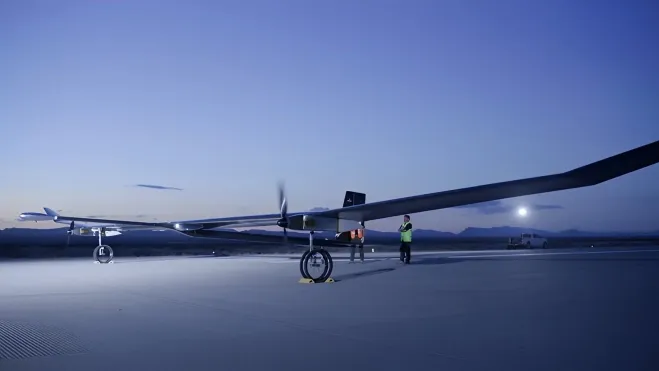
An airplane designed to stay in the stratosphere for months
The PHASA-35 is not designed to carry passengers or goods. Its purpose is to remain at high altitudes for very long periods performing tasks such as surveillance, communications, Earth observation, or environmental monitoring.
Its solar panels power the electric motors and recharge the batteries during daylight hours.
Its design is very different from that of a conventional airplane. Despite having a wingspan comparable to much larger aircraft, it weighs only about 150 kg, which greatly reduces the amount of energy needed to keep it in the air. To this light weight is added a large surface covered with solar cells. During daylight hours, these generate enough electricity to sustain flight and charge the batteries that will power the aircraft at night.
The goal is for it to function practically like an atmospheric satellite, but flying much closer to Earth with the ability to return to the ground and be reused.
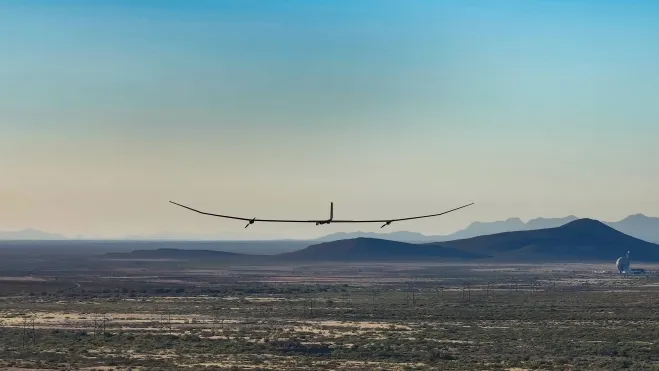
The problem arises when there isn’t enough sunlight
The solar system works particularly well under favorable conditions, but it has an obvious limitation: long nights and periods with little solar radiation. BAE Systems cites winter conditions in latitudes such as the United Kingdom as an example, where there may not be enough solar energy to ensure continuous operation over extended periods. To address this issue, the company is now involved in a project funded by 15.7 million pounds that aims to transmit energy from the ground to PHASA-35 wirelessly.
The aircraft will have an integrated receiver located on one of its wings. The energy sent from the ground will be captured by this system and converted back into electricity, which can be used both to power the aircraft and to recharge its batteries. The project is expected to last approximately three and a half years and should conclude with an in-flight demonstration.
The goal is not to replace solar energy but to complement it. Solar panels will remain the primary source of electricity during the day, while ground-based transmission can cover times when solar conditions are insufficient. If the system works as planned, the PHASA-35 could maintain continuous operations for months with much greater independence from the time of year or day length.
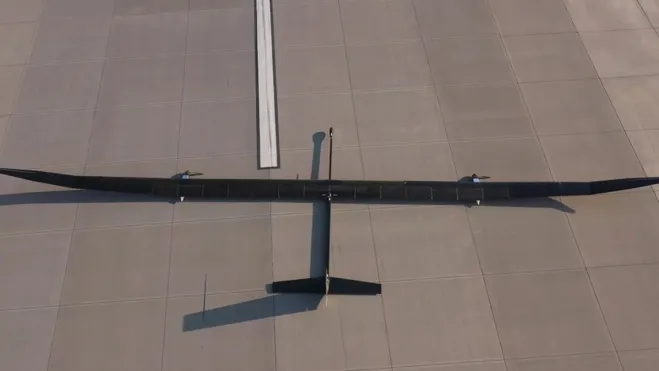
The combination of solar panels, batteries, and energy sent from the ground would enable this type of aircraft to become long-lasting platforms capable of remaining over the same region for much longer than a conventional airplane, without the need to launch a satellite into orbit.
PHASA-35 is designed to fly in the stratosphere, above 66,000 feet, an area well above regular commercial air traffic. From that altitude, it can cover large areas of land and serve as a platform for communications, surveillance, or data collection.
BAE Systems believes this type of aircraft can offer some of the advantages of satellites, but at lower costs and with greater flexibility, as they can land, be maintained, and reused. The major innovation now is that, in addition to harnessing solar energy, the PHASA-35 could receive electricity directly from the ground, eliminating one of the main limitations of long-duration solar aircraft.