
10% more efficient and 30% cheaper to produce: Honda is developing a new generation of hybrids set to arrive in 2027
25/09/2026 14:00
Updated to
25/09/2026 14:00
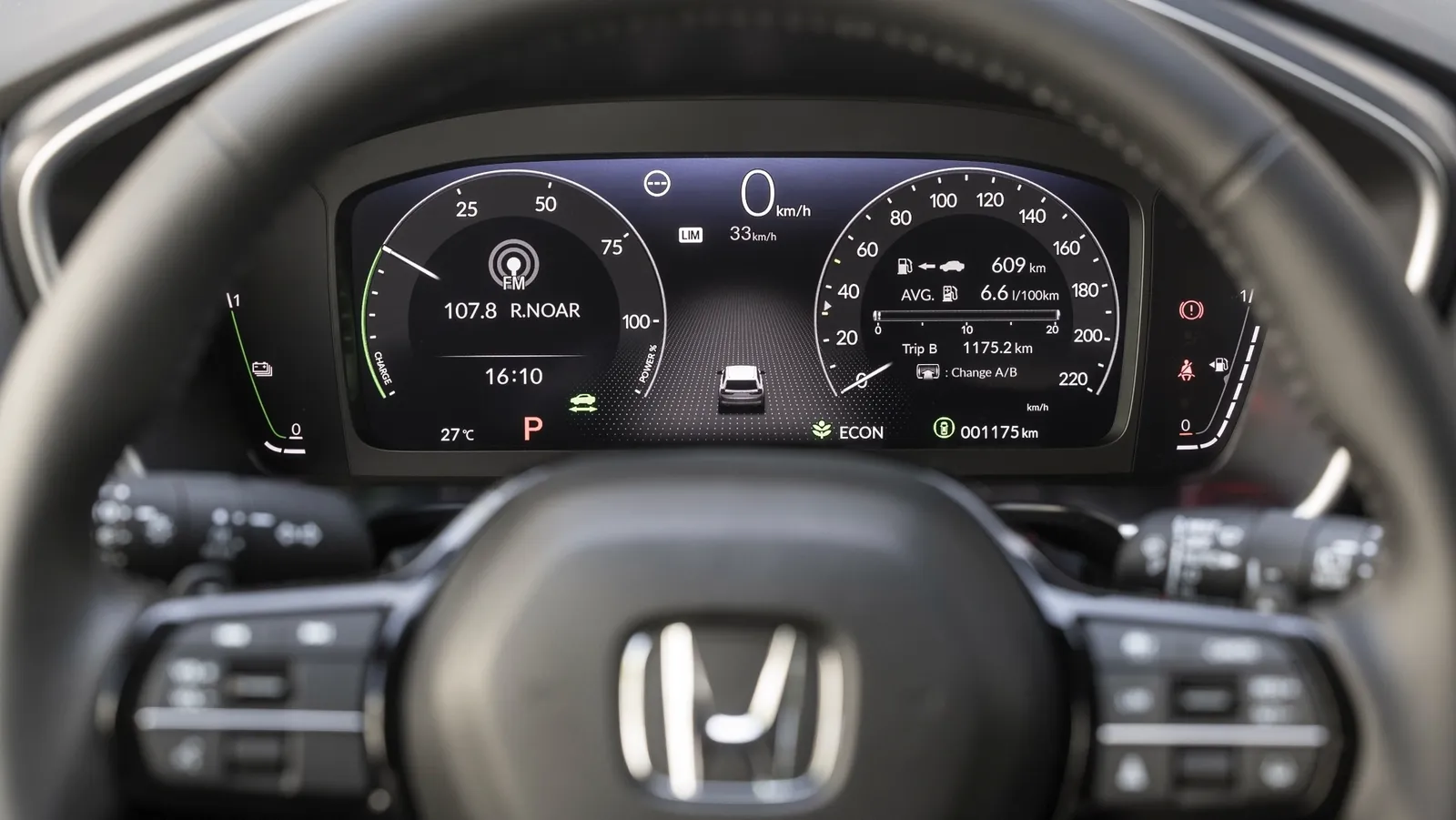
Honda has decided to stick with its commitment to hybrid technology. The Japanese brand will introduce its next-generation hybrid technology in the new CR-V, whose production will begin in February 2027. This new hybrid system features an improved 2.0-liter four-cylinder engine along with new electric motors, promising a 10% improvement in fuel efficiency and a 30% reduction in production costs.
The announcement confirms that hybridization remains the core of Honda’s global strategy, with the hybrid version of the CR-V set to lead this new technological phase before it is rolled out to the rest of the lineup. Honda has not achieved the success it hoped for with its fully electric models. Vehicles like the e:Ny1 have received little acceptance from consumers due to their excessively high prices relative to their features.
A system arriving ahead of schedule
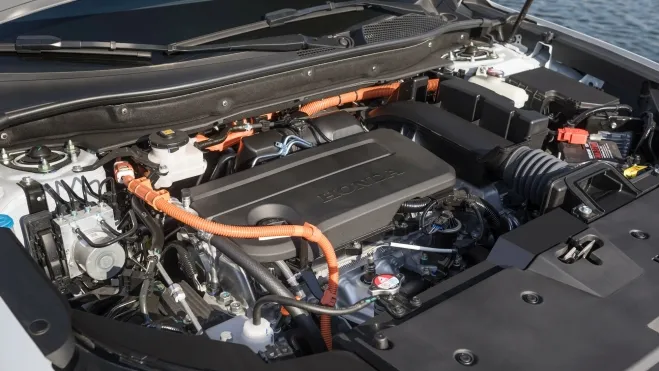
Honda had been developing this new generation of improved hybrid powertrains for some time now, intended to replace the current system used in models such as the Civic, CR-V, HR-V, and the new Prelude, among others. According to available information, models equipped with this system will reach the market earlier than originally planned, with the hybrid CR-V being the first model to introduce it starting in February 2027.
The heart of this fifth generation of Honda’s hybrid system is a new 2.0-liter four-cylinder engine with direct fuel injection, combined with two entirely new electric motors. All models equipped with this system will also feature Honda’s S+Shift gear shift simulation system, designed to provide a driving experience closer to that of a traditional transmission despite being a hybrid system.
A 10% reduction in fuel consumption for the CR-V
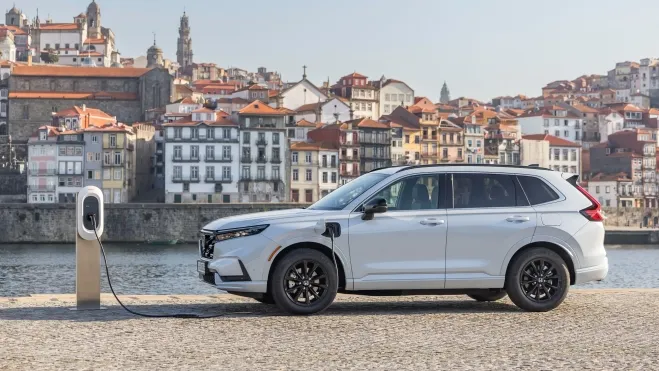
To give some context for what that 10% improvement in fuel consumption would mean, it’s useful to look at the official figures for the current Honda CR-V e:HEV in Europe. According to data approved under the WLTP cycle, the front-wheel-drive version currently consumes 5.9 liters per 100 kilometers on a combined cycle, with 134 grams of CO2 emissions per kilometer, while the all-wheel-drive variant reaches 6.7 liters per 100 kilometers and 151 grams per kilometer.
Applying that 10% reduction that Honda attributes to its new hybrid system, the combined fuel consumption of the next generation CR-V could be around 5.3 liters per 100 kilometers for the front-wheel-drive version and around 6.0 liters per 100 kilometers for the all-wheel-drive version—figures that would bring the model below the current threshold and place it among the most efficient hybrid SUVs in its segment.
A platform that reduces weight by 90 kilograms
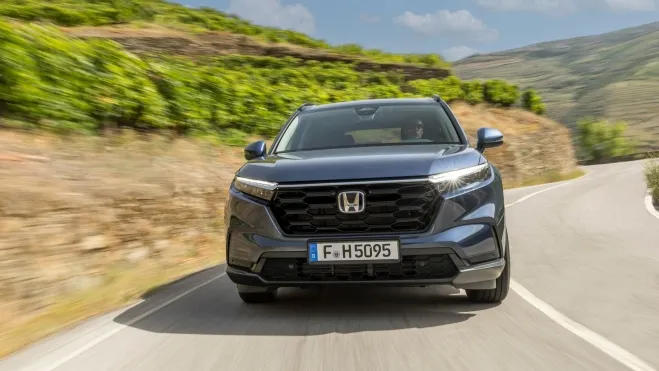
Besides the new hybrid system, the updated CR-V and other Honda models will adopt the new mid-size platform that the brand introduced at the end of last year. Combined with the new hybrid mechanics, this architecture reduces the overall weight by 90 kilograms compared to current Honda models with equivalent specifications. The platform design is deliberately crafted to increase the chassis’s deformation capacity, thereby further optimizing vibration damping by the suspension system.
In addition to these mechanical advancements, Honda will gradually introduce a new sports management system across its entire lineup. This system analyzes and controls the vehicle’s yaw rate, optimizing dynamic performance by adjusting braking and electric motor torque in real time. It represents an additional layer of electronic control designed to improve the car’s handling in corners, leveraging the ability to distribute torque among the various motors provided by the new hybrid mechanics.