
Ulm and Neu-Ulm are transitioning their bus fleet to 77 electric buses
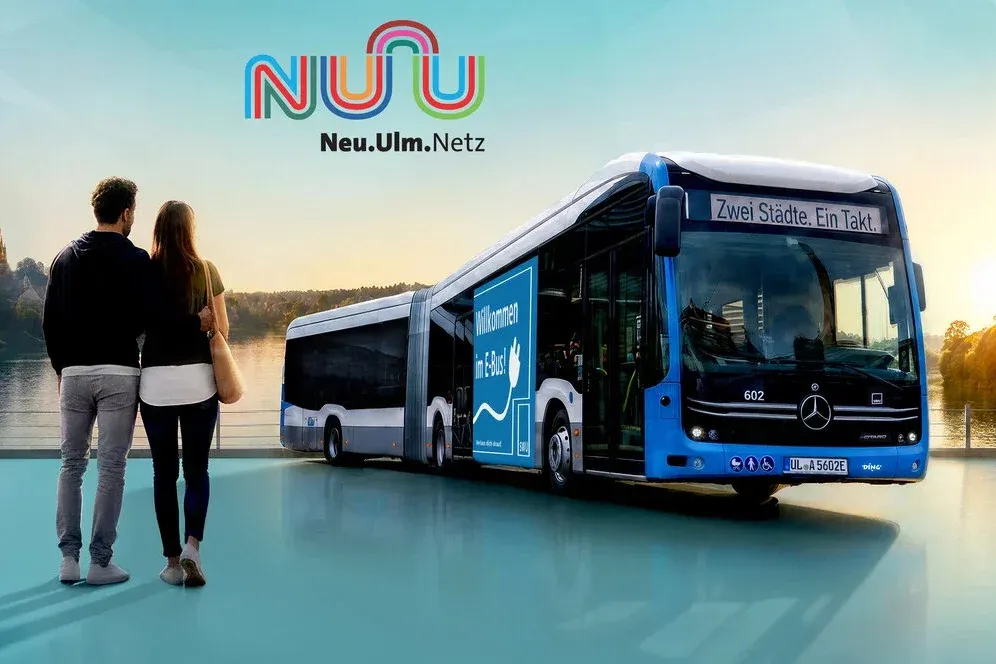
Ulm and Neu-Ulm will launch a unified city bus network starting January 1, 2027. Meanwhile, the electric bus fleet is set to grow significantly: a total of 77 e-buses are planned to operate on this network, accounting for around 70 percent of the city’s bus fleet.
77 electric buses are scheduled to operate on the unified city bus network starting in 2027.
Image: SWU
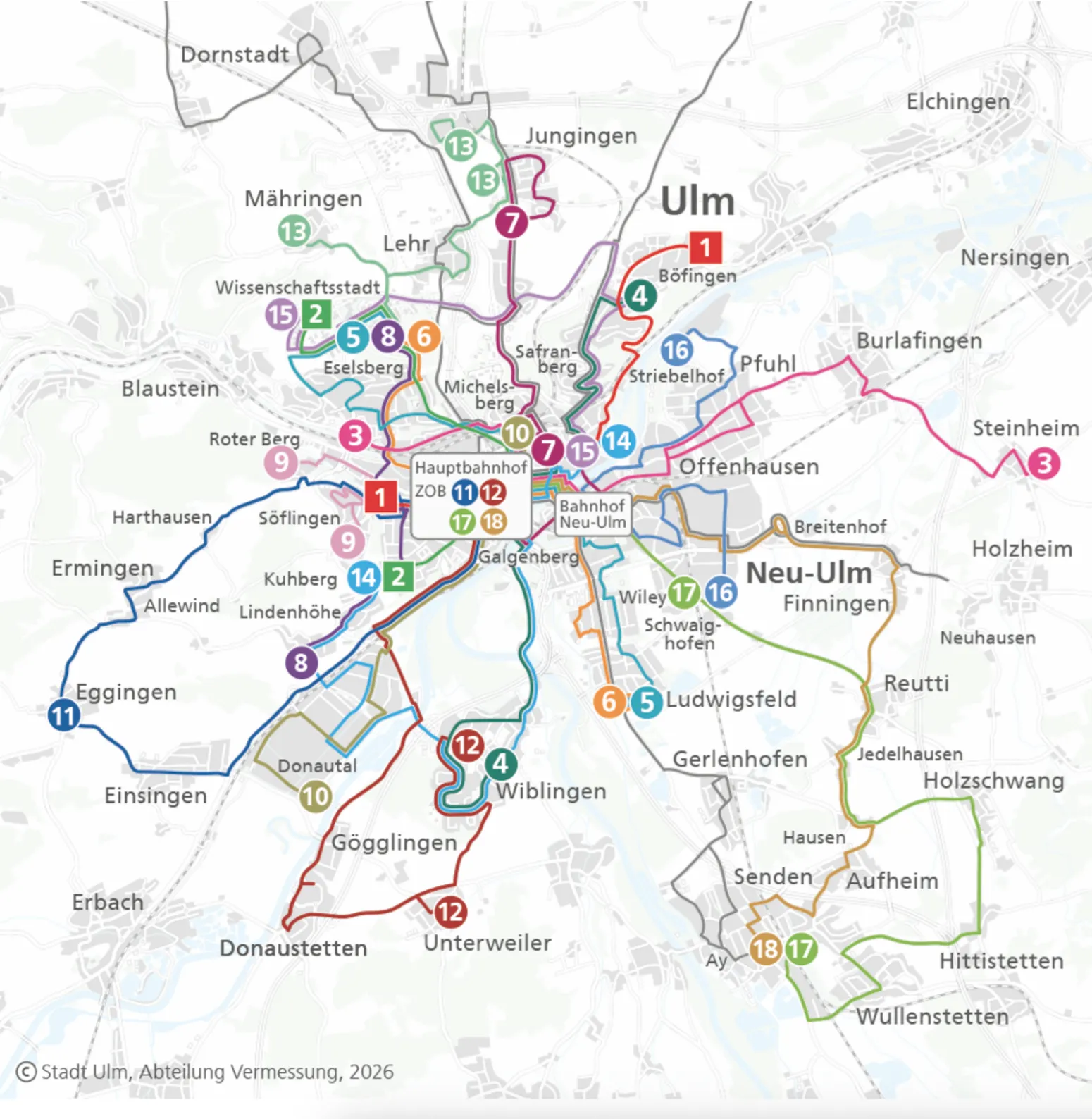
The core of this reorganization is a stronger integration of the previously largely separate bus networks of the two cities. Continuous routes are intended to reduce transfers and provide more frequent service along key corridors. The network in Neu-Ulm will see the most significant restructuring.
The new Line 3 will operate along the eastern route through Offenhausen, Pfuhl, Burlafingen, and Steinheim. It is scheduled to run every ten minutes up to Burlafingen, and every 20 minutes between Burlafingen and Steinheim. Line 5 will also follow a consistent ten-minute schedule, supplemented by Line 26 running every 20 minutes.
Simultaneously, the stop infrastructure has been expanded. According to the city, around 20 new stops or stops with improved accessibility have been built in Neu-Ulm. However, some construction sites will still require detours at the start of service in early 2027.
The Stadtwerke Ulm/Neu-Ulm (SWU) were already operating 14 electric buses from Daimler. An additional 37 vehicles will be added by the end of 2026, with 30 of them already delivered at the time of the announcement. The remaining seven are scheduled to arrive in October. Additionally, subcontractors employed by SWU will acquire 26 more electric buses. As a result, a total of 77 electric buses are set to operate on the city’s bus routes starting in 2027. According to SWU Verkehr, this represents around 70 percent of the city’s total bus fleet.
The operation has not yet become fully electric. Some diesel hybrid buses are only a few years old and will therefore continue to be used. SWU Verkehr expects to replace them only in the early to mid-2030s. The charging infrastructure is also being expanded for electrification. The state of Baden-Württemberg has already allocated 24.6 million euros in subsidies for this purpose. An additional 7.5 million euros will fund the purchase of new electric buses. Federal subsidies will also be available.
With this new network, Ulm and Neu-Ulm are connecting two projects: a denser and more interconnected bus route network across cities, as well as an accelerated shift to electric propulsion. The key factor for operation will likely be how well the additional charging infrastructure can keep up with the rapidly increasing proportion of electric buses.