
The UK government wants to loosen the electric vehicle sales requirement — but only slightly.
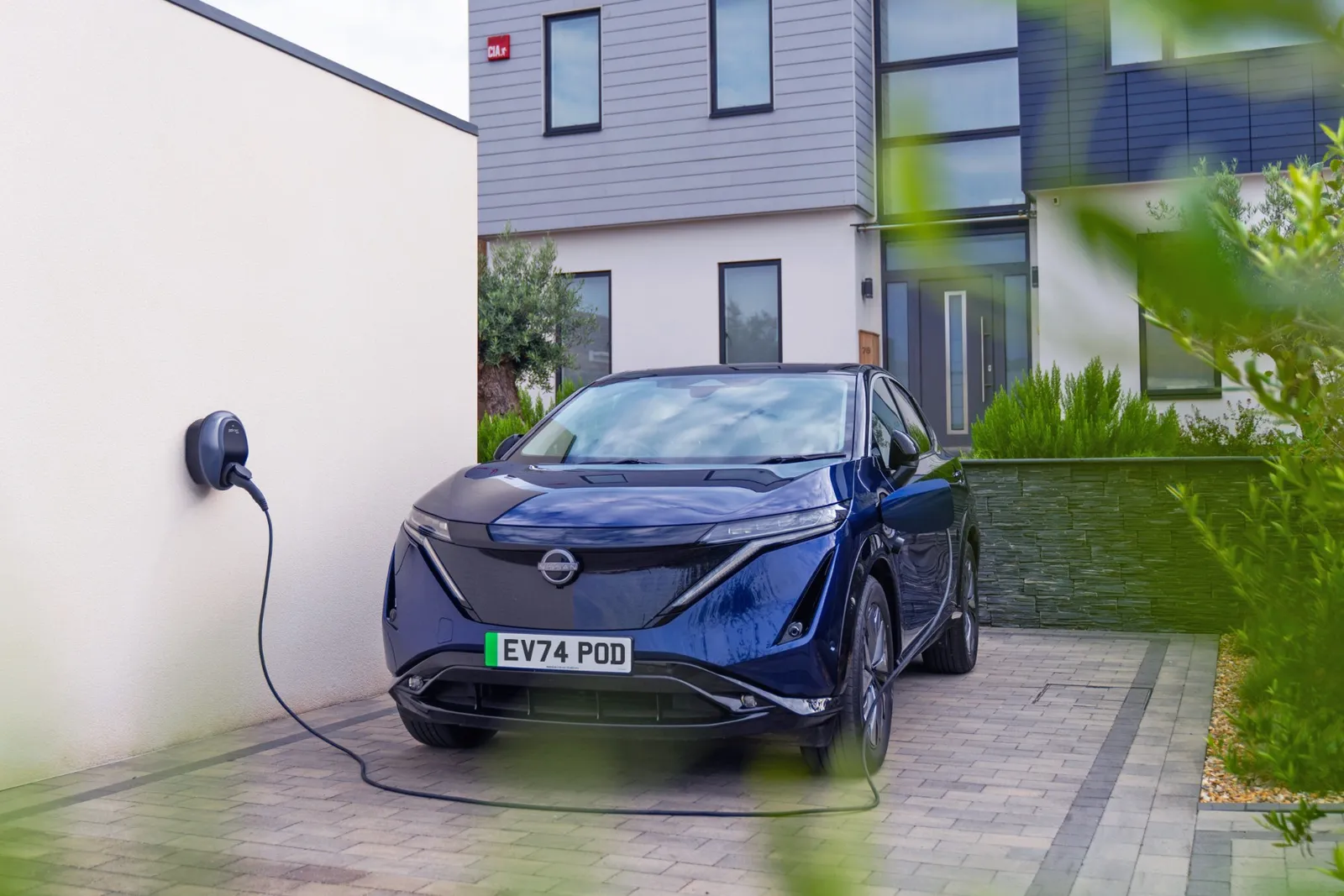
The British government has launched a review of the ZEV mandate and is willing to relax the electric vehicle sales targets for the period 2027 to 2035. However, it becomes clear during the consultation that policymakers intend to ease regulations less significantly than originally planned.
Image: Nissan
According to the Financial Times, the government under Andy Burnham maintains that by 2030, not 80 percent of all new cars in the UK must be fully electric as required under the current ZEV mandate, but rather 60 percent, with the remaining 40 percent being hybrid vehicles. Pure gasoline and diesel cars are therefore not to be approved anymore starting in 2030. The UK automotive industry had expected a more relaxed approach.
According to the FT, this information is based on “insiders.” It claims that Burnham’s government consulted the industry during current discussions regarding a 60% BEV target by 2030. The reactions to this proposal remain unclear. However, companies such as Ford and Nissan had already called for reducing the new car sales target to 40 or 50% BEVs even before the consultations began. Peter Kyle, the economy minister under Burnham’s predecessor Sir Keir Starmer, who prepared those consultations, also aimed to lower the electric vehicle quota from 80% to 50% by 2030.
According to the FT, the 60 percent figure now under discussion in the Burnham government is highly contentious: “The Department for Business is pushing for as sharp a reduction in the target as possible to support the UK’s automotive industry, which is under pressure from Chinese competition and wants a slower transition to electric vehicles. The Department for Energy Security and Net Zero Emissions, on the other hand, opposes this, as it wants to ensure that the UK continues to meet its climate targets.”
Although registration numbers for electric vehicles in the UK have also risen this year, as in almost all European industrialized countries, the increase has been less significant than in countries such as Germany or France. The share of electric vehicles there is currently 26 percent, up from 22 percent the previous year. Automakers based in the UK have long argued that the planned increase in the ZEV mandate from 38 percent next year to 80 percent by the end of the decade is unrealistic.
To bring together these vastly differing viewpoints, the aforementioned consultation is currently underway. It began in mid-August and will continue until October 23, 2026. During this period of discussion, automakers, industry stakeholders, and other interest groups have had about two months to officially express their positions.
Background: Under its ZEV mandate, the UK has failed to meet extremely ambitious and increasingly stringent sales targets for electric vehicles since 2024. However, there has been growing unrest in the industry over this issue for some time now. For Britain’s new Prime Minister Andy Burnham, the consultation inherited from the previous government represents the first political action related to the automotive industry.
Here’s the key point: The ZEV requirements were introduced in 2024, with manufacturers required to ensure that 22 percent of all passenger car sales consist of electric vehicles. This target rose to 28 percent in 2025 and is currently at 33 percent. The goal for next year is 38 percent, followed by a sharp increase to 52 and 66 percent in 2028 and 2029, respectively — reaching 80 percent by 2030. No specific targets have been set yet for the years between 2030 and 2035. However, a de facto ban on internal combustion engine vehicle sales is expected by 2035. The current consultations focus on the target years from 2027 to 2035.
British media and websites report that nearly the entire British automotive industry believes the current requirements are simply unattainable. The Society of Motor Manufacturers and Traders also holds this view, arguing that while the regulations can force supply but not demand, car manufacturers are thus pressured to spend billions on discounts and similar measures to artificially boost demand. This is not a sustainable business model, says Mike Hawes, CEO of SMMT.
In its original version introduced in 2024, the ZEV regulations no longer apply at this point. In the meantime, the fines for non-compliant vehicles imposed on manufacturers have been reduced from 15,000 to 12,000 pounds. Moreover, OEMs have been given greater flexibility in meeting the requirements, much like EU manufacturers. As a result, sales can now be reported over several years in aggregate.