
UK records strongest EV July to date
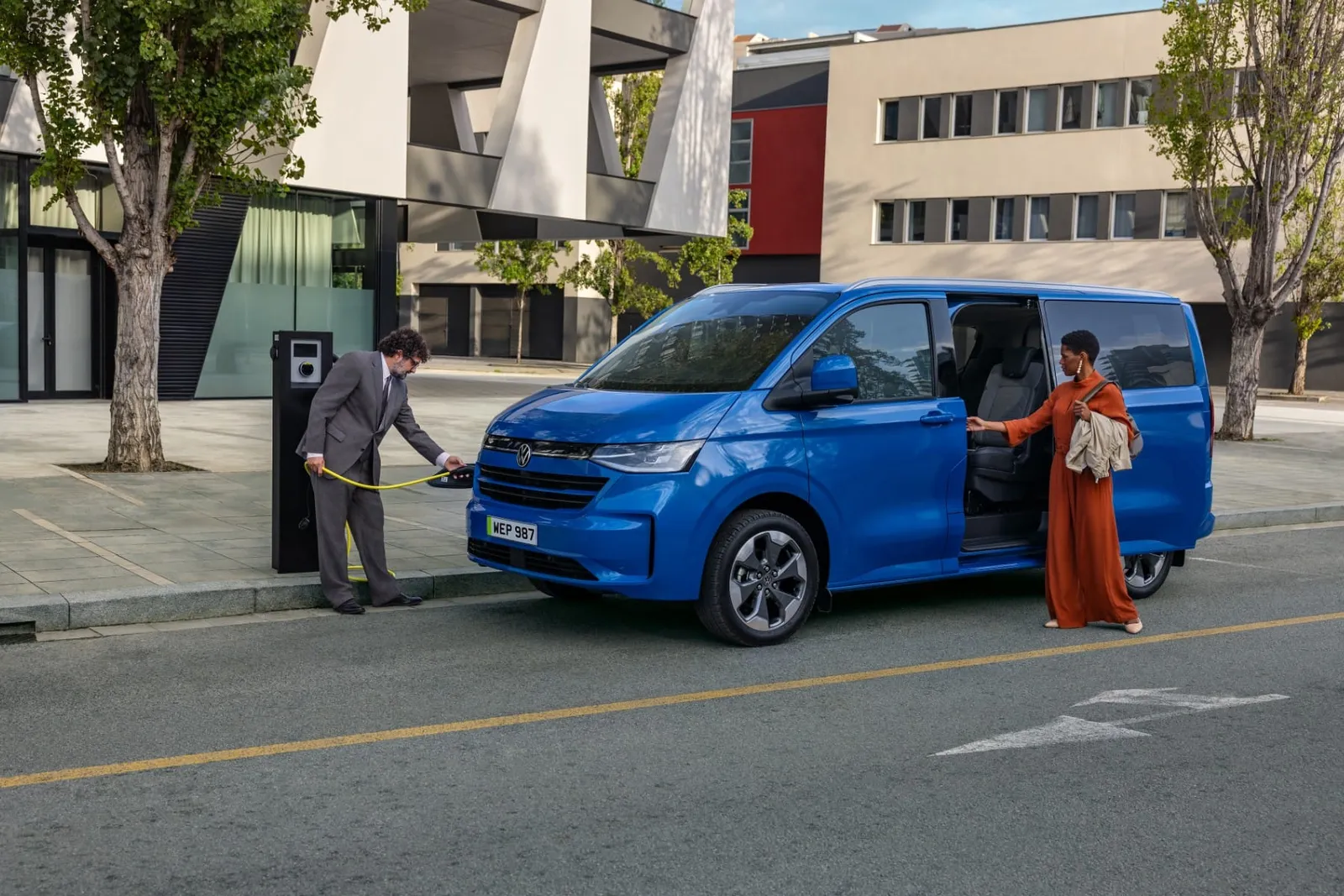
Battery-electric vehicles continued to drive the UK's transition to electric mobility in July, posting record market shares in both the passenger car and light commercial vehicle segments. But the SMMT says both markets remain below the trajectory required by the UK's ZEV mandate.
Battery-electric vehicles continued to drive the UK’s transition to electric mobility in July, posting record market shares in both the passenger car and light commercial vehicle segments. According to the Society of Motor Manufacturers and Traders (SMMT), BEV registrations rose by 44.5 per cent in the passenger car market and by 74.1 per cent among vans.
Let’s first look at the passenger cars: The UK registered 156,571 new passenger cars in July, up 11.7 per cent year on year. Electrified drivetrains accounted for virtually all of the market growth. BEVs recorded another monthly high, with registrations increasing by 44.5 per cent compared to July 2025 to capture a record market share of 27.5 per cent.
According to the SMMT, last year’s comparatively weak July performance was influenced by buyers delaying purchases until the government confirmed which models qualified for the Electric Car Grant (ECG).
Plug-in hybrid electric vehicles also continued to gain ground. PHEV registrations increased by 33.6 per cent year on year, lifting their market share to 14.9 per cent. Combined, BEVs and PHEVs represented 42.4 per cent of all new passenger car registrations in July.
The SMMT attributes the continued growth in electric vehicle demand to a broader choice of models, substantial manufacturer discounts and government incentives, alongside persistently high fuel prices.
Forecast remains below ZEV mandate trajectory
Despite the record July performance, the industry association expects battery-electric vehicles to account for 27.4 per cent of total new car registrations across 2026, according to its latest market outlook. That represents a slight increase from the previous forecast of 26.8 per cent published in April but remains well below this year’s ZEV mandate target of 33 per cent.
The SMMT expects BEVs to capture 32.1 per cent of the market in 2027, compared with a regulatory target of 38 per cent. The forecast was compiled before the government ended Electric Car Grant eligibility for demonstrator and courtesy vehicles in mid-July. Since those vehicles currently account for around 10 per cent of all BEV registrations, the association says the policy change could influence future market performance.
According to the SMMT, manufacturers continue to rely on significant discounts, marketing support and government incentives to stimulate demand and comply with the ZEV mandate. While regulatory flexibilities help bridge part of the gap between market demand and sales targets, the organisation argues that these mechanisms become less effective as annual targets increase. The resulting costs are affecting profitability, weakening residual values and diverting investment.
“July’s record EV performance is a great achievement, reflecting the industry’s huge investment in zero-emission mobility,” said SMMT Chief Executive Mike Hawes. “But that progress cannot be sustained if manufacturers continue haemorrhaging billions in EV discounts, distorting demand to avoid even steeper penalties.”
Electric vans also reach record market share
The UK’s electric van market also continued to expand in July. Battery-electric van registrations increased by 74.1 per cent year on year, marking the strongest monthly growth since August 2025. BEVs consequently achieved a record 14.7 per cent share of the light commercial vehicle market.
Over the first seven months of the year, battery-electric vans accounted for 10.6 per cent of registrations, exceeding the 10 per cent threshold for the first time. However, this remains well below the 24 per cent market share required under the UK’s 2026 ZEV mandate for light commercial vehicles.
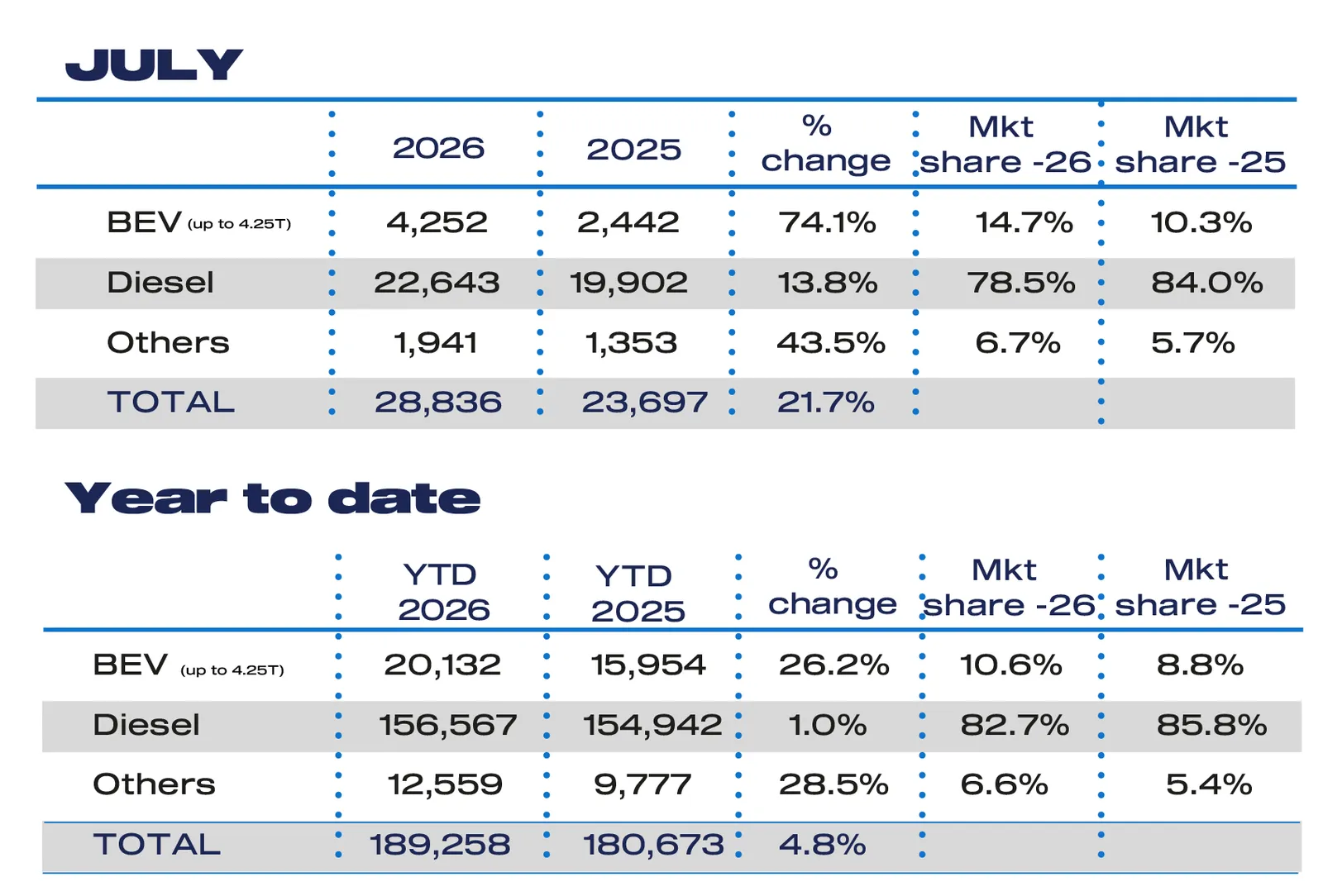
The SMMT expects electric vans to account for 11.5 per cent of registrations this year, increasing to 15.9 per cent in 2027. According to the association, adoption continues to lag behind regulatory ambitions despite an expanding range of models. It identifies higher upfront purchase costs, insufficient charging infrastructure and increasing operating pressures as the main barriers to faster electrification.
“Continued van market growth shows operator resilience and sustained sector investment, while record battery electric van uptake is encouraging, proving businesses will switch if business conditions are right,” Hawes said. “However, multiple barriers are constraining the market – high capital expenditure costs, infrastructure challenges and, for pick-ups, fiscal disincentives. Rapid revisions to regulation and taxation are required urgently to spur the commercial vehicle fleet renewal essential to the achievement of net zero.”