
UK apparently considering special tariffs on Chinese EVs
Just days after a report that the EU is allegedly pushing for higher tariffs on Chinese electric cars, the British government is now apparently drawing up a corresponding regulation. This is presumably the only way the UK can be eligible for the EU's upcoming "Made in Europe" initiative.
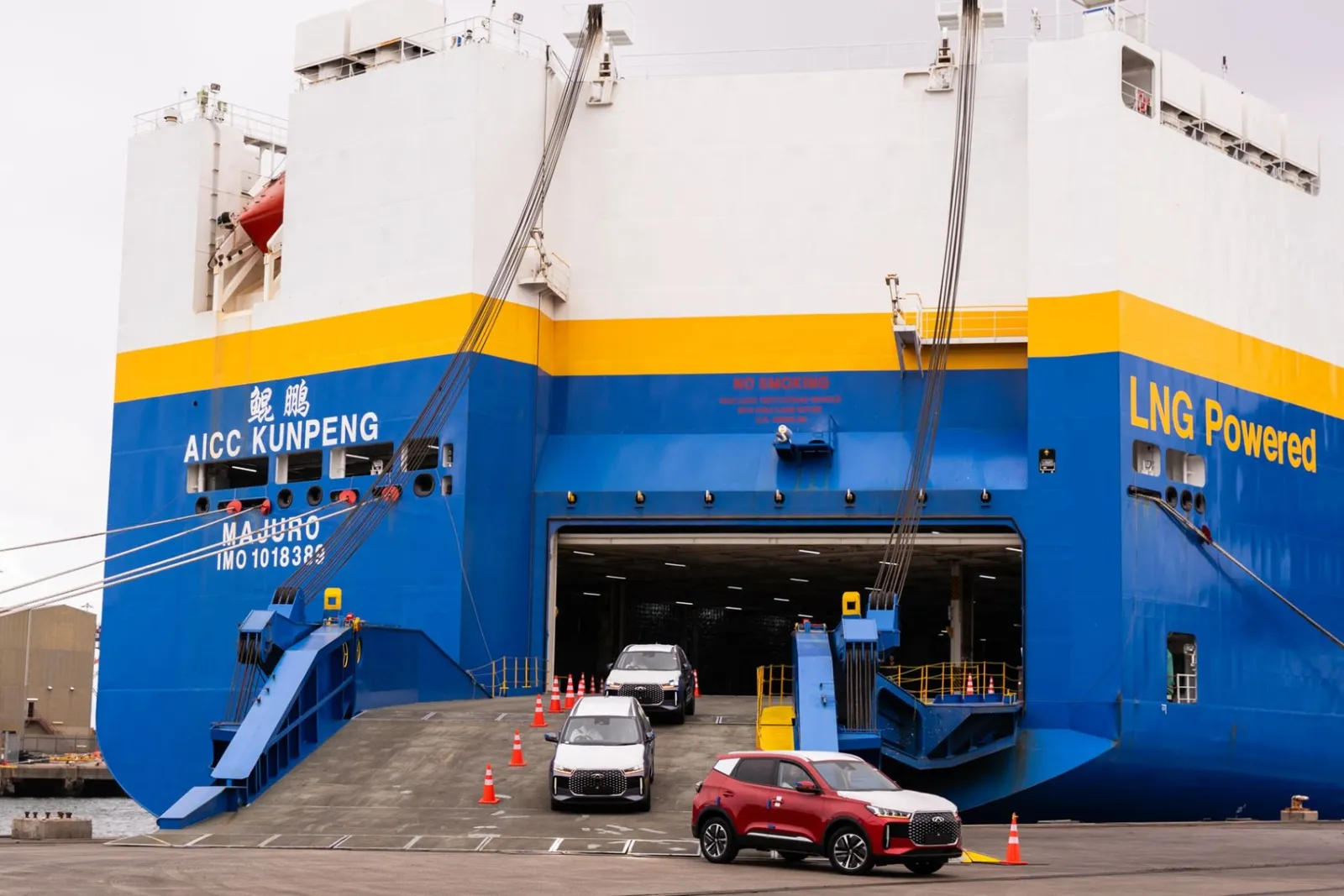
Import of vehicles from Chinese manufacturer Chery in Teesport
Image: PD Ports
The UK is reportedly considering additional tariffs on Chinese electric vehicles. This could align the UK with EU rules imposing special anti-subsidy tariffs of between 7.8 and 35.3 per cent on battery-electric passenger cars from China. Anti-subsidy tariffs have been in force in the EU since the end of October 2024, on top of a regular import duty of 10 per cent, depending on the manufacturer.
According to the British publication _The Times_, Economic Secretary Jonathan Reynolds is currently developing a package of potential tariffs on Chinese vehicle imports. The concern is that Chinese manufacturers are bringing subsidised vehicles to the UK at dumping prices, as _Reuters_ summarises. Just a few days ago, it was reported that Chinese manufacturers currently hold a 16 per cent market share in new registrations in the UK, across all powertrain types.
No new tariffs imposed yet
So far, however, the UK government has not yet imposed any new tariffs on Chinese electric vehicles. “We continue to engage closely with industry so that our approach reflects the sector’s and UK’s national interests,” a government spokesperson told _Reuters_.
The background to the proposed special tariffs is likely political pressure from the European Union: the EU is currently working on its Industrial Accelerator Act. This aims to place a stronger focus on products manufactured in Europe in certain funding programmes, public procurement, and other industrial policy measures, with key issues of local content and the designations ‘Made in Europe’ or ‘Made in EU ‘. This is critical for the UK automotive industry because, although the UK is no longer part of the EU, it is extremely closely intertwined with the European automotive sector. The UK automotive association SMMT has just published an analysis by Oxford Economics, according to which UK car production supports €24 billion in economic activity, 250,000 jobs, and €1.6 billion in tax revenues in the EU annually.
Accordingly, lawmakers and industry players in both territories consider it important for the UK automotive industry and the UK government to be included as a partner country in the Industrial Accelerator Act so that UK manufacturers are treated as suppliers, just like companies based in the EU. UK Prime Minister Andy Burnham stated in September that he would work to ensure the UK is treated as a “trusted partner” under the planned EU regulations. This would allow the UK to retain full access to the EU market under the EU’s Made in Europe requirements.
The EU’s Made in Europe policy aims, among other things, to reduce dependence on products and components from non-EU countries such as China by prioritising goods produced in Europe. A few days ago, the _Financial Times_ cited sources familiar with the discussions, saying that the European Union is pressuring the UK to increase its tariffs on Chinese electric cars to enable the UK to become a partner in the EU’s Made in Europe criteria.
