
Cheap Twingo cars, free charging stations: how could the government have spent the 450 million euros in subsidies for heavy-duty vehicles more effectively?
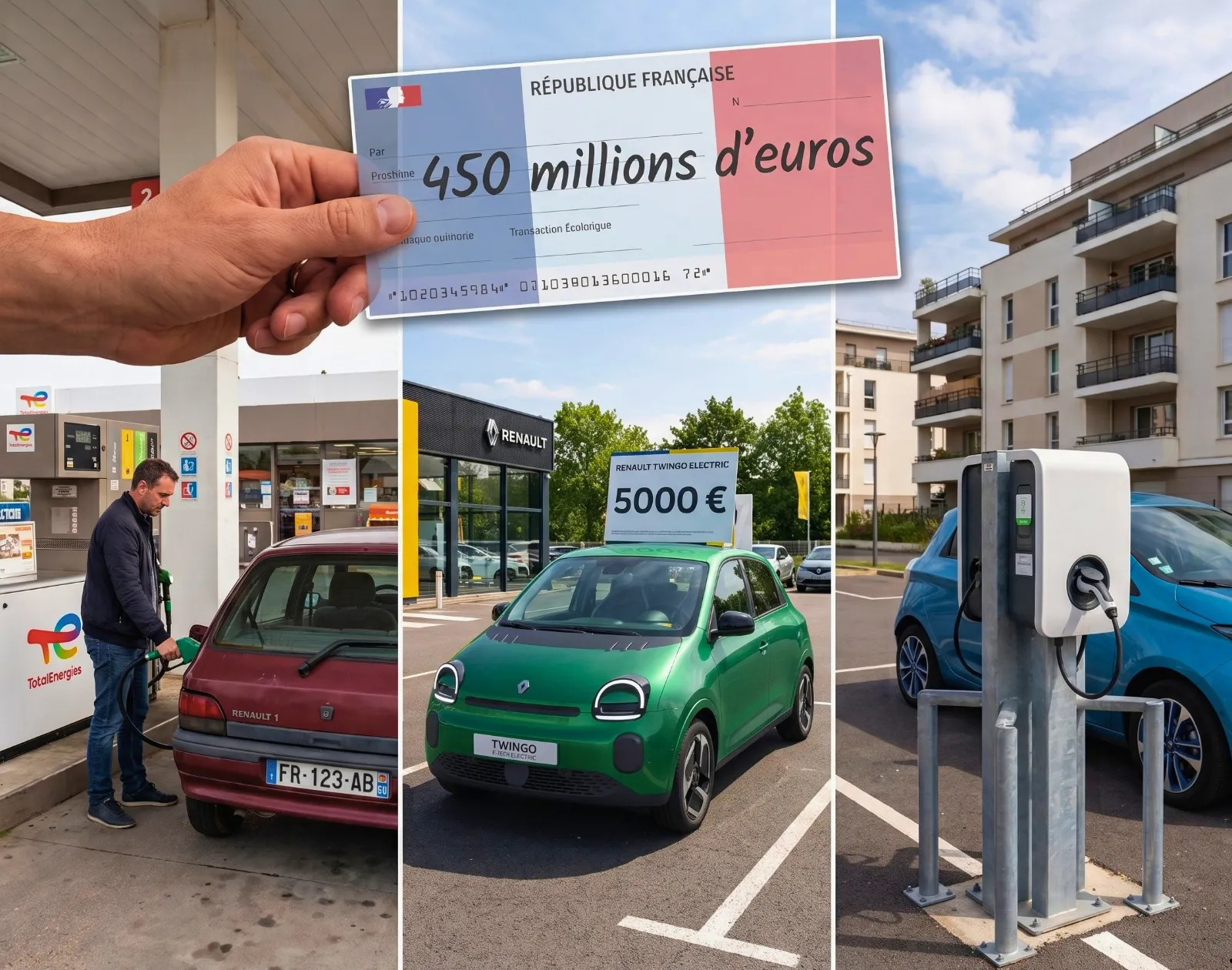
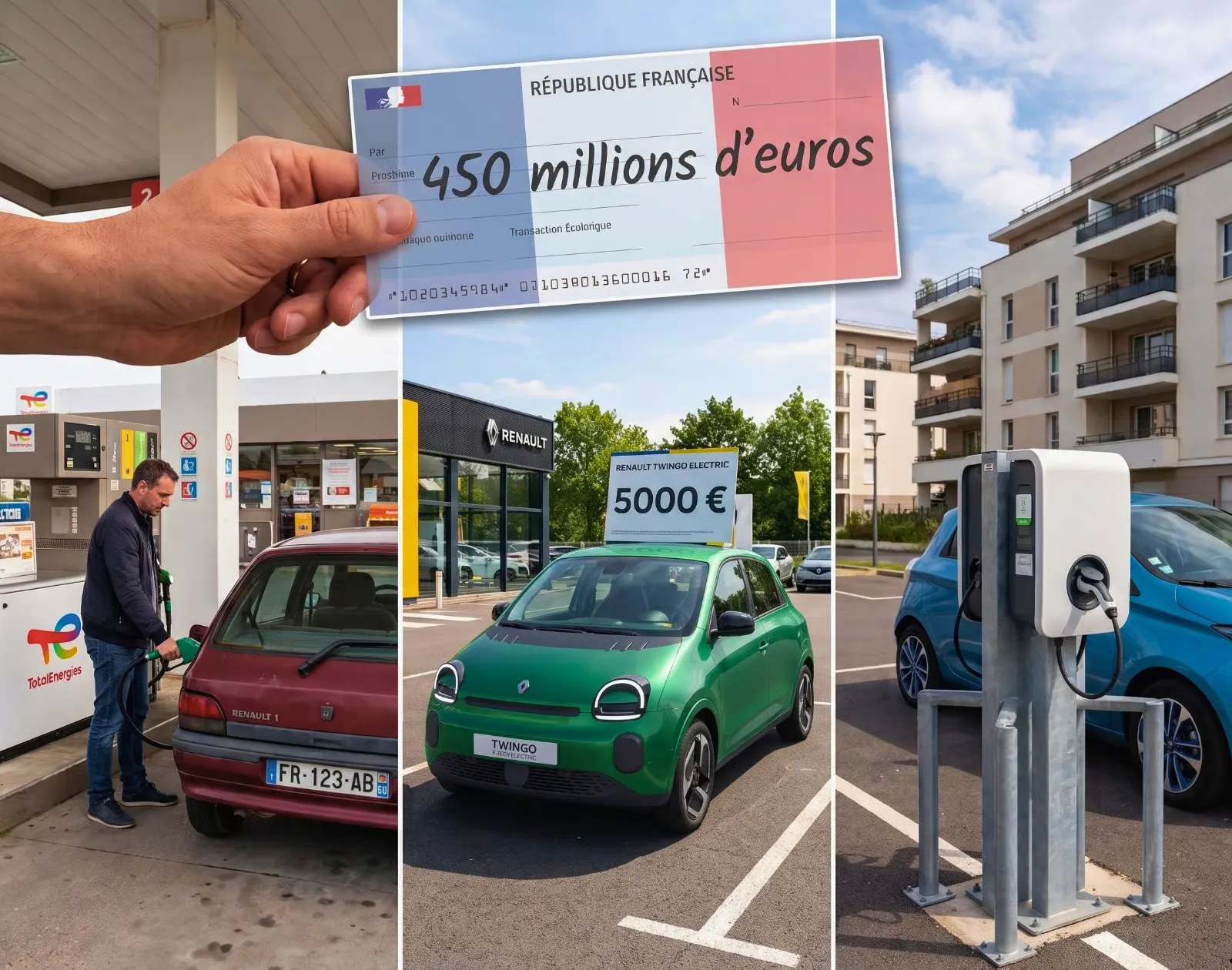
To help drivers cope with rising fuel prices, the government provides a one-time subsidy of 100 euros, subject to financial eligibility. A total of 450 million euros will be spent to provide a full tank of fuel to around 5.5 million French people. This is a poisoned gift, as it does nothing to reduce their dependence on hydrocarbons.
Should we give a fish to a hungry person or teach them how to fish? This old adage can be applied somewhat to the current oil price crisis. With substantial public funds, should we provide full tanks of fuel to millions of drivers dependent on hydrocarbons or help hundreds of thousands switch to electric vehicles?
In response to the surge in fuel prices, the government has allocated 450 million euros for low-income drivers, subject to income criteria. Over 5 million French people are eligible for this one-time subsidy of 100 euros, enough to cover just one fill-up out of the roughly twenty needed by a driver who travels 15,000 kilometers per year. And what happens after that? Nothing: consumers are left struggling with their dependence on a fuel that harms the economy, health, environment, and climate.
Also read
Fuel: Why I say no to subsidies
Nothing will change once this half billion euros is spent. The discontent won’t ease, and calls to reduce VAT on fuels will continue. Worse: no one will be helped in switching to electric vehicles, the only effective alternative to get rid of the oil burden. Yet with 450 million euros, many subsidies for electrification could have been provided. Such funding would result in significant and lasting savings on fuel. We leave the choice to you:
Option 1: an electric Twingo at the price of a decent bicycle for 55,500 people
With the support package for low-income households, the government could offer an electric Twingo with a range of 263 km for 5,000 euros to 55,500 people. These recipients could be selected through lottery from those with modest to intermediate incomes. For a user who drives 15,000 km per year, this would save 1,500 euros in fuel costs annually. In total, we can estimate that the lucky winners would save 83.2 million euros in fuel expenses each year.
To arrive at this estimate, we based it on the pre-VAT price of an electric Twingo with fast charging capability and urban range: 13,100 euros, already deducting any existing subsidies. The average fuel consumption of the gasoline vehicle being replaced is 5 liters per 100 km, with SP95-E10 fuel costing 1.99 euros per liter.
Also read
Reform of the eco-score: bad news ahead for electric car purchase subsidies?
Option 2: providing 204,500 charging points for employees at companies
Alternatively, the government could have chosen to offer 204,500 AC 7.4 kW charging points to businesses. This would allow their employees to charge at work, often at a very favorable rate per kilowatt-hour, or even almost free. This could encourage the switch to electric vehicles for those who cannot install charging solutions at home. If all these charging points are used intensively, it could help employees save over 300 million euros in fuel costs each year.
For this option, we have estimated the cost of an on-site charging point at 2200 € VAT excluded, based on the price of a standard dual-socket, floor-standing charger commonly used by professionals (4400 €). The fuel savings are estimated based on 204,500 electric vehicles replacing equivalent gasoline vehicles that travel 15,000 km per year with an average fuel consumption of 5 l/100 km, using SP95-E10 fuel at 1.99 €/l.
Also read
Charging electric cars at work: is this perk coming to an end?
Option 3: deploy 300,000 floor-standing chargers free of charge
This is likely the most relevant option. With 450 million euros, the government could provide 300,000 charging stations in social housing and condominiums. This would remove a major obstacle to the adoption of electric cars, as most people living in apartments do not have easy access to charging points on a daily basis. The funding would amount to 1,500 euros per station, which is more than sufficient for collective installations, since the network connection part is already fully covered by existing subsidies.
A tenant or homeowner with a charging station always available at their home is naturally inclined to acquire an electric vehicle. This is especially true since many used electric models are now affordable for everyone. If all charging stations were utilized, the 300,000 electric cars that plug in there could enable their owners to save 450 million euros annually. Thus, the return on investment for such support would be 100%: for every 450 million euros spent by the government, that much would be saved by the beneficiaries from the very first year. Impressive.
This estimate is based on the typical cost of a charging station in a condominium, including installation, but excluding the electrical connection work to the communal infrastructure (which can be covered at no extra cost through an existing mechanism). Of course, maximum fuel savings are achieved if all charging stations are used by electric cars, each traveling 15,000 km per year.
Also read
How to charge an electric car in an apartment?
Ending our reliance on gasoline and diesel
The surge in fuel prices is a real hardship for households, significantly reducing their purchasing power. However, lowering taxes on gasoline and diesel or offering minimal subsidies is likely not an appropriate solution. Such measures provide only extremely temporary relief without addressing the root of the problem.
Moreover, these subsidies are unfair to those who have chosen electric vehicles, sometimes at the cost of making certain compromises. And you, how would you allocate the 450 million euros in subsidies to oil-dependent heavy drivers?
