
Twin test: Fiat Grande Panda v Renault 5: Which is Britain’s best electric supermini?
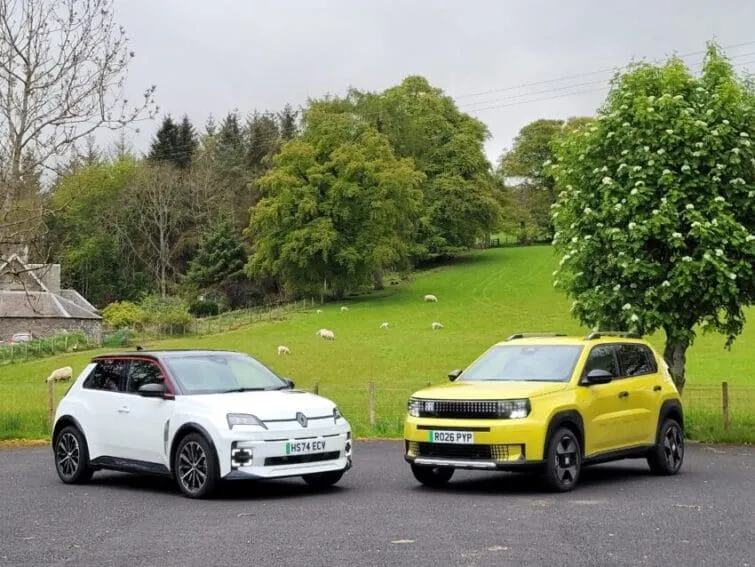
After years where the EV landscape was dominated by big, pricey SUVs, things have turned a corner.
Everywhere you look, manufacturers are pouring energy into developing smaller, cheaper, more accessible electric cars.
The stand-out success story so far has undoubtedly been the Renault 5. This retro-inspired supermini has won just about every award under the sun, and with good reason.
But Renault can’t have things its own way forever and traditional rival Fiat has hit back this year with the launch of the Grande Panda.
Like the Renault 5, the Grande Panda is a compact five-door hatchback inspired by the past but with a thoroughly modern look, feel and powertrain. And with prices starting at just over £20,000 it’s competing directly with the Renault for buyers’ hearts and minds.
So, in this battle of European electric superminis, who comes out on top?
Design
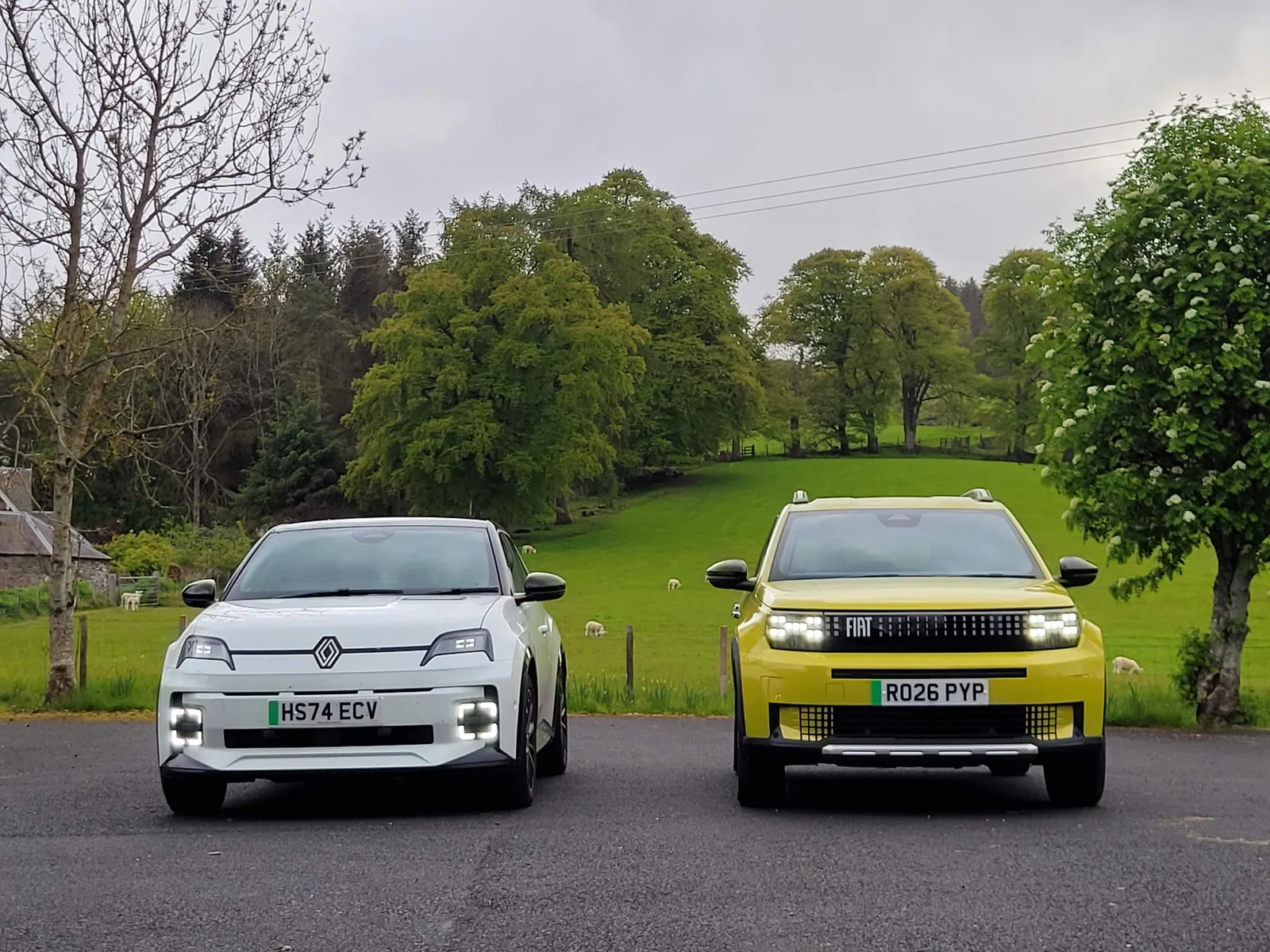
The Grande Panda and Renault 5 both lean heavily on their heritage for their design and both succeed in paying homage without falling in parody.
The French and Italian design teams have taken the original shapes from the 1970s and 80s and blended them with a modern twist. In both cases you call tell what they are even before seeing the badges and both use bold, crisp lines to stamp their personality.
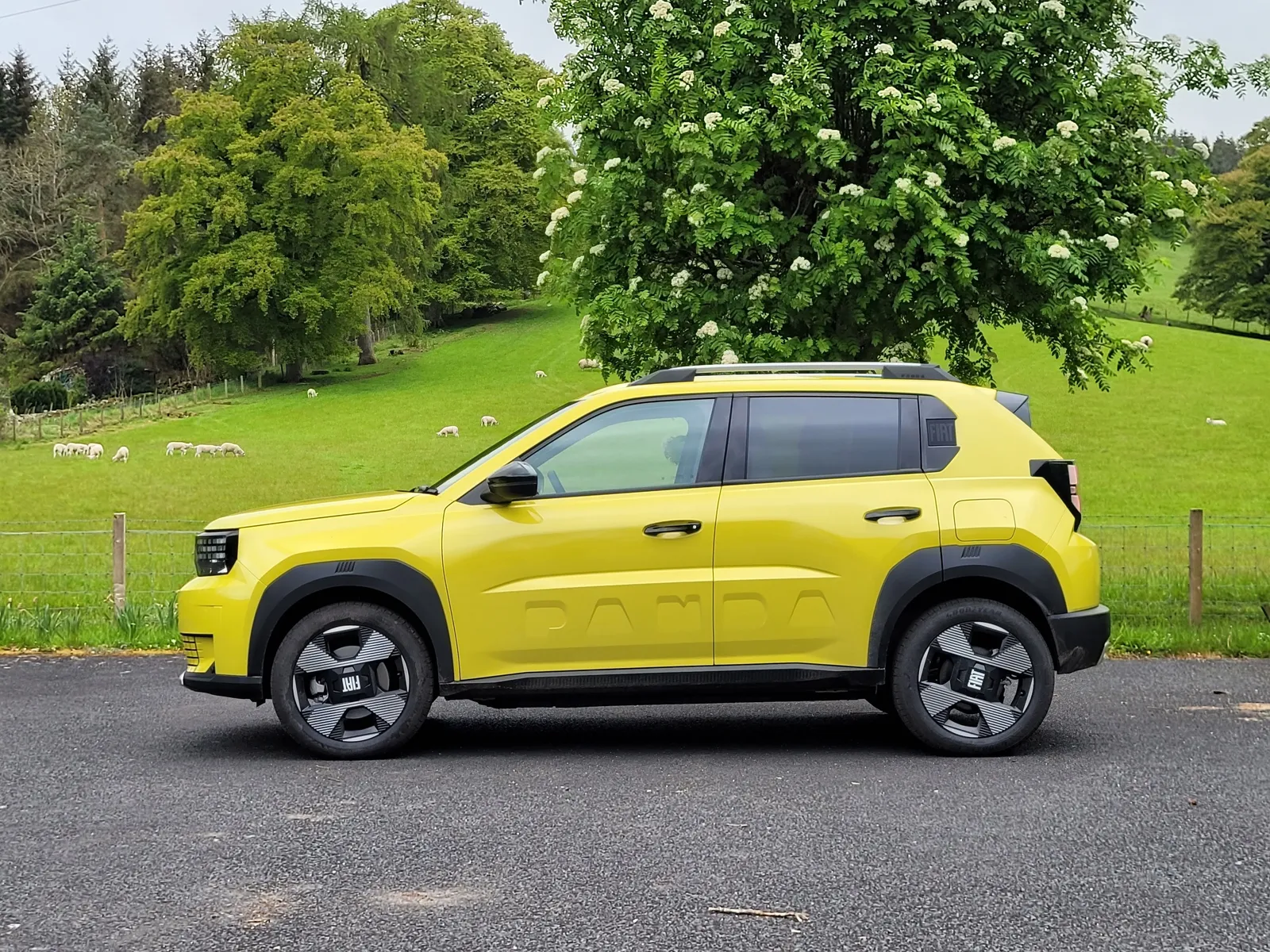
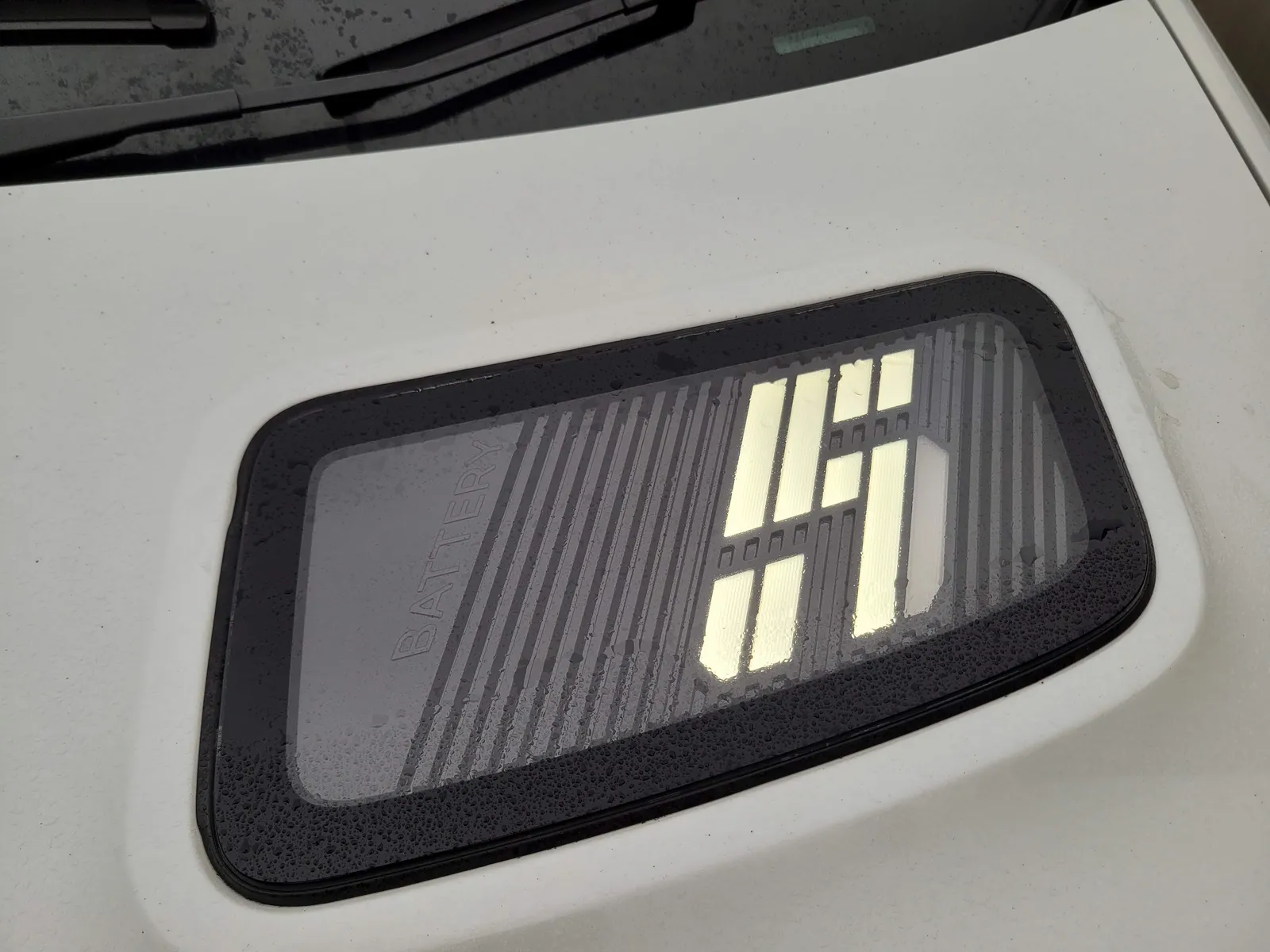
The Fiat’s literal stamping of its name into the doors is a clever touch and there are lots of historic Easter eggs in its boxy design such as the four-bar logo in the C-pillar. The Renault, too, has nods to the original design in touches such as the tail lights and the bonnet-mounted charging indicator where the original car had an air scoop.
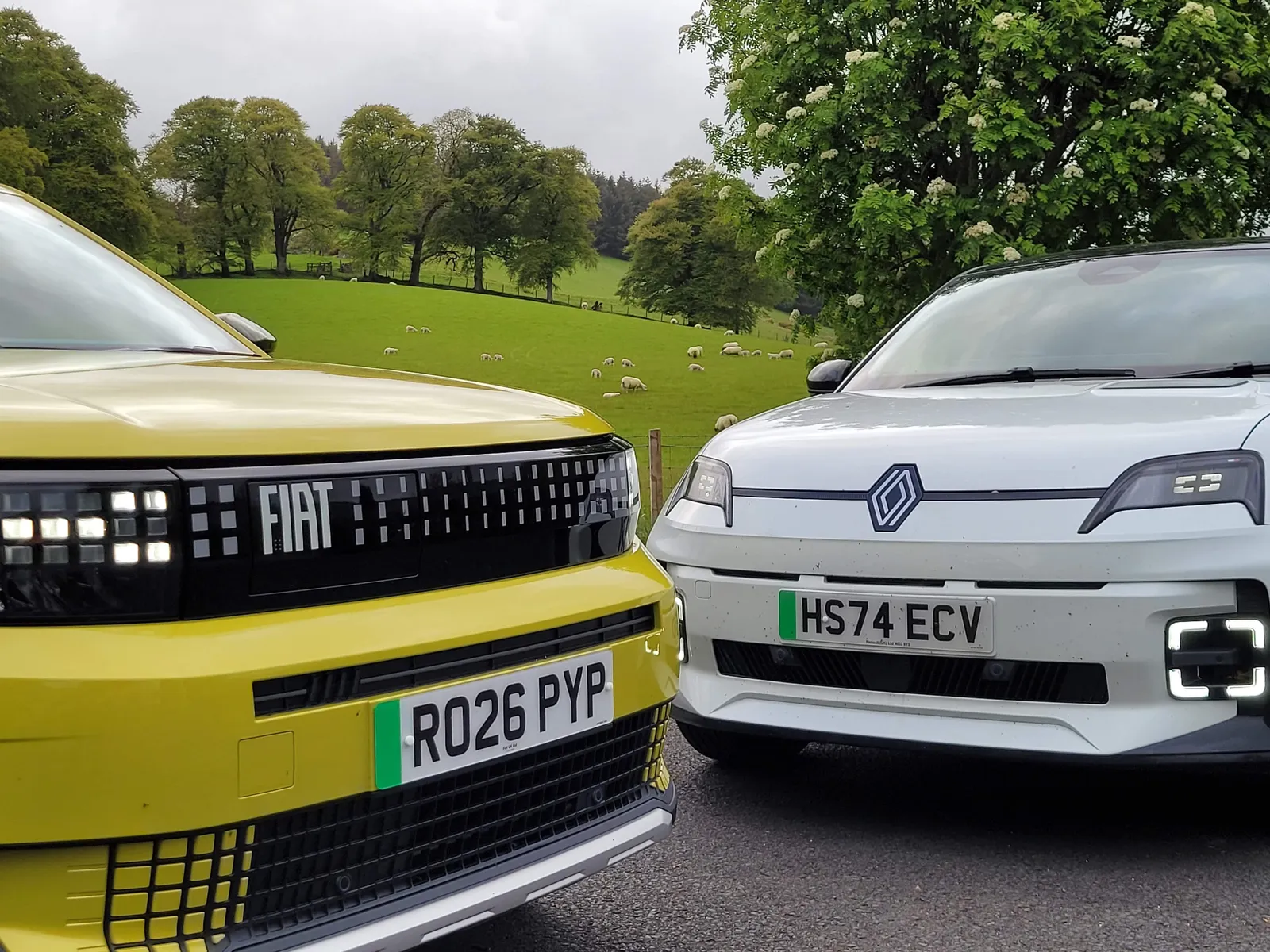
But neither is slavish in its acknowledgement of the past and both have thoroughly modern elements – from their big diamond-cut alloy wheels to the smart LED headlights. Both are also substantially bigger than the originals but carry their size well and feel compact compared with most modern cars.
To these eyes, they’re both a triumph of modern design and which is best will come down to personal taste.
Winner – Draw
Interior
The Fiat carries its nods to the past over to the interior as well. There’s a representation of the famous Lingotto test track in the screen surround, plus a mini Panda set in the translucent plastic.
But it’s a generally modern affair with digital instruments and a 10-inch touchscreen, plus plenty of sustainable materials – from the blue-tinted door cards to the bamboo-based storage box.
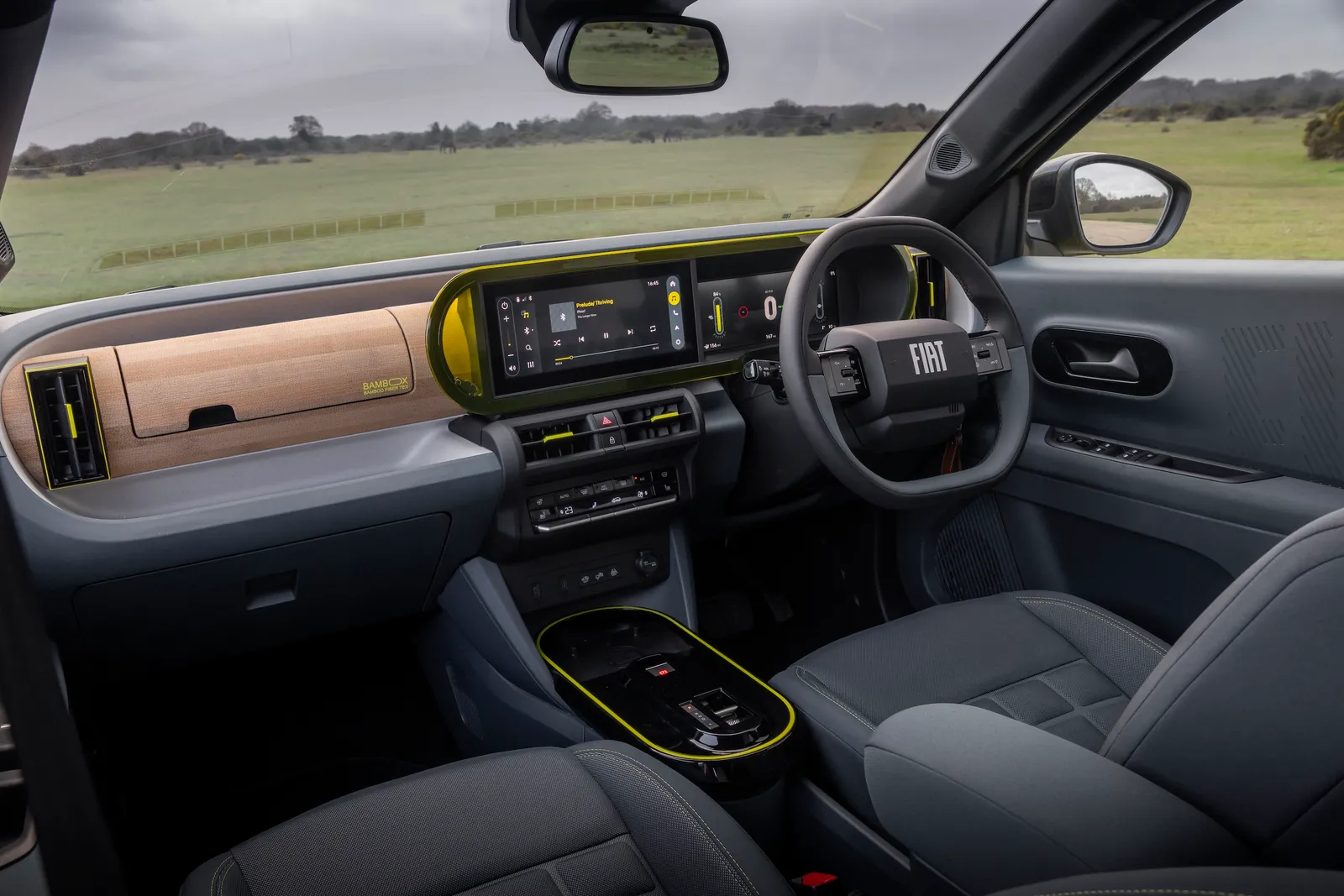
The Renault, too, uses sustainable fabrics around the cabin, including a vibrant seat material. But it’s generally a darker and less characterful place than the Fiat’s cabin. The Grande Panda feels a little lighter and airier and is marginally more practical thanks to a better laid-out centre console and that clever dash-top “Bambox”.
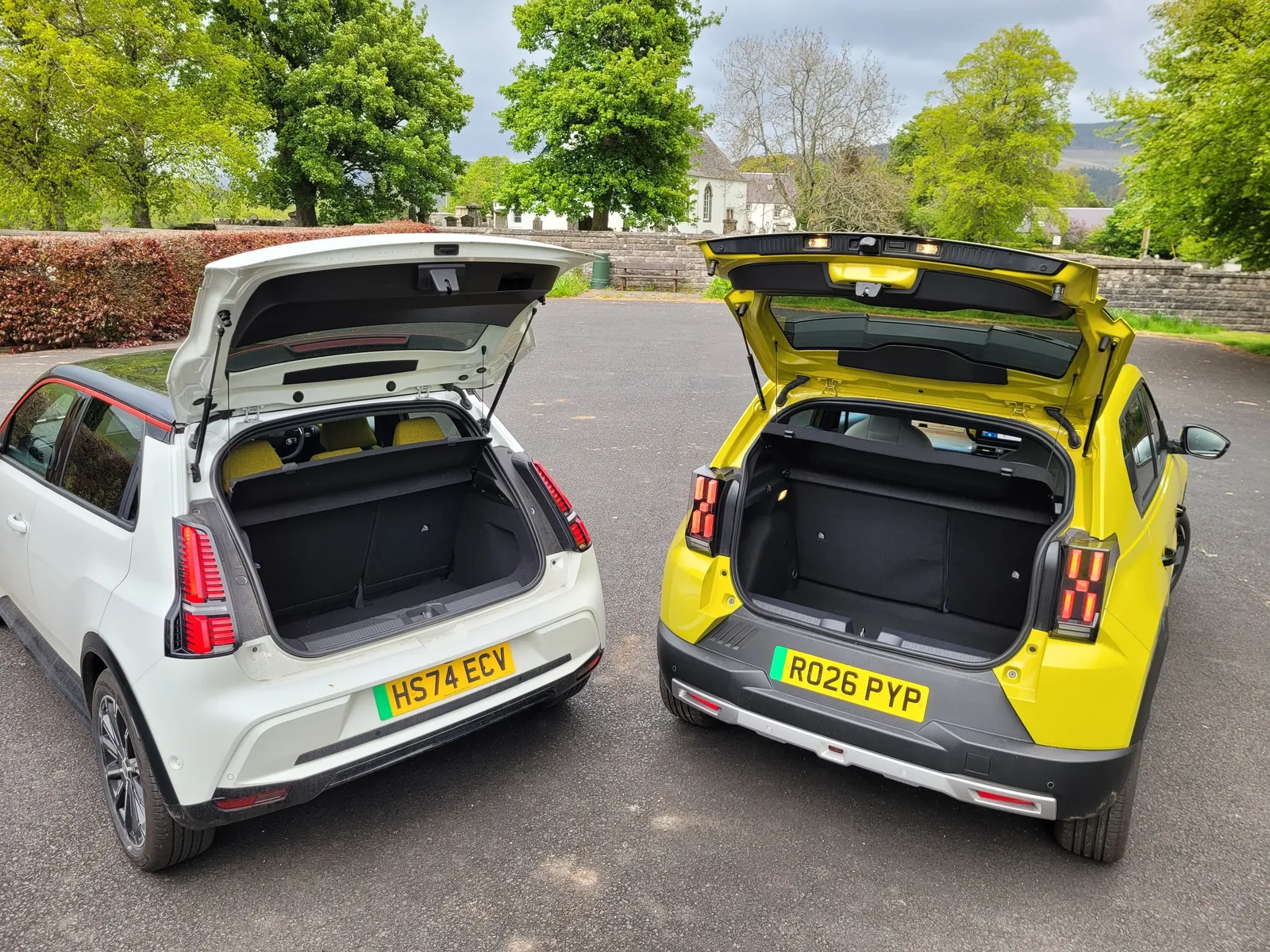
The Panda also offers 361 litres of boot space to the Renault’s 321 litres. There’s perhaps fractionally more rear legroom in the Panda, although this comes at the expense of the front seats, which are less accommodating than the Renault. In the final reckoning both offer typical supermini levels of space, which will be fine for most average couples or young families.
Fiat and Renault have avoided the temptation to rely entirely on touchscreen controls for their entry-level EVs. Both cars feature sensible physical controls for key functions such as heating, and share similar logical dashboard layouts. Both also have simple physical methods to deactivate their ADAS, although Renault’s single “E-Perso” button is simpler and more accessible than the two-button setup of the Fiat.
The Renault is also clearly ahead of the Fiat when it comes to the infotainment system. Fiat’s is pretty basic. There is onboard sat nav and smartphone mirroring but the system itself is light on features and sluggish to use. The Renault’s Google-based setup, in contrast, is quick to respond, clear and with plenty of useful functions and information. It also benefits from Google Maps integrated with the car’s systems to give range predictions and charging suggestions based on planned routes.
Winner – Draw
Powertrain & performance
On the road the Renault starts to pull out a bit of a lead over the Grande Panda – figuratively and literally.
For a start, the Renault packs an extra 47bhp, which translates to faster acceleration, better responsiveness and a general more lively feeling. That manifests in a 0-62mph time of under 8 seconds for the R5 and more than 11 seconds for the Fiat. Especially at higher speeds, the Renault has more flexibility than the Fiat, which starts to run out of steam outside the town.
Around town, the Fiat feels comfortable and more than able to keep up with the urban cut and thrust. However, the Renault’s extra punch, along with sharper throttle and steering settings mean that, here as well, it feels more capable.
The Fiat steals back a bit of ground with a more pliant ride that copes better with bad road surfaces but then loses out again with less body control at higher speeds.
Along with the bigger motor, the Renault 5 also gets a bigger battery – 52kWh to the Grande Panda’s 44kWh. Officially, the Renault offers efficiency of 4m/kWh and a range of 251 miles while the Fiat will do 3.7m/kWh and up to 199 miles.
So, on paper the Renault has a clear advantage and in the real-world that seems even greater. While our long-term R5 is averaging around 4.5m/kWh and offering 200 miles of summer range, the Fiat we tested managed just 3.2m/kWh and around 130 miles per charge over a week of driving.
New versions of the R5 also get multi-stage braking regeneration and one-pedal driving, while the Fiat makes do with two fairly similar levels and no one-pedal option.
There’s nothing in it for charging speeds, with both offering peak DC rates of 100kW.
It’s worth noting that there is also an entry-level version of the Renault 5 with a 118bhp motor and 40kWh battery that offers 192 miles of range and a 0-62mph time of 9 seconds for around £21,500.
Winner – Renault 5
Price and specification
Based on simple list price, the Fiat has an edge here. The range starts at £20,955 and the top-spec La Prima costs £24,035.
However, with the current ECG, the top-tier Renault 5 Iconic 5 is £25,945. And for less than £2,000 more you get more power, more range and more standard equipment than the range-topping Grande Panda.
Both cars feature LED lights, alloy wheels and heated seats along with wireless smartphone mirroring and charging. However, even in top-spec, the Fiat lacks keyless entry and requires a physical key to start it. It also misses out on the adaptive cruise control, two-zone climate control and smart Google interface of the Iconic trim Renault.
Alternatively, for £90 less than the Fiat Grande Panda La Prima you can have a mid-spec Renault 5 Techno, which loses touches such as the heated seats and two-zone air conditioning but keeps the 148bhp motor and 52kWh battery.
Winner – Renault 5
Verdict
Quite frankly, anyone buying a Renault 5 or Fiat Grande Panda will be perfectly happy with their choice, but for us, the Renault does just edge it.
Both cars boast similarly brilliant design that blends retro and modern to excellent effect and show an admirable level of care and attention.
They’re both also perfectly capable and competent as daily commuter cars, with comparable space. While the Fiat is fractionally more practical, the Renault’s interfaces and on-board tech are smarter and more user friendly.
It’s on the road and in the showroom that the Renault steals the lead. At current prices, the Renault 5 offers more range and power plus a better driving experience for very similar money, which is enough to make the difference.
Winner – Renault 5
Fact file
Renault 5 Iconic+ Vs Fiat Grande Panda La Prima
Price
£25,945 (Incl ECG)
Price
£24,035
Powertrain
Single-motor, front-wheel-drive
Powertrain
Single-motor, front-wheel-drive
Battery
52kWh
Battery
44kWh
Power
148bhp
Power
111bhp
Torque
181lb ft
Torque
89lb ft
Top speed
93mph
Top speed
83mph
0-62mph
7.9 seconds
0-62mph
11.5 seconds
Range
251 miles
Range
199 miles
Consumption
4m/kWh
Consumption
3.7m/kWh
Charging
up to 100kW
Charging
up to 100kW