
TUM Research: Electric trucks as energy storage reduce energy costs
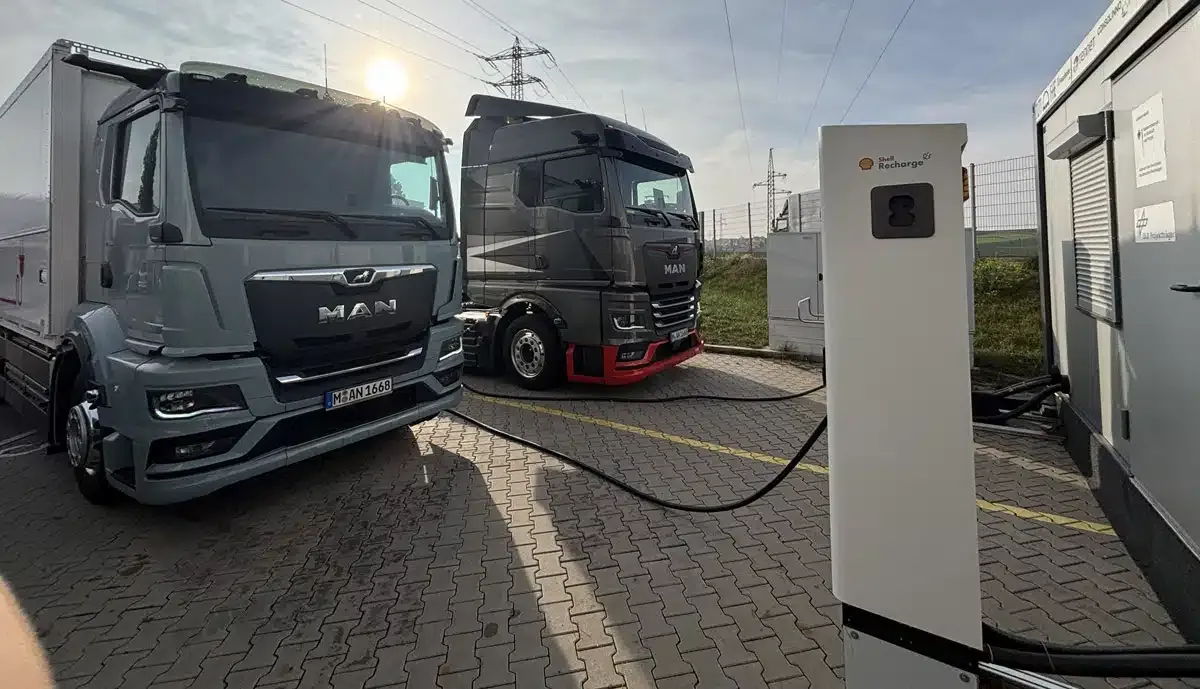
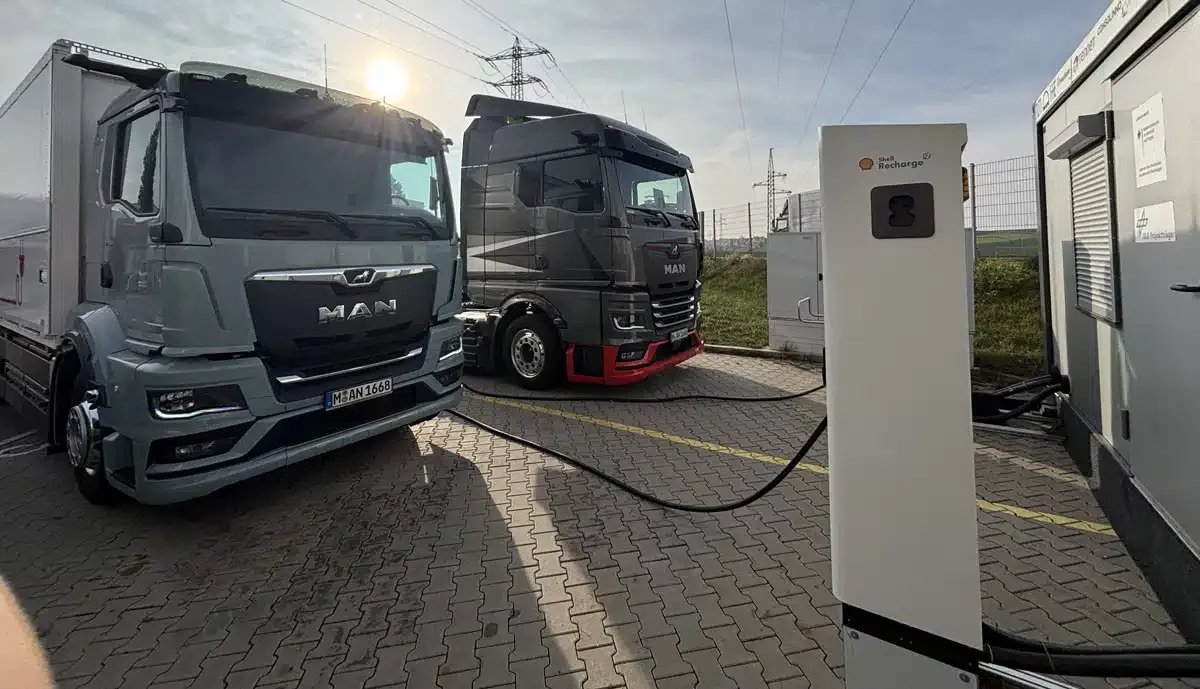
Image: MAN (illustrative)
Electric trucks can not only transport goods but also supply their batteries as energy storage for depots and the public grid. In the SPIRIT-E research project, a consortium led by the Technical University of Munich (TUM) investigated how heavy electric trucks can be integrated into the energy system and utilized economically.
In a test environment, the project partners tested, among other things, electricity trading, which allows vehicles to purchase energy at low prices and sell it back at higher prices. At a logistics company in Regensburg, the researchers used electric trucks with 480 kilowatt-hours of usable battery capacity. Through a bidirectional DC charging station, the vehicles could feed electricity back into the grid at up to 350 kilowatts. The systems were tested for supplying other vehicles, supporting power supply on the company premises, and feeding power into the public grid.
TUM’s supporting research relied on real driving data from six German heavy-duty truck fleets, totaling 2.15 million kilometers recorded. Available public charging stations reduced time losses compared to diesel trucks by an average of about one to four percent depending on the scenario, while proprietary depot charging infrastructure enabled reliable electric operation for a significantly larger portion of the fleet. Joint planning of vehicle conversion, photovoltaic systems, and battery storage resulted in 25 to 44 percent higher savings than switching trucks alone.
Two-way charging reduces costs for electric truck fleets
Through the intelligent integration of depots into the power grid and electricity market, the total costs for the fleets studied decreased by an average of 1.7 cents per kilometer, rising to 6.1 cents with two-way charging. The project team estimates that energy cost savings can reach around ten percent, with driving distance, vehicle lifespan, and electricity prices playing key roles. Vehicles used in regional transportation are particularly suitable, as they regularly return to depots where they can store excess solar power or cover peak electricity demand.
Among the biggest barriers to implementation are insufficient grid connection capabilities at many depots, the lack of unified standards for electricity trading, and incompatible technical solutions. Flexible grid connection contracts, battery storage, and shared charging infrastructure can help overcome these existing limitations.
It remains unclear how tasks and revenues should be distributed among logistics companies, vehicle manufacturers, and electricity traders, while TUM professor Markus Lienkamp emphasizes standardization, scaling, and the development of business models as the next steps.
"SPIRIT-E has shown that heavy electric trucks can be much more than just new electricity consumers. Technically, they can be integrated into the energy system as flexible storage," explains Lienkamp, head of the Vehicle Technology Chair at the TUM School of Engineering and Design. "Now it’s time to standardize the proven solutions, scale them up, and turn them into viable business models — for this, research, utility operators, industry, logistics, and policymakers need to work together."
Have you found any errors? Please let us know
by email
about them. Thank you!
Also interesting
About the author
Thomas Langenbucher is an expert in electromobility with professional experience in the automotive industry and finance sector. Since 2011, he has been covering electric vehicles, sustainable technologies, and mobility solutions for ecomento.de. Learn more.
Reader interactions