
Three insights about CHIN: BYD Atto 8, also known as Sealion 8, Chinese cars that are efficient in energy consumption, Geely, and a methanol hybrid
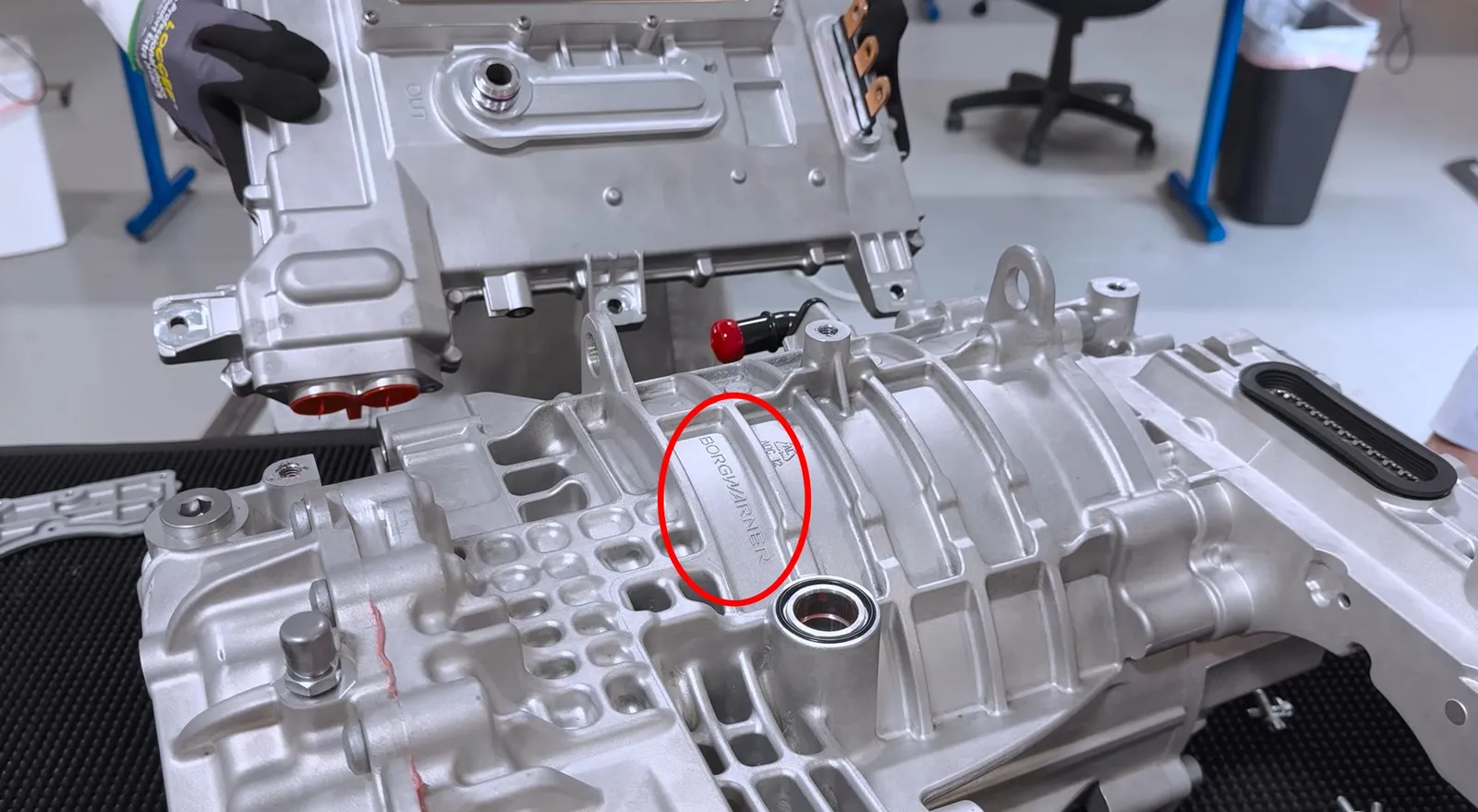
Geely today unveiled the world’s first gasoline vehicle powered by methanol, which not only accepts fuel in any mixture (from pure methanol, through liquid blends, to pure gasoline) but is also a hybrid, meaning it consumes less fuel than its purely gasoline-powered counterpart. This shows that Chinese companies are not infallible but continue to seek engines tailored to the capabilities of different customers. It’s also one of three interesting facts about Chinese cars that reached us today.
First plug-in hybrid powered by methanol
Table of contents
First plug-in hybrid powered by methanol
The Chinese approach’s limitations
BYD Sealion 8: Readers of Elektrowoz knew first
The idea of using methanol as a fuel or fuel additive is not new. Brazil was the closest in adopting this approach, but alcohol was deemed toxic and could harm workers at gas stations because they “would not follow safety protocols.” As a result, ethanol, which has a much lower level of toxicity and is also produced from biomass, was ultimately chosen. However, the idea of utilizing methanol is resurfacing, as it is cheaper to produce and can be easily manufactured from organic waste, coal, or natural gas. Alcohol is already being successfully used in some races, and experiments are also being conducted with it in maritime transportation.
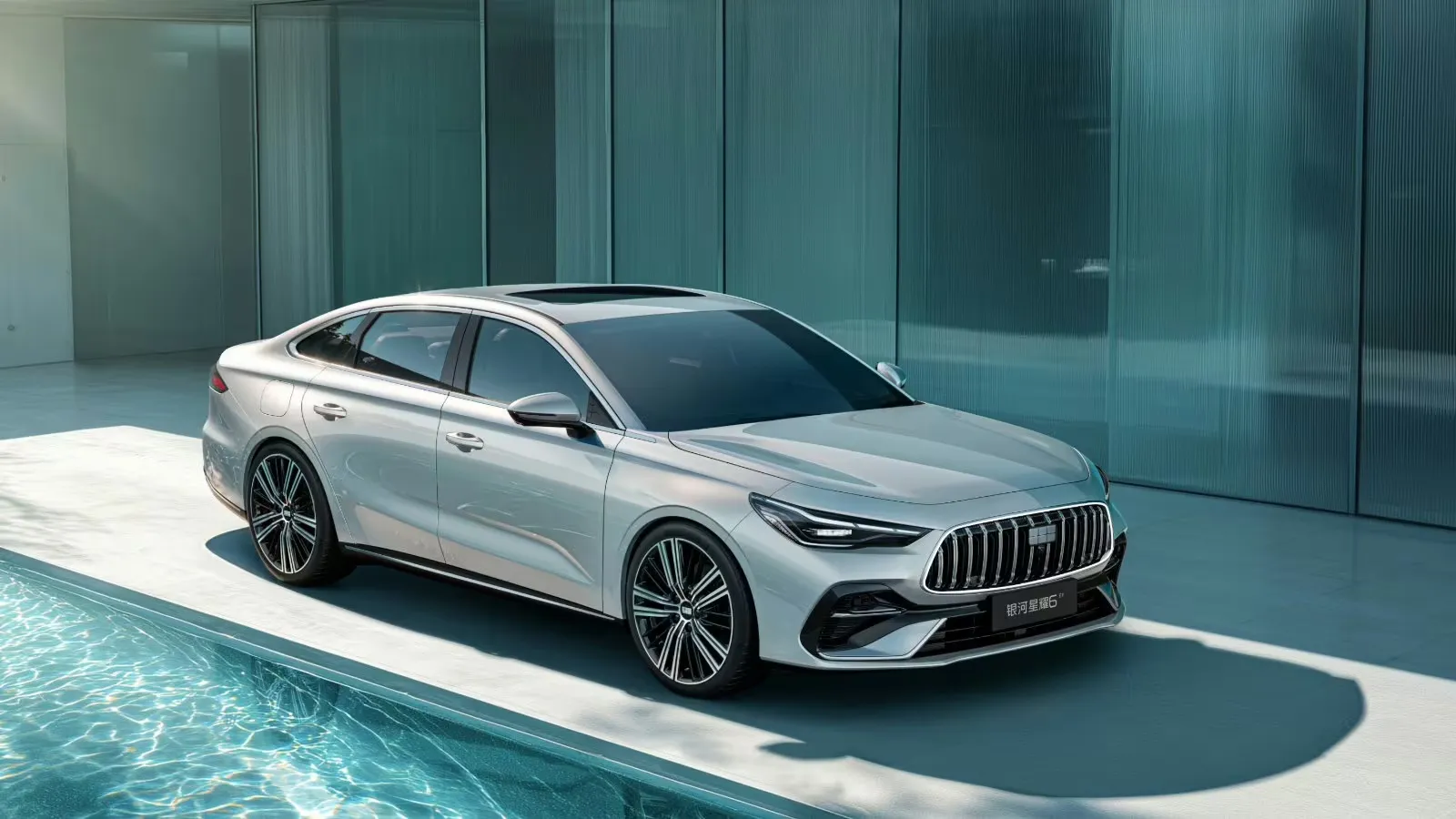
Today, China is the world’s largest producer of methanol. And the first car manufacturer to create a plug-in hybrid with a combustion engine that accepts any mixture of methanol and gasoline is China’s Geely Auto. It’s the Geely Xingyao 6 EF (illustration above). The combustion engine installed in the car has a thermal efficiency of 48.15 percent. Thanks to injectors operating at 350 bar (35 MPa) and a “high-power ignition system,” it can start running at -40 degrees Celsius, although low temperatures have always been a problem for methanol. From our perspective, the most interesting aspect is the electric range, which is 230 CLTC units, or about 180 WLTP units, thanks to a battery with a capacity of 29 kWh.
Methanol and gasoline. Any ratio.
The engine adapts.
Here’s how Geely’s methanol hybrid technology works. https://t.co/7g2tzoDhF3
— Geely Auto Group (@GeelyAutoGroup) November 3, 2026
The car is an experiment aimed at entering the market in northern China, where there is less willingness to switch to electric vehicles compared to the coast and south. Due to the continental climate and harsh winters, these regions prefer gasoline-powered models.
Chinese companies’ weak performance
Chinese electric cars are known for lacking efficiency in terms of energy consumption. Tesla sets the benchmarks here, the Hyundai Ioniq Electric performed well, Lucid also fares well, and there are increasingly promising developments regarding models based on the E-GMP 400 V platform (see: Kia EV2, Kia EV4). Meanwhile, China appeals primarily through ultra-fast and megafast battery charging. The explanation turns out to be quite surprising: Chinese brands often use electric motors from external suppliers or at least those developed in collaboration with them.
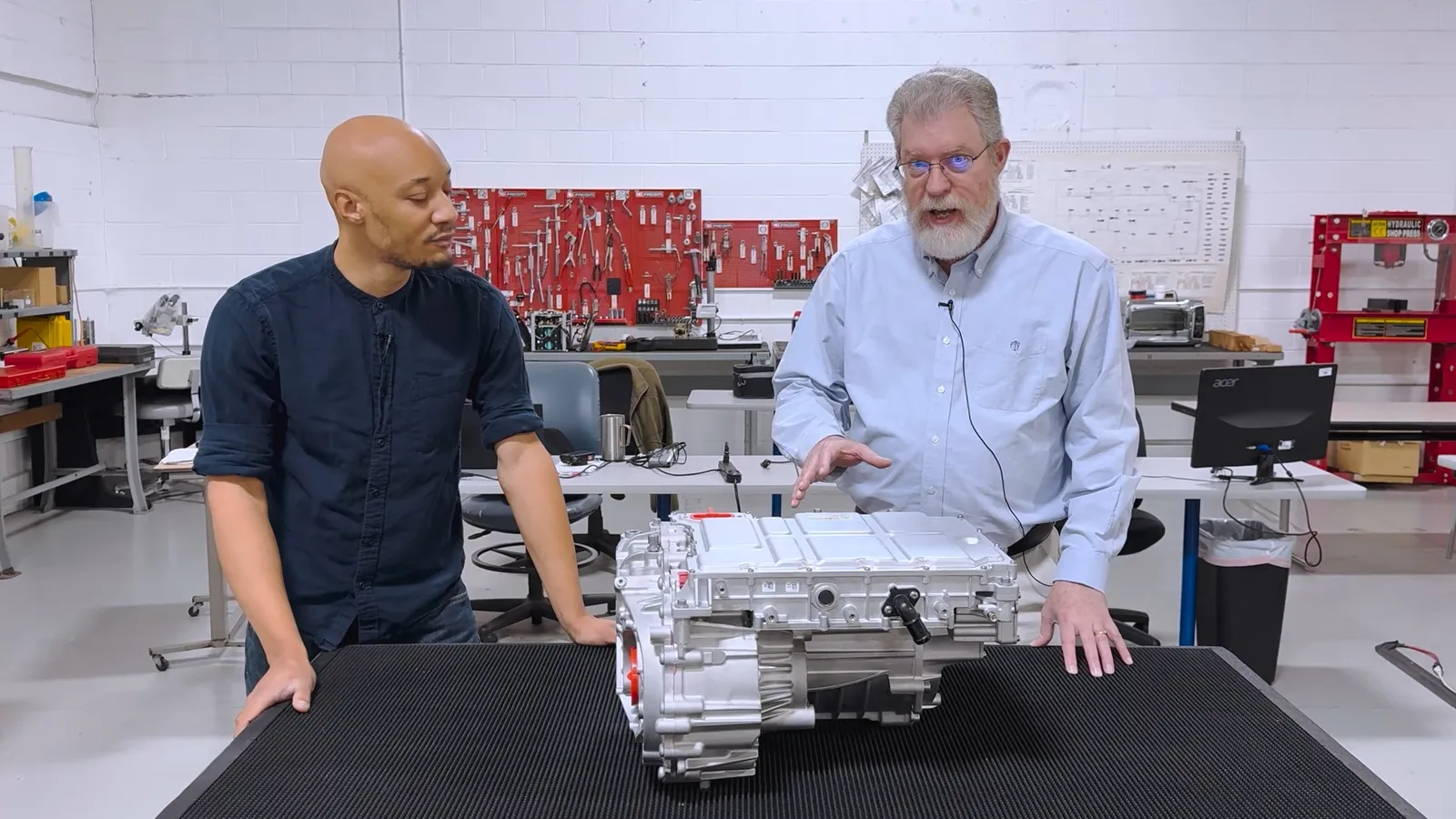
BYD uses BorgWarner engines, as does Xpeng. Zeekr employs solutions from Viridi E-Mobility Technology (VREMT), a company created in partnership with the Japanese firm Nidec. Polestar also borrows technology from BorgWarner; Volvo claims to develop everything independently, but its energy consumption is the same as that of Polestar or Zeekr... We’re not sure whether to use strong qualifiers like “always” in the previous sentences, because Chinese brands are even less willing to highlight these collaborations than Li-ion cell suppliers, as it undermines the myth of Chinese manufacturers being capable of doing everything. Similarly, it’s the same in other conglomerates—few want to admit that their best-selling combustion engine was developed and assembled in India.
Using engines from external suppliers is simple because you just pick a product off the shelf and can use it in a car right away. But such an engine is often less efficient than one developed by the company’s own engineers. And this is evident: Tesla and Lucid have their own products, collect data from sold vehicles, and optimize both the designs and energy consumption. What about Chinese companies? They had lower efficiency at the start of the decade, and they still have lower efficiency today (=higher energy consumption). The information flow is simply slower, so companies like BYD or Geely (Zeekr) are left to optimize areas that depend on them—namely, the lithium-ion cells.
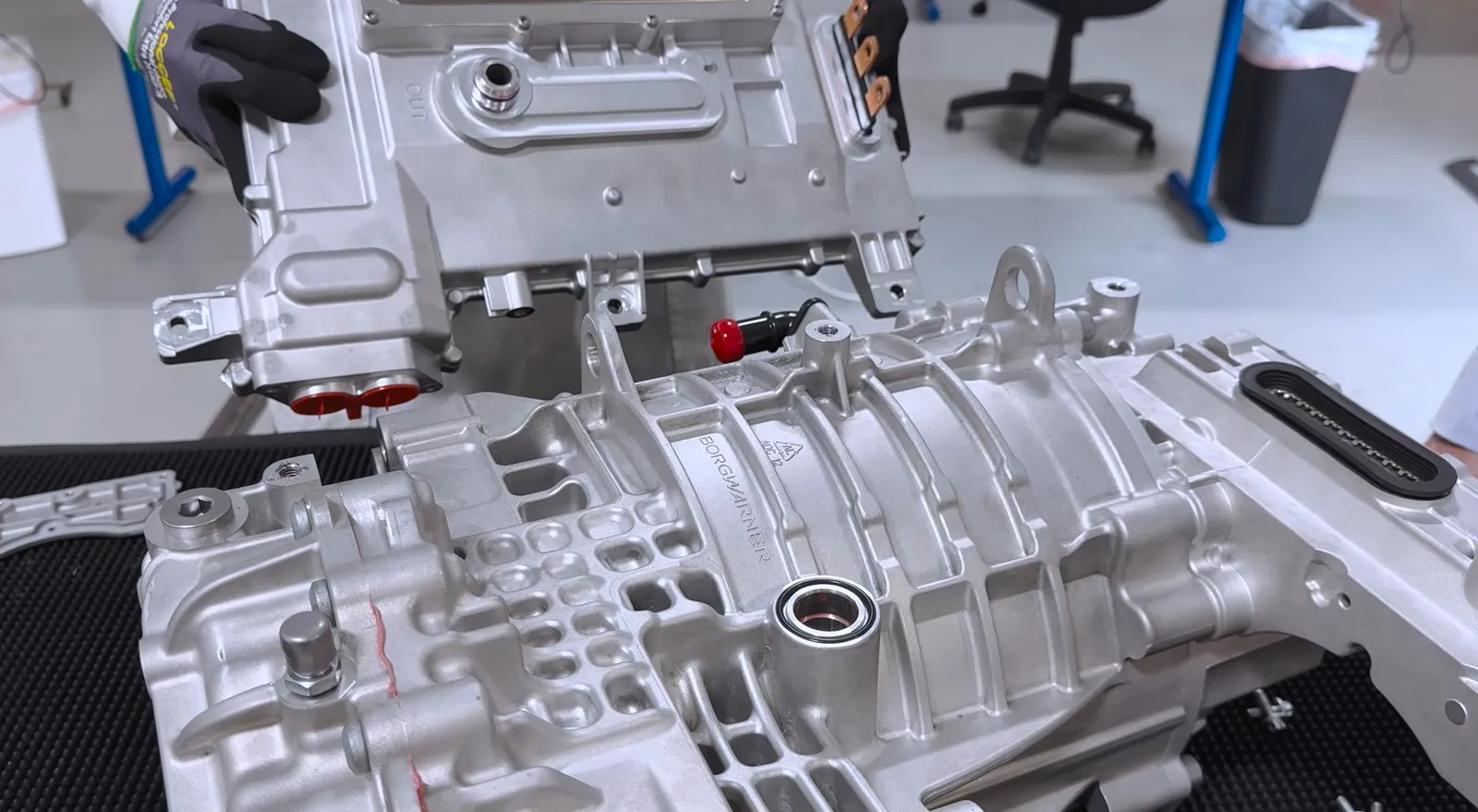
The BorgWarner logo on the rear engine of the BYD Han and BYD Tang, including the Tang L (c) Munro Live / YouTube
This is precisely why Renault, Volkswagen, or BMW fight so hard for engines of their own design. A product developed independently may be inferior at first (APP310), but it serves as a good starting point for optimization (APP350, APP550). Moreover, Europe has the most advanced engineering infrastructure in the world when it comes to “the mothers of all machines” (lathes), especially since the quality of every component in an electric engine proves crucial for its efficiency. Even the smoothness of the metal sheet edges in engines matters.
BYD Sealion 8, or How the Electric Locomotive Readers Knew First
After all this information about Chinese electric vehicles that reached our editorial office today, something else struck us. In February 2026, we attended a presentation summarizing BYD’s 2025 performance and strategies for 2026 in Poland and Europe. There was such a slide:
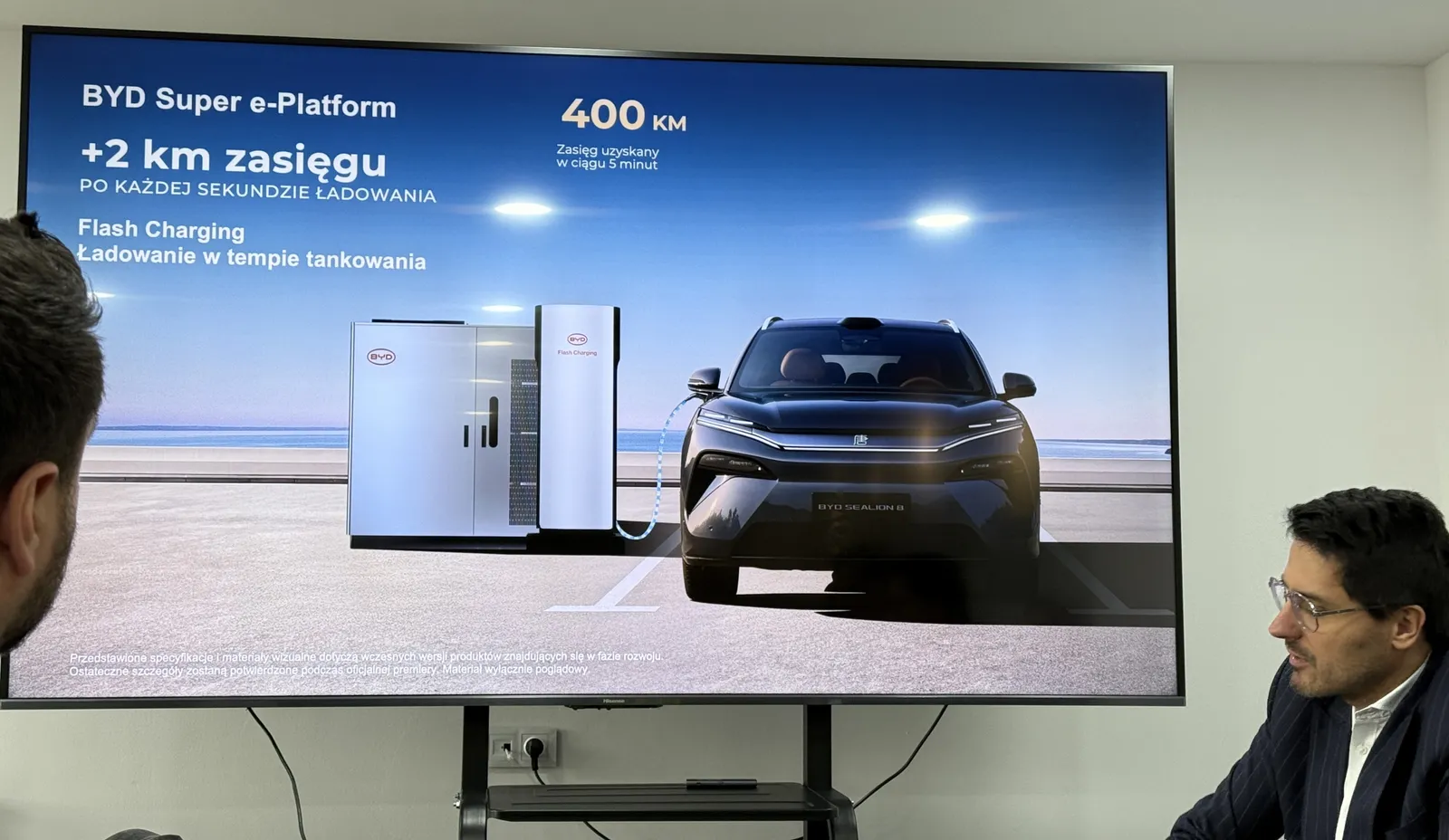
In February, a vehicle labeled as BYD Sealion 8 was connected to a fast-charging station. This surprised us because the Sealion 8 is a plug-in hybrid. It does originate from the BYD Tang L, but it remains a hybrid. A BYD representative we asked about the car shown in the slide said, “It’s an illustration; it just happened that way, there’s no need to take it seriously.” That’s why we were slightly shocked during the auto show in Paris (September 2026). The car below reminded us of something, though we didn’t realize it at first:
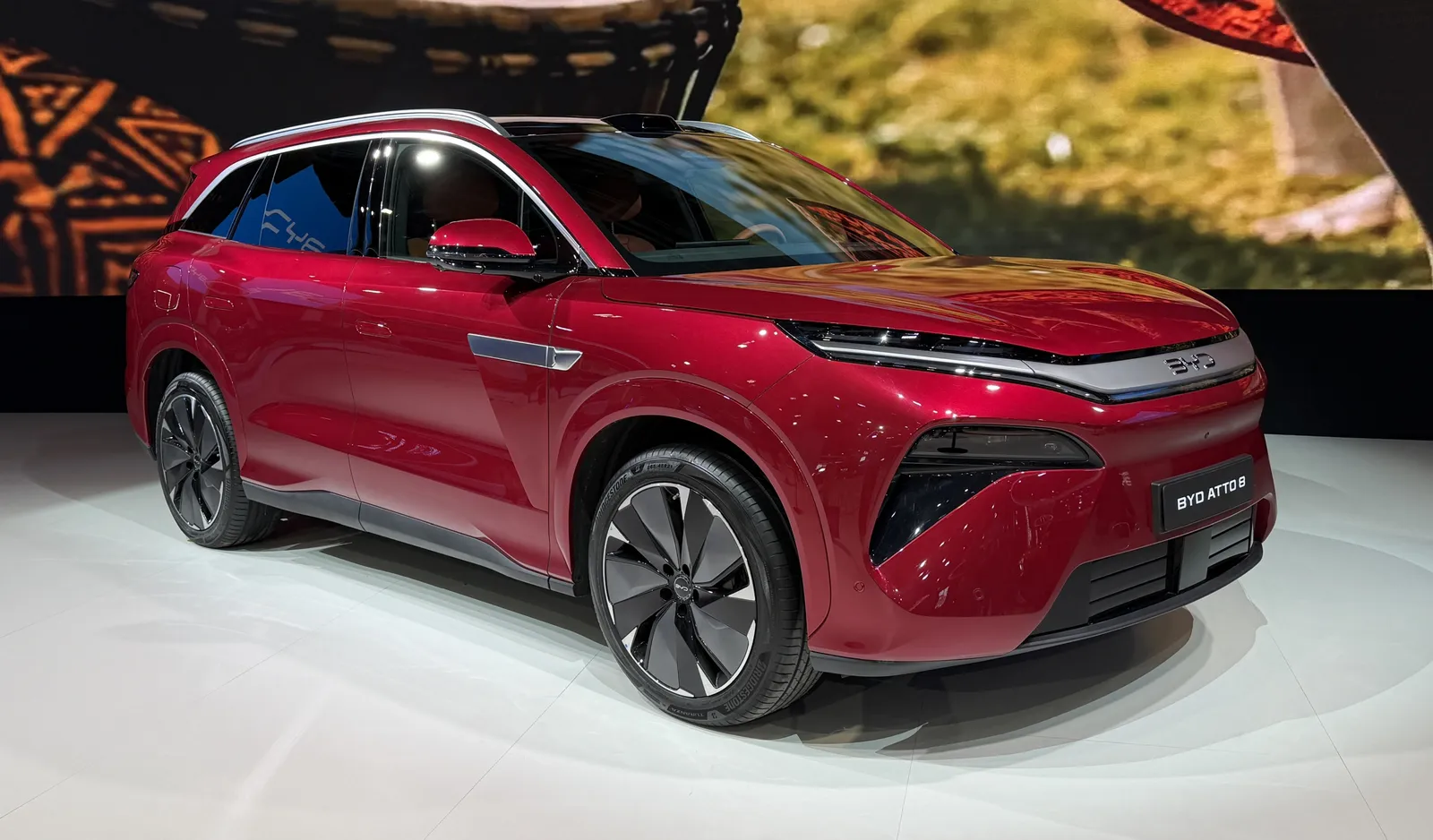
The same car, which was originally planned to be sold as the BYD Sealion 8, eventually became part of the even cheaper Atto series. It was named the BYD Atto 8 (illustration above). This is a huge confusion, because the BYD Tang L – its predecessor – is BYD’s flagship model in the “imperial” Tang series, positioned above the existing BYD Tang. Think of it as the equivalent of a Mercedes GLS. Yet in Europe, it was placed in the cheapest Atto series, even though any owner of an Atto 2 would notice that the BYD Atto 8 is a completely different vehicle category:
And most importantly: attentive readers of Elektrowozu who examined the illustrations got the chance to learn about this first. That’s because BYD’s Polish branch orchestrated a controlled leak
Article rating
Reader ratings
[Total: 0 votes Average: 0]
Don’t miss new content — CLICK and FOLLOW Elektrowoz.pl on Google News. You might also be interested in the following ads: