
The warning triangle is becoming obsolete. The orange lamp is now mandatory equipment.
In short:
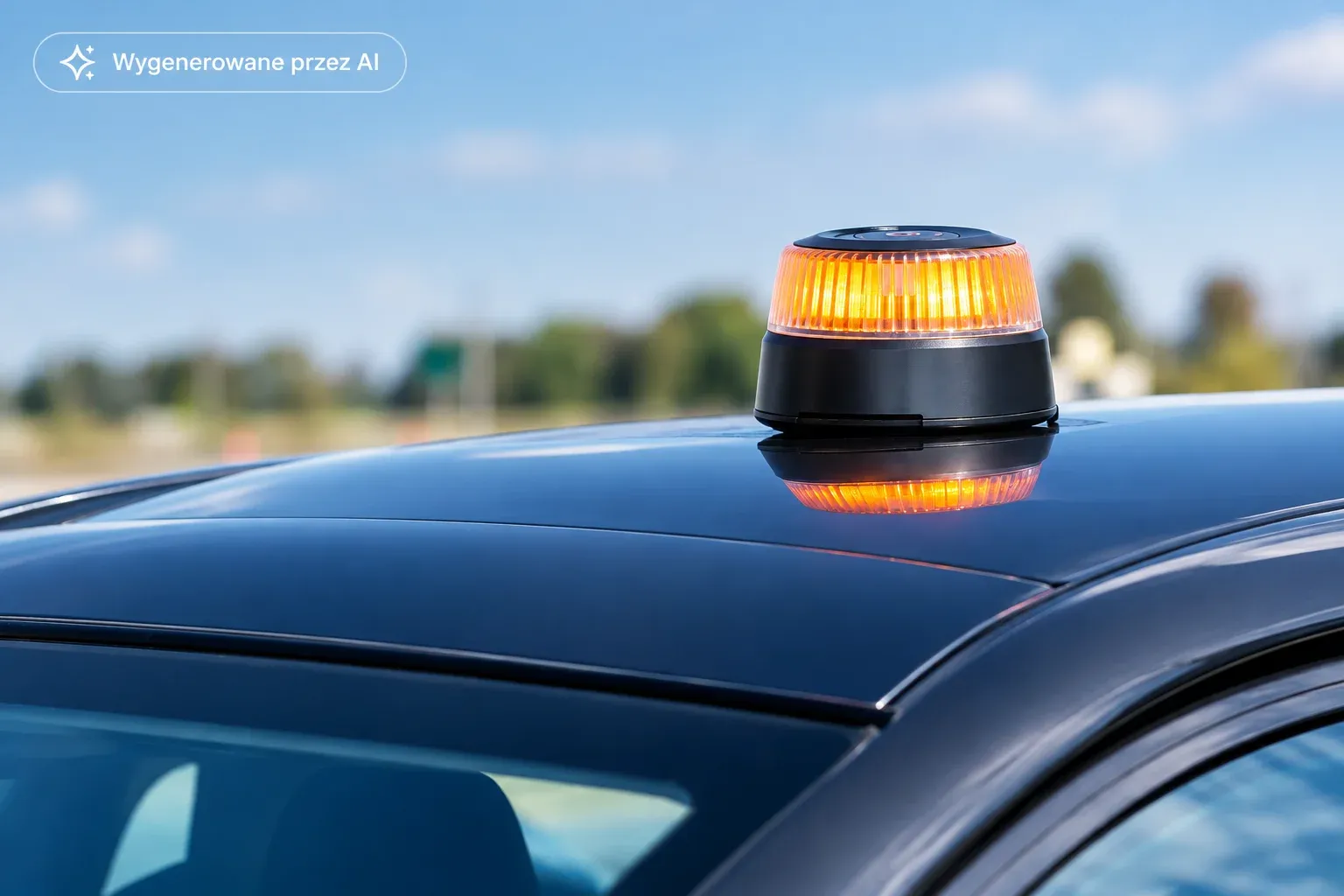
The traditional warning triangle is being replaced by the V16 smart light, which is magnetically attached to the roof
The new device automatically sends the car’s GPS coordinates to the DGT 3.0 traffic management system upon activation
The regulations take effect in Spain on January 1, 2026, but other European Union countries are closely watching this trend
Failing to comply with the new requirements results in a fine of up to 200 euros (about 800 zł)
Why is the traditional warning triangle becoming obsolete?
The need to set up a warning triangle after an accident or collision involves significant risk. The driver must leave the safe cabin of the vehicle and walk along the side of the highway or expressway for 30 to even 100 meters to place the sign at the proper distance. According to data from Spain’s General Directorate of Traffic (DGT), dozens of people have died or suffered serious injuries in recent years while attempting to mark a stop in the emergency lane.
Modern equipment in the form of the V16 lamp solves this problem simply. In case of a breakdown, the driver does not need to leave the vehicle. All that is required is to lower the window and place the small, orange device on the car’s metal roof. A strong magnet immediately secures the lamp, which then begins emitting pulsing light visible from a distance of over a kilometer at a 360-degree angle.

How does the network-connected V16 light and DGT 3.0 system work?
However, the warning light alone is only half the solution. V16 devices approved for use starting in 2026 are equipped with an integrated SIM card for data transmission (usually pre-paid for at least 12 years). When the light turns on, the GPS module automatically sends the vehicle’s precise location to the cloud of the national traffic management system DGT 3.0.
Information about a stalled vehicle is immediately sent to emergency services and distributed to other road users. Drivers approaching the scene receive warnings through variable message signs installed along the route, as well as directly in their digital navigation systems or vehicle infotainment apps. This notification system drastically reduces reaction time and prevents collisions with the stalled vehicle.
Fine of up to 800 zł for lacking a new warning light
The introduction of new regulations means consequences for those who fail to comply with the law. Starting in 2026, the absence of a V16 light connected to the vehicle’s electrical system on roads in Spain will be considered a lack of required equipment. This violation carries a fine of up to 200 euros, which is approximately 800 zł when converted.
Importantly for tourists and drivers traveling across Europe, these regulations apply to all vehicles on local roads, including cars from rental companies and those registered outside Spain. It is advisable to check before departure whether the rented car already has updated equipment that meets the latest safety standards.

Will the change apply to the entire European Union?
Although the requirement to have a V16 lamp takes effect in Spain starting in January 2026, industry experts agree that this is just the beginning of greater changes across Europe. The European Commission places strong emphasis on digitizing infrastructure and exchanging telemetry data between vehicles and their surroundings (V2X technology).
Traditional safety features are gradually giving way to electronic solutions. Just like in the case of the automatic accident reporting system eCall or advanced driver assistance systems ADAS, innovative equipment tested first in selected member states has a high chance of eventually becoming a legal EU standard for all newly registered cars.
Summary: A new era of road safety
The V16 internet-connected lamp is a clear sign that traditional automotive industry is irreversibly merging with digital technologies. Replacing the warning triangle with a device that sends GPS signals directly to the cloud saves drivers’ lives by eliminating the need for dangerous walks along the shoulder. It’s worth keeping an eye on developments in these regulations, as intelligent warning equipment is likely to appear on Polish roads in the coming years as well.
Edited by elektromobilni.pl