
Three wheels, one seat, and up to 120 km of range: this was the pioneering electric vehicle from 1987
For decades, the evolution of electric cars has been tied to major manufacturers, increasingly powerful batteries, and models aimed at replacing conventional vehicles. But long before today’s urban electric cars emerged, there were projects that pursued a much simpler idea: minimizing size, weight, and energy consumption.
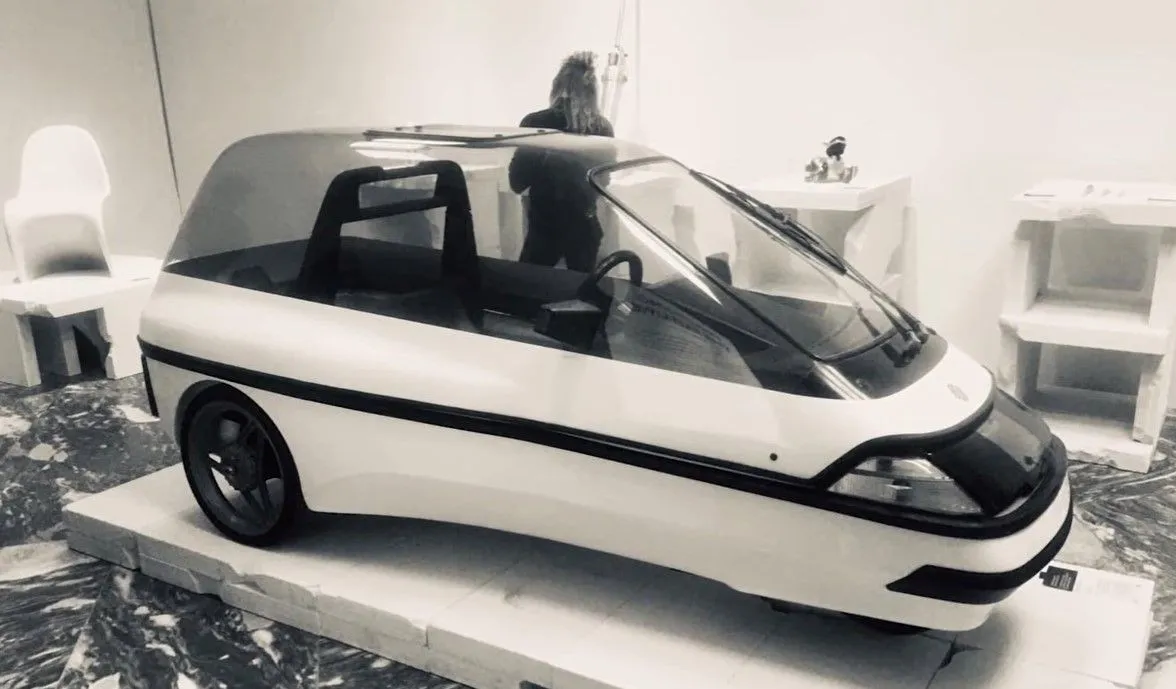
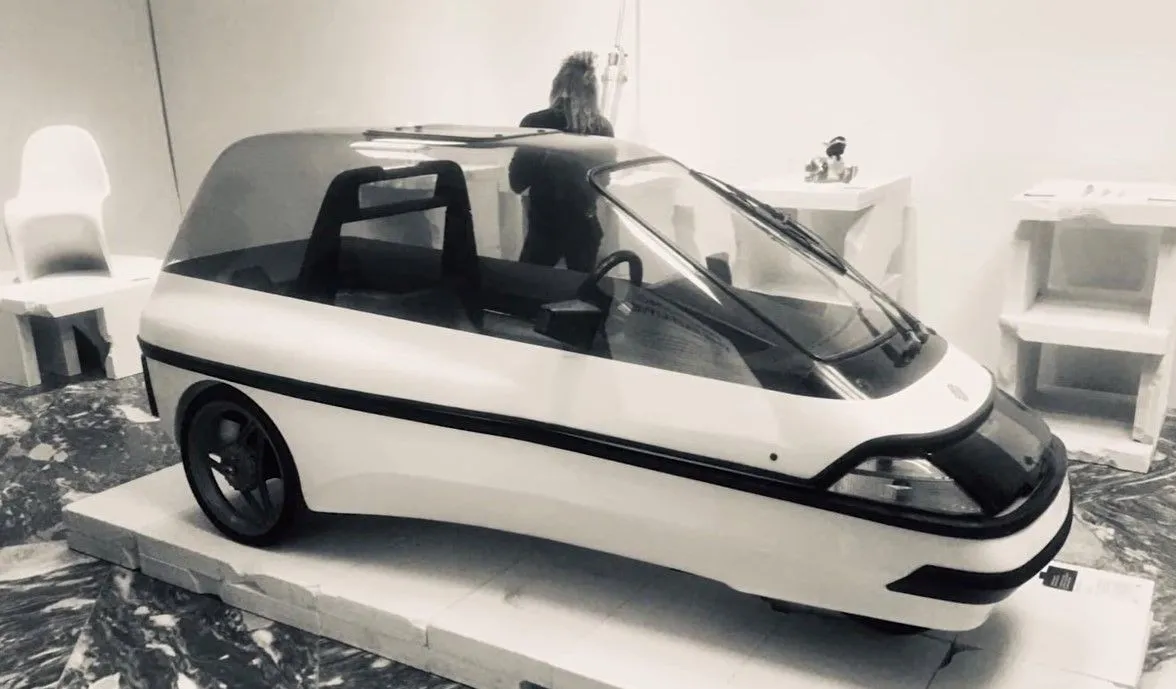
One of the most interesting examples is the CityEl, a small three-wheeled electric car that originated in Denmark and was eventually manufactured in Germany. Its history dates back to the 1980s, marked by several changes in name, owners, and manufacturers, but also by a philosophy that has remained largely unchanged since its inception: offering an extremely lightweight solution for urban commuting.
The project was initially developed by the Danish company El Trans A/S in the town of Randers. The vehicle entered the market in 1987 under the name Mini-El, before later adopting the name CityEl. Production experienced several interruptions and changes of ownership in its early years, with El Trans stopping manufacturing in 1988 and new attempts at revival during the first half of the 1990s.
In 1995, CityCom took over production, and later a German investor moved the operations to Aub in Bavaria. The company became CityCom Elektromobile GmbH and later went through the Smiles AG phase. After Smiles AG faced financial difficulties, production of the CityEl resumed in 2012 under CityCom. The company itself confirms that CityCom GmbH was established in 1995 to take over the originally Danish production and that it acquired the assets of the insolvent Smiles AG in 2012.
A car reduced to its bare essentials
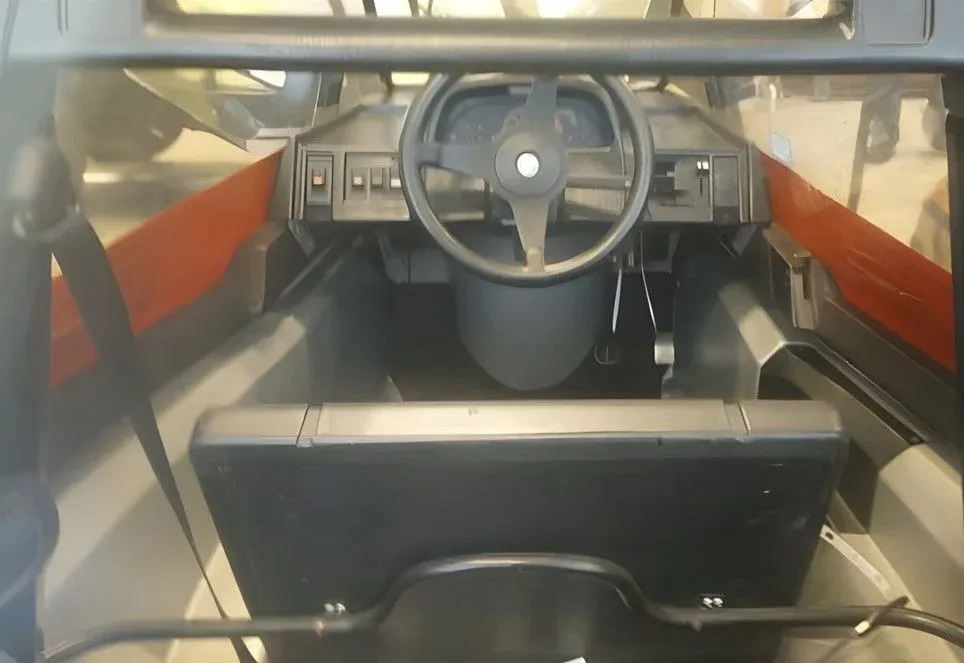
The design of the CityEl remains striking even today. It is a three-wheeled electric vehicle intended for one person, with the driver seated in the center. There are no conventional doors: the entire upper part of the bodywork rises using gas shocks to allow access to the cabin.
This design allows for an extremely simple and lightweight structure. There was also an option to install a rear child seat to carry a child up to 30 kg, although the CityEl was primarily conceived as an individual vehicle for urban commuting. Despite using a steering wheel, brake pedal, and accelerator like a conventional car, it was legally classified as an electric motorcycle in some markets.
During its commercial life, there were several body styles available. The base version featured a closed roof, while others included side plexiglass windows. There was also a fully open convertible version, and later the Targa variant appeared, with a removable canvas center roof and fixed rear windows. In the United States, it was also offered with a special fiberglass roof.
The dimensions help illustrate the extent to which efforts were made to reduce the vehicle’s size. The CityEl is approximately 2.74 meters long, 1.06 meters wide, and 1.26 meters high, with a wheelbase of 1.81 meters. Depending on the version and batteries installed, its weight ranged from about 210 to 280 kg, a figure that explains much of its low energy consumption.
The mechanical development was quite significant for such a small project. The earliest models used an engine of just 0.8 kW (1 HP) and a 36-volt electrical system. Later versions featured a 2.5 kW (3 HP) engine along with three 80 Ah lead batteries. Those initial models could reach speeds between 40 and 55 km/h, with their range depending on the model series and battery condition.
With the introduction of the FactFour, the CityEl took a significant step forward. The engine produced 4 kW (5 HP), the top speed reached 63 km/h, and range with lead batteries was approximately between 70 and 90 kilometers. Fuel consumption stayed at just 3.5 to 5 kWh per 100 km, figures that are exceptionally low even compared to current urban electric cars.
The possibility of using lithium batteries further enhanced its capabilities. Some conversions allowed range to exceed 120 kilometers while significantly reducing weight. A conversion with 100 Ah batteries could save around 70 kg compared to certain previous configurations. In a vehicle that weighed just over 200 kg in some versions, this difference was particularly significant.
The light weight did have one obvious drawback. A vehicle that is so narrow and lightweight becomes much more susceptible to crosswinds, especially at speeds above 50 km/h. This is precisely the kind of trade-off that arises when the pursuit of efficiency is taken to extremes: less mass means less energy is needed to move, but it also means reduced stability under certain external conditions.
The latest documented technical advancement before the end of this model phase came with a 4.5 kW (6 HP) engine paired with a 48-volt system and a lithium battery using iron phosphate chemistry. This battery could provide between 60 and 100 Ah, with a maximum capacity of 4.8 kWh, while the claimed range ranged from 70 to 90 kilometers depending on the configuration.
And this is precisely what made the CityEl interesting. It didn’t try to compete with conventional cars by offering more power, more space, or more features. Its approach was completely different: a one-person cabin, three wheels, very low weight, and a minimal amount of energy needed to navigate the city. Production continued for decades, up until around 2018 according to available sources, making it one of the longest-lasting electric mobility projects in its category.
Viewed from a distance, the CityEl almost seems like a relic from another era, but it also shows that many of the ideas emerging again today around small urban electric cars are not exactly new. Reducing weight, limiting power output, and adapting the vehicle to real-world use can be a much more efficient approach than simply trying to electrify conventional cars. The Danish small car already carried this idea in its DNA when most of the industry still didn’t even consider electric cars as a viable alternative.
