
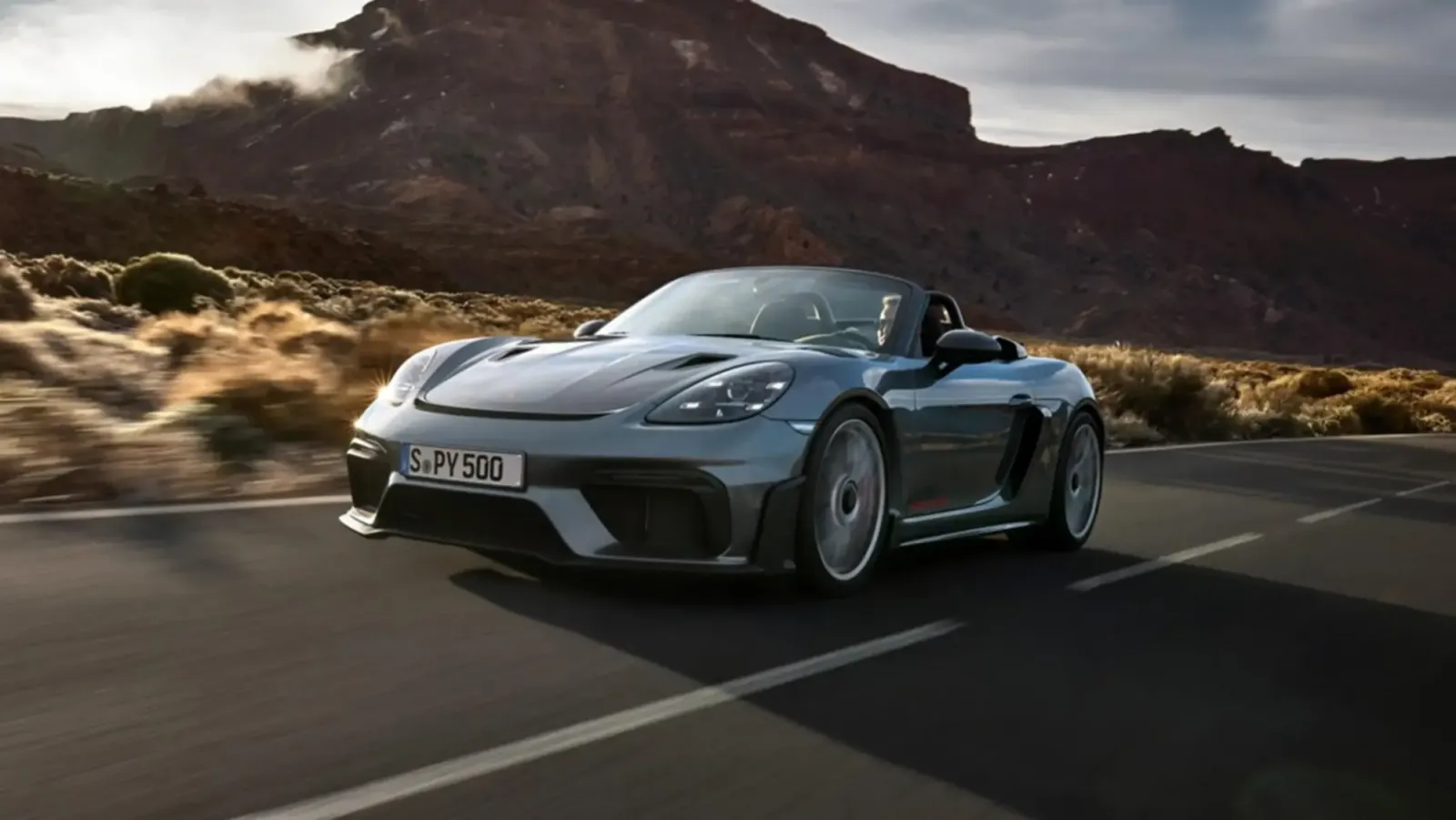
Following rumors about their disappearance, Porsche clarifies that these two iconic sports cars will arrive with 100% electric versions.
20/09/2026 09:30
Updated to
20/09/2026 09:30
Reports of delays in development and unexpected costs have raised doubts about one of Porsche’s most ambitious and risky projects. The possibility that Zuffenhausen might delay indefinitely or even cancel the launch of zero-emission versions of its entry-level sports cars has caused significant concern among enthusiasts and industry analysts.
However, the German company’s leadership has dispelled these doubts by confirming that the project is still on track and that the next generation of these two legendary models will be 100% electric.
The technical challenges that have delayed the transition
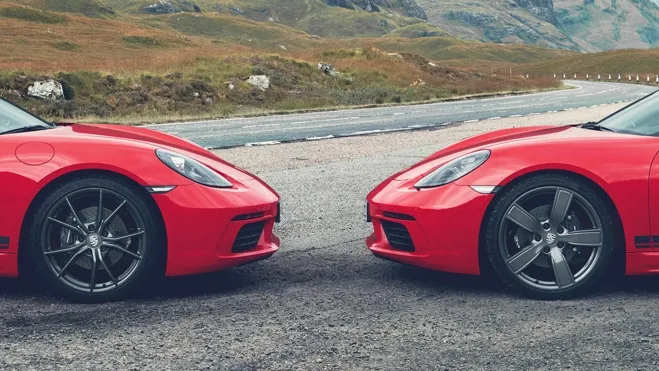
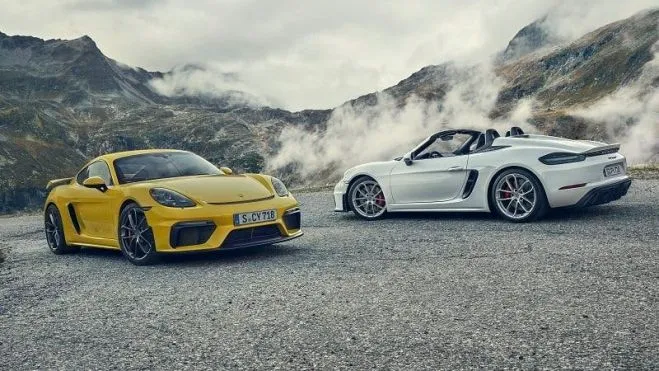
Reinventing a vehicle whose identity has always relied on agility, low weight, and the mass distribution typical of a mid-engine layout presents an unprecedented engineering challenge. The 718 series, which included the Boxster and Cayman models, has served as a historical benchmark in the category of entry-level sports cars. Transitioning to a 100% electric platform requires replacing the traditional architecture with one where batteries and electric drive modules maintain the center of gravity intact.
To achieve this, the Stuttgart-based firm has chosen to develop a specialized platform that abandons the traditional flat battery layout on the vehicle floor in favor of a configuration that mimics the weight distribution of a conventional internal combustion engine. This concept, first envisioned in the Mission R prototype, places the battery pack right behind the seats and ahead of the rear axle. This arrangement ensures a very low driving position while maintaining the cornering performance that has defined these two-seater models for decades.
800-volt architecture and high-power charging efficiency
In terms of thermal management and energy efficiency, the qualitative leap is made possible by the adoption of a system with an 800-volt electrical architecture. This solution, which has already been tested and refined in models such as the Taycan or the electric Macan, allows for optimizing cell performance and reducing downtime at ultra-fast charging stations. The integrated technology enables continuous high-power charging without compromising battery pack degradation or sustained performance during sporty driving conditions.
Although the final power specifications have not been made public, the range will include rear-wheel drive versions with a single engine in the rear axle for entry-level models, reserving dual-engine and all-wheel drive configurations for higher-performance variants. This technology layout aims to deliver immediate torque without excessively increasing the overall weight of the vehicle, a key aspect on which engineers have focused their efforts to ensure that acceleration in straight lines is matched by high precision in cornering.
Stuttgart’s response to global market challenges
The economic landscape and changes in international regulations have forced many manufacturers to reassess their timelines for electrification. In Porsche’s case, the discontinuation of previous generation gasoline models in several markets accelerated the need to take action. Despite ongoing rumors suggesting a possible pause to the project under the company’s new leadership, official confirmation confirms that replacing Boxster and Cayman with zero-emission models is considered the best technical and economic solution in the long term.
The development of stealth prototypes continues to progress on public roads and test tracks, where the tuning of the chassis, steering, and regenerative braking is examined to the millimeter. The arrival of these two battery-powered sports cars represents a test of fire for the industry, demonstrating whether passion, dynamic precision, and pure driving sensations can be successfully transferred to the era of electric mobility without losing the essence of a legendary brand.