
After the 5 and Twingo, Renault brings back another of its most iconic cars to turn it into a retro electric sports car
24/09/2026 13:30
Updated to
24/09/2026 13:30
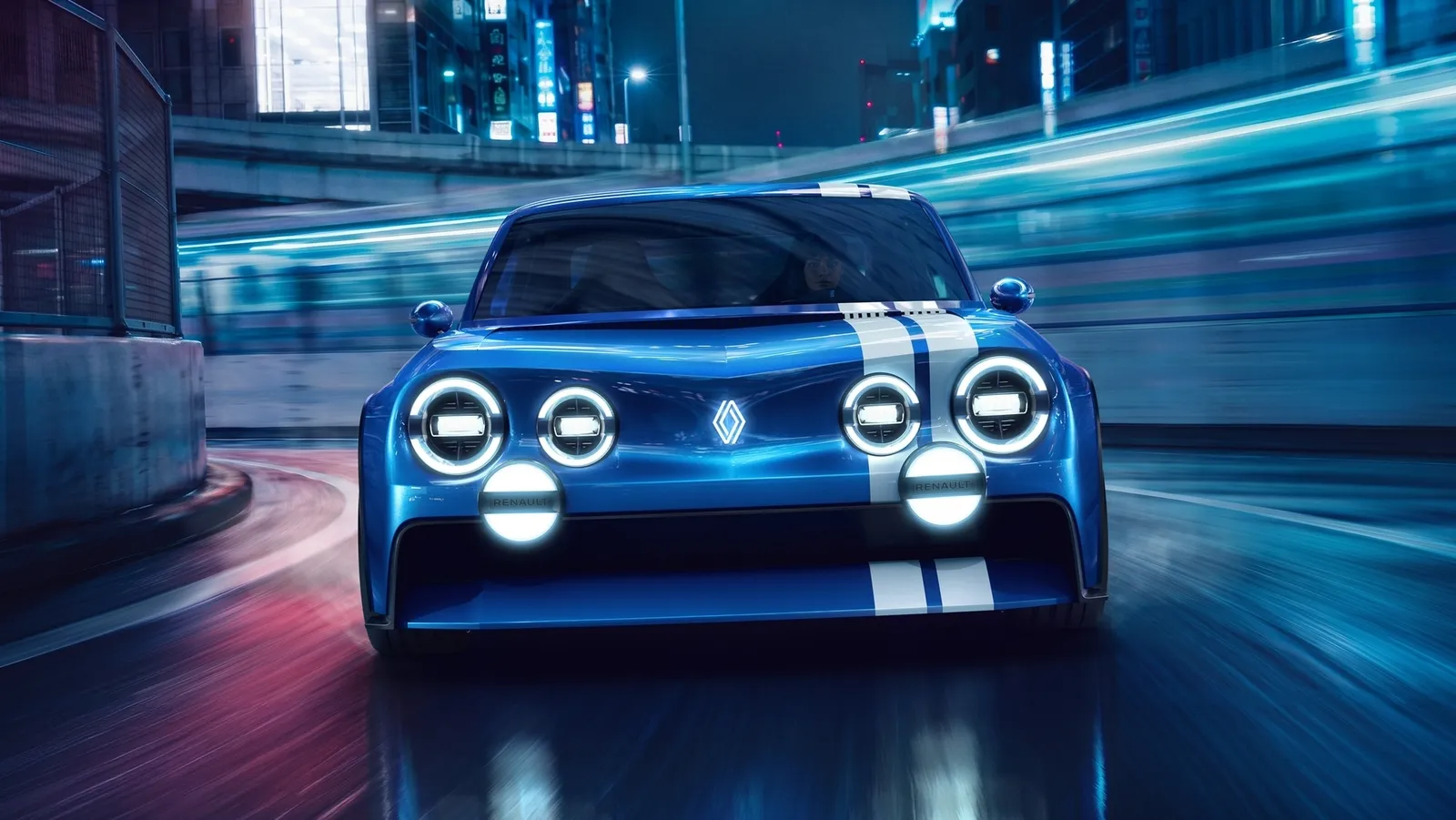
Renault continues to draw from its historical legacy to create projects that excite automotive enthusiasts, and this time it’s the turn of the Renault 8 Gordini, one of its most beloved models from its sporting past. The brand introduces the Renault 8 Gordini Concept, a two-seater electric coupe that retains the rear-engine and rear-wheel-drive layout that made the original famous, though it replaces the internal combustion engine with a 270 CV electric motor.
The project is the third in a series of design exercises through which Renault has been reinterpreting iconic models from its 128-year history for five years, following the R17 electric restomod created with Ora Ïto and the Renault 5 Diamant developed with designer Pierre Gonalons. Its official unveiling to the public will take place during the Paris Motor Show, from October 12 to 18, 2026.
The origin: a 95-horsepower car that shaped an entire generation of drivers
Launched in 1964, the original Renault 8 Gordini featured a 95 HP rear engine mounted on a rear-wheel drive layout. It offered true racing performance, though it required a high level of driving skill: efficient, but demanding. Affectionately known as “la Gorde,” it served as an excellent driving school for a whole generation of drivers, including Jean Ragnotti. By associating the Gordini name with a sports version of a production model, Renault democratized high-performance driving a decade before the GTI phenomenon emerged, and its distinctive double white stripe quickly became an icon.
The name Gordini honors Amédée Gordini, who began his collaboration with Renault in 1957 with the Dauphine Gordini, increasing its engine power from 32 to 37 CV. This marked the start of a history of success that would culminate in the Renault 8 Gordini itself. Nicknamed “the magician,” Gordini had the talent to transform even the most modest engines into true performance machines, to the point of directly instructing the lathe operator on which material to remove from the engine block, without even needing a drawing board.
Dimensions of modern rally cars
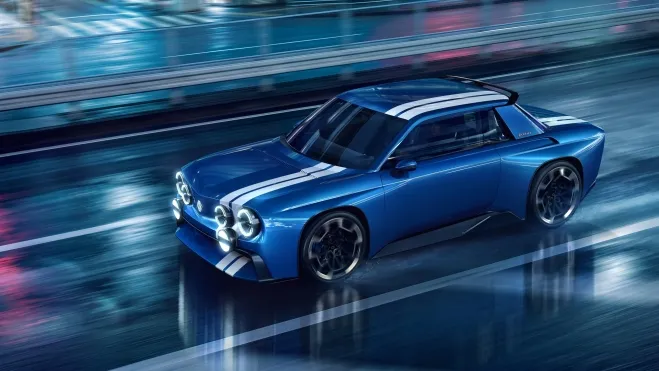
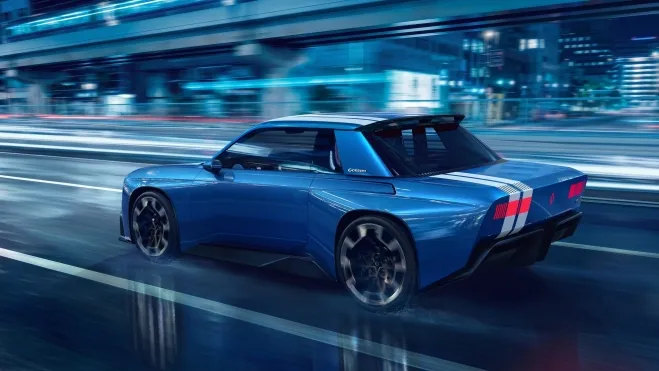
The Renault 8 Gordini Concept is 4.12 meters long, 1.88 meters wide, and only 1.27 meters high, featuring particularly compact and dynamic proportions. It features 19-inch wheels on the front axle and 20-inch wheels on the rear axle, a combination that enhances the sense of forward momentum and recalls the rear layout that made the original model so fun to drive. As a two-door coupe, it is much more dynamic than the original four-door model, with an aggressive front end marked by a V-shaped emblem and six headlights, as well as a wide, muscular, and heavily sculpted rear end that evokes the rear mechanics of the classic Renault 8.
The concept is inspired by the “café racer” aesthetic, which is very popular in the world of customized motorcycles—a style Renault had already used earlier on the Renault 5 Turbo 3E. The idea is to modernize classic vehicles by removing unnecessary elements and highlighting the beauty of the materials and mechanical parts. In this case, it shows up in details such as the original chrome side trim, now integrated directly into the body as a tension line, or the hood with no visible seams that can be removed as a single piece, just like in some racing cars.
Direct nods to the 1964 model
Many design elements reinterpret the original Renault 8 in a contemporary way. The typography of the Gordini name is inspired by that of 1964 and features the stripes from the original emblem, along with a new “8” emblem made up of eight segments. The character line located at mid-height on the body remains, but now also serves an aerodynamic function by directing airflow toward a new intake. The square wheel arches, the six round headlights integrated into the front, and the fully flush rear lights reinforce this visual identity. The color of the concept car is inspired by the original model’s Bleu de France, using a three-layer construction that combines nacre with a blue-dyed binder.
A interior of brushed aluminum and Alcántara
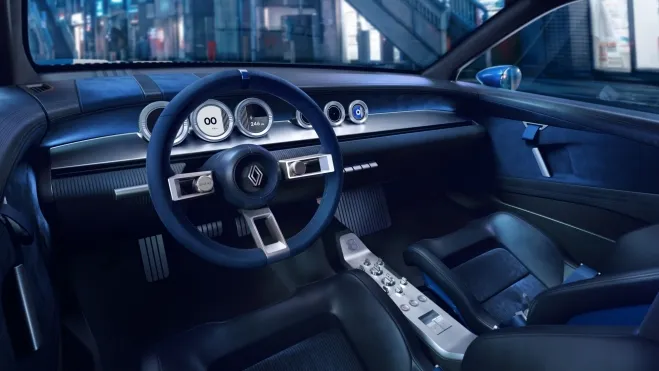
The interior features a dashboard that spans the entire width of the cabin, with a brushed aluminum horizontal strip holding circular clocks. True to the “café racer” spirit, plastic materials give way to brushed aluminum and Alcántara-covered surfaces. The bucket seats reinterpret those of the original model, with a blue leather center section contrasting against black areas, while the circular gauges are actually digital screens that appear to float above the dashboard.