
Toyota solves one of the major problems of electric SUVs
Traditional off-road vehicles use a frame with beams and crossmembers instead of a monocoque structure. Today, only a few models still rely on this design: the Ford Bronco, Jeep Wrangler, Mercedes-Benz Class G... and of course, the ever-popular Toyota Land Cruiser. The Class G already has a fully electric version, while the Land Cruiser may follow soon.
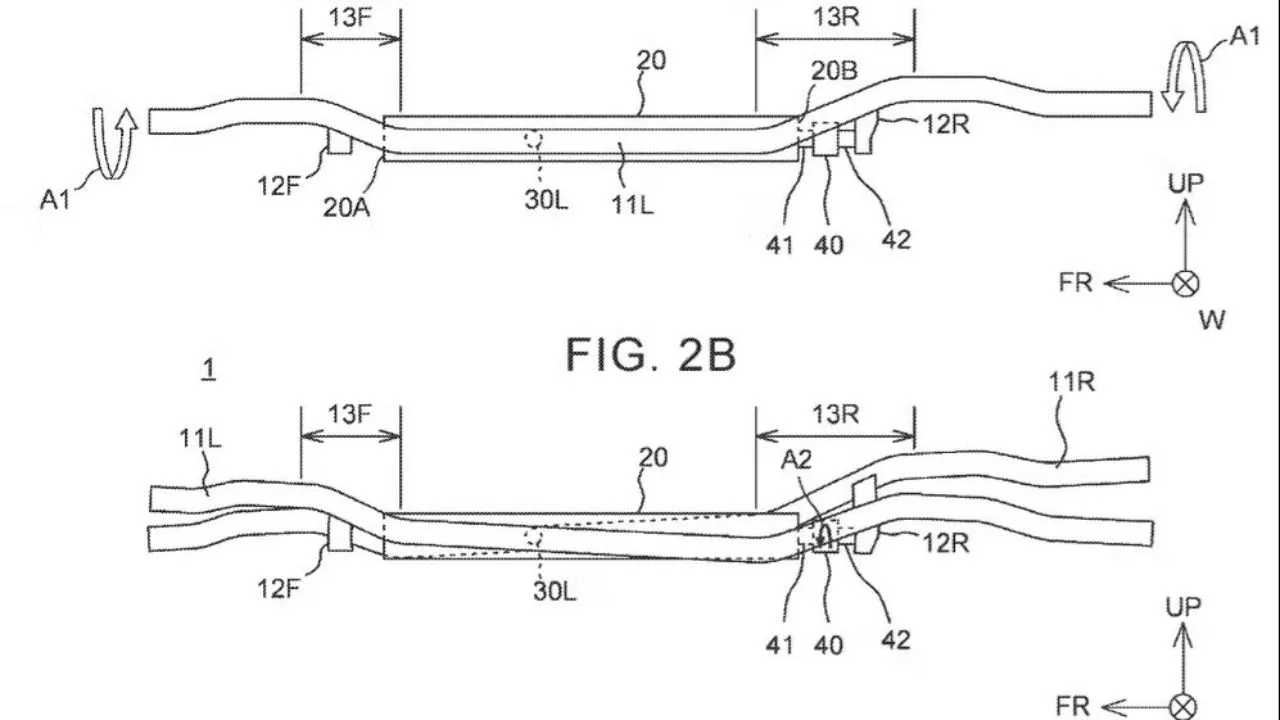
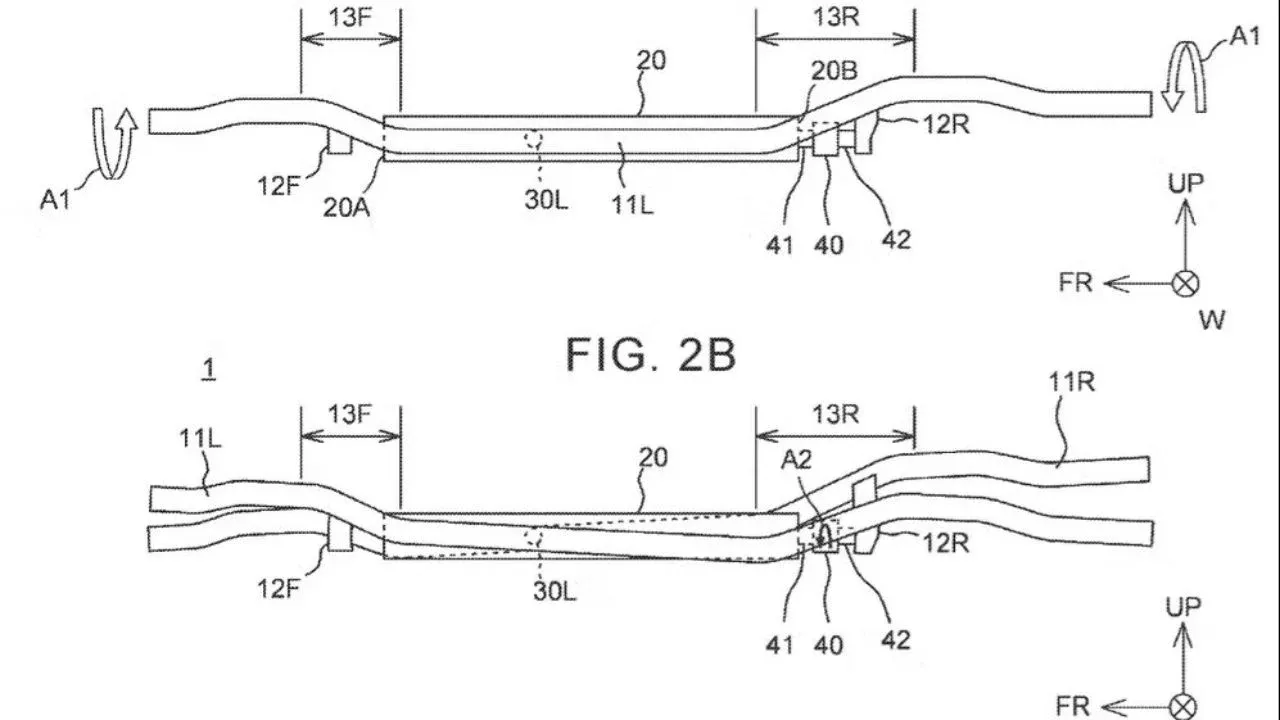
The main challenge for electric off-road vehicles when navigating difficult terrain is that the frame is subjected to torsional forces. Since the batteries are rigidly attached to the structure, this creates significant mechanical stress, something that does not occur in vehicles with internal combustion engines.
Toyota has patented a solution to this problem: a design in which the battery is placed at the center of the chassis, while a kind of hinge located at the end of the structure allows the battery to remain straight when the chassis twists. This enables the vehicle’s off-road capability to be preserved without compromising the integrity of the batteries.
Besides ensuring battery stability when driving off-road, this technology could also improve safety in the event of a collision. By allowing some movement to the battery instead of fixing it rigidly, the structural elements of the chassis (which are designed to deform first in a crash) can absorb as much energy as possible without transferring it to the battery pack.
The Land Cruiser family will soon get an electric model
This solution could be applied to any electric vehicle with a beam-and-truss chassis: besides SUVs, it would also be particularly useful in pickups and commercial vehicles. In any case, this is an idea that hasn’t yet been implemented in a production vehicle, as the electric Hilux relies on a conventional structure.
As we mentioned at the beginning, it’s no secret that Toyota is working on an electric Land Cruiser. It won’t be derived from the already existing Land Cruiser 250 (Prado) or Land Cruiser 300, but rather a new model based on the Land Cruiser Se prototype. It’s not clear whether it will retain the frame structure of its gasoline counterparts.
And even if it does, it might not feature the technology in question today, as there are numerous patents that manufacturers never end up using in mass-produced vehicles. In any case, it’s an undeniably clever idea that shows Toyota is making serious efforts in the field of electric mobility.
Source | ecomento