
Toyota is introducing fuel cells to Iveco trucks as well
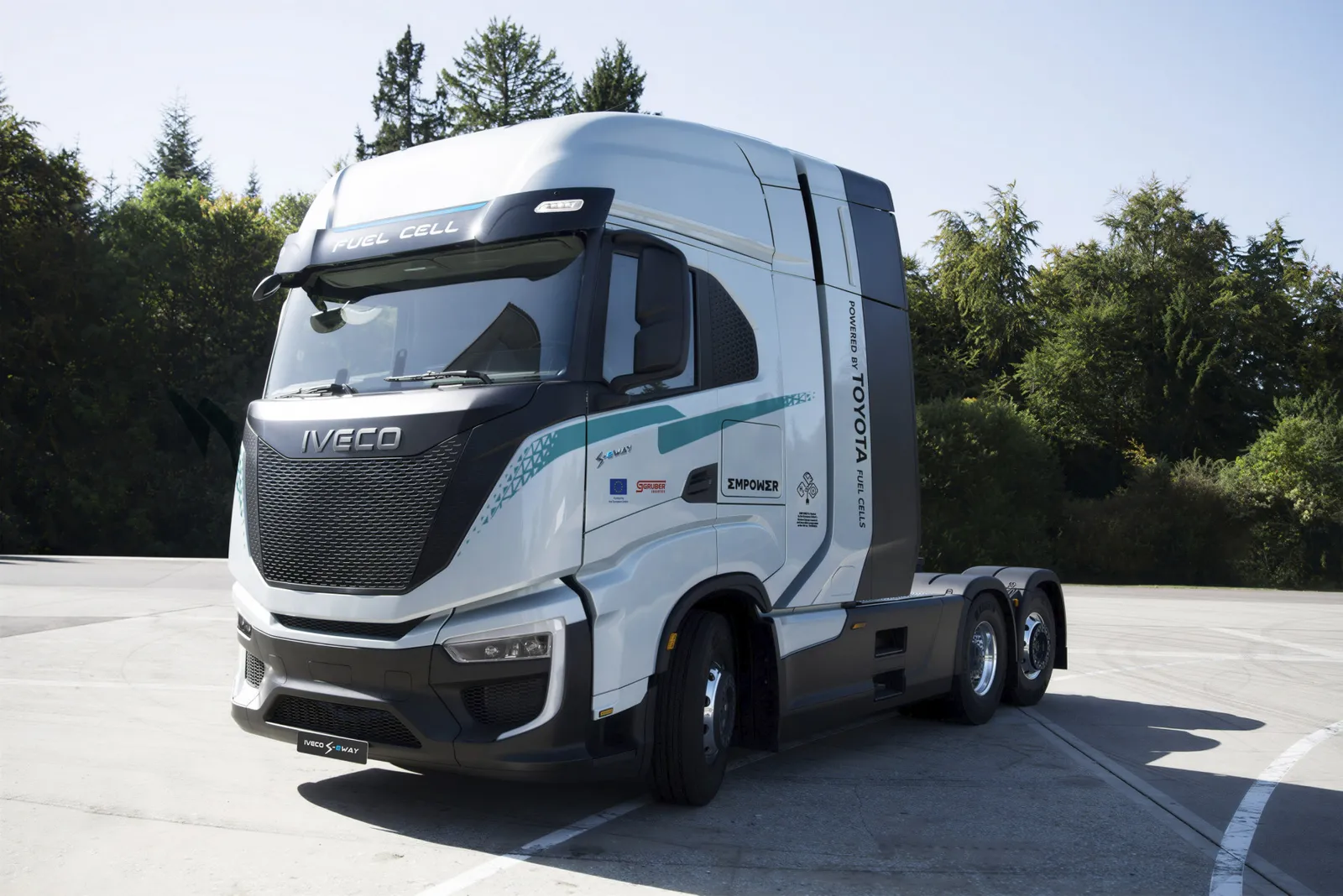
Following Scania, Iveco is also turning to Toyota’s fuel cell technology: Under the EU project EMPOWER, a new S-eWay Fuel Cell with a range of over 900 kilometers is being developed.
Iveco’s new fuel cell truck is designed to achieve more than 25,000 operating hours.
Image: Toyota
Toyota and Iveco are working together on the EU-funded EMPOWER research project to develop the next generation of heavy fuel cell trucks. Toyota provides its third-generation fuel cell system, while Iveco is responsible for the vehicle’s development, integration, and validation. The Iveco S-eWay Fuel Cell uses Toyota’s fuel cell systems with a total power output of 300 kW. The range is expected to exceed 900 kilometers, and the fuel cell technology’s lifespan is intended to be over 25,000 operating hours.
The energy efficiency is also set to improve compared to the first generation of fuel cell trucks (which used a Bosch fuel cell system) deployed by Iveco in the European H2Haul project. At the same time, the vehicle weight was reduced and the architecture simplified. Thanks to an optimized energy management system, the new S-eWay Fuel Cell requires only half as much battery capacity as its predecessor, according to the company.
For Toyota, Iveco is already its next European truck partner in a short period of time. Just in early September, the Japanese manufacturer announced a partnership with Scania. Under this agreement, 40 trucks equipped with Toyota’s current 300-kW fuel cell system are to be tested in real logistics operations starting in 2027.
Toyota is also working on fuel cell trucks with companies such as Sinotruk and the VDL Group. Additionally, the company aims to become an equal partner in Cellcentric, a fuel cell joint venture between Daimler Truck and the Volvo Group. By doing so, Toyota is increasingly making its commercial vehicle segment a focus for its fuel cell technology.
Iveco, on the other hand, is incorporating insights from the EU project H2Haul into its new vehicle generation. The EMPOWER project aims to improve performance, efficiency, and durability while testing the technology under real-world conditions.
The validation and testing of the new S-eWay Fuel Cell are set to begin in the fourth quarter of 2026. Initial tests on public roads are planned for the first half of 2027, with the goal of gathering data for future industrialization efforts.