
Toyota is working on a new battery mounting system for electric SUVs.
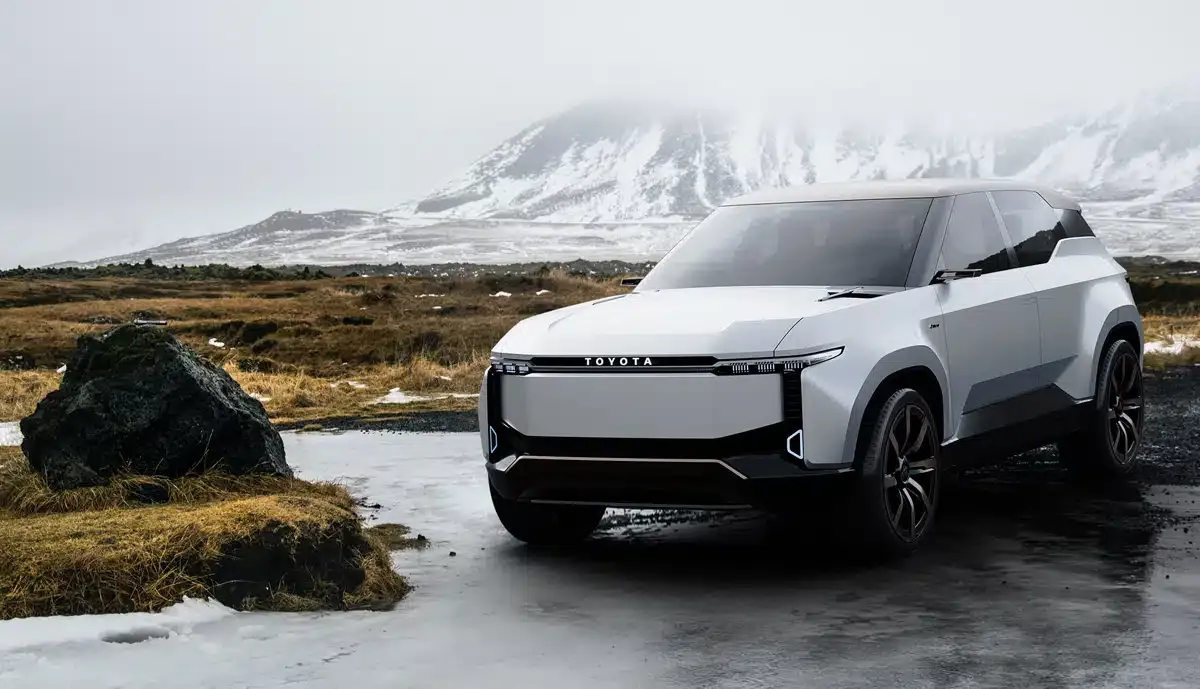
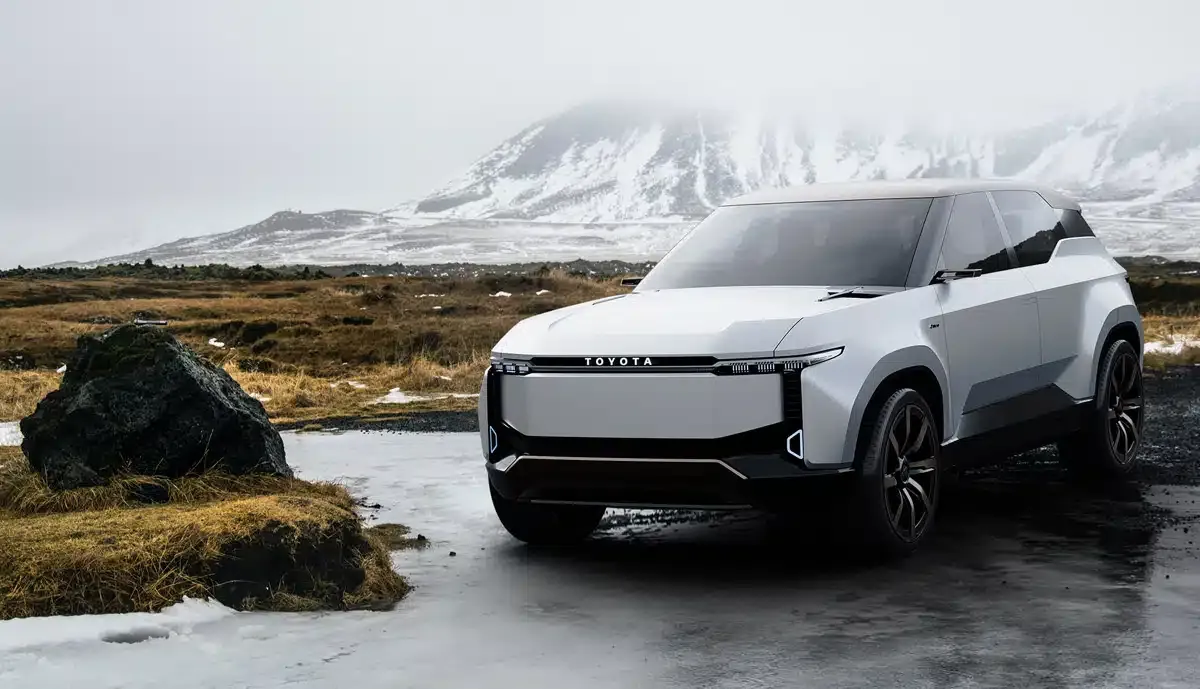
Image: Toyota (illustrative)
Toyota has filed a new patent that aims to provide a solution to a technical challenge in electrified off-road vehicles. When driving on uneven surfaces, the frame of vehicles with a truck-style frame structure, such as pickups or SUVs, twists due to the different movements of the wheels. This twisting poses a particular problem for electric vehicles.
Unlike fuel tanks in gasoline-powered vehicles, heavy battery packs are installed under the vehicle floor in electric cars. While the frame is designed to handle such movements, the bending forces caused by tightly secured battery packs result in high mechanical stress.
According to Autoblog, Toyota’s new patent describes a underbody design intended to reduce stress on the battery. The concept involves supporting most of the energy storage unit in the center of the frame, as this area experiences less movement. A rotating joint is planned to be used at one end of the structure. This functions similarly to a hinge, allowing the frame to twist without moving the battery.
This system is designed to keep the battery pack stable while maintaining the vehicle’s off-road capability. The technology could be applied not only to SUVs but also to pickups, commercial vehicles, and hybrid models. The new mounting method might also free up space in the vehicle floor, enabling the installation of larger batteries without extensive structural changes.
An equally recently published patent also indicates that the Japanese may be placing greater emphasis on battery safety in accidents. Rather than fixing the battery pack rigidly to the vehicle structure, Toyota is exploring the possibility of allowing it some flexibility in the event of a crash.
In this concept, the battery pack is located in the lower part of the vehicle but is not securely screwed down as a structural component. Instead, it sits within the frame and is surrounded by suspension components and reinforced structural elements designed to deform first in a collision, thereby absorbing forces.
Also interesting
About the author
Thomas Langenbucher is an expert in electromobility with professional experience in the automotive industry and finance sector. Since 2011, he has been covering electric vehicles, sustainable technologies, and mobility solutions for ecomento.de. Learn more.
Reader interactions