
Toyota has found a trick to make its future electric sports cars even lower.
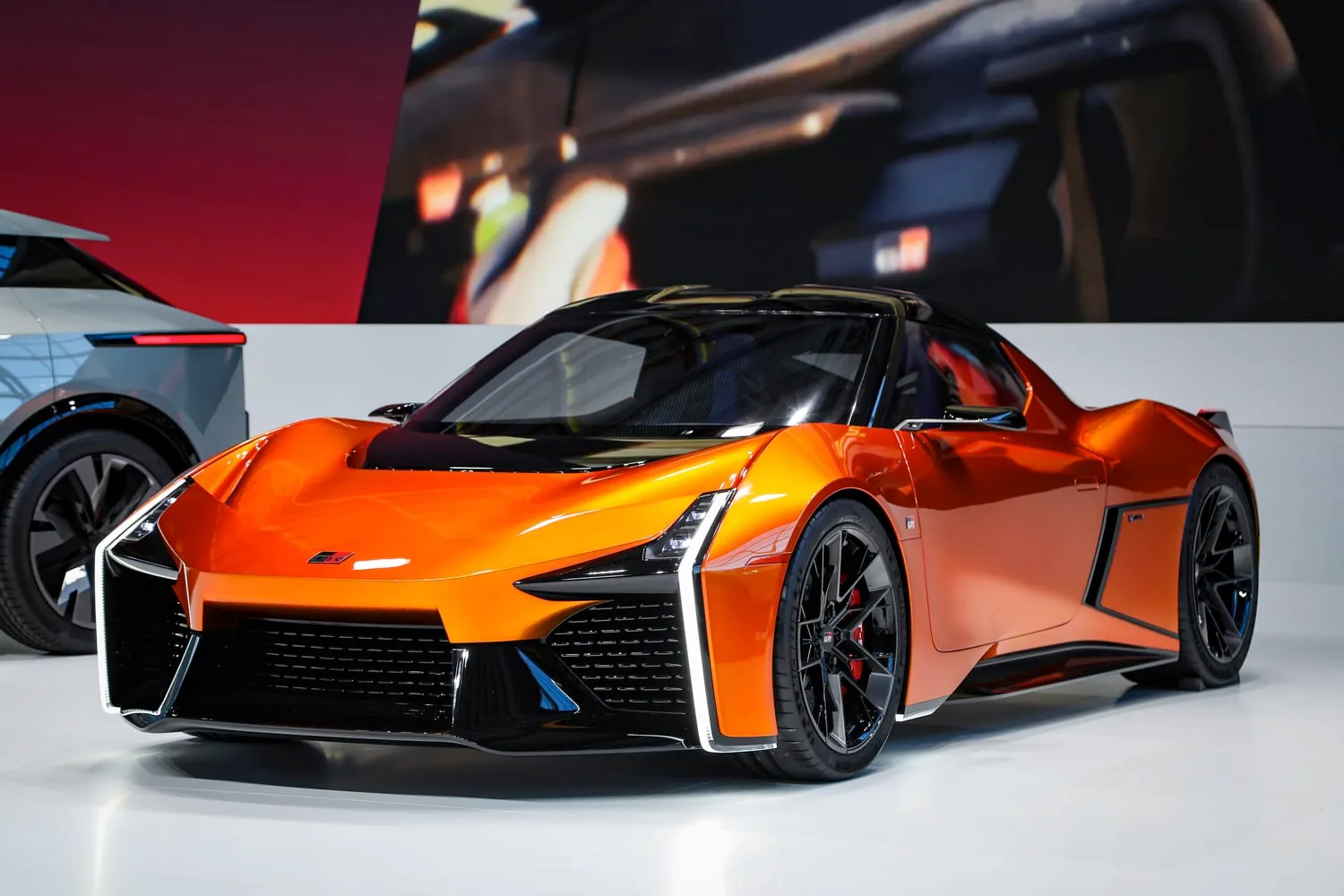
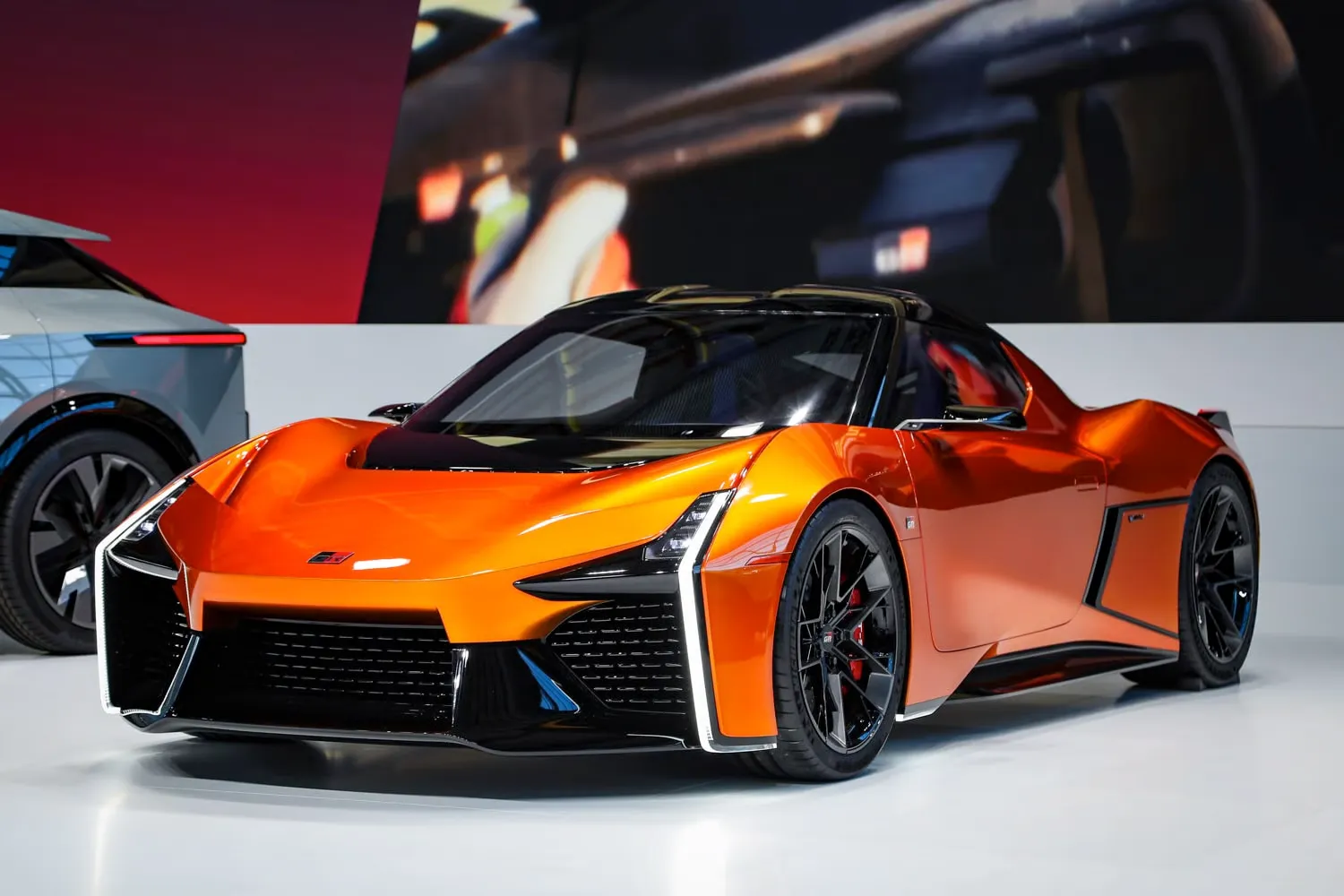
An electric car doesn’t have a large internal combustion engine under its hood. Yet, designing an electric sports car with a very low front end remains a real challenge. Toyota has just filed a patent describing a new arrangement of engines and technical components that could help solve this problem. It’s an ingenious solution, but it still raises a few questions.
Electrification gives automotive designers more freedom. By eliminating the internal combustion engine and its traditional transmission, manufacturers can envision different vehicle silhouettes with more original proportions and larger interiors. But this freedom has its limits. In an electric car, the space between the front wheels remains occupied by numerous components: motors, gear reducers, power electronics, charging systems, and cooling devices. All these elements take up space and can prevent designers from lowering the hood sufficiently.
It is precisely this problem that Toyota aims to address. In a recent patent identified by Carmoses, the Japanese automaker describes a technical architecture designed to reduce the height of the front section of an electric vehicle. The goal is clear: to facilitate the design of electric sports cars with low, aerodynamic lines.
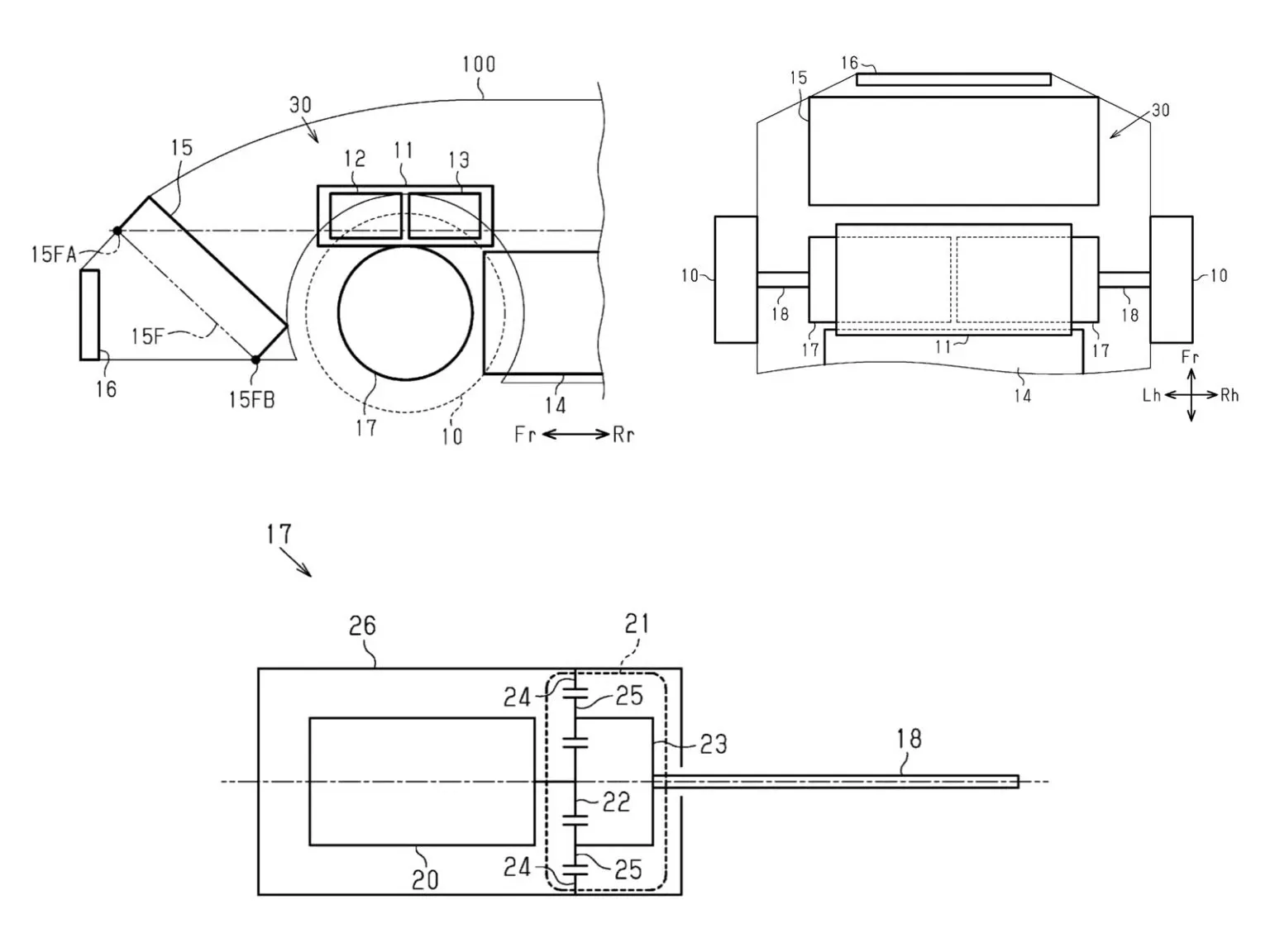
Two electric motors mounted on the same axis as the wheels
Toyota’s first trick relates to the arrangement of electric motors. In many electric vehicles, the motor and the gears responsible for transmitting its power to the wheels are arranged along multiple parallel axes. This design works very well, but it can increase the vertical and longitudinal bulk of the powertrain.
Toyota proposes another approach: placing the electric motor and its reduction system on the same shaft, directly aligned with the wheels. To achieve this, the manufacturer uses an epicyclic gear train, a mechanism composed of several gears that allows reducing the motor’s rotational speed before transmitting motion to the wheels. In the configuration detailed in the patent, two motor-reduction units are installed side by side between the front wheels. Each motor drives its own wheel directly, without a central mechanical differential.
Also read
Toyota FT-Se: First look at images of the upcoming programmable electric sports car
This design has an advantage: it allows reducing the height and length of the entire unit. On the other hand, Toyota acknowledges a drawback. Such an architecture takes up more width space than a conventional system.
The concept of a coaxial powertrain is not entirely new. Porsche, for example, uses a compact version of this design on the front axle of the Taycan, although its system relies on a single engine paired with a differential. Toyota goes further by incorporating two independent units.
This configuration could theoretically enable separate control of the power delivered to each front wheel. However, the patent does not explicitly mention any active torque distribution function, also known as torque vectoring.
Another trick to lower the hood
Reducing the height of the motors is not enough. There must also be space for the other components essential for the operation of an electric vehicle. Therefore, Toyota proposes installing the power electronics directly above the motors. In the main configuration of the patent, this setup includes a DC-DC converter designed to adjust voltage during fast charging, as well as an onboard charger for AC charging. Other variations involve installing just one of these devices, or even the inverter that controls the electric motor.
But the most innovative element is located a bit further forward. The Japanese manufacturer is focusing on the condenser of the air conditioning system, that heat exchanger which is usually installed vertically behind the grille. Rather than keeping it in that position, Toyota proposes tilting it forward. This allows lowering its highest point while still maintaining a surface exposed to the airflow coming in from the front.
The patent imposes an essential requirement: the upper part of the radiator must remain lower than the top of the electronic housing mounted on the engines. Thanks to this arrangement, the hood can gradually descend toward the front of the car without being restricted by a radiator that is too high. In theory, this solution could facilitate the creation of a particularly low front end, as seen on some sports cars.
A technology intended for Toyota’s future electric sports cars?
This invention makes full sense when considering the Japanese manufacturer’s sports car projects. In 2023, Toyota unveiled the FT-Se concept, a two-seater electric sports car with particularly low and wide proportions. More recently, Lexus also presented the LFA electric sports car concept, whose design emphasizes a low profile and highly aerodynamic lines. These vehicles clearly illustrate the group’s ambitions in the field of electric sports cars. However, nothing currently suggests that the architecture described in this patent will be used in any of these models. Toyota does not mention any specific vehicle in its document.
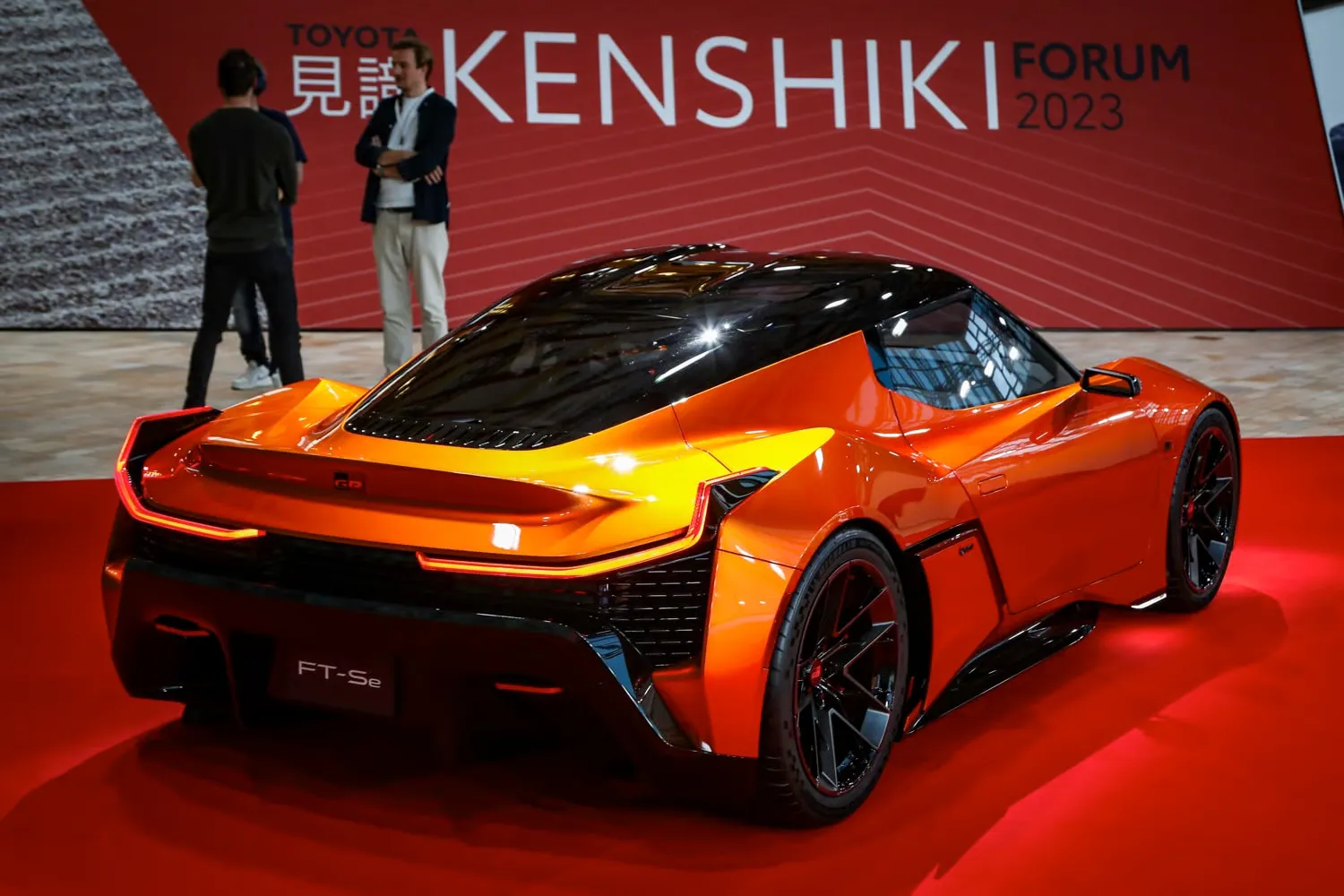
Another notable feature: the configuration shown applies to the front wheels. This might seem surprising for a sports car, but nothing prevents the idea of adding a second engine to the rear axle. Therefore, this architecture could easily fit into a future all-wheel-drive electric vehicle. In fact, the FT-Se concept was presented by its chief engineer as a vehicle equipped with an engine on each axle. This does not, however, mean that Toyota plans to install the system described in this new patent.
A promising solution, but with some uncertainties
If the idea seems appealing, several questions remain unanswered. The first concerns cooling. The patent describes the position of the air conditioner condenser in detail, but does not specify the location of the other heat exchangers required for an electric sports car to function. Yet, a vehicle designed for dynamic driving must be able to effectively cool its battery, engines, and power electronics, especially during intensive use on a racetrack. Integrating these additional components could complicate achieving a front end as low as desired.
Also read
Toyota is developing a new hybrid engine that could consume only… 3.3 liters per 100 kilometers
Another question is cost. Two separate electric motors and two reduction systems can introduce complexity and additional expenses compared to an architecture based on a single motor.
Finally, Toyota does not disclose the target hood height, the engine performance, or the electrical specifications of the battery. Safety issues also need to be considered, particularly regarding pedestrian protection and the deformation space required in the event of a frontal collision.