
Contact information: Dongfeng VIGO electric and MAGE PHEV, the two new SUVs the brand is bringing to Spain priced at 26,615 € and 28,740 € respectively.
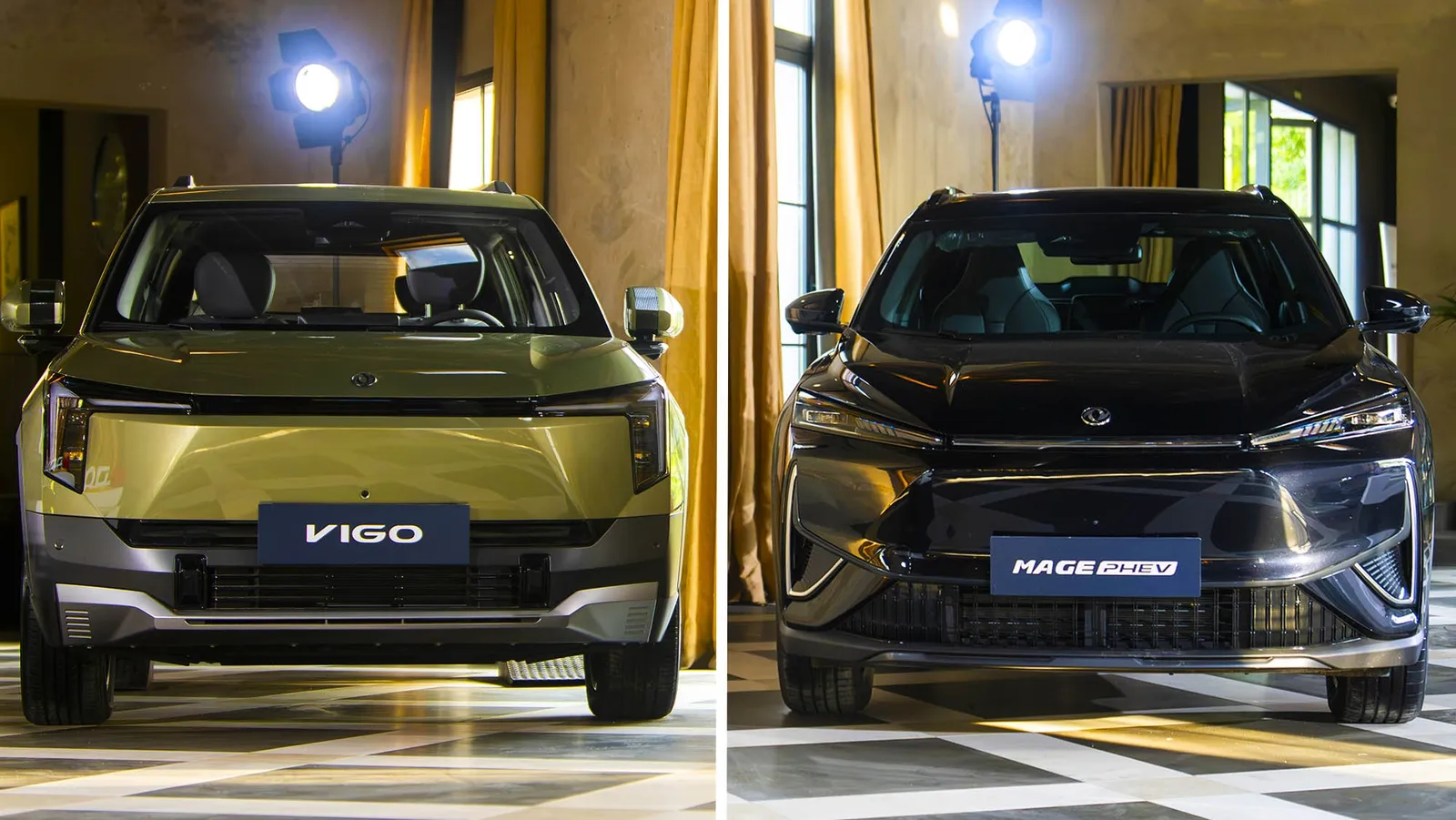
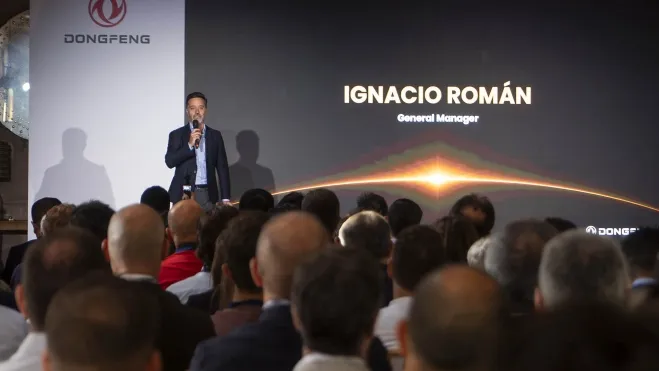
Dongfeng took advantage of its first Dongfeng Day, held in Madrid, to officially introduce two models in Spain as part of its strategy to expand its presence in one of the most competitive segments of the market: electric SUVs. These are the Dongfeng VIGO, a 100% electric SUV with 120 kW / 163 HP, and the Dongfeng MAGE PHEV, a plug-in hybrid with 220 kW / 299 HP.
In addition to learning about the brand’s expansion plans in Spain, I had the opportunity to test drive both models. Although it wasn’t a full-scale test yet, the initial impressions give a pretty clear idea of what these two Chinese SUVs have to offer.
Two Electric SUVs to Expand the Range
The VIGO and MAGE PHEV join a Spanish lineup that began with the Dongfeng BOX, the compact electric model with which the brand started operating in our country. These two new SUVs share a philosophy focused on equipment, comfort, and an excellent price-to-product ratio.
Both models carry the DGT CERO label and come with a seven-year or 300,000-kilometer warranty on the vehicle. For the high-voltage battery and electric drive system, the coverage extends to ten years with no mileage limit.
Dongfeng currently has 25 official dealerships in Spain and plans to reach 30 by 2026 and 45 by 2027. The brand’s import operations in Spain are handled by Salvador Caetano Auto.
The VIGO starts at 26,615 euros in cash or 139 euros per month, while the MAGE PHEV has a launch price of 28,740 euros or 195 euros monthly, subject to applicable promotions and support from the Auto+ program.
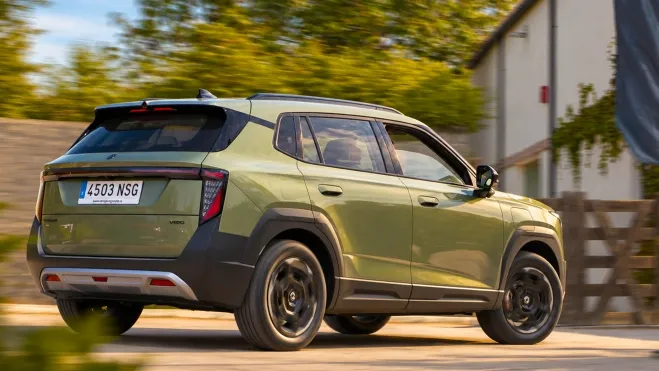
Dongfeng VIGO: a compact electric vehicle that impresses with its space
The Dongfeng VIGO measures 4.31 meters in length, 1.87 meters in width, and 1.65 meters in height. It is built on the Quantum electric architecture and features a front-mounted motor with 120 kW / 163 HP and 230 Nm of torque.
The LFP battery has a capacity of 51.87 kWh, enabling up to 521 kilometers of urban range and 340 kilometers of combined range. The fast DC charging capability reaches 167 kW, sufficient to restore 30% to 80% of the battery in approximately 18 minutes.
When I got behind the wheel, one of the first things that caught my attention was its agility. The electric motor responds instantly, and the 230 Nm of torque available from the very start allows smooth driving in both city conditions and on highways.
The steering is light and precise, though it gives off a somewhat artificial feel. The driver can choose between Eco, Comfort, and Sport modes, as well as adjust the level of regenerative braking during deceleration.
The chassis setup features McPherson struts at the front and a torsion beam at the back. On roads, the VIGO clearly prioritizes comfort without becoming overly soft. In this first test drive, I particularly appreciated the balance between handling irregular surfaces, stability, and noise reduction.
The interior space is also impressive. With a wheelbase of 2.72 meters, the rear seats offer considerable room for an SUV of these dimensions. The trunk capacity is 500 liters and can reach 1,040 liters with the rear seats folded down. There is also a 72-liter compartment under the floor, and in front we find a 49-liter frunk.
But another feature that stands out is the split rear door. The upper part can open independently, while the lower part folds down to create a support surface capable of holding over 150 kilograms. This unusual solution adds functionality to the overall design.
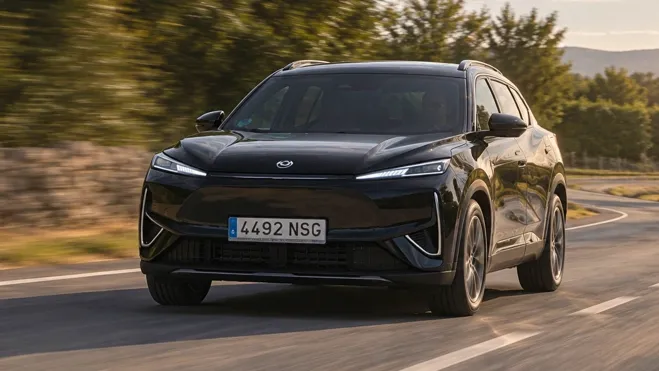
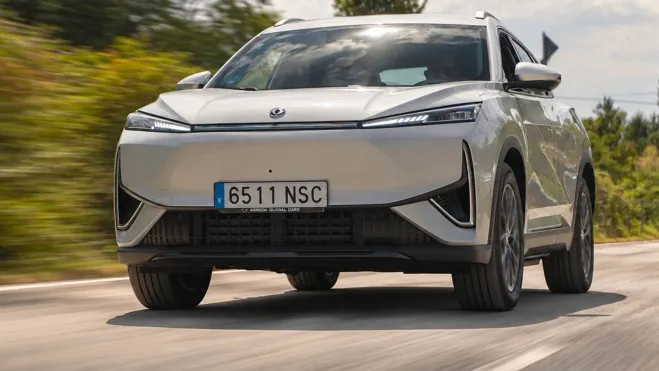
MAGE PHEV: 299 HP and up to 89 kilometers on electric power
The MAGE PHEV marks Dongfeng’s entry into Spain’s plug-in hybrid market. It is an SUV measuring 4.69 meters in length, 1.90 meters in width, and 1.62 meters in height, with a wheelbase of 2.78 meters and five seating positions. The trunk offers 525 liters of space, which increases to 1,846 liters when the rear seats are folded down.
Its propulsion system combines a 1.5-liter turbocharged gasoline engine producing 111 HP with an electric motor delivering 120 HP and a 17 kWh battery. The total power output is 299 HP, and the intelligent hybrid transmission features four speeds.
The battery allows up to 89 kilometers of driving in pure electric mode according to the WLTC cycle, while the combined range reaches 1,200 kilometers. The certified fuel consumption is 1.49 l/100 km, and with the battery depleted, Dongfeng reports 4.8 l/100 km.
When started, the transition between the electric motor and the gasoline engine is very smooth. The electric power contribution is clearly noticeable in the vehicle’s response, but the shifts between the two energy sources are practically imperceptible when driving at a constant speed.
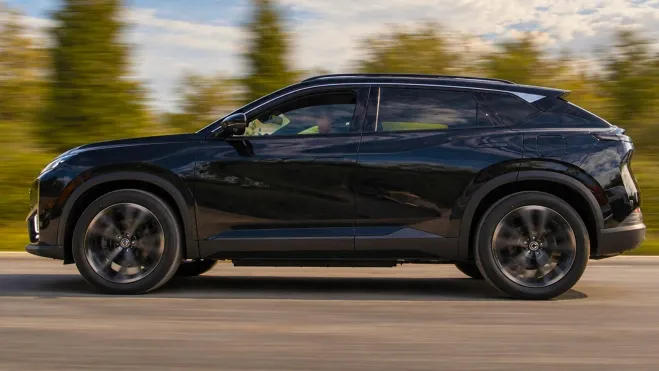
The 299 CV is one of the most noticeable features on the road. When requesting power to overtake, the response is immediate and gradual, with no significant delay in the thermal engine coming online.
The MAGE PHEV also delivers a more stable feel compared to the VIGO. It is a larger and heavier vehicle, but it feels firmly planted on the asphalt and offers good sound insulation. The suspension effectively filters out road irregularities while maintaining a reasonable balance between comfort and dynamic performance.
The driving position also seems well thought out. The seats are comfortable, the visibility is good, and the practical panoramic roof adds brightness to the cabin. Additional features include a heated steering wheel, power driver’s seat with memory function, electric rear door, and a 540-degree vision camera.
Displays and assistants: room for improvement
Both models offer high-level technological equipment, though we identified a few areas that could be improved during our testing.
In the VIGO, the 12.8-inch central display responds quickly and smoothly, but the interface didn’t seem particularly intuitive to me. This is something that requires some time to adapt to in order to determine how much it affects daily use.
What’s more important is the performance of some driving assistants. At certain times, I found them to be overly intrusive with somewhat abrupt interventions. The sensitivity may depend on the selected settings, so a longer test would be necessary to assess this aspect more thoroughly.
Another thing I missed is a system that allows adjusting the retention of the electric motor when the foot is removed from the accelerator, especially for a car designed for urban driving. In this case, the retention is minimal, which is what’s required when driving on roads.
There is another detail worth knowing before purchasing either model: both the VIGO and MAGE PHEV come equipped with Apple CarPlay, but not Android Auto. Official documentation confirms compatibility with Apple CarPlay in both cases.
Two different options with the same goal: value for money
The Dongfeng VIGO starts at 26,615 euros cash, a price that applies to the vehicle without any government purchase subsidies. It can also be acquired through financing with a monthly installment of 139 euros.
One of the strengths of this offering is its comprehensive standard equipment, which includes features and systems typically found in higher-tier vehicles. No additional packages are needed to access them; the buyer only has to choose the body color.
In the case of the Dongfeng MAGE, the starting price is 28,740 euros cash, also without any purchase assistance, while with financing it starts at 195 euros per month.
The brand also opts here for a very comprehensive standard equipment package, featuring technology, comfort, and assistance systems that in other models might be part of higher trims or optional packages. This simplifies the configuration to the maximum: the customer only needs to choose the vehicle color.
After this initial introduction, it’s clear that Dongfeng has not positioned the VIGO and MAGE PHEV as two equivalent alternatives.
The VIGO features a compact design, a 100% electric powertrain with 163 HP, a 51.87 kWh LFP battery, 340 kilometers of combined range, and fast charging at up to 167 kW. Its interior space, driving comfort, and practical features are some of its main strengths.
The MAGE PHEV adopts a different approach. With 299 HP, 89 kilometers of electric range, and up to 1,200 kilometers of total range, it aims to combine daily electric use with the ability to handle long trips without relying solely on charging stations.
In both cases, the first impression behind the wheel is positive, though with subtle differences. The VIGO stands out for its agility, comfort, and smart use of space, while the MAGE PHEV offers a greater sense of solidity, power, and suitability for long journeys.
Dongfeng’s strategy now focuses on turning these initial impressions into a real presence in the Spanish market. With two electrified SUVs starting at under 30,000 euros and a lineup set to grow further, the Chinese brand significantly expands its range of options to compete in Spain.