
All electric SUVs in Portugal for large families
Seven-seater SUVs are no longer limited to internal combustion engines. If you’re looking for a 100% electric option, there are increasingly more choices available.
Just a few years ago, having a large family almost always meant owning an MPV or a van based on a commercial vehicle. Today, the situation is quite different. The market has changed, customer preferences have shifted, and manufacturers realize that these vehicle types no longer carry the same weight.
Even vans, which used to be the natural solution for those needing space, have been losing ground to SUVs. But with fuel prices at their current levels, more and more people want to avoid vehicles that rely entirely on gas stations.
This is where electrification plays a crucial role. As it gains momentum, family vehicles with more than five seats have also begun to move away from relying solely on internal combustion engines. Initially with hybrid and plug-in hybrid solutions, but increasingly as well with 100% electric options.
For those who no longer want to be at the mercy of gasoline and diesel prices, the range of electric SUVs capable of accommodating large families is now much more attractive.
That’s why we’ve gathered all the 100% electric SUVs available or planned for Portugal that can accommodate up to seven passengers. Some already have prices and are available in our country, while others are yet to arrive. But all of them deserve a spot on this list.
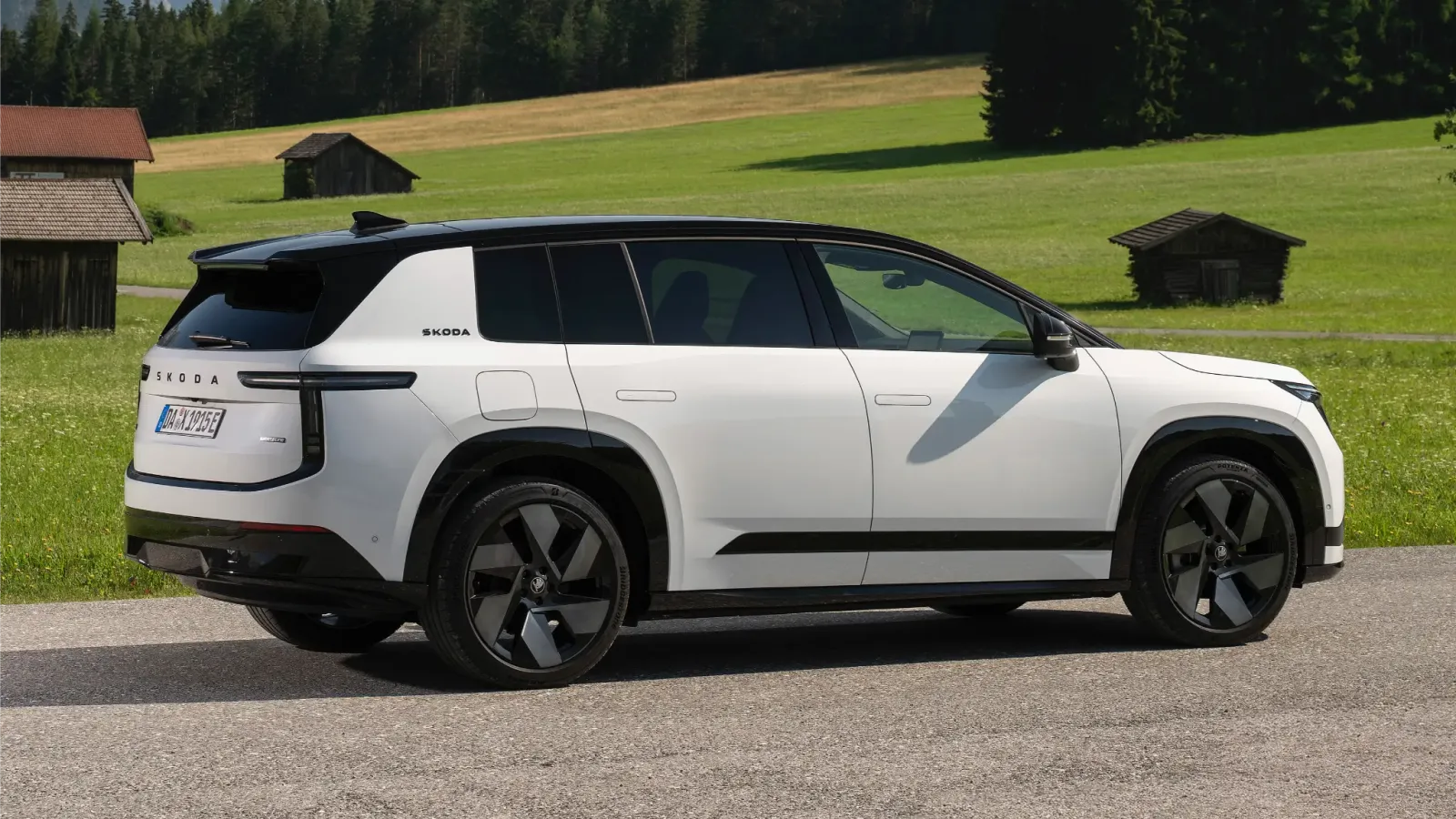
Skoda Peaq
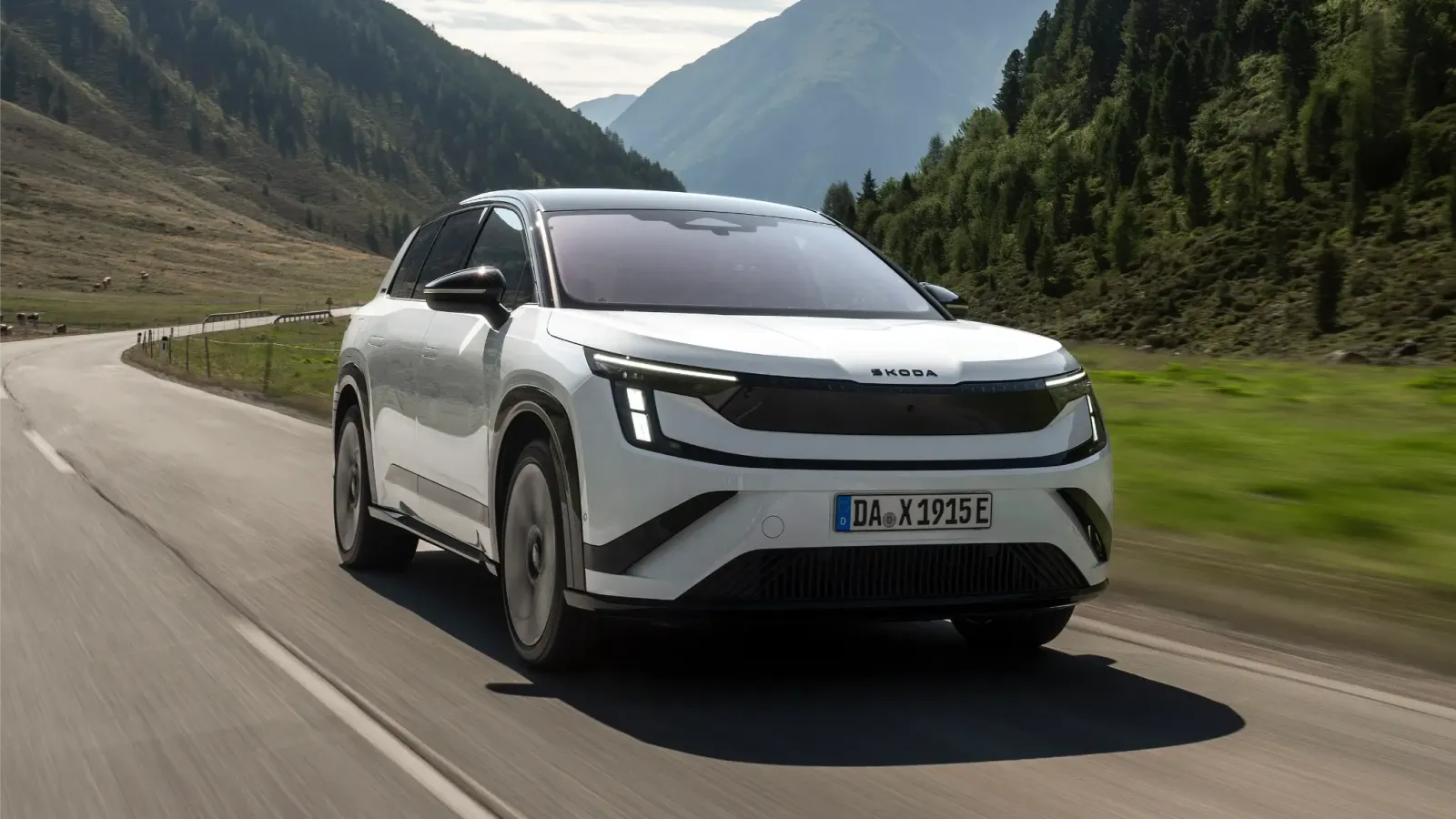
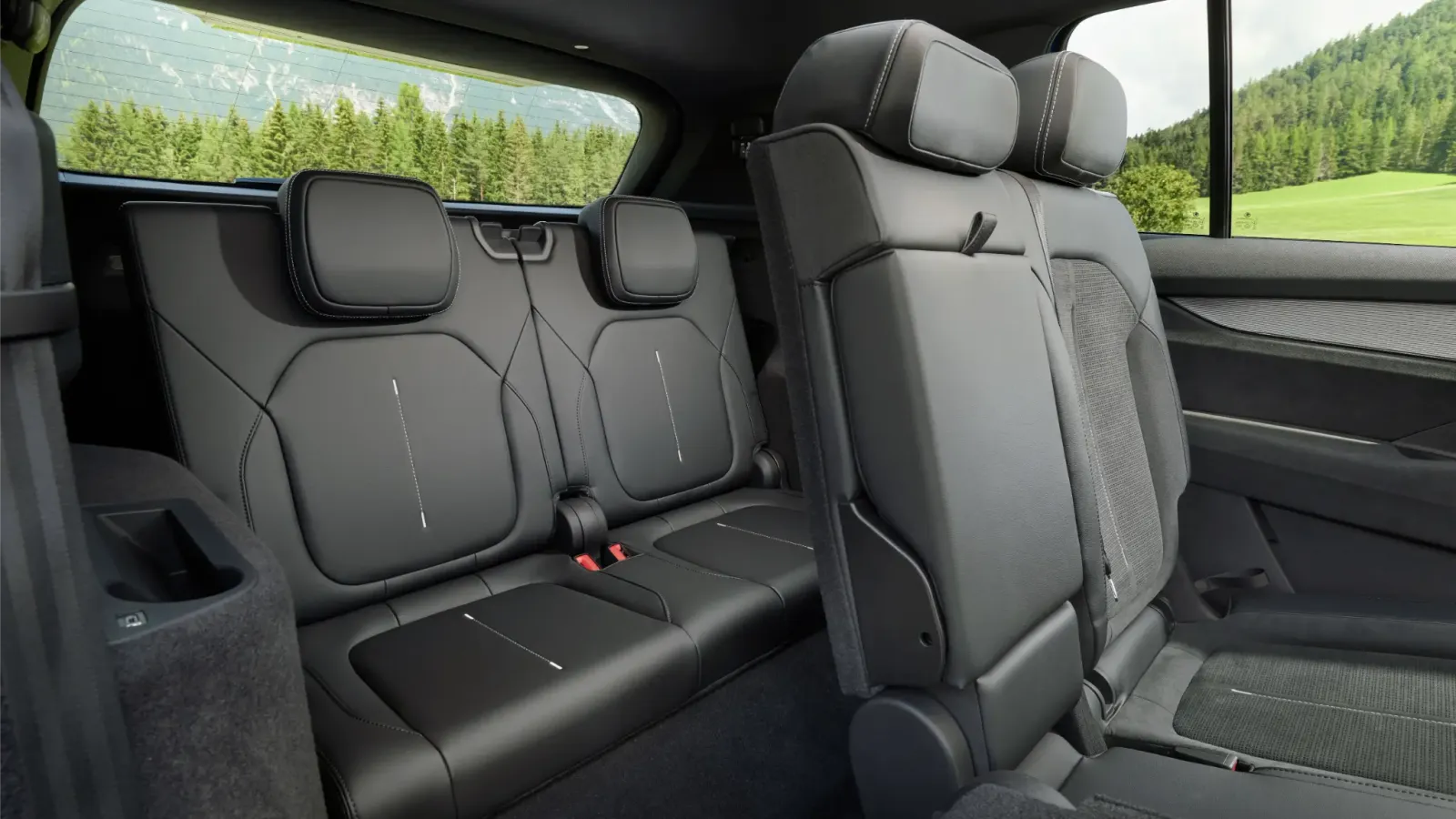
Let’s start with the latest addition. It’s called Skoda Peaq and is the largest SUV ever released by the Czech manufacturer, with a length of 4874 mm, width of 1867 mm, height of 1664 mm, and a wheelbase of 2965 mm.
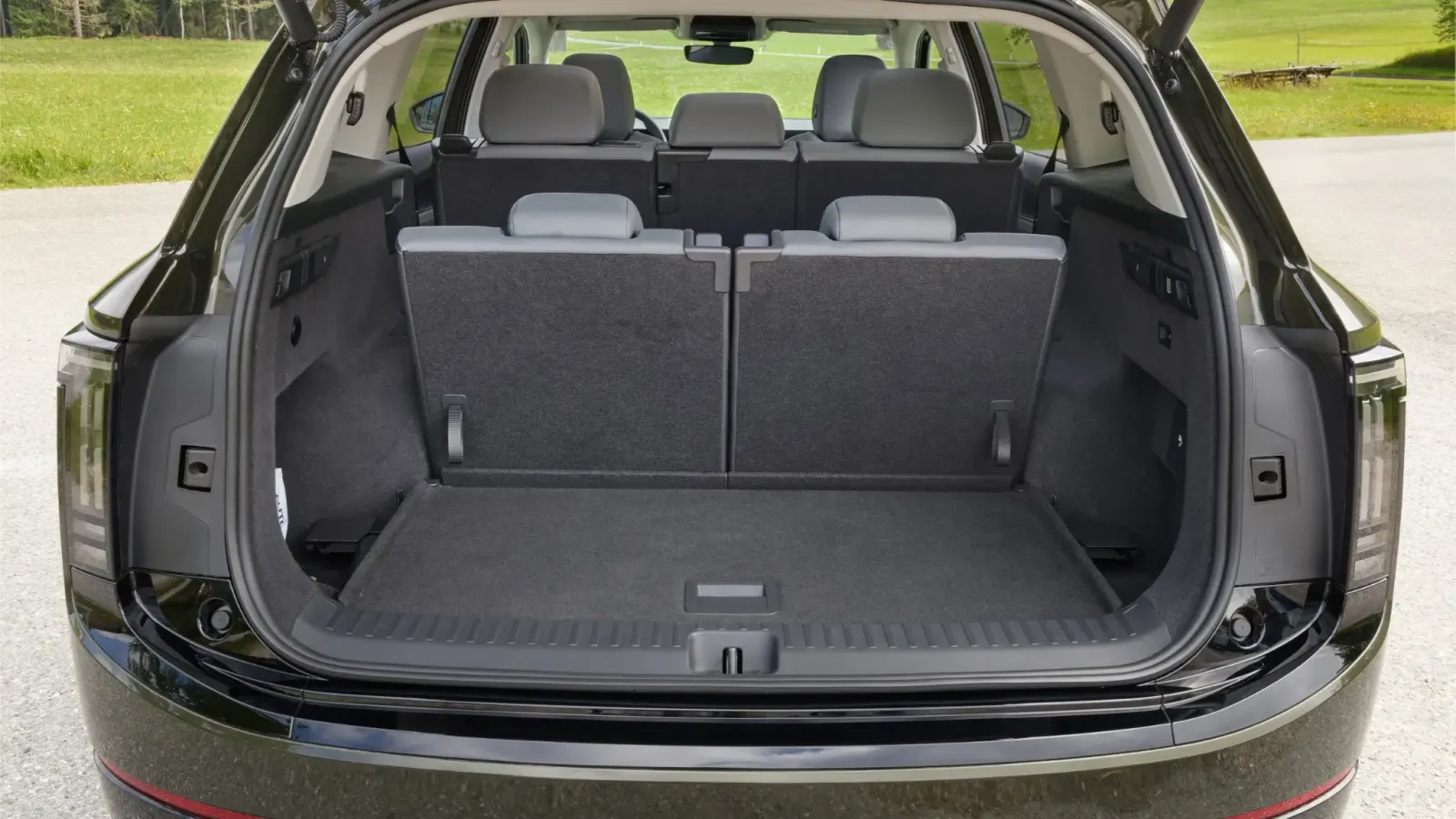
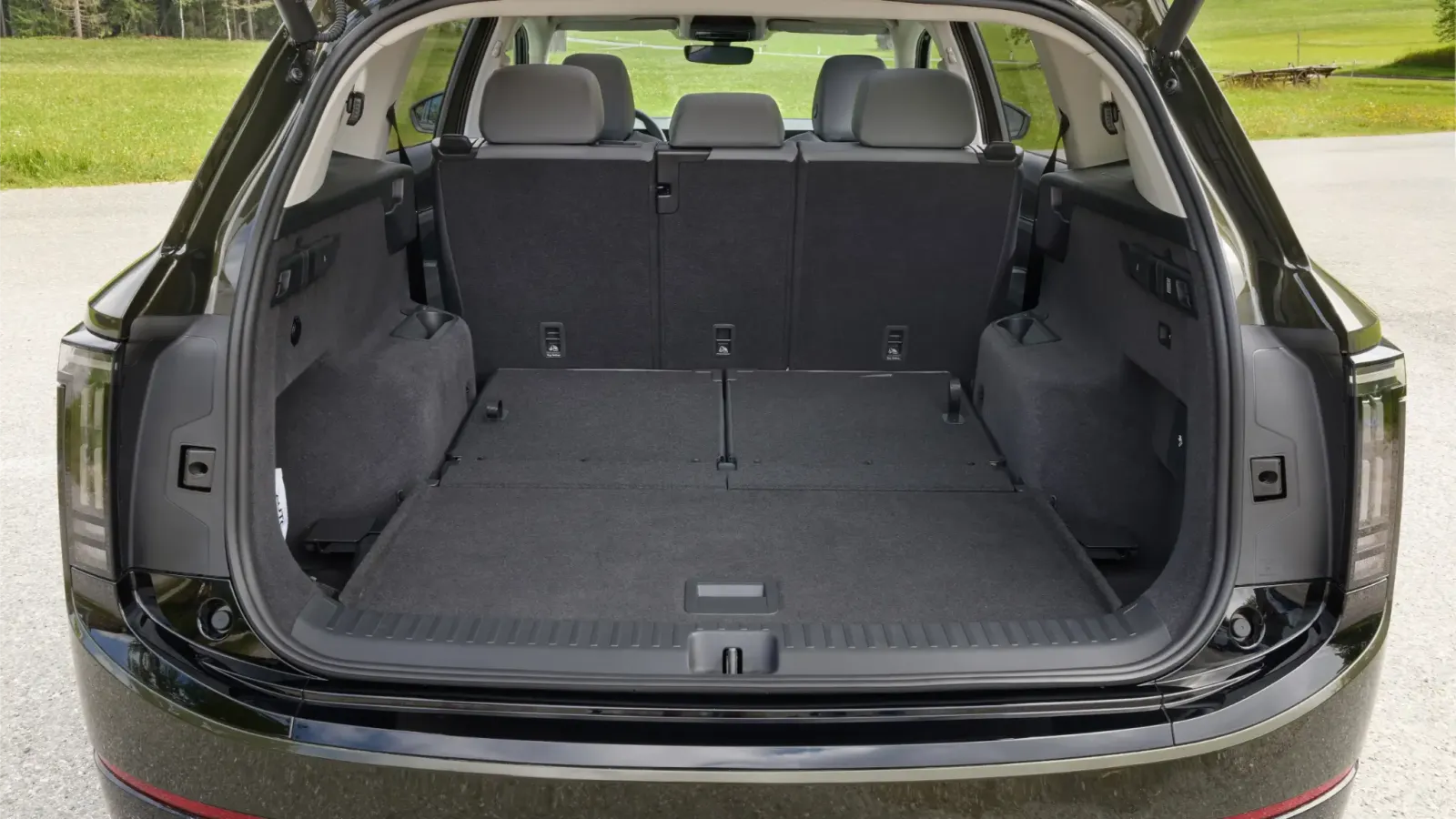
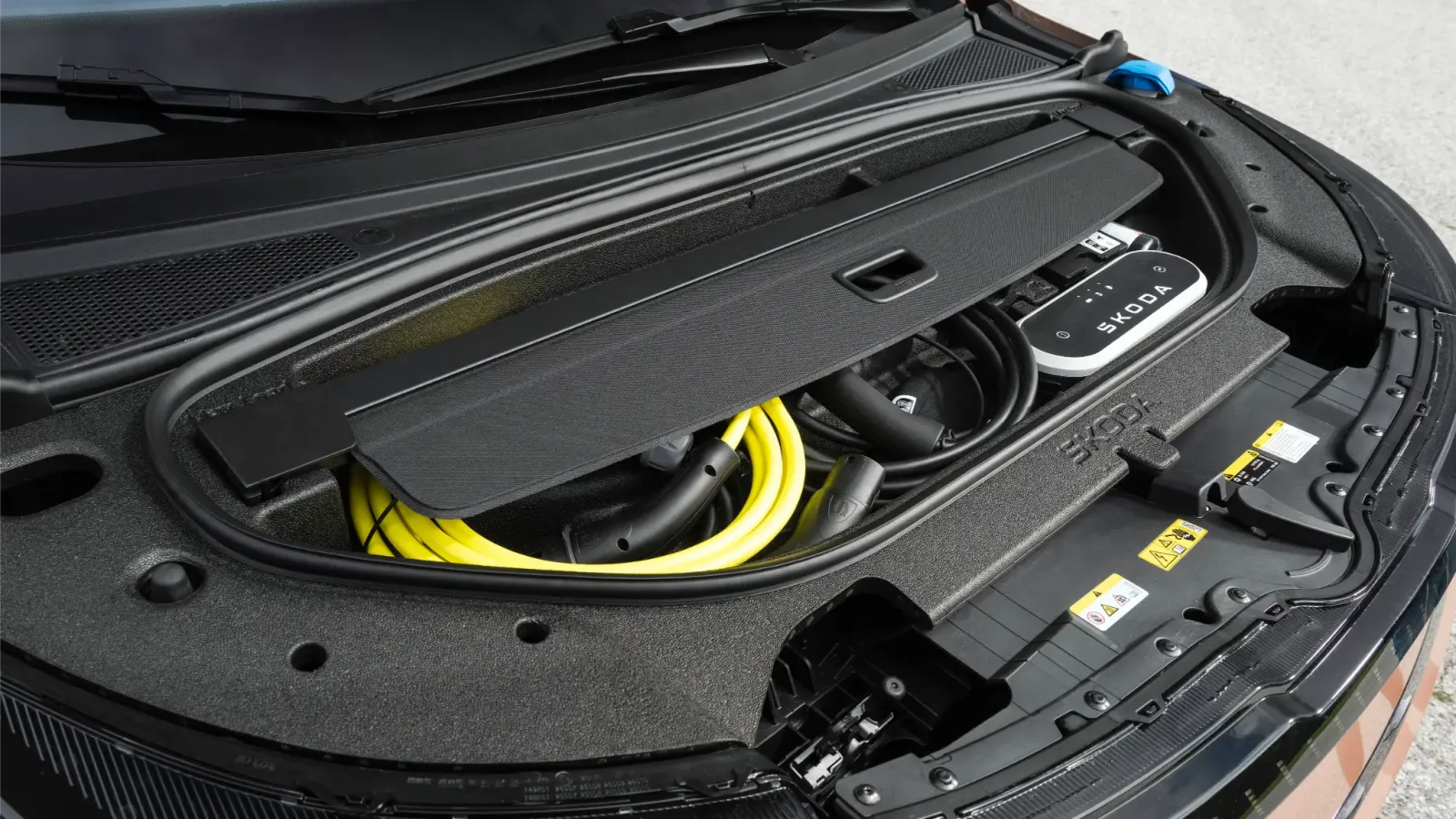
The dimensions naturally affect the cabin space, but even more so the trunk area. Regardless of the version chosen, the available space remains consistent: very large. In five-seater configuration, the Peaq offers up to 935 liters, while this figure drops to 890 liters in the seven-seater version.
4 images
But the advantages of this model extend beyond dimensions. With several global and domestic launches, the new Skoda Peaq is built on Volkswagen Group’s new MEB Plus platform and features the largest battery ever installed in a Škoda electric vehicle, at 91 kWh (86 kWh usable).
This battery is available only on the 90 and 90x versions, and it can power one or two electric motors respectively, delivering 210 kW (286 hp) or 220 kW (299 hp). On the other hand, the entry-level version — the Peaq 60 — is equipped with a less powerful rear electric motor, at 150 kW (204 hp), and a smaller battery of 63 kWh.
But since we’re talking about a family vehicle, autonomy is the most important factor after space. In this regard, the Czech SUV claims ranges of 460 km to 647 km depending on the version. Charging it isn’t difficult either: just 28 minutes are needed to charge from 10% to 80%. Learn more about it in detail:
As for prices, the Skoda Peaq still doesn’t have fixed prices in Portugal, but it’s available in Germany starting at 48,000 euros. In the domestic market, it’s likely to cost around 50,000 euros, or 60,000 euros if you choose the Peaq 90 and 90x models.
Peugeot E-5008
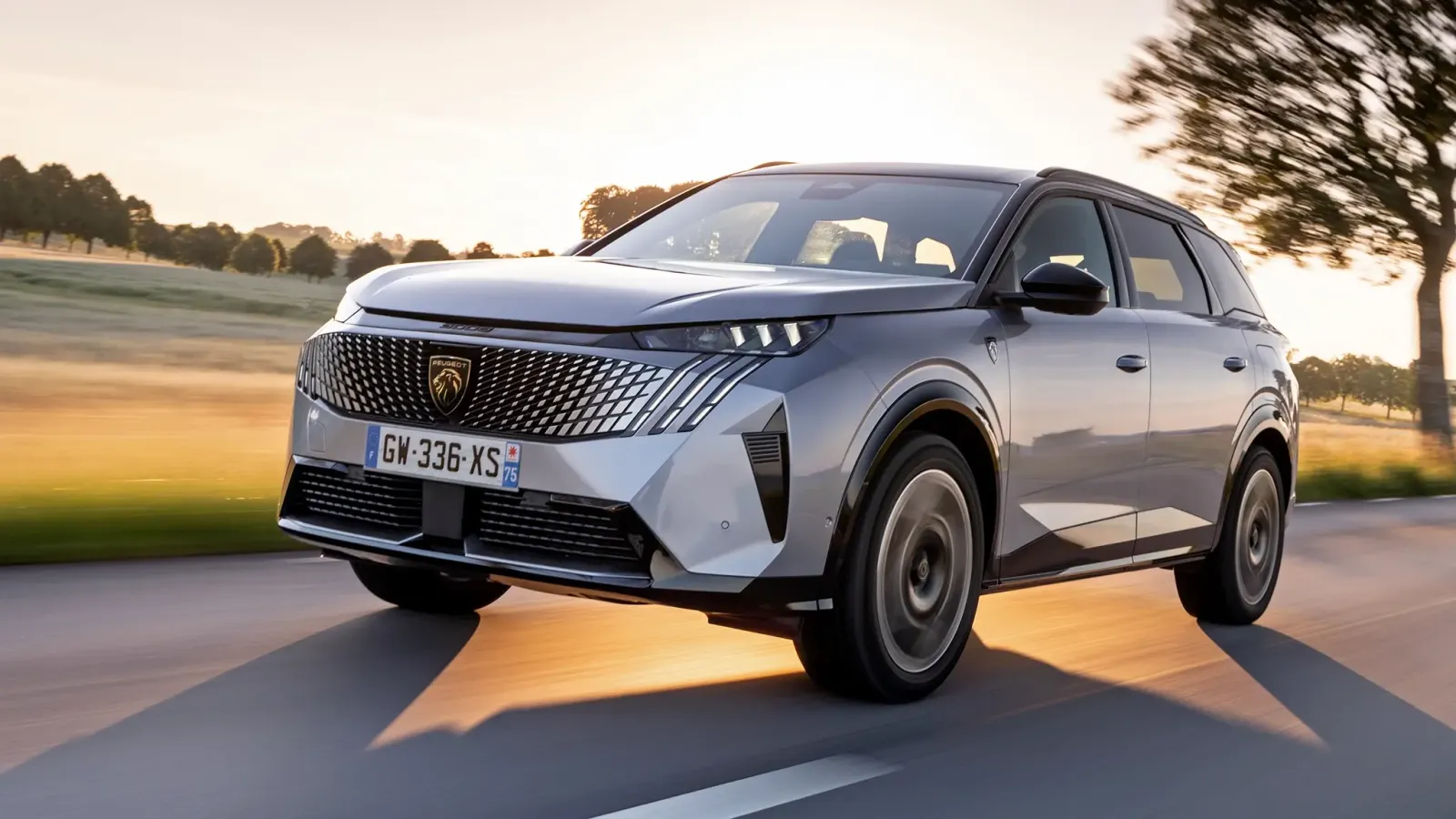
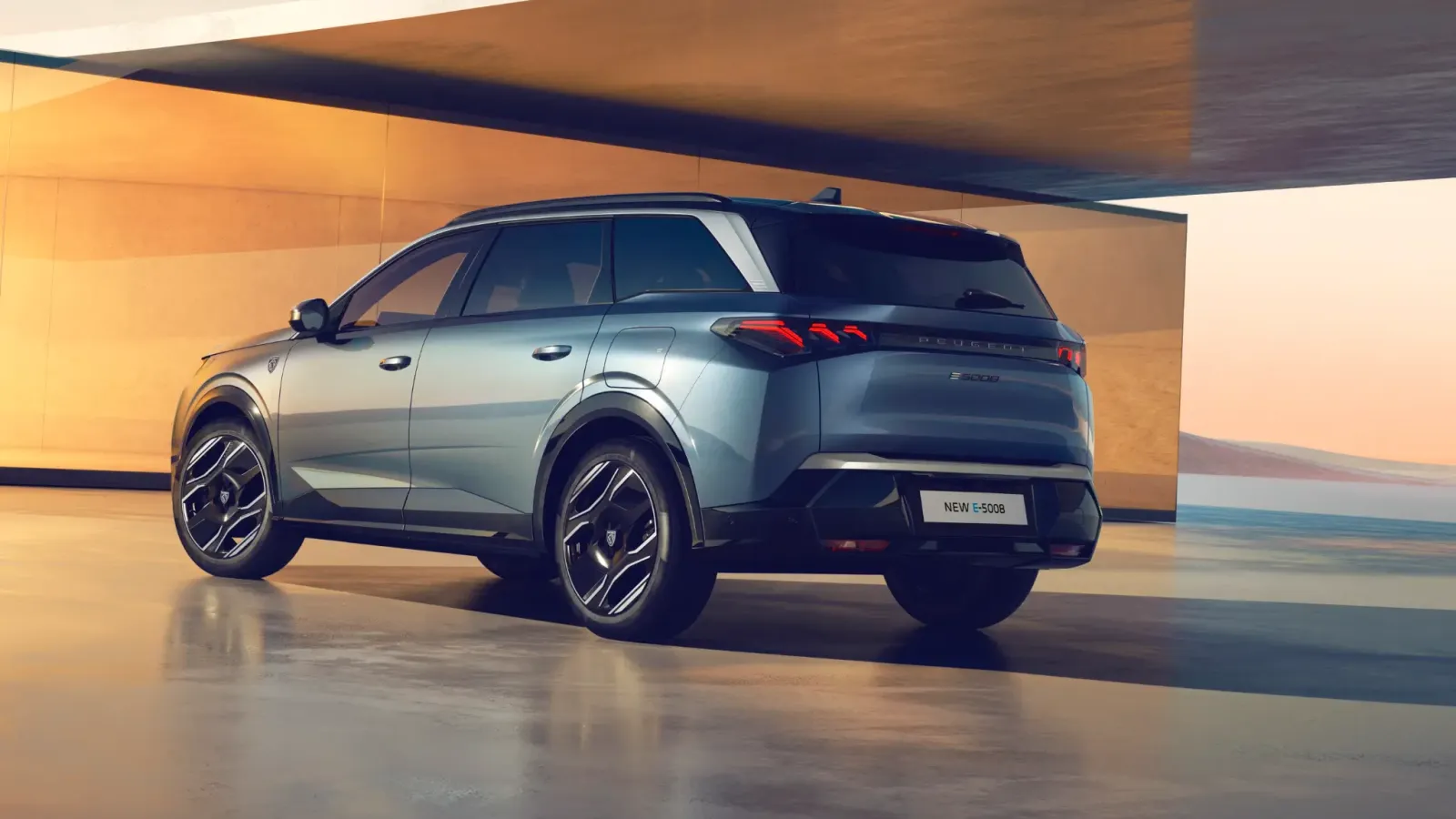
The Peugeot E-5008 is better established in the market. Unlike the Skoda Peaq, this model can also be equipped with internal combustion engines, either paired with a 48 V mild-hybrid system or a plug-in hybrid system.
Focusing on those that rely solely on electric power, the French electric SUV can be equipped with one or two electric motors and offer different levels of power: 157 kW (213 hp) and 239 kW (325 hp). In both cases, the battery has a capacity of 73 kWh, and range reaches up to 500 km in the front-wheel-drive version.
3 images
In terms of space, don’t expect the same figures as the Peaq. After all, “space” and “Skoda” will always be associated. Nevertheless, the E-5008 is far from disappointing: its trunk offers 748 liters of capacity, or 259 liters when all seven seats are in use. On the other hand, there are no additional compartments under the hood.
The Peugeot E-5008 may not be as spacious nor offer the same range as the Skoda Peaq, but until its price is known, it is the cheapest option on this list, with prices starting at 49,885 euros.
Hyundai IONIQ 9
The Hyundai IONIQ 9, though not entirely new, has also not been on the market for very long. And if you are someone who appreciates more futuristic designs, this South Korean offering might interest you, largely due to its pixelated headlights and the “aeroesthetic” design language used in its development.
With a length of 5060 mm, width of 1980 mm, height of 1790 mm, and a wheelbase of 3130 mm, it is the largest SUV ever released by Hyundai and the biggest in this list. Interestingly, it is not the most spacious.
With its sixth and seventh seats folded down, it offers 908 liters of cargo space, but with them up, it provides the most space at 338 liters.
4 images
Beneath the body, the IONIQ 9 is equipped with one of the largest batteries on the market, at 110 kWh. In Portugal, it is available with two electric motors — one per axle — delivering a combined total power of 230 kW (313 hp) and 605 Nm of torque, along with a range of up to 600 km.
When it comes to price, this is where the IONIQ 9 falls short. As the top of the range and representing everything Hyundai does best, its price reflects that, costing nearly 90,000 euros to own.
Kia EV9
Also part of the Hyundai Group, Kia offers another electric SUV in its lineup that can accommodate up to seven passengers. Named the EV9, it shares the same E-GMP platform as the Hyundai IONIQ 9.
In Portugal, it is available with one electric motor per axle, providing a combined output of 283 kW (385 hp) and 700 Nm of torque.
3 images
It is slightly smaller than the IONIQ 9 and comes equipped with a smaller battery, at 99.8 kWh. For this reason, it claims a range of only up to 510 kilometers (WLTP). Nevertheless, it can be more expensive, with prices starting at 89,922 euros.
ADVERTISING
I want a smaller electric SUV
If you don’t need more than five seats, there are plenty of options available.
Volvo EX90
Just as space is Skoda’s strength, safety is Volvo’s. The new EX90, introduced at the end of 2022, was described by the brand as the safest car it has ever built. Alongside the XC90 and the also new ES90, this model is considered one of Volvo’s flagship vehicles.
Although we don’t typically associate premium models with the most versatile ones on the market, this EX90 shatters that stereotype. With a length of 5.03 meters, width of 1.96 meters, height of 1.75 meters, and a wheelbase of 2.98 meters, it is the second-largest SUV in this list.
Naturally, these dimensions translate into ample space for passengers. The trunk offers a (very) satisfactory 669 liters of capacity. With all seven seats in use, there are still 324 liters available. If that isn’t enough, the frunk provides an additional 46 liters.
As a premium model, it features meticulous attention to detail that is rare in other vehicles. This focus extends to every aspect, especially safety—what has defined Volvo for decades.
Among the vast array of systems and sensors featured in the EX90, the LiDAR mounted on the roof stands out. It can detect cars, pedestrians, cyclists, and other obstacles hundreds of meters ahead with high precision without relying on cameras.
In Portugal, the Volvo EX90 is available in three power levels and with two battery options. The entry-level version comes with the smallest battery (92 kWh), which powers a single rear motor producing 245 kW (333 hp).
The 106 kWh battery is paired with two motors—one per axle—and depending on the version, it delivers between 335 kW (456 hp) and 500 kW (680 hp). In terms of range, the EX90 promises between 564 km and 617 km of driving distance.
With all this in mind, don’t expect prices as affordable as those of the first options on this list. The new Volvo EX90 starts at 86,725 euros. It’s a high price, but interestingly, it’s still lower than that of the South Korean models.
Discover your next car:
Mercedes-Benz GLB
The Mercedes-Benz GLB is the smallest SUV on this list, which is reflected in its interior space—especially the area available for the sixth and seventh passengers—and its trunk capacity, which ranges from 480 liters to 1,605 liters, or as low as 150 liters when all seven seats are in use.
On the other hand, it offers the largest front compartment on this list, with a capacity of 127 liters.
4 images
Beneath the bodywork, the new GLB is built on the MMA platform introduced by its “sibling” model, the CLA. It is available in two electric versions—the GLB 250+ and the GLB 350 4MATIC—as well as with internal combustion engines.
The entry-level version features a system with 200 kW (272 hp) of power and up to 631 km of WLTP range, thanks to a battery with an 85 kWh usable capacity. In the case of the GLB 350 4MATIC, an engine is added to the front axle, giving the GLB all-wheel drive along with 354 hp of power.
In both cases, the 800 V electric architecture allows for approximately 260 km of range to be regained in just ten minutes using a fast charger (DC), thanks to charging speeds of up to 320 kW.
Regarding prices, the Mercedes-Benz GLB electric model is available starting at 59,200 euros, but this figure doesn’t tell the whole story. The German SUV does not come standard with seven seats, which are an optional feature that adds 1,400 euros to the price. In other words, with these two extra seats, the GLB costs starting at 60,600 euros.
Mercedes-Benz EQS SUV
Similar to the GLB, to get seven seats on the Mercedes-Benz EQS SUV, you must opt for additional features. However, in this model, adding two more seats comes at a slightly higher cost: 2,000 euros.
On the other hand, while the GLB is based on a platform compatible with both internal combustion engines and fully electric powertrains, the EQS SUV is limited to electric options. Available in three versions — EQS 450+, EQS 450 4MATIC, and EQS 580 4MATIC — this luxury electric SUV always uses the same 118 kWh battery.
Depending on the version, it can be equipped with one or two electric motors, offering power outputs between 265 kW (300 hp) and 400 kW (544 hp). Although it is the heaviest option on this list, weighing around 2900 kg, it promises the longest range: up to 697 km (WLTP) in the 450+ version.
3 images
Naturally, the EQS SUV is not the best choice for those who prioritize versatility above all else, but it’s ideal for those wanting to combine luxury, comfort, and driving pleasure with the ability to transport up to seven passengers.
As one of the brand’s top-tier models, it is also quite expensive. In fact, it is the most costly model on this list, with prices starting at 129,500 euros.
What now?
As you can see, there are already quite a few options on the market that combine 100% electric powertrains with enough space for a large family. Not only do they offer sufficient range for most families’ daily use, but they can also handle longer trips.
The main differences lie, of course, in price, size, and how each of these models makes use of the available space. But one thing is certain: those who need seven seats no longer have to choose between space and 100% electric driving.